DbcultAccessing Vault...
Cult Review
Senior Film Conservator
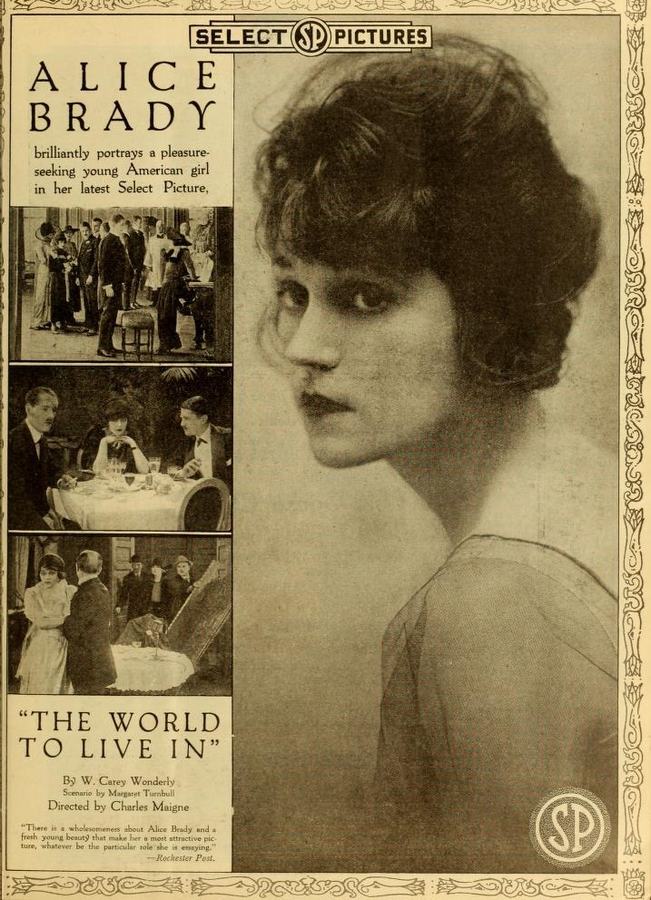
Step into the flickering shadows of early cinema, where moral quandaries and societal pressures were often illuminated with stark clarity. The World to Live In, a cinematic artifact from an era grappling with rapidly shifting social landscapes, invites us to ponder the eternal conflict between material aspiration and emotional fulfillment. Penned by Margaret Turnbull and W. Carey Wonderly, this narrative, while seemingly straightforward in its premise, unfolds with a subtle complexity that belies its age, offering a window into the prevailing anxieties and desires of its time. It’s a compelling character study, primarily focused on Rita Charles, a woman navigating a world where a woman's worth was often measured by her marital prospects and the financial standing of her chosen partner. This isn't merely a quaint historical piece; it resonates with a timeless quality, forcing us to confront whether the 'world to live in' is one built on pragmatic security or the more fragile, yet ultimately more rewarding, foundation of genuine affection.
At the heart of this compelling drama is Rita Charles, portrayed with nuanced conviction by Anne Cornwall. Rita is not merely a stenographer; she is an architect of her own destiny, albeit one shaped by the societal confines of her epoch. Her ambition isn't crude or overtly villainous; rather, it's a pragmatic response to a world that offered limited avenues for upward mobility, especially for women. She understands that marriage to a man of wealth is her most direct route to a life beyond the drudgery of her daily work. This isn't a new narrative, certainly. Films like Naar Hjertet sælges (When the Heart is Sold) have explored similar themes of bartering affection for security, but The World to Live In imbues Rita with an almost clinical detachment in her pursuit, making her a fascinating, if sometimes frustrating, protagonist. She consciously courts the attention of affluent men, her every move a calculated step on a social chessboard. Her evenings are dedicated to Hugh Chalvey, a wealthy New Yorker whose societal standing is precisely what Rita seeks to elevate herself into. Cornwall's performance, even within the expressive limitations of silent film, conveys a woman perpetually weighing her options, her smiles often carrying a hint of strategic intent.
The juxtaposition of her daytime employment with T. J. Olverson and her nighttime pursuits of Chalvey paints a vivid picture of a life bifurcated by aspiration. Olverson, a man whose wealth is already established, represents the very world Rita yearns to inhabit. Her interactions with him, while professional, likely serve as a constant reminder of the life she is striving for. This duality highlights the relentless nature of her ambition, a drive that leaves little room for spontaneous emotion or genuine connection. Her character, in this regard, offers a poignant commentary on the pressures faced by women of the era, where financial independence was largely unattainable, and social advancement was almost exclusively achieved through marital alliance.
Into this meticulously constructed world steps Dr. Varian, portrayed by Earl Metcalfe, a young settlement doctor whose devotion to service stands in stark contrast to Rita's material preoccupations. Varian embodies an idealism that Rita, in her initial pragmatism, cannot comprehend or value. He sees beyond the superficial, recognizing something intrinsically worthy in Rita, a potential for depth that she herself has suppressed. His love for her is earnest, unadorned by wealth or social status, and herein lies Rita's initial blindness. She dismisses him, not for any personal failing, but for his insufficient income. This rejection of genuine affection in favor of perceived security is a pivotal aspect of the film's thematic exploration. It forces the audience to question what truly constitutes a 'rich' life.
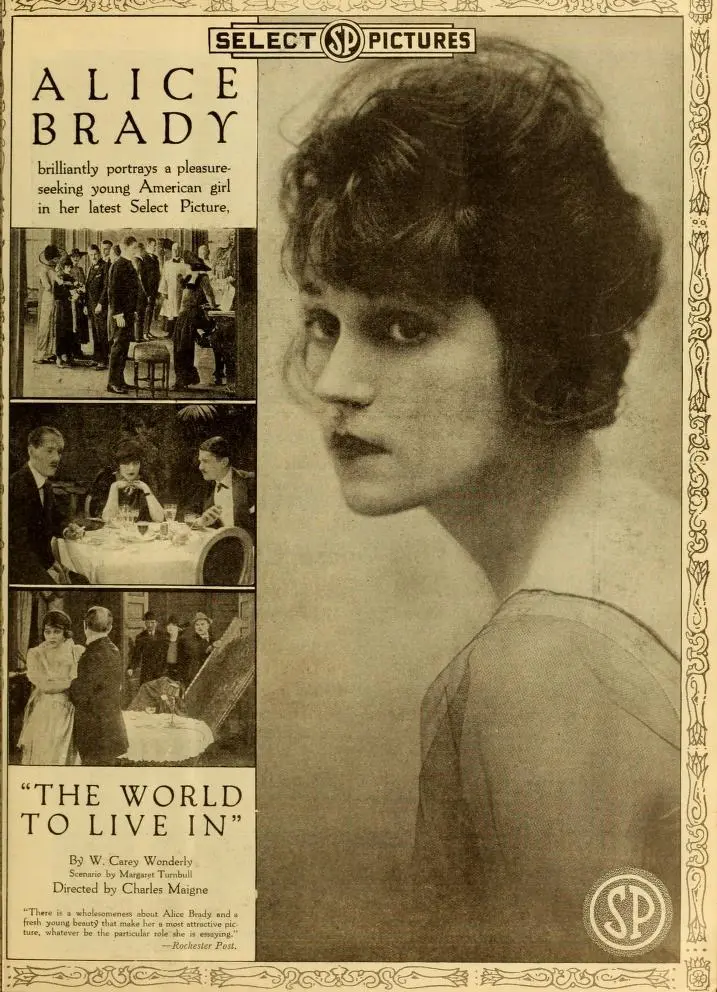
Metcalfe's portrayal of Varian is subtle, conveying a quiet strength and unwavering commitment. He is not a man of grand gestures, but of consistent, heartfelt presence. His character provides the moral compass of the story, representing an alternative path to happiness, one rooted in purpose and compassion rather than accumulation. The narrative cleverly positions Varian as the antithesis to Chalvey, not just in wealth, but in values. While Rita is busy trying to coax a proposal from the elusive Chalvey, Varian's affection remains steadfast, a silent testament to a love that asks for nothing in return but itself. This dynamic can be seen in other films where divergent paths of love and ambition are explored, such as When Doctors Disagree, which often delves into the personal sacrifices made in the pursuit of a profession, contrasting it with romantic entanglement.
Hugh Chalvey, brought to life by William T. Carleton, represents the very pinnacle of Rita's social aspirations. He is the embodiment of the glittering New York society she desperately wishes to join. Rita's efforts to secure a proposal from him are relentless, a testament to her single-minded determination. Yet, Chalvey proves to be an elusive prize. He enjoys Rita's company, her vivacity, perhaps even her ambition, but he is wary of commitment. His reluctance to marry her underscores a common theme in period dramas: the social stratification that often prevented genuine connection across class lines, or perhaps, simply the cynical reality that some wealthy men preferred dalliance over durable partnership. Chalvey's character is less a villain and more a symbol of the superficiality that can accompany extreme wealth, a man who, despite his advantages, seems incapable of offering the profound connection Rita, deep down, craved.
The narrative deftly illustrates the power dynamics at play. Rita, despite her intelligence and charm, is ultimately in a position of lesser power, dependent on Chalvey's willingness to elevate her. Her frustration is palpable as her carefully laid plans repeatedly fail to yield the desired outcome. This struggle for social mobility and recognition is a recurrent motif in cinema, much like the urban struggles depicted in The City, where individuals navigate complex social hierarchies to find their place. In The World to Live In, however, the battle is fought not in the streets but in drawing rooms and clandestine meetings, a testament to the more subtle, yet equally potent, forces at play in the social arena.
Rita's attempts to ingratiate herself with the Olverson family, specifically T. J. Olverson, Jr., played by Robert Schable, prove to be a misstep. The elder Olverson, a shrewd observer of human nature, quickly discerns Rita's intentions and orchestrates a month-long 'vacation' for her, effectively removing her from the immediate vicinity of his son. This forced sojourn to Atlantic City, intended as a punitive measure, becomes instead a pivotal turning point in Rita's journey. It is a period of enforced solitude, a chance for introspection away from the pressures and calculations of her New York life. This narrative device, where a protagonist is removed from their familiar environment to undergo a transformative experience, is a classic storytelling trope, reminiscent of epic journeys where character is forged through adversity, though on a much more intimate scale here. It allows Rita to shed the layers of ambition and pretense she has carefully constructed.
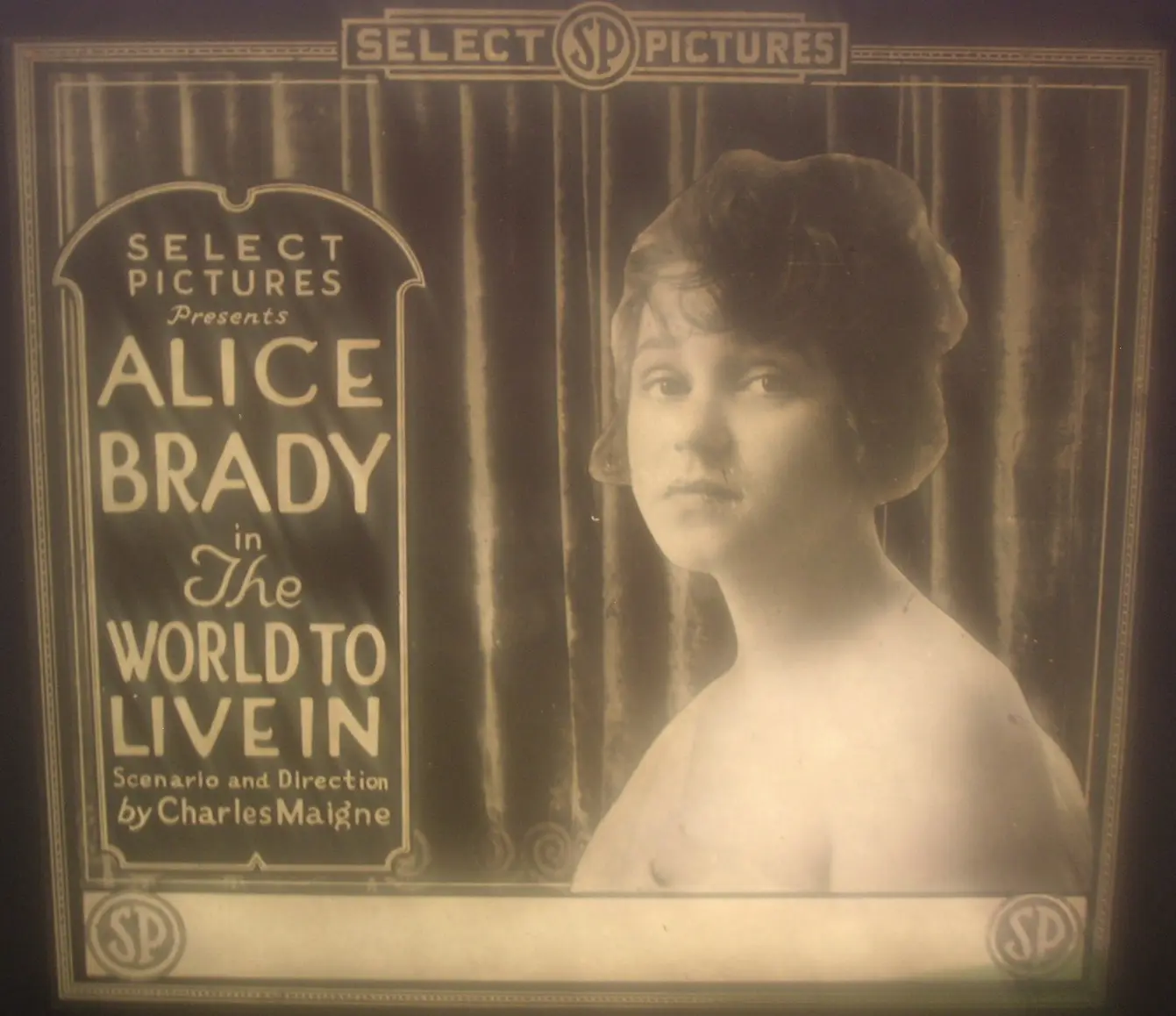
It is in Atlantic City that the narrative reaches its emotional crescendo. Chalvey, perhaps realizing the depth of his feelings or simply spurred by the threat of losing Rita entirely, follows her and finally proposes. This moment, which should have been the culmination of all her efforts, the triumphant realization of her grand plan, is precisely when Rita's internal landscape shifts dramatically. The glittering prize she had so relentlessly pursued suddenly loses its luster. The superficiality of her ambition is laid bare, and she is confronted with the true desires of her heart. This realization is profoundly human, a testament to the idea that sometimes, getting what you think you want only reveals what you truly need. This journey of self-realization, of understanding one's 'better self,' is a theme explored with varying degrees of success in films like Her Better Self, but The World to Live In handles it with a delicate touch, allowing Rita's change of heart to feel earned.
The arrival of Dr. Varian in Atlantic City, unbidden and driven solely by his enduring affection, seals Rita's fate. His presence, coupled with Chalvey's belated proposal, forces Rita to confront the stark choice before her: a life of material comfort with a man who was hesitant to commit, or a life of genuine love and purpose with a man who had loved her selflessly from the start. The film's climax is not one of dramatic action, but of profound internal deliberation. Rita's decision to reject Chalvey's offer and accept Varian's is a powerful statement. It signifies a profound shift in her values, a realization that the 'world to live in' is not defined by external markers of success, but by the richness of human connection. This moment is the narrative's most triumphant, showcasing a protagonist who, through trial and introspection, has truly grown.
The supporting cast, including Zyllah Shannon, Alice Brady, and Virginia Hammond, contribute to the film's texture, creating a believable social milieu against which Rita's drama unfolds. Their performances, though perhaps less central, help to ground the story in a sense of reality, making Rita's choices feel all the more impactful. The writers, Margaret Turnbull and W. Carey Wonderly, deserve commendation for crafting a narrative that, despite its era, delves into complex psychological terrain. They avoid simplistic moralizing, instead presenting Rita as a flawed but ultimately redeemable character whose journey towards self-awareness is both believable and inspiring. The film's ending, far from being a saccharine resolution, feels like a hard-won victory for the human spirit, a testament to the enduring power of love to transcend superficial concerns. This narrative arc, where a protagonist chooses authenticity over artifice, echoes the broader themes of personal destiny and choice found in other compelling stories, such as the intricate webs of fate in The Lash of Destiny, though here, the destiny is ultimately self-chosen.
The World to Live In is more than just a period romance; it's a commentary on the enduring human quest for happiness and meaning. It asks us to consider what truly constitutes a fulfilling life. Is it the accumulation of wealth and social status, or the cultivation of genuine relationships and purpose? Rita Charles's journey from a calculating social climber to a woman embracing authentic love is a powerful testament to the transformative potential of self-discovery. The film, through its characters and their choices, invites us to reflect on our own values and the 'world' we choose to inhabit. It reminds us that while external circumstances can shape our paths, the ultimate power to define our happiness often lies within our own hearts. Its exploration of personal growth and the triumph of inner truth over societal pressure places it in a lineage of compelling narratives that continue to resonate with audiences today, proving that even films from a bygone era can offer profound insights into the human condition. The quiet power of such a narrative, focusing on internal struggle and resolution, stands in contrast to the grander, more epic scope of films like Ivan the Terrible or The Count of Monte Cristo, yet its impact on the viewer's emotional landscape is no less significant. It’s a quiet triumph, a subtle yet potent exploration of what it means to truly live.
In its essence, The World to Live In, with its evocative performances and thoughtful narrative, stands as a compelling example of early cinema's capacity for nuanced storytelling. It's a film that, despite its age, continues to speak to the universal dilemmas of the heart and the relentless pursuit of a life well-lived. It invites us not just to watch a story unfold, but to ponder the choices we make and the values we uphold in our own 'world to live in.'
IMDb 7.3
1937
Community
Log in to comment.