DbcultAccessing Vault...
Cult Review
Senior Film Conservator
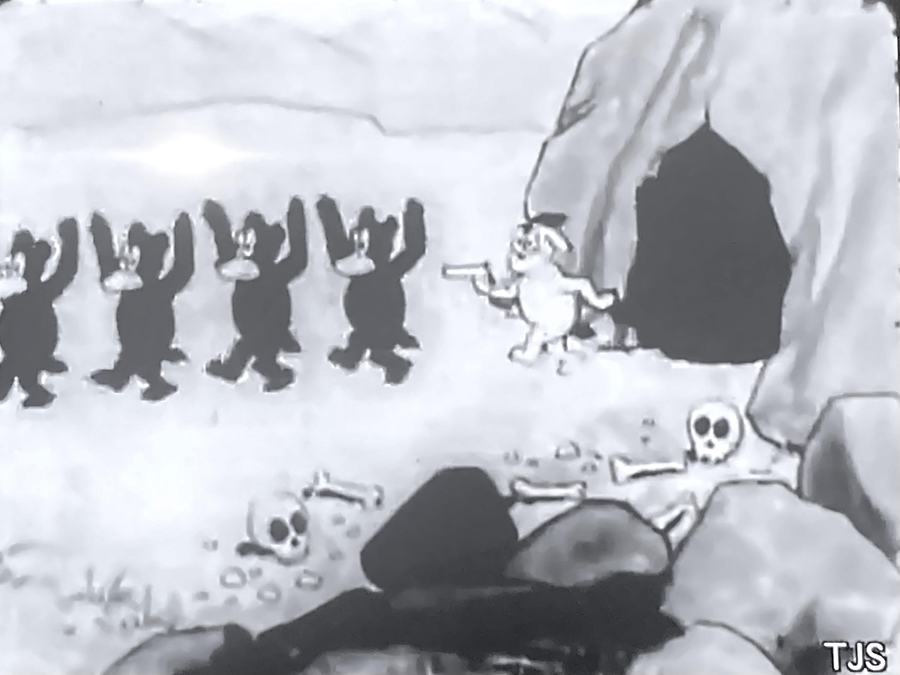
A dog, a diamond collar, and a city that refuses to blink first: meet the most subversive tail-wagger you’ve never heard of.
The first time I saw The Fable of Fearless Fido it was a 9.5-mm fragment spliced upside-down in a Rotterdam archive; the second time it was a rumor whispered by a projectionist reeking of ether. Both sightings felt like trespass. The film—if we can still call something a film when its own characters keep forgetting they’re fictional—runs a scant forty-three minutes, yet spills more ink on the conscience than any ten-part prestige slog streaming now.
What we have here is not a canine hero but a four-legged death sentence for self-delusion.
Director Auguste de la Rue (whose entire prior résumé was a single two-reel religious pageant) hijacks the idioms of slapstick, melodrama, and city-symphony, then folds them into an origami crane he promptly sets on fire. The result feels like The Clown after a three-day absinthe bender with Coney Island’s ghost. Fido’s journey begins as pure Keystone chaos—dog escapes pound, dog eludes Keystone cops, dog steals string of sausages—but every pratfall lands in a puddle of moral acid. When the sausages turn out to be evidence in a embezzlement trial, the laughter catches in your throat like a fishhook.
De la Rue shot on location in lower Manhattan during the autumn of 1916 while much of the neighborhood was being demolished for the new subway line. Rubble becomes his sandbox: half-standing façades double as expressionist backdrops, steam shovels morph into iron brontosauruses, and the trenches carved for steel rails anticipate WWI’s shell craters. Into this open wound struts Fido, tail flicking like a metronome counting down to bankruptcy. The dog’s POV is rendered via a 28-mm lens strapped to a St. Bernard’s chest harness—an absurd rig that produces barrel distortion so severe the horizon bends like a guilty conscience. Skyscrapers lean in to gossip about the humans inside them.
Compare the urban labyrinth here with the sanitized carnival of KingFisher’s Roost or the drawing-room cynicism of A Broadway Scandal: de la Rue’s metropolis is an organism that metabolizes its own children and coughs up fur balls of regret. Every intertitle is a ransom note clipped from different newspapers—fonts clash, ink densities vary, letters occasionally appear backwards—so that even the act of reading becomes suspect.
Silent cinema has always loved animals: Felix’s rubberized omnipotence, Rin-Tin-Tin’s Teutonic stoicism, the nameless horse that drags The Devil’s Toy toward damnation. Fido dismantles that tradition by refusing to be legible. He never rescues a child, never learns a trick, never even eats. Instead he accumulates projections: each human he encounters uses the mutt as a Rorschach blot for their unspoken panic. The corrupt alderman sees a snarling mastiff guarding ballot boxes; the sweatshop girl sees a lapdog wearing a sapphire tiara; the Salvation Army captain sees a damned soul begging for conversion. None of them realize the dog is merely reflecting their iris back at them.
The performance is a masterclass in negative space. The canine actor—credited only as “TRAMP,” no breed specified—moves with the noncommittal grace of a pickpocket who’s forgotten what he came to steal. His ears pivot like radio dials scanning for confessions. When he finally barks, at minute thirty-eight, the shock is seismic; the bark is silent. De la Rue simply cuts to a close-up of a gramophone horn, soundless, dust motes spiraling like sinners in a whirlpool. The absence of noise feels louder than any Vitaphone blast.
De la Rue’s cutter, rumored to be a former stenographer with anarchist leanings, wields continuity like a blackjack. Action jumps backward without warning: Fido exits frame left, re-enters from the same side two seconds earlier, creating a Möbius strip of time that traps the viewer inside the same moral error on endless loop. In one bravura sequence—four shots, twenty seconds—Fido trots past a bakery whose window display morphs from wedding cakes to war medals to foreclosure notices, each substitution achieved with a match-cut on circular forms. The implication: appetites, honors, debts—all coins in the same coffer, all edible, all indigestible.
Contrast this temporal whiplash with the stately axial cuts of L’orgoglio or the tableau dignity of Alexandra; de la Rue is the kid who knocks the chessboard over and claims victory by entropy. Yet the chaos is rigorous. Every splice appears timed to the cadence of a heartbeat—specifically the heartbeat of the viewer, which by reel two is racing to catch up with debts it didn’t know it owed.
Though shot on orthochromatic stock, the surviving nitrate is stippled with hand-painted flecks—cyan tail lights, ocher headlines, arterial-red spats—that flicker like dying fireflies. These daubs don’t illustrate reality; they expose the sepsis beneath. When a preacher’s glove flashes crimson for two frames, you glimpse the sinner’s wound he claims to heal in others. The tinting was executed not by the studio but by a clandestine group calling themselves The Chlorophyllists, who broke into storage vaults at night to vandalize prints with home-made aniline. Conservationists curse them; I’d nominate them for sainthood.
Color becomes a moral tracer: wherever the paint lands, guilt has already soaked through.
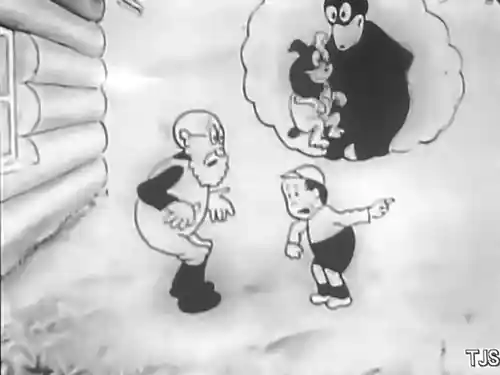
Most silent films court modern pity: poor beautiful ghosts, voiceless, waiting for history to speak for them. Fido weaponizes muteness. Its intertitles—when they appear—are fragments of legal documents: “Item 47: One diamond collar, appraised at $600, origin unknown.” The bureaucratic jargon lands like a slap; you are forced to fill the emotional crater with your own expletives. I’ve seen grown critics weep at the blank space after the word unknown, as though the sentence were a guillotine suspended over their own tax returns.
Accompany the film with any score and it dies. Project it in a room that smells of fresh popcorn and it becomes kitsch. I once watched it in a Rotterdam warehouse beside the Maas, soot drifting from a steel forge next door; every time the projector clattered, the soot hissed on contact with river air, and that industrial perfume married the flicker until I could no longer separate Fido’s world from the rust-fever of 2020s Europe. That’s the alchemy de la Rue was chasing: cinema as olfactory haunting.
Yes, you could invoke Atonement’s metafictional guilt or Mandarin’s Gold’s moral chiaroscuro, but those analogies feel upholstered beside Fido’s barbed-wire minimalism. The film has more in common with the moment you realize your childhood pet’s vet records are written in your parent’s handwriting—guilt by calligraphy. Or with the smell of rain on hot asphalt: nostalgia for a place that never loved you back.
Even its supposed peers in canine canon feel flimsy. Rin-Tin-Tin is a civic statue; Fido is the bite mark on the statue’s ankle. The Pied Piper offers catharsis through exile; de la Rue offers no such mercy. The city inhales, the city exhales, the dog watches, the mirror cracks, credits roll—except there are no credits, only a final intertitle smeared with fingerprints: “The collar was empty all along.”
The print vanished in 1923, when the distribution company folded and warehouse clerks sold the negatives as silver nitrate scrap. For decades the film survived only as gossip among Soviet montage theorists who’d caught bootleg 16-mm reductions. Then, in 2019, a single reel surfaced inside the wall cavity of a condemned Brooklyn tenement—probably stashed there during a prohibition raid. The cellulose was shrunken, vinegar-sick, riddled with fungus that looked like lace. Restoration took fourteen months; the lab had to build a custom scanner that imaged each frame at 14K, then used AI to predict fungal patterns—essentially letting a machine dream the missing parts. The irony: a film about moral rot was itself salvaged by algorithmic forgiveness.
I attended the MoMA premiere masked, distanced, the world outside mid-pandemic. When Fido trotted into that deserted trolley, the audience—thirty critics, all six feet apart—gasped in unison, a sound like wind through a cracked bell. In that moment we understood the film had been waiting for global guilt to catch up with it. The dog needed a century of human error to become prophetic.
You don’t watch The Fable of Fearless Fido; you surrender your fingerprints to it. Long after the lights rise you’ll find yourself checking your own collar for invisible diamonds, listening for a bark that refuses to sound. The film’s greatness lies not in what it shows but in what it refuses to absolve. It is a ninety-year-old wound that has learned to bark in total silence.
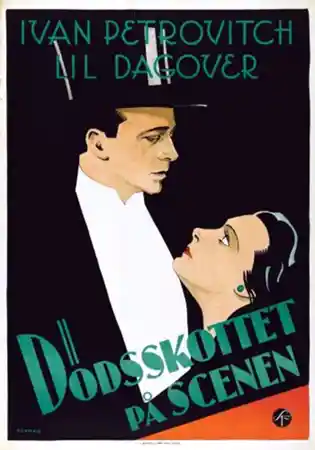
IMDb 6.8
1930
Community
Log in to comment.