DbcultAccessing Vault...
Cult Review
Senior Film Conservator
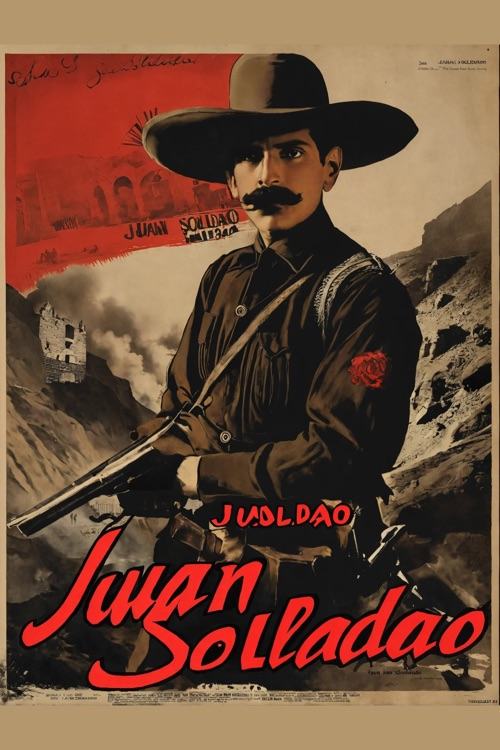
There are films that merely tell a story, and then there are those that etch themselves onto the very fabric of one’s consciousness, resonating long after the final frame has faded. Juan Soldado, a cinematic artifact of profound emotional depth and stark realism, unequivocally belongs to the latter category. It is a work that transcends its era, offering a timeless meditation on the human spirit’s resilience and vulnerability in the face of overwhelming adversity. From its opening scenes, which quietly establish the bucolic simplicity of Juan’s pre-war existence, to its harrowing, climactic sequences, the film maintains an unflinching gaze at the collateral damage of conflict, not just on landscapes, but on souls.
At its core, Juan Soldado is a character study, a meticulous dissection of a man thrust into an inferno not of his own making. José Rubio’s portrayal of Juan is nothing short of magnificent. He imbues the titular character with a quiet dignity, a stoicism that barely conceals the raging tempest of fear, doubt, and ultimately, moral indignation within. Juan is not a caricature of the heroic soldier; he is everyman, a farmer whose hands are accustomed to tilling soil, not wielding weapons. Rubio masterfully conveys the transformation from an innocent, albeit earnest, patriot to a weary, disillusioned veteran, burdened by the weight of unspeakable horrors and impossible choices. His eyes, often downcast or gazing into the middle distance, become windows to a soul grappling with the profound absurdity of war, a silent testament to the suffering that words often fail to articulate.
The supporting ensemble casts a formidable shadow, each performance contributing vital texture to the film’s rich tapestry. Teté Tapia, as Elena, Juan’s beloved, delivers a performance of remarkable subtlety and strength. Her character is not merely a passive object of affection, but an embodiment of hope, a beacon in Juan’s darkest hours. The scenes between Rubio and Tapia are infused with a palpable tenderness, a quiet understanding that speaks volumes more than dialogue ever could. Their love story, tragically interwoven with the larger narrative of conflict, serves as a poignant reminder of what is lost, and what desperately needs to be preserved. Elena's resilience, her unwavering belief in Juan's return despite the bleakest tidings, mirrors the indomitable spirit of those left behind, enduring their own silent battles on the home front. Her presence, even when physically absent from the screen, acts as a powerful motivator for Juan, a silent promise he strives to keep, making their eventual reunion, or the lack thereof, all the more impactful.
Eduardo Urriola’s turn as Captain Morales is chillingly effective. Morales is not a mustache-twirling villain, but a nuanced antagonist, a man whose ambition and pragmatism have calcified into a cynical disregard for human life. Urriola’s performance highlights the insidious corruption that can fester within military hierarchies, a stark contrast to Juan’s inherent decency. The dynamic between Juan and Morales encapsulates the film’s broader thematic exploration of morality versus expediency, personal conscience against institutional demand. Morales represents the grim, often unacknowledged, reality that not all threats come from the enemy lines. His calculated cruelty and self-preservation instincts serve as a constant foil to Juan’s burgeoning moral awakening, pushing our protagonist to question not just the war itself, but the very nature of leadership and sacrifice. The tension between them is a slow burn, building inexorably towards a confrontation that feels both inevitable and devastating.
Rutila Urriola and Flora Islas Chacón, as Juan’s younger sister and ailing mother, respectively, complete this intimate portrait of a family torn asunder. Their struggles on the home front, the constant fear, the gnawing hunger, the desperate hope for a future that seems increasingly distant, provide a crucial counterpoint to the brutal realities of the battlefield. These performances, though perhaps less prominent in screen time, are nonetheless pivotal, grounding the grand narrative of war in the deeply personal, showcasing the ripple effect of conflict on the most vulnerable. Flora Islas Chacón’s portrayal of the mother is particularly heart-wrenching, her fragility and quiet suffering embodying the universal pain of a parent watching their child disappear into the maw of war, a pain amplified by the relentless passage of time and the dwindling resources. Rutila Urriola's youthful innocence, slowly eroded by the harsh realities of a war-torn world, serves as a stark reminder of the future being jeopardized.
Thematically, Juan Soldado delves deep into the often-contradictory notions of duty, heroism, and the true cost of liberty. It questions the simplistic narratives often spun around armed conflict, opting instead for a gritty, unromanticized depiction of its toll. One cannot help but draw parallels to the visceral historical sweep of a film like Les Misérables, not in its specific setting, but in its profound exploration of individual struggle against the backdrop of societal upheaval and systemic injustice. Both films champion the resilience of the human spirit in the face of overwhelming odds, though Juan Soldado grounds its struggle in the more immediate, personal horror of the battlefield rather than the broader socio-political revolution. The film’s narrative architecture is a testament to the power of focusing on the micro to illuminate the macro, making the grand tragedy of war intimately comprehensible through Juan’s singular, agonizing experience.
The direction, while subtle, is remarkably effective in building atmosphere and tension. The filmmakers employ a visual language that is both stark and poetic, utilizing natural light and minimalist sets to create a sense of authenticity that is truly disarming. The cinematography, often employing wide shots of desolate landscapes or claustrophobic close-ups on the faces of soldiers, underscores the isolation and despair inherent in the narrative. There’s a particular shot, a long take of Juan traversing a shelled-out village, where the camera lingers, allowing the viewer to absorb every detail of the devastation, every shadow of loss. This deliberate pacing ensures that the emotional impact of each scene is fully realized, never rushed, always potent. The sound design, too, is exceptional, with the distant rumble of artillery or the sudden crack of a rifle adding layers of chilling realism without ever resorting to gratuitous spectacle.
In its unflinching portrayal of the brutal realities of combat, Juan Soldado finds common ground with other seminal works of war cinema. One might think of Fields of Honor, another film that strips away the glory of battle to reveal its grim, human cost. However, Juan Soldado distinguishes itself through its particular focus on the psychological toll, the slow erosion of a man’s identity and moral compass under duress. It’s less about grand strategic maneuvers and more about the individual soldier’s internal battlefield. The film doesn't shy away from depicting the moral compromises forced upon men, the desperate acts for survival that blur the lines between right and wrong. This psychological depth elevates it beyond a mere war drama, transforming it into a profound philosophical inquiry into the nature of humanity itself when pushed to its absolute limits.
The film also subtly critiques the broader socio-political landscape that gives rise to such conflicts. While never overtly didactic, the underlying sense of a society fractured, of different factions vying for control, resonates strongly. This echoes the thematic undercurrents found in films like El último malón, which often explored the plight of marginalized communities or the clash of cultures within a larger national narrative. In Juan Soldado, the 'enemy' is often ambiguous, shifting, sometimes within one's own ranks, highlighting the complex and often murky motivations behind civil strife. The film doesn't offer easy answers or clear villains; instead, it presents a nuanced, almost tragic, depiction of a world where everyone is, in some way, a victim of circumstance and ideology.
The screenplay, penned with a keen understanding of human psychology, allows for moments of quiet introspection amidst the chaos. The dialogue, though sparse at times, is always impactful, carrying the weight of unspoken emotions and profound truths. There are no grand speeches, no theatrical pronouncements; instead, conversations are often clipped, functional, or laden with subtext, reflecting the grim reality of men on the brink. This minimalist approach to dialogue only amplifies the power of the visual storytelling and the actors’ nuanced performances. The writers deftly weave in elements of betrayal and moral quandary, reminiscent of the intricate ethical dilemmas faced in a film like Der Seelenverkäufer, where characters grapple with the cost of their choices and the erosion of their principles. Juan's struggle to maintain his integrity in a morally bankrupt environment is a central pillar of the narrative, making his ultimate decisions all the more compelling.
Moreover, the film's depiction of the home front and the struggles faced by women left behind resonates with the quiet strength often celebrated in films like The Witch Woman, not in terms of mysticism, but in the portrayal of female characters enduring hardship with an almost primal fortitude. Teté Tapia’s Elena, in particular, embodies this spirit, her unwavering hope and practical resilience providing a stark contrast to the despair that threatens to engulf their world. Her character is a vital anchor, representing the life Juan fights to return to, and the future they both desperately cling to. Her scenes are often filled with an understated tension, the fear of the unknown constantly lurking beneath the surface of her daily routines, making her a relatable figure for anyone who has experienced the gnawing anxiety of a loved one far away in harm's way.
The enduring legacy of Juan Soldado lies in its refusal to offer easy resolutions or romanticized visions of conflict. It is a film that demands reflection, prompting viewers to consider the profound and often irreversible scars left by war, both visible and invisible. It's a testament to the power of cinema to not only entertain but to educate, to provoke thought, and to foster empathy. While it might not possess the grandiosity of some epic historical dramas, its intimate focus and raw honesty give it a gravitas that few films achieve. It stands as a powerful reminder of the human cost of ideological battles, a timeless plea for peace filtered through the lens of one man's harrowing journey. The film's conclusion, ambiguous yet deeply affecting, leaves an indelible mark, inviting contemplation on the true nature of victory and defeat, and the enduring human spirit that strives for meaning amidst the ruins. It's a film that resonates with the existential weight found in works like Creation, contemplating the very essence of human existence and purpose when confronted with annihilation. The desolate landscapes often mirror Juan's internal desolation, visually reinforcing the narrative's emotional core.
In a cinematic landscape often saturated with special effects and superficial narratives, Juan Soldado emerges as a beacon of artistic integrity and profound storytelling. It is a film that demands to be seen, discussed, and remembered, a vital piece of cinematic heritage that continues to speak volumes about the human condition. Its enduring relevance is a testament to the universal themes it explores: love, loss, duty, and the eternal quest for meaning in a world frequently devoid of it. The performances, particularly José Rubio’s, are masterclasses in nuanced acting, conveying depths of emotion with minimal fuss. This film doesn't just show you war; it makes you feel its suffocating grip, its relentless sorrow, and the flickering embers of hope that somehow manage to persist. It’s a compelling, haunting experience that deserves its place among the most significant works of its genre, urging us to never forget the sacrifices of those who walked the path of the soldier, both on and off the battlefield.
IMDb 5.3
1916
Community
Log in to comment.