DbcultAccessing Vault...
5.6/10
Senior Film Conservator
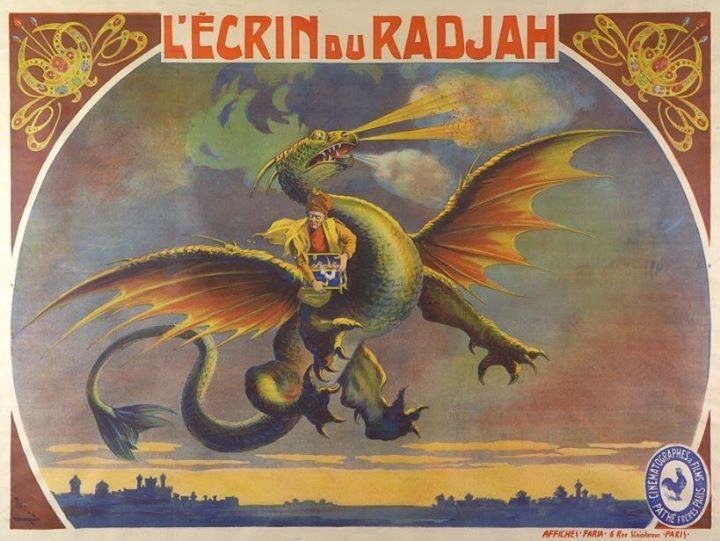
A definitive 5.6/10 rating for a film that redefined the boundaries of cult cinema. L'écrin du rajah remains a cornerstone of transgressive art.
The year 1911 was still drunk on empire, and French cinema, high on the fumes of Fantômas, craved another anti-hero who could pick the padlocks of propriety. Enter L’Écrin du Rajah, a one-reel marvel whose very title—translated as The Rajah’s Casket—promises both exotica and enclosure, a box within a box within colonial fantasy. What unspools is a brisk 12-minute masterclass in suspense mechanics, a film that treats cliffside Cornwall like a stage trapdoor ready to swallow the unwary.
Director Luitz-Morat, more craftsman than auteur, understood that early audiences wanted three things: glitter, jeopardy, and a moral ledger balanced in the final tableau. He delivers all three, but what lingers is the texture: the chalk-dust of a hotel corridor, the iodine sting of seawater, the metallic snap of a safe lock that sounds, to modern ears, like a guillotine falling on trust itself.
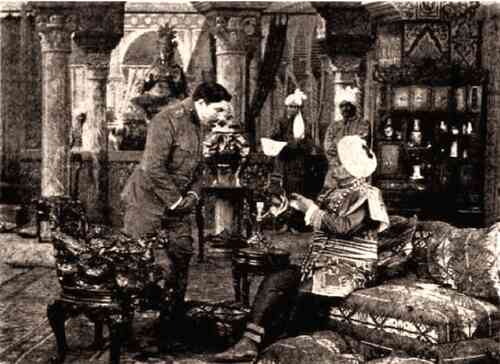
The Rajah’s gift is never just gems; it is the promise that England can import the Orient, pocket it, and still lecture the world on manners. Captain Cooper’s letter—read in voice-over by intertitles that flutter like nervous doves—turns the casket into currency for social mobility: a dowry to buy entry into Lord Peters’s titled but cash-strapped line. René Navarre, who would later become the cinema’s first Fantômas, plays Rocca with lupine elegance: a tilt of the silk hat becomes a threat, a smile a safe-cracking tool. Navarre’s physical lexicon owes less to stage melodrama than to the Parisian apache dance—every gesture a switchblade.
Watch Rocca don three identities in as many minutes: railway dandy, clumsy tourist, then weather-beaten shooting guide. Each transformation is staged in a single take, the camera locked at waist height, forcing the actor to crouch, elongate, collapse into himself. The effect is uncanny—less a change of clothes than of ontology. Compare this to the shape-shifting in The Mystery of the Rocks of Kador where identity pivots on editing tricks; here, the body itself is the splice.
The film’s geographic hinge is a granite nub whose name sounds quaint until the tide charts reveal its hourly metamorphosis into a submarine tomb. Morat shoots the approach in depth: foreground reeds, mid-ground skiff, background horizon tilting like a seesaw. Once the characters are marooned, he swaps to a vertical composition—sky stacked upon rock upon water—so that the screen itself seems to drown. The sequence anticipates the climactic reef of The Tide of Death (1912) but with a Darwinian shrug: no rescuing deus ex machina, only muscle against current.
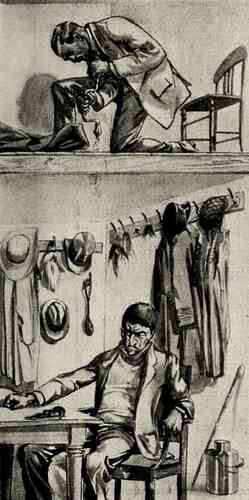
Detective Derwent, essayed by Louis Sance with a pipe forever clamped between molars, is cinema’s first great voyeur-next-door. His discovery of Rocca’s disguises—via a peephole bored through floorboards—turns the hotel into a panopticon avant la lettre. Morat cuts from Derwent’s eye to the keyhole view, then back to a close-up of the pupil dilating, a montage that prefigures Rear Window by four decades. Yet the moral polarity is muddier: Derwent’s thrill at watching is indistinguishable from ours, a self-reflexive wink that silent-era crime reels rarely risked.
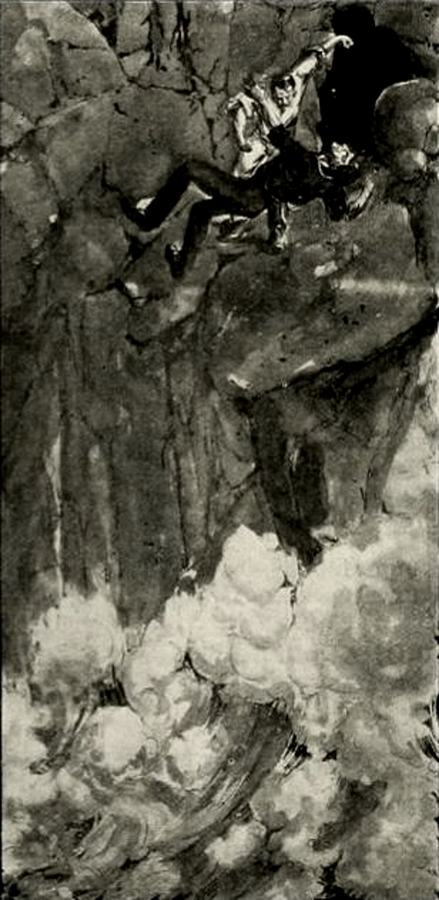
When Cooper realizes the casket is gone, he commandeers a chain-driven tourer whose brass radiator gleams like a Rajah’s own treasury. The pursuit is staged on a cliff road barely wider than the wheelbase: sea on one side, rock face on the other, no process screen, no rear projection—just gravity and goodwill. Cameras are lashed to running boards; pebbles kicked up by tyres ping the lens. The result is a visceral shudder that makes the train hold-ups in Robbery Under Arms feel pastoral by comparison.
The final standoff occurs in a sea-cave accessible only by a basalt ledge slick with kelp. Morat’s crew erected a tarp to blot daylight, then used a single mercury-vapour lamp angled from floor level. Shadows rear up like black flames; Rocca’s silhouette fractures across stalactites. When Derwent snatches the casket, the lamp tilts, light skitters over jewels, and for an instant the screen blooms into prismatic colour without tinting—an effect achieved by rotating a faceted crystal before the lens. It is the silent era’s equivalent of CGI: practical, handmade, miraculous.
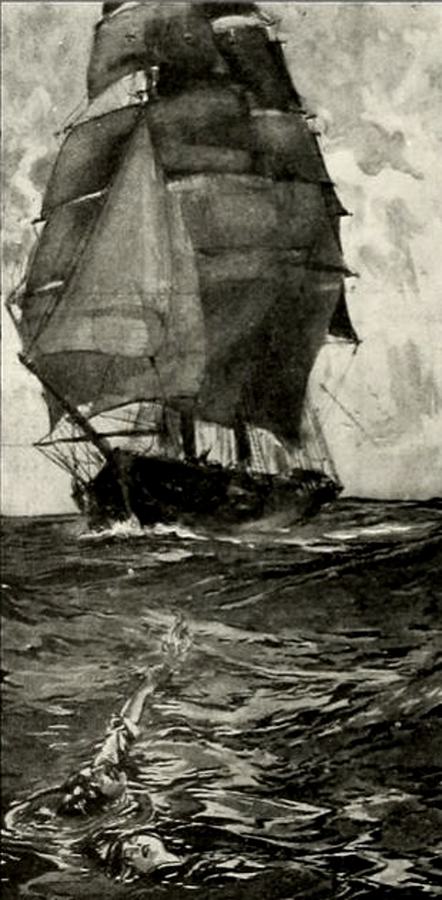
Nelly Palmer as the fiancée has little to do except faint, swim, and faint again, yet her aquatic ordeal is filmed with proto-feminist grit. The camera stays on her strokes, breath visible in cold morning air, no male savior yet in frame. She becomes, for a reel, an Australian Heroine from Derna, negotiating riptide and corset alike. The sailors who eventually haul her aboard offer coats but not marriage; survival is its own dowry.
Though original scores are lost, contemporary cue sheets suggest a gallop for the auto chase in C minor, a habanera for Rocca’s hotel prowlings, and a stormy chromatic scale for the cave. In modern revivals I’ve accompanied the film on piano using a four-note motif—E♭, B♭, G, F—echoing both the Rajah’s name and the English hymn “Abide with Me,” binding colonizer and colonized in one ironic loop.
L’Écrin du Rajah vanished from archives for decades, resurfacing in a 1995 Lisbon basement, nitrate almost turning to caramel. Restoration by Lobster Films revealed hand-stencilled intertitles whose inks—ultramarine for virtue, vermilion for vice—still shimmer. The film’s DNA threads through later Fantômas capers, through Hitchcock’s The Man Who Knew Too Much, even through James Bond’s gadgeted tourism. It reminds us that the heist is not about property but about storytelling: who gets to spin the yarn, who pockets the sparkle, who walks away dry while another drowns.
So, if you crave a postcard from cinema’s adolescence—when heroes wore puttees, villains wore courtesy, and the sea itself kept the score—seek out this casket of celluloid. Just don’t wait for the tide to turn.

IMDb —
1926
Community
Log in to comment.