DbcultAccessing Vault...
6.3/10
Senior Film Conservator
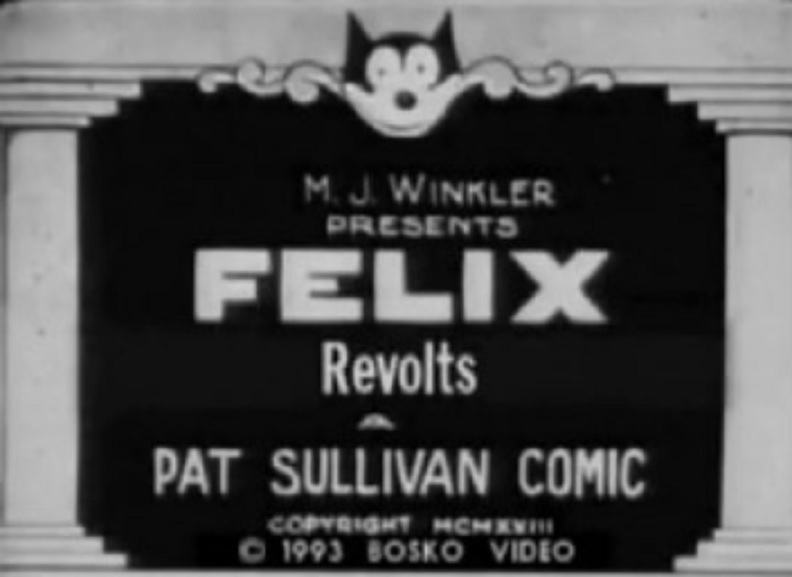
A definitive 6.3/10 rating for a film that redefined the boundaries of cult cinema. Felix Revolts remains a cornerstone of transgressive art.
The 1923 masterpiece Felix Revolts stands as a testament to the subversive potential of early animation. While contemporary audiences might view Felix the Cat as a mere relic of a bygone era of marketing, this particular short film reveals a darker, more politically charged undercurrent that mirrors the social anxieties of the Roaring Twenties. Otto Messmer, the true creative engine behind the character, utilizes the medium not just for slapstick, but as a vehicle for a visceral exploration of systemic abuse and the eventual eruption of the oppressed.
The film opens with a sequence of micro-aggressions that quickly escalate into macro-traumas. We witness Felix navigating a world that is fundamentally designed for his exclusion. The incident at the fish market is particularly harrowing; the owner's reaction to Felix’s hunger isn't merely defensive—it is punitive. This isn't the lighthearted chase seen in The Blue Jay; it is a brutal reminder of the hierarchy of the streets. When Felix enters the restaurant, the cruelty takes on a more psychological dimension. The act of being forced to consume hot mustard is a brilliant, albeit painful, metaphor for the 'bitter pills' the working class is often forced to swallow by those in positions of leisure.
Messmer’s animation style during these sequences is fluid and elastic, yet there is a weight to Felix’s movements that suggests a growing psychological burden. Unlike the romanticized struggles in Casanova, Felix’s plight is stripped of any glamour. He is a scavenger in a world that hates him for his survival instincts. The mustard scene is animated with a jagged intensity, the heat of the condiment manifesting as literal flames and distortions of the frame, capturing a subjective experience of agony that few live-action films of the time could replicate.
The narrative pivot occurs when the Mayor takes the stage. Here, the film moves from individual grievance to collective struggle. The Mayor’s speech is a chilling display of scapegoating. By vowing to drive all cats out of town, he is using a marginalized group to distract from the city's broader failings. This political maneuver feels eerily modern, echoing the xenophobic rhetoric often explored in historical dramas like Julius Caesar. However, where the Roman play deals with the elite, Felix Revolts focuses on the bottom-up response.
Felix’s reaction to the speech is not one of despair, but of cold, calculated realization. The 'revolt' isn't a spontaneous riot; it is an organized labor action. He gathers his peers, and the imagery of cats congregating in the shadows evokes the secret meetings of revolutionary cells. There is a sense of impending doom for the status quo that rivals the tension in The Railroad Raiders. Messmer uses the negative space of the black-and-white frame to emphasize the sheer number of cats, their glowing eyes becoming a motif of surveillance and resistance.
What sets Felix Revolts apart from its contemporaries, such as the more grounded Scrap Iron, is its embrace of the impossible. Felix’s tail becomes a question mark, a cane, or a tool of war. This plastic reality allows the revolution to take on forms that defy human logic. The cats don't just fight; they deconstruct the city itself. They use the very environment that oppressed them as a weapon. This is where the film aligns with the avant-garde movements of the early 20th century, using the 'unreality' of animation to comment on the 'reality' of social structures.
The pacing of the revolution is frantic, yet controlled. It lacks the sentimentalism found in The Mate of the Sally Ann, opting instead for a relentless, almost mechanical progression toward victory. The visual gags are sharp and often mean-spirited, reflecting the righteous anger of the protagonists. When the cats finally take over, the imagery is both triumphant and unsettling. They haven't just won a seat at the table; they have flipped the table entirely.
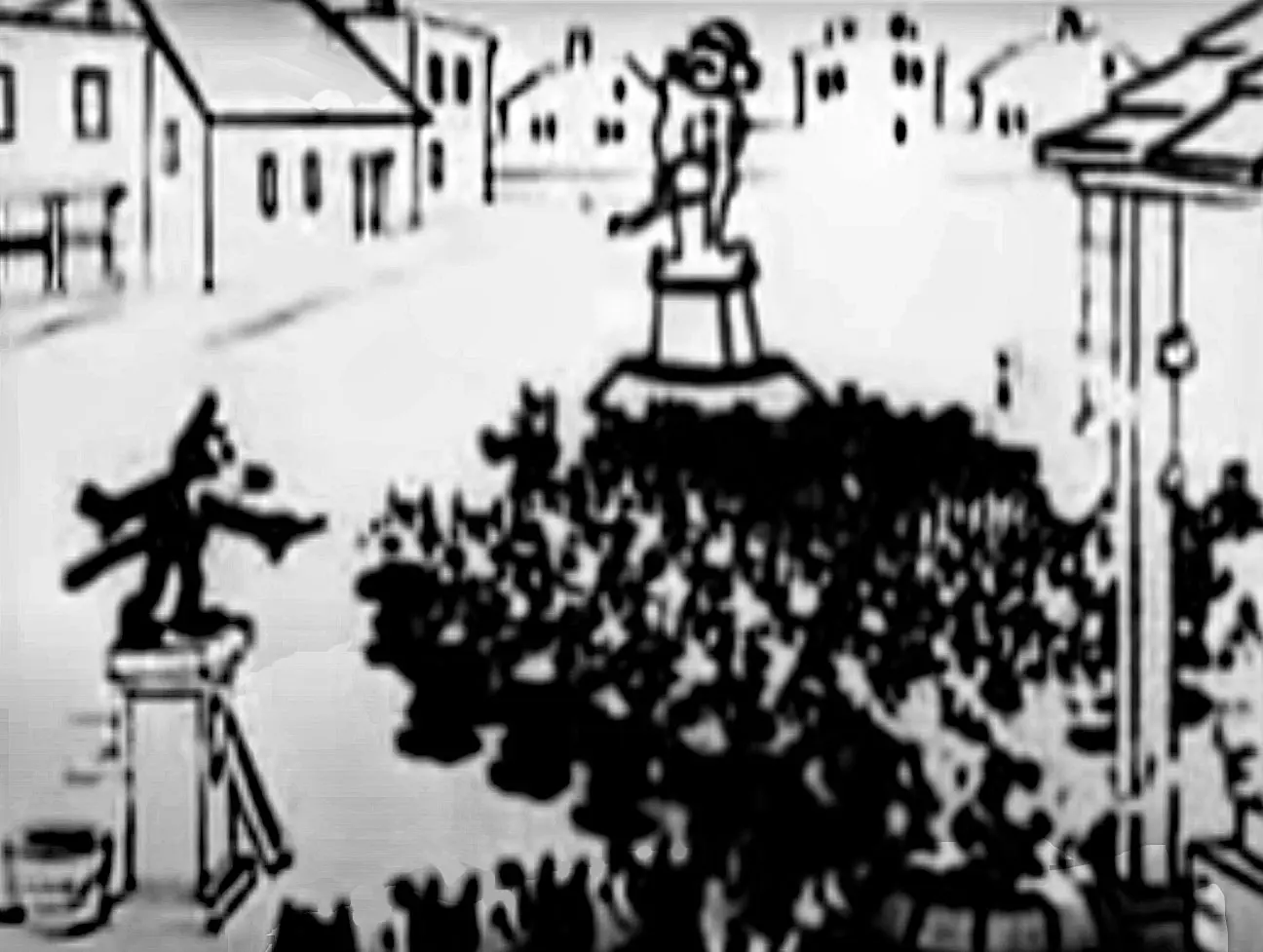
In the context of silent cinema, the 'voice' of the revolution in Felix Revolts is conveyed through movement and typography. While a film like The Torture of Silence uses quietude to explore internal agony, Messmer uses the silence of the medium to amplify the visual noise of the uprising. The absence of dialogue makes the Mayor’s decree feel more universal and the cats' response more primal. We don't need to hear the meows to understand the cacophony of their dissent.
Furthermore, the film’s urban setting provides a stark contrast to the rural or exotic locales of Indiana or Das Eskimobaby. Felix is a product of the asphalt and the alleyway. His struggle is defined by the proximity of his oppressors. This density of conflict creates a pressure cooker environment that makes the eventual revolt feel inevitable. The city is a character in itself—cold, indifferent, and eventually, conquered.
The collaboration between Pat Sullivan and Otto Messmer has always been fraught with questions of authorship, but in Felix Revolts, the artistic vision is singular. The draftsmanship is confident, using bold lines and high-contrast shadows to create a world that feels both whimsical and threatening. It avoids the soft edges of Her Tender Feet, opting instead for a visual language that is as sharp as a cat’s claw.
Even when compared to larger-scale productions like The Merry-Go-Round, this short film manages to pack a more significant emotional and political punch. It doesn't require a massive cast or elaborate sets to convey the scale of a social upheaval. Through the simple silhouette of a black cat, Messmer communicates the universal desire for agency and the explosive power of the collective. The film’s conclusion, while ostensibly a 'happy ending' for the cats, leaves the viewer with a lingering sense of the fragility of social order.
Is Felix a hero? Or is he a manifestation of the urban id? In The Valley of Doubt, characters are often paralyzed by their moral quandaries. Felix, conversely, is a creature of pure action. Once the mustard is swallowed and the Mayor has spoken, there is no room for doubt. This clarity of purpose is what makes the character so enduring. He is the ultimate survivor, a figure who can be flattened, stretched, and beaten, only to return with a plan for vengeance.
The film also touches on the concept of 'place.' The cats are fighting to restore their 'rightful place in society.' This implies a lost golden age, a theme often explored in aristocratic dramas like Baron Olson. For Felix, however, that place isn't a throne; it's the right to exist in the sun without being kicked. It’s a modest goal that requires a total revolution to achieve, a paradox that Messmer explores with both humor and pathos.
In the end, Felix Revolts is much more than a historical curiosity. It is a vibrant, aggressive piece of filmmaking that uses the medium of animation to its fullest potential. It challenges the viewer to look past the ink and paint to see the reflection of our own societal failings. It reminds us that even the most 'fired' or marginalized individual, much like the protagonist in You're Fired, has a breaking point. When that point is reached, the resulting revolt is as inevitable as it is spectacular. Whether you are a fan of animation or a student of cinema history, this film remains an essential viewing experience, a loud shout from the silent era that still resonates today.
The technical prowess displayed here, especially in the synchronization of movement and the inventive use of metamorphosing objects, predates many of the 'innovations' credited to later studios. Messmer was a pioneer of visual shorthand, using Felix’s iconic silhouette to convey complex emotions with minimal fuss. This efficiency of storytelling is what allowed Felix Revolts to stand alongside the big-budget features of its day, such as The Big Town Round-Up, and emerge as a work of arguably greater lasting impact. It is a film that demands to be taken seriously, even as it makes you laugh at the absurdity of a cat leading an army. It is, quite simply, revolutionary.
IMDb 5.7
1931
Community
Log in to comment.