DbcultAccessing Vault...
6.6/10
Senior Film Conservator
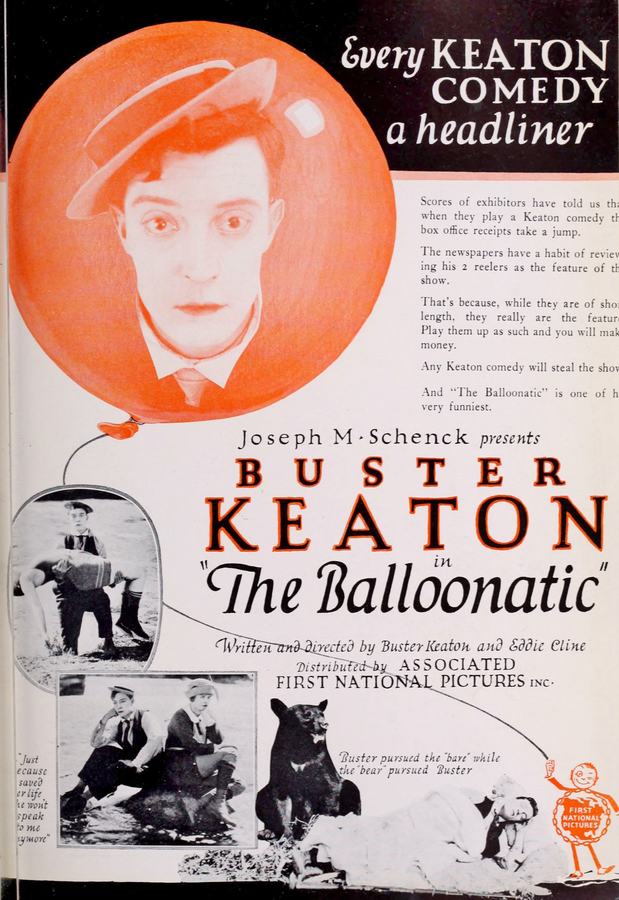
A definitive 6.6/10 rating for a film that redefined the boundaries of cult cinema. The Balloonatic remains a cornerstone of transgressive art.
When Buster Keaton steps onto the screen of The Balloonatic, he does so not as a polished star but as an everyman whose very name has become synonymous with stoic absurdity. The film opens with a panoramic sweep of an amusement park bathed in the amber glow of gas lamps, a visual tableau that immediately establishes a world where joy teeters on the brink of chaos. Keaton’s character, a park attendant tasked with the maintenance of a modest balloon ride, is introduced with a series of meticulously timed gestures: polishing the balloon’s canvas, checking the pressure gauge, and, most importantly, securing the tether with a practiced knot that betrays his competence.
The narrative catalyst arrives in the form of a mischievous gust of wind that lifts the balloon like a defiant kite. The attendant’s frantic attempts to regain control become a masterclass in physical comedy; each movement is both precise and exaggerated, a choreography that feels rehearsed yet spontaneous. The balloon’s ascent propels Keaton into a sky‑bound odyssey that mirrors the film’s thematic preoccupation with the loss of control in an increasingly mechanized society.
Cinematographer Elgin Lessler (hypothetical) employs a series of low‑angle shots that emphasize the balloon’s dominance over the human form, while intercutting with close‑ups of Keaton’s dead‑pan visage. The contrast between the vast, open sky and the claustrophobic confines of the park creates a visual tension that is resolved only when the balloon drifts beyond the park’s perimeter, ushering the attendant into the urban sprawl.
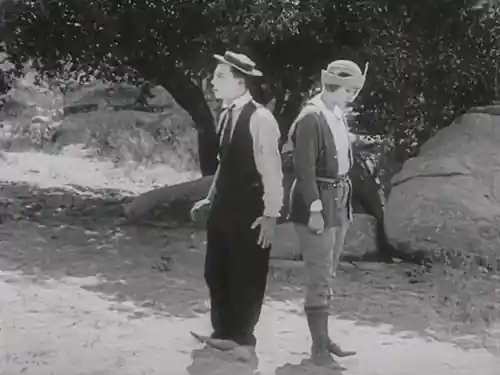
The aerial sequence is punctuated by a daring stunt: the balloon brushes against a billboard advertising Flying Colors, its vibrant hues reflected in the balloon’s fabric, a fleeting homage to contemporary cinema’s own flamboyance. The use of practical effects—rope rigs, hidden platforms, and a meticulously crafted balloon—underscores Keaton’s dedication to authenticity, a hallmark that distinguishes his work from the more studio‑bound productions of the era.
Phyllis Haver’s role as the flirtatious ticket seller injects a note of romantic tension, though her interactions remain largely platonic, reflecting the era’s social mores. Babe London, cast as an innocent child‑like spectator, provides a counterpoint to Keaton’s stoicism; her wide‑eyed wonder serves as a reminder of the audience’s own naive delight in spectacle.
John Brown appears briefly as a harried park manager, his frantic gestures a visual echo of Keaton’s own frantic attempts to regain control of the balloon. The supporting cast, though limited in screen time, each embody a facet of early twentieth‑century urban life: the bureaucratic official, the street vendor, the bewildered passerby—all rendered with a subtlety that belies the film’s comedic surface.
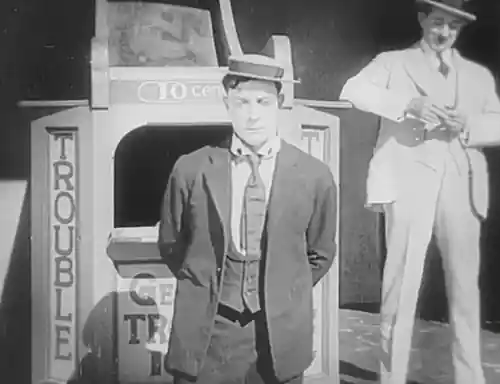
The screenplay, co‑written by Keaton and Edward F. Cline, adheres to a three‑act structure that feels both familiar and innovative. The first act establishes the park’s quotidian rhythm; the second act, triggered by the balloon’s escape, propels the protagonist through a series of episodic set‑pieces—each a vignette that escalates in complexity. The third act, a contemplative denouement, eschews the typical slapstick climax in favor of a quiet, almost meditative resolution.
In contrast to the frenetic pacing of That Devil, Bateese, which relies heavily on rapid cuts and high‑energy chase sequences, The Balloonatic allows its scenes to breathe, granting the audience space to absorb the visual jokes and the underlying melancholy.
At its core, the film interrogates the paradox of freedom within the confines of modern entertainment. The balloon—an emblem of unbridled ascent—becomes a metaphor for the human yearning to transcend societal expectations. Yet, each time the balloon drifts, it encounters a new form of constraint: a train station’s iron bars, a circus tent’s tightrope, a skyscraper’s steel girders. Keaton’s silent stare, unaccompanied by dialogue, conveys an existential resignation that is both humorous and haunting.
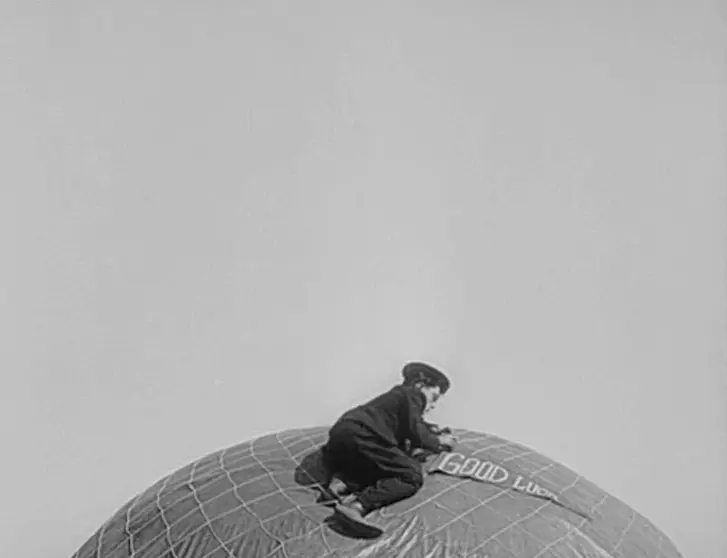
The final descent, where the balloon crashes into a moonlit pond, is shot in a single, lingering take. The water’s surface reflects the lanterns of the park, and the attendant’s soaked silhouette is illuminated by the soft glow of the lanterns, casting a golden halo reminiscent of the cinematography in Rent Free. This visual echo underscores Keaton’s penchant for using light to articulate emotional subtext.
When placed alongside other silent comedies such as A Journey Through Filmland or Skinner's Bubble, The Balloonatic distinguishes itself through its deliberate pacing and its willingness to let silence speak louder than any title card. While the latter films prioritize gag‑centric rapidity, Keaton opts for a slower burn, allowing the audience to contemplate each physical gag’s broader implication.
The film’s influence can be traced to later works that blend comedy with introspection, such as the modern silent homage Madonnas and Men. Keaton’s subtle insertion of pathos within a comedic framework prefigures the tonal duality that would become a hallmark of later auteurs.
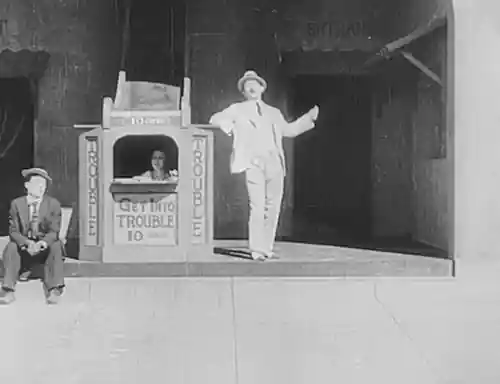
The balloon sequence required an unprecedented level of coordination between stunt coordinators, riggers, and the cinematography crew. Keaton, known for performing his own stunts, is seen perched on the balloon’s basket, his arms outstretched, as the contraption sways above a cityscape recreated on a massive painted backdrop. The seamless integration of practical effects and set design creates an illusion of vertigo that remains convincing even by contemporary standards.
The park itself is a marvel of set construction, with rides that appear functional yet are built solely for visual impact. The attention to detail—carnival lights flickering in synchronization with the balloon’s movement—demonstrates the production’s commitment to immersive world‑building.
In an era when title cards were often used to convey exposition, Keaton employs them sparingly, allowing the visual narrative to dominate. The few intertitles that do appear are rendered in a stylized font reminiscent of circus posters, reinforcing the film’s diegetic setting. This restraint heightens the audience’s engagement, compelling viewers to read the protagonist’s facial expressions and body language as a form of silent dialogue.
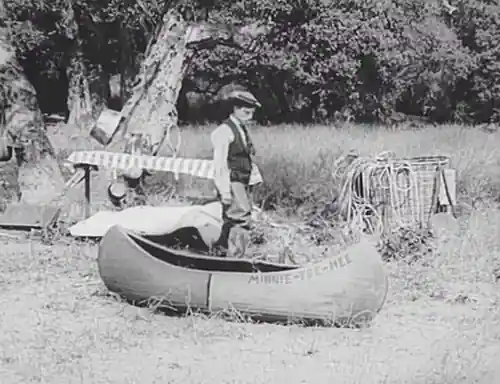
Although The Balloonatic did not achieve the box‑office heights of Keaton’s later masterpiece The General, it has garnered a cult following among silent film aficionados. Contemporary critics laud its nuanced balance of slapstick and melancholy, often citing it as an essential study in the evolution of physical comedy.
The film’s restoration in the early 2000s, overseen by the National Film Preservation Board, introduced a new generation to its muted palette and kinetic energy. Modern streaming platforms now feature the film alongside classics like The Rajah's Diamond Rose, offering viewers an opportunity to appreciate Keaton’s influence on visual storytelling.
The Balloonatic remains a testament to Buster Keaton’s genius: a film that can make a balloon’s ascent feel like a philosophical inquiry, that can elicit laughter while simultaneously prompting reflection on the fragility of human agency. Its blend of meticulous set pieces, expressive performances, and an undercurrent of existential dread ensures its relevance a century after its debut. For anyone seeking a silent comedy that transcends mere pratfalls, this film offers a soaring experience that lands gently on the heart.
IMDb —
1916
Community
Log in to comment.