DbcultAccessing Vault...
4.1/10
Senior Film Conservator
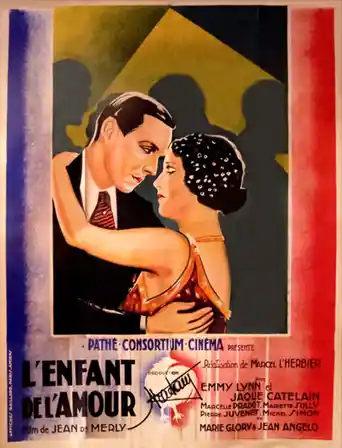
A definitive 4.1/10 rating for a film that redefined the boundaries of cult cinema. L'enfant de l'amour remains a cornerstone of transgressive art.
L'enfant de l'amour is one of those old films. You know, the kind you seek out if you're really into cinema history, especially French silent movies. It's not a casual watch, not by a long shot. Anyone hoping for quick pacing or snappy dialogue will probably get antsy.
But hey, if you're curious about early cinema, or director Marcel L'Herbier's early stuff, there's something here. For most folks, though, it’s probably a hard pass. So, decide your camp before diving in. 🍿
The whole setup feels like a classic melodrama: a powerful politician, Raymond de Bressoles (Jean Angelo), with a secret past. That past includes an legitimate son, André Mareuil (Jaque Catelain). And André, guess what, he's a journalist. Perfect for digging up dirt, right?
Angelo plays de Bressoles with this stern, almost frozen look. You can tell he’s important, very much concerned with appearances. Catelain as André, he’s got that intense, brooding silent film hero thing down. Sometimes it felt like he was really trying to convey deep feelings just through his eyes. A bit much, maybe, but that was the style.
I kept noticing how often characters would just stand there. Like, a long, drawn-out shot of someone looking out a window. Or pondering a letter. It makes you appreciate how much films zip along these days. One moment, André is staring at a portrait, and it felt like an eternity. What was he even thinking? The intertitle didn't quite spell it out.
Liane, the music-hall star and André's mother, is played by Desdemona Mazza. She carries herself with this elegant, slightly tragic air. Her costumes are beautiful, very 1920s glamour. She's quietly trying to deal with her past colliding with her son's actions. It’s a more subdued performance, often overshadowed by the bigger gestures happening around her.
The blackmail plot is pretty simple. André wants to expose his father for abandoning his mother. It’s a very French kind of scandal, all about reputation and hidden secrets. There’s a scene where André confronts de Bressoles, and the close-ups on their faces are quite striking. You really see André's anger, and de Bressoles's defiance.
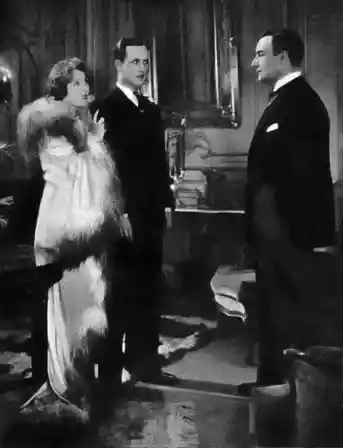
There's a party scene where the extras look a bit… stiff. Like they were told precisely where to stand and not move. Not a huge crowd, but the stillness made it feel a little artificial. Then again, it’s 1925. Things were different.
Michel Simon is apparently in this. Listed as a "passerby." And he really is just a passerby. Blink, and you miss him. Makes you wonder about all those famous actors who started out almost invisible.
The film has this consistent, almost somber mood. Even big reveals are handled with a certain gravity. No sudden shocks. More like a slow, unfolding tragedy. The pacing is super deliberate, letting you soak in each scene. Sometimes, maybe too soaked. 💧
It’s really interesting how much society's expectations drive everything. The shame of an illegitimate child, the importance of a politician's image. Huge things back then. The movie does a good job showing that heavy weight. Makes you think about how much, or how little, things have changed.
Some of the intertitles used really flowery language. Even for a silent film. Like they were trying to be extra poetic. Sometimes it works, sometimes it’s just a bit… much. Like an old book trying too hard to impress.
Marcel L'Herbier’s direction is solid, but not as flashy as his later, more experimental stuff. Here, he's focused on the drama, the raw emotions. The camera is mostly static, but when it moves, it really stands out. There's one nice shot tracking through a hallway. It actually caught my eye.
Ultimately, it’s a window into another time. It won’t wow you with special effects or twisty plots. It's a slow burn, very much a character study. If you can appreciate that, plus the historical vibe, then it’s worth a peek. Otherwise, there’s always Du Barry, Woman of Passion if you want a different kind of historical drama.
IMDb —
1934
Community
Log in to comment.