DbcultAccessing Vault...
Cult Review
Senior Film Conservator
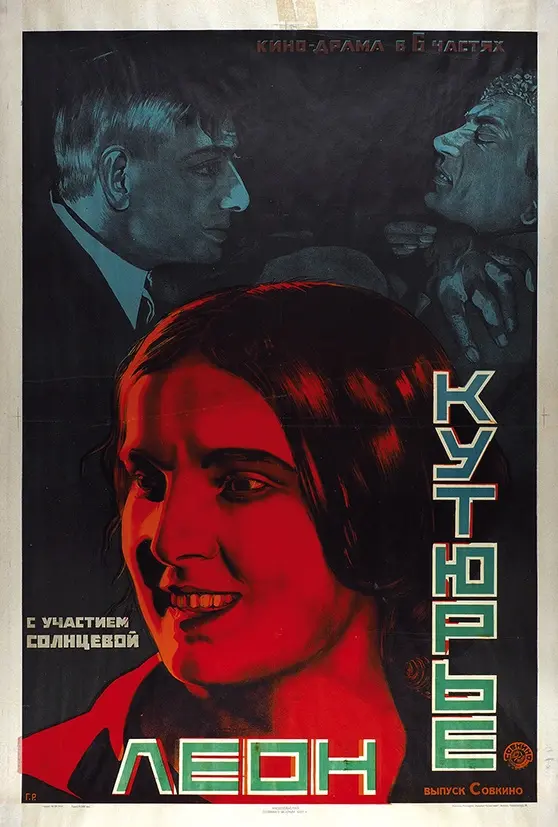
Is Leon Kutyurye, a film from an era often dismissed as antiquated, truly worth your time in the modern cinematic landscape? Short answer: yes, but with significant caveats. This is a film that demands a particular kind of viewer, one willing to engage with the nuances of silent storytelling and a narrative style far removed from today's rapid-fire editing.
It is unequivocally for the dedicated cinephile, the history buff, and anyone fascinated by the foundational artistry of early cinema. Conversely, it is decidedly not for those seeking instant gratification, explosive action, or a dialogue-heavy character study. If you prefer your narratives spoon-fed or your pacing brisk, Leon Kutyurye will test your patience rather than reward it.
Stepping into the world of Leon Kutyurye is like opening a dusty, leather-bound book found in an forgotten archive—it offers a glimpse into a time and a sensibility that feels both distant and eerily resonant. This is not merely a historical artifact; it is a film that, despite its age, grapples with themes of idealism, betrayal, and the crushing weight of societal injustice with an intensity that still manages to pierce through the decades. Directed with a keen eye for human drama, it stands as a testament to the power of visual narrative long before synchronized sound became the industry standard.
The screenplay, penned by Vladimir Kasyanov and Boris Leonidov, demonstrates a clear understanding of the silent medium's strengths. They craft a story that relies heavily on visual cues, character expressions, and symbolic imagery to convey complex ideas. While some might find the archetypal nature of certain characters simplistic by today's standards, within the context of early cinema, these broad strokes allowed for universal emotional connection, transcending language barriers.
At its core, Leon Kutyurye is a character study, placing the titular journalist at the heart of a maelstrom of political and personal turmoil. His journey from impassioned idealist to a man burdened by the true cost of his convictions is painted with broad, yet surprisingly effective, strokes. The film doesn't shy away from the moral ambiguities inherent in any fight against oppression, presenting a protagonist who is earnest but not infallible, courageous but also vulnerable.
It’s a stark reminder that the fight for justice is rarely clean or straightforward, a message as potent now as it was a century ago.
The success of any silent film hinges almost entirely on the expressiveness of its cast, and in this regard, Leon Kutyurye largely delivers. Yuliya Solntseva, in particular, commands the screen with a presence that is both delicate and formidable. As Anna, she embodies a quiet strength, her eyes often conveying more nuanced emotion than a hundred lines of dialogue ever could. There's a particular scene—or rather, a series of lingering close-ups—where her character grapples with a difficult revelation, and Solntseva’s subtle shifts in expression, from stoicism to profound sorrow, are utterly captivating. It’s a masterclass in silent film acting, eschewing exaggerated melodrama for genuine pathos.
Leonid Yurenev, as the cynical industrialist Viktor, provides a compelling antagonist. His performance is less about overt villainy and more about a chilling, detached pragmatism. Yurenev uses his physicality and subtle facial contortions to suggest a man utterly devoid of empathy, whose power is built upon the suffering of others. The contrast between his cold, calculated demeanor and Leon's fiery passion creates a potent dramatic tension that drives much of the film's conflict. It’s a performance that lingers, embodying the oppressive forces Leon fights against.
The supporting cast, including Vsevolod Massino, Boris Shlikhting, and Antonin Pankryshev, contribute significantly to the film's atmosphere. While their roles are perhaps less central, each actor carves out a distinct presence, whether as a menacing authority figure or a wavering ally. Massino, as the calculating police chief Petrov, projects an aura of insidious threat, often through nothing more than a piercing stare or a slow, deliberate movement. These performances elevate the film beyond a simple morality play, grounding it in believable, if heightened, human interactions.
The directorial hand behind Leon Kutyurye is evident in its deliberate pacing and evocative visual style. The film often employs long takes and carefully composed wide shots to establish the oppressive grandeur of the aristocratic world and the stark reality of the common people. There’s a particular emphasis on shadow and light, a common technique in early cinema, but here used with an artistic precision that elevates it beyond mere necessity. Shadows often seem to engulf characters, symbolizing the looming threats and moral darkness that pervade the narrative.
The cinematography is less about flashy camera movements and more about framing and composition. Each shot feels purposefully constructed, telling a part of the story visually. For instance, the recurring motif of Leon standing alone against vast, imposing architectural backdrops effectively conveys his isolation and the monumental task he faces. The film understands that in the absence of dialogue, every visual element must carry narrative weight, and it largely succeeds in this ambitious endeavor.
Pacing, as mentioned, is a point of contention for modern viewers. It is slow, methodical, almost meditative at times. This deliberate speed allows for the emotional beats to truly land, giving the audience time to absorb the gravity of each situation and the internal struggles of the characters. However, it also means that patience is a virtue required to fully appreciate the film’s rhythm. This isn't a film that rushes to its conclusions; it lingers, allowing tension to build organically, almost imperceptibly, until it reaches its breaking point.
The thematic richness of Leon Kutyurye is perhaps its greatest strength. It delves into the timeless conflict between individual conscience and societal pressure, the corrupting influence of power, and the often-painful sacrifices demanded by a commitment to justice. The film’s tone is predominantly somber, reflecting the serious subject matter, yet it is punctuated by moments of defiant hope and quiet resilience. It’s a delicate balance, and the film generally maintains it without descending into pure bleakness or saccharine optimism.
One could argue that the film’s portrayal of class struggle, while potent, occasionally veers into simplistic good-versus-evil territory. However, this simplification can also be seen as a deliberate choice, magnifying the injustices to make them undeniable. It's a testament to the film's conviction that it doesn't equivocate on where its sympathies lie, firmly aligning itself with the oppressed while acknowledging the immense personal cost of such allegiance. This conviction is what gives the film its enduring moral backbone.
In a surprising observation, the film's reliance on intertitles, often seen as a limitation of the silent era, actually enhances its impact in certain scenes. Rather than merely conveying dialogue, they often serve as powerful, almost poetic pronouncements, adding a layer of philosophical weight to the visual narrative. This isn't just a workaround for lacking sound; it's an integral part of its unique storytelling language, a stylistic choice that feels deliberate and effective.
When placed alongside other films of its era, Leon Kutyurye carves out a distinct niche. While it shares the dramatic intensity of films like The Last Egyptian or the social consciousness of Umanità, its strength lies in its focused character study within a broader political canvas. It avoids the overt spectacle of some historical epics, opting instead for a more intimate, psychological exploration of its protagonist's inner turmoil.
The film's exploration of morality and consequence also brings to mind the nuanced character work seen in certain European dramas of the period, albeit with a uniquely Russian flavor of stoicism and revolutionary fervor. It doesn't possess the slapstick charm of an Alice at the Rodeo, nor the lighthearted intrigue of Tea for Three. Instead, it aligns more closely with the weightier, more artistically ambitious projects that sought to use cinema as a tool for profound social commentary.
It works. But it’s flawed. Its deliberate pacing, while artistically justifiable, will undoubtedly be a barrier for many. The film demands an investment, not just of time, but of attention and an open mind to the conventions of a bygone era. For those willing to make that investment, however, the rewards are considerable, offering a window into a powerful narrative and a foundational moment in cinematic history.
Leon Kutyurye is a cinematic experience that transcends its historical context, offering a powerful and emotionally resonant story for those willing to meet it on its own terms. It is not an easy watch, nor is it designed for broad appeal in today’s market. Its deliberate pace and reliance on visual storytelling demand patience and an appreciation for the foundational artistry of film. However, for the discerning viewer—the one who seeks depth over speed, emotion over dialogue, and a genuine connection to cinema's rich past—this film offers profound rewards. Yuliya Solntseva's performance alone is worth the journey, anchoring a narrative that is as relevant today in its exploration of human conviction against overwhelming odds as it was when it first graced the silver screen. It’s a vital piece of cinematic history, and a potent reminder of the silent era's often-underestimated power to move and provoke. Seek it out, but come prepared to truly engage.
IMDb —
1927
Community
Log in to comment.