DbcultAccessing Vault...
Cult Review
Senior Film Conservator
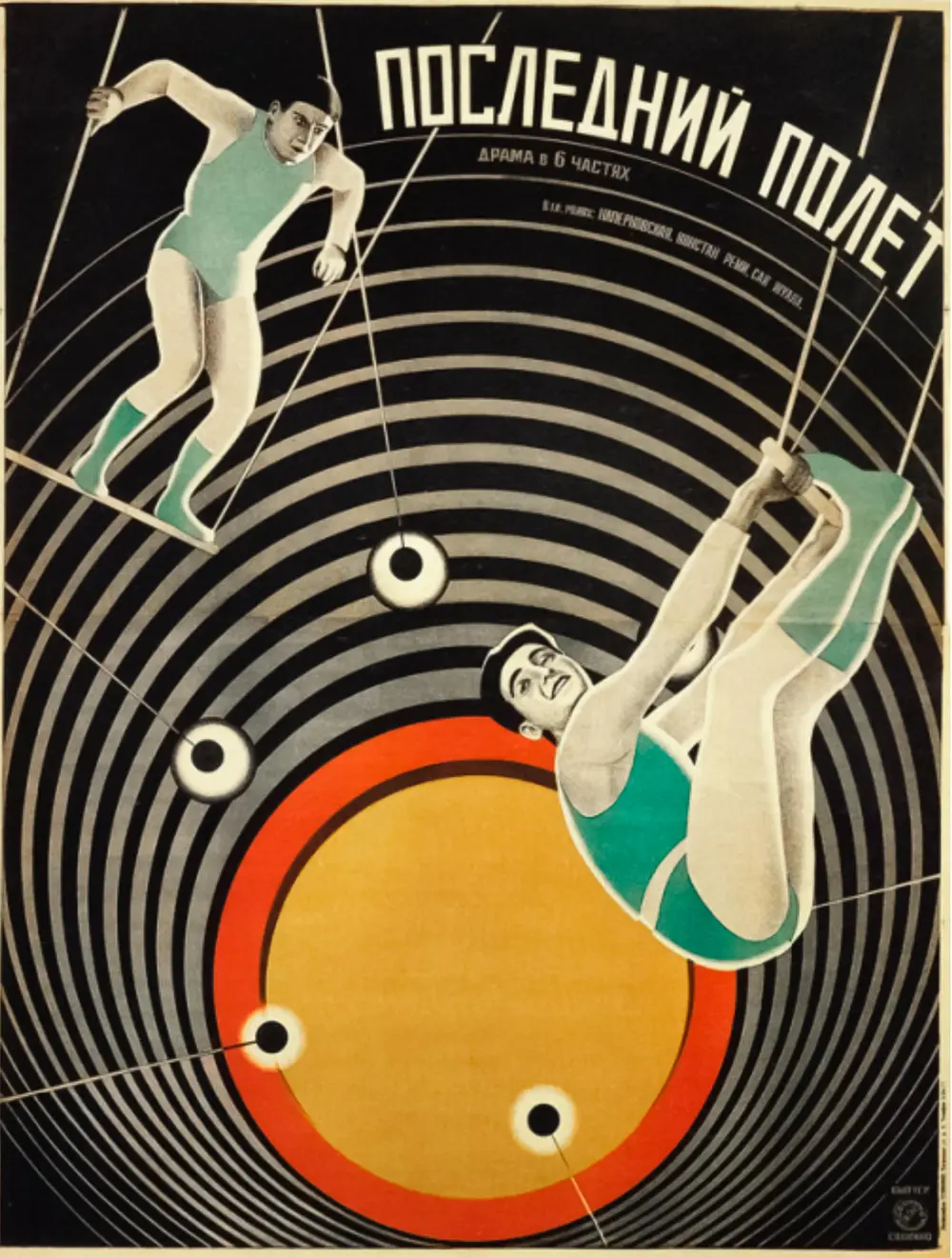
Should you invest your afternoon in a 1925 silent film about circus acrobats? Short answer: yes, but only if you possess the patience to look past the greasepaint and see the raw, psychological anatomy of brotherhood beneath. This is not a film for those seeking the high-octane thrills of modern spectacle; it is for the viewer who finds beauty in the slow, deliberate decay of a dream.
Les frères Zemganno is a somber, often claustrophobic experience that trades the typical whimsy of the circus for a gritty, almost documentarian focus on the physical labor of performance. It is a film for the historians of the heart and those who appreciate the transition from 19th-century literature to the visual language of early cinema. It is emphatically NOT for anyone who finds silent-era melodrama 'boring' or expects a happy ending under the big top.
1) This film works because: The central performances by Luc Dartagnan and Casanova (who also directed) capture a genuine, non-verbal intimacy that transcends the limitations of the era's technical constraints.
2) This film fails because: The middle section suffers from an indulgent pacing that lingers too long on secondary characters, diluting the tension of the brothers' central arc.
3) You should watch it if: You are a fan of French Impressionist cinema or stories that explore the intersection of art, physical sacrifice, and familial obligation.
Direction by Casanova (who also stars as Gianni) is surprisingly modern in its focus on texture. We don't just see the circus; we feel the dust in the air and the sweat on the palms. Unlike the more adventurous visual experimentation found in films like Miarka, the Child of the Bear, Les frères Zemganno opts for a more grounded, heavy aesthetic. The camera often stays close to the brothers, capturing the micro-expressions of Nello’s anxiety and Gianni’s unrelenting drive.
The cinematography by Jean-Pierre Liausu and his team utilizes the shadows of the circus tent to create a sense of impending doom. There is a specific scene mid-way through where the brothers are practicing in an empty arena. The light filters through the canvas in long, skeletal fingers. It’s an arresting moment that highlights the isolation of their profession. They aren't performing for a crowd here; they are performing for the ghost of their own expectations. It works. But it's flawed by the era's tendency to over-explain through title cards that occasionally break the visual spell.
The pacing is where many modern viewers will struggle. While the film is only roughly 90 minutes (depending on the cut), it feels significantly longer. This is because Casanova is more interested in the state of being an acrobat than the plot of being one. Every sequence of training is shown in excruciating detail. For some, this is immersive realism. For others, it’s a slog. I lean toward the former, but I recognize the toll it takes on the audience’s attention span.
Luc Dartagnan’s portrayal of Nello is the film’s emotional anchor. In an era where 'big' acting was the norm, Dartagnan provides a surprisingly subtle performance. His face during the final act—after the catastrophic fall that ends their career—is a masterclass in silent suffering. He doesn't need to wail or flail; the vacancy in his eyes says everything about a man whose body has betrayed his spirit. This level of restraint is rare for 1925 and makes the film feel remarkably contemporary in its psychological depth.
Compare this to the more theatrical performances in The Oath of Stephan Huller, and you see the difference. Where other circus films of the time leaned into the 'freak show' or the 'glamour,' Les frères Zemganno leans into the exhaustion. Constant Rémy and Stacia Napierkowska provide solid support, but this is a two-man show. The chemistry between the leads is what keeps the film from floating away into generic melodrama. They feel like brothers. They fight like brothers. They hurt like brothers.
Is Les frères Zemganno worth your time in the age of 4K streaming and CGI spectacles? The answer depends entirely on your appetite for emotional authenticity. If you view cinema as a window into the evolution of human empathy, then yes. It is a vital piece of the puzzle. It captures a specific French sensibility—a mix of romanticism and harsh naturalism—that was championed by the Goncourt brothers in the source novel.
However, if you are looking for a 'fun' movie night, stay far away. This is a tragedy in the truest sense. It is a film that sits heavy in the stomach. The ending does not offer easy catharsis. Instead, it offers a lingering image of two men standing in the ruins of their shared life. It is beautiful, yes, but it is a cold beauty. It is the beauty of a broken statue.
Pros:
- Exceptional lead performances that avoid typical silent-era overacting.
- A realistic, gritty depiction of circus life that eschews romanticized tropes.
- Powerful emotional resonance in the final act.
- Strong thematic exploration of disability and identity.
Cons:
- Pacing is uneven and can feel lethargic in the middle.
- Some secondary characters are underdeveloped and serve only as plot devices.
- The transition from the novel's prose to visual storytelling is sometimes clunky.
One cannot discuss Les frères Zemganno without mentioning the influence of the Goncourt brothers. The film manages to translate their 'écriture artiste'—a style characterized by sensory detail and nervous energy—into a visual medium. This is achieved through the use of close-ups on hands, ropes, and the mechanical parts of the trapeze. It’s a tactile film. You can almost smell the resin and the old wood. This focus on the 'thingness' of the circus elevates it above mere stage-play-on-film.
The editing, while standard for the time, shows flashes of brilliance during the climactic performance. The cross-cutting between the brothers' faces and the height of the tent creates a genuine sense of vertigo. It’s a moment where the film finally lets go of its literary roots and embraces the unique power of the moving image. It’s a shame the rest of the film doesn't always maintain this level of kinetic energy.
"The ring is not a place of joy here. It's a grinder. It takes the youth of the Zemganno brothers and gives back only the hollow echo of applause and the permanence of pain."
Les frères Zemganno is a difficult, demanding, and ultimately rewarding piece of cinema. It strips away the glitter of the circus to reveal the bone and gristle underneath. While it stumbles in its pacing and occasionally feels tethered to its 19th-century origins, the central story of Nello and Gianni remains a poignant reminder of the cost of artistic ambition. It is a somber poem written in light and shadow. It isn't perfect, but its flaws are as human as its protagonists. It’s a film that lingers long after the final title card fades. It’s a testament to the fact that even in silence, the heart can scream quite loudly. It is a relic, but one that still has a pulse.
IMDb 6.6
1929
Community
Log in to comment.