DbcultAccessing Vault...
Cult Review
Senior Film Conservator
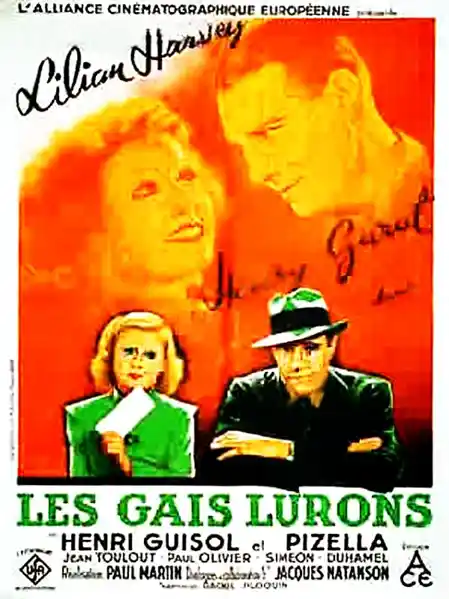
Okay, let's talk about Les gais lurons. Is it worth tracking down today? Well, that depends heavily on what you're looking for. If you’re a fan of early sound-era French comedies, especially with stars like Lilian Harvey, then absolutely. You'll probably enjoy its gentle pace and old-fashioned charm. For anyone expecting a modern rom-com's quick wit or rapid-fire plot, you’ll likely find it a bit of a slog. It’s a definite niche watch, but a rewarding one for the right person.
The premise is pretty straightforward, which is often the case for films of this vintage. Lilian Harvey plays this vibrant young woman, tired of her small-town life, who packs up and heads to Paris. She’s looking for work, you know, a bit of adventure. She lands a job as a secretary in a pretty bustling office, and, of course, her boss is a handsome but rather serious fellow played by Henri Garat.
Lilian Harvey, gosh, she just lights up the screen. There’s a scene early on where she's trying to navigate the city, looking for a job, and you just feel her determination. Her eyes sparkle. She doesn't need a lot of dialogue to show you what she’s thinking. It’s all there in her expressions. Very captivating.
The office itself is a character, almost. It's this hive of activity, with people rushing about, papers flying. It feels authentically busy for the time, though perhaps a little staged by today’s standards. You can almost smell the old ink and hear the clatter of typewriters. It’s all very period, which I appreciate.
One thing that really jumped out at me was the humor. It’s subtle, a lot of it. Not laugh-out-loud slapstick, but more like a quiet chuckle. There’s this great bit with Paul Ollivier as a sort of bumbling colleague. He doesn’t have many lines, but his reactions, his flustered little movements? Pure gold. He’s very much playing to the camera, but it works here.
The sound quality, as you might expect for an early talkie from 1931, can be a little inconsistent. Sometimes the music swells a touch too loud, making the dialogue a bit muffled. It’s part of the charm, though, really. It reminds you how far film technology has come. You're watching history unfold.
Henri Garat, as the boss, starts off quite stiff. Very proper, very business-like. But you see these tiny cracks form as Lilian Harvey’s character slowly, inevitably, gets under his skin. It’s not an explosive transformation. It’s a slow burn. The way he clears his throat or adjusts his tie when she's around changes ever so slightly. It's very sweet.
There are a few musical numbers, which isn’t surprising for a Lilian Harvey film from this era. They don't always feel seamlessly integrated into the plot, almost like they just *happen*. But her singing is lovely, and she moves so gracefully. It's a nice little interlude, even if it brings the story to a complete halt.
The pacing is… leisurely. This isn't a film in a hurry. You get long takes of people just *being* in a room. Or a conversation playing out without quick cuts. It allows you to soak in the atmosphere. But if you’re used to modern editing, it might feel a little drawn out. I kept thinking, “Are they going to cut away yet?” Nope! They linger. 🕰️
I found myself wondering about the fashion sometimes. The outfits are so elegant, even the everyday work clothes. The hats! Everyone wears a hat. It really makes you nostalgic for a time that probably never existed exactly like that, but it’s nice to pretend. It's an interesting contrast to the very formal office settings.
The ending is pretty much what you'd expect from a romantic comedy of this type. It's satisfying, if a little predictable. It ties everything up neatly, maybe a touch too neatly for some. But sometimes, you just want that happy, uncomplicated finish, don't you? This film delivers that.
Overall, Les gais lurons isn't a forgotten masterpiece that will change your life. But it's a wonderfully charming window into a different era of filmmaking. It’s a gentle, pleasant watch. Definitely worth it if you enjoy exploring cinema history, especially the early sound period. Just go into it ready to slow down and enjoy the ride. It’s got a certain *je ne sais quoi* about it. 😉
IMDb —
1915
Community
Log in to comment.