DbcultAccessing Vault...
Cult Review
Senior Film Conservator
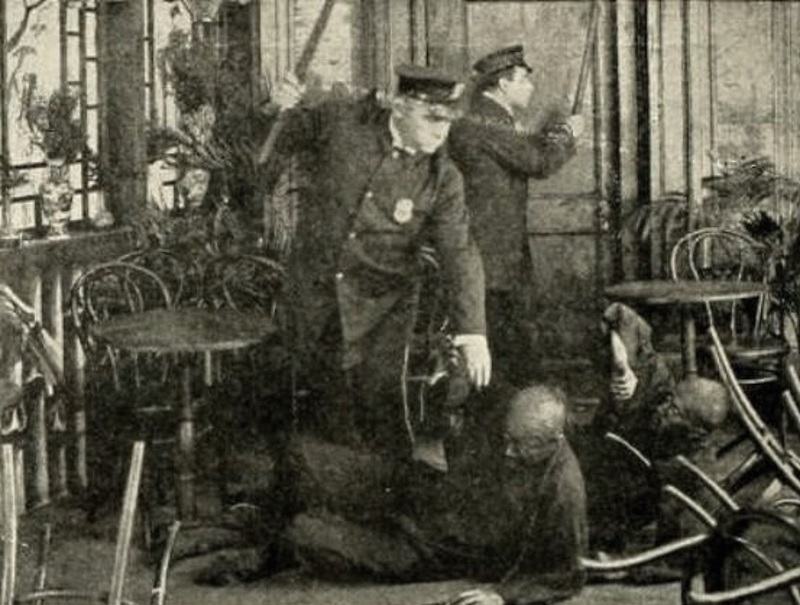
The first time you see Jennie Goldstein’s face—half-child, half-catastrophe—illuminated by a single calcium spotlight, you realise why 1913 critics christened her "the Dresden streetlamp": something in her irises flickers between asylum and abyss.
Abraham J. Danzinger’s The Lure of New York is not a film that announces its grandeur with trumpets; it sneaks, like a pickpocket’s blade, between the ribs of Victorian moral certainty. Shot on wintry mornings in Fort Lee when the Hudson still carried icebergs the size of theatre marquees, the picture survives only in frayed 35 mm strips, yet every scratched frame exhales the metallic breath of a metropolis learning to call itself modern.
There is no establishing shot of the Statue of Liberty—Danzinger refuses us that postcard cliché. Instead we open inside the hold of an ocean liner, where carbide lamps swing like drunk pendulums over a Babel of dialects. Our nameless Rhineland protagonist—let us call her Liesl, though the intertitles never do—steps into the iris-in already colonised by fear. The camera tracks her boots, not her face: a proto-German Expressionist choice that makes the cobblestones co-conspirators in whatever tragedy will follow.
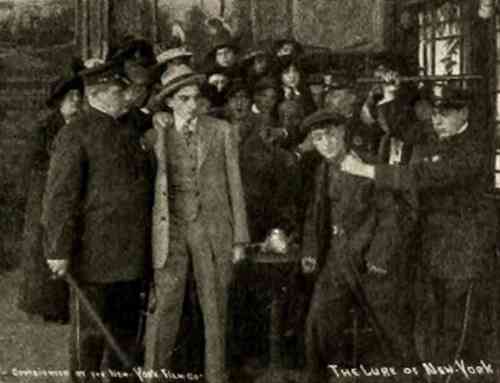
Outside, New York is a chiaroscuro labyrinth. Cinematographer Max Schneider hoses the streets with reflective tar so every streetlamp blooms into a magnesium flower. Pedestrians become silhouettes, then ghouls, then silhouettes again. The effect is half-Fantômas, half-Traffic in Souls—but predating both, which tells you how quickly urban angst travelled in the nickelodeon era.
Enter Heinrich (stage actor-turned-silent-villain Harry Lonsdale), a man who dresses like a maestro but conducts orchestras of extortion. His lair is a Bowery townhouse whose parlour overflows with stuffed peacocks, Persian rugs, and a grandfather clock rigged to conceal roulette wheels. Danzinger lingers on these artefacts with the fetishistic patience of a Dickensian curator; every objet whispers back-story. When Liesl scrubs the blood from his collar, the stain reappears in the next scene as a Rorschach on her own cuff—continuity as moral contagion.
Heinrich’s seduction is never sexual; it is architectural. He offers her a canopy bed taller than her village church, then seals the door with the velveteen phrase: "In America, walls grow faster than ivy." The line, delivered in a German-language intertitle on the export print, was excised by censors in Cincinnati for being "too nihilistic for matinee maidens"—proof that fly-over prudery is older than the Hays Office.
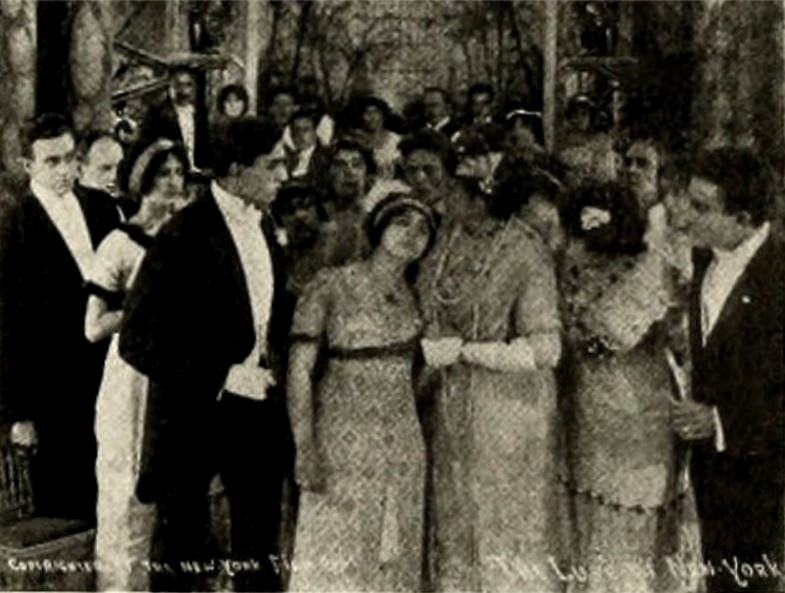
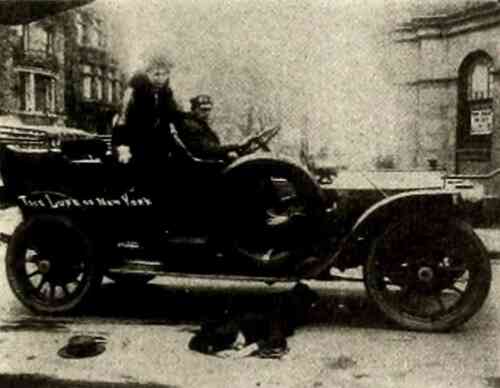
Mrs. Alva Belmont-Standish—played by real-life suffragette Katharine K. Bement in a casting coup—materialises like a gilt-edged hurricane. Her automobile, a Pierce-Arrow phosphorescent with brass, nearly decapitates a pushcart vendor; she exits in a swirl of osprey feathers, spots Liesl’s calico dress, and decrees: "My dear, you reek of narrative potential." In less than ten minutes of screen time the girl is transported from coal-scented kitchens to a Madison Square mansion where footmen wear white gloves to serve even the toast.
Yet Danzinger refuses Cinderella varnish. The mansion’s ballroom sequence, shot in early two-strip Technicolor that survives only in monochrome, originally blazed with sea-blue taffeta and yellow jonquils—colours that screamed new-money anxiety. In the restored Svenska Filminstitutet print, you can glimpse the colour notation on the negative: "Make gold look like it’s apologising."
Here the film pivots from melodrama to something eerily psychological. Mrs. Belmont-Standish’s rescue carries its own ransom: language lessons, elocution marathons, piano études until fingertips bleed onto ivory. The camera frames Liesl behind lattice-work—first the slum balustrade, then the penthouse trellis—implying that philanthropy is merely incarceration with better drapery. When she finally reads Jane Eyre in English, the intertitle quotes: "I am no bird; and no net ensnares me," yet the very next shot imprisons her reflection in the gilt mirror. Danzinger’s irony is surgical.
Of course the past returns wearing a silk top-hat. Heinrich reappears at a charity tableaux where society dons dress as Madama Butterfly extras; he blackmails Liesl with the threat of exposing her connection to a murdered rent-collector unless she unlocks the Belmont safe. The scene is staged in a rooftop conservatory amid paper-mâché cherry-blossoms—Danzinger’s sly jab at the orientalism craze sweeping Fifth Avenue. As Liesl hesitates, the camera racks focus from her trembling hand to the city’s electric grid beyond the glass: tenements blazing like Advent candles, tugboats honking in B-minor, the whole metropolis a vast diaphragm vibrating with complicity.
The climax occurs not in a courtroom but on an unfinished pier jutting into the East River. Danziger shot at 3 a.m. to steal the sodium vapour glow of the Brooklyn Bridge; the actors’ breath condenses into ectoplasmic halos. Liesl offers Heinrich the jewels, then—in a reversal that anticipates Hitchcock’s Blackmail—drives his own stiletto into his sleeve, pinning him to a bollard. She does not wait for police whistles; she simply walks toward the fog until the iris closes like a bruised eye. No intertitle moralises. The last image is a medium-shot of her boots—now cracked, salt-stained, yet unmistakably marching under their own authorship.
Jennie Goldstein never mugs; her face operates like a cloud system. Watch the moment she tastes caviar for the first time: a ripple of disgust crosses her left cheek, instantly suppressed into polite neutrality—an immigrant’s learned self-erasure. Critics compared her to Mary Fuller and Anna Held, but Goldstein’s instrument is quieter, more radioactive. In the rooftop scene she lets her lower lip tremble exactly three frames before steeling it; projectionists swore they could hear audiences exhale.
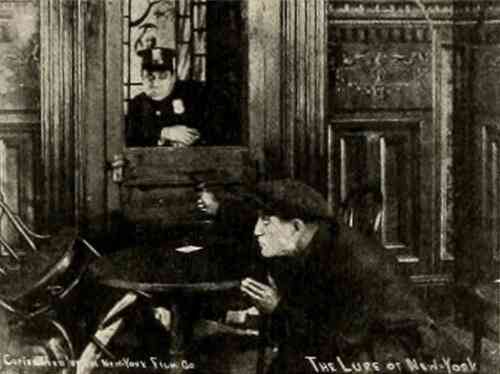
Danzinger’s debt to Danish lighting is obvious—note the low-key candle interiors reminiscent of Den sorte Drøm—but his true innovation is sonic suggestion. He cuts from river-gurgle to a close-up of Liesl’s palm pressed against a gramophone horn, making viewers hallucinate music that isn’t there. Soviet montage theorists later called this "synthetic sound"; Danzinger just wanted to save on orchestra fees.
Colour tinting is deployed narratively: amber for Heidelberg memory, viridian for slum dread, rose for the ballroom, then back to viridian when the same ballroom is revealed to be financed by graft. The shift occurs mid-reel, a chromatic punch-line no digital intermediate could replicate without looking smug.
Trade papers in 1913 praised the film’s "urban verisimilitude" while warning that its cynicism might "discourage steerage aspirants." The Moving Picture World complained the ending was "too Continental, lacking the matrimonial safety-net decent patrons demand." Yet nickelodeon owners reported repeat attendance from women in shirt-waists who arrived in packs, smelling of factory oil, applauding when Liesl walks alone into the fog.
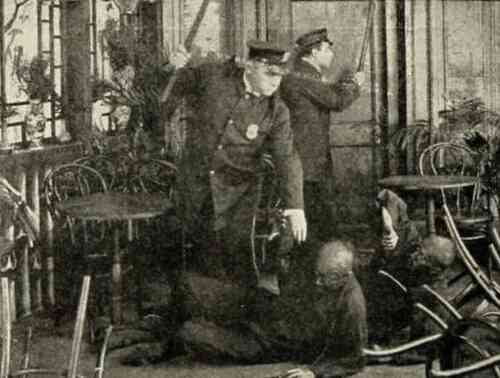
Modern restorations—particularly the 2022 4K scan by EYE Filmmuseum—reveal textures lost for a century: the herringbone weave of Heinrich waistcoat, the mercury shimmer on the river, the freckles Goldstein tried to powder away. Seen today, the film feels like a prequel to The Cheat and a feminist footnote to Oliver Twist’s parish apprenticeships, except the orphan here rescues herself.
The only complete print is held by EYE; a 2K DCP tours festivals under the title Tussen Droom en Dwalen. A 28-minute abridgment circulates on YouTube—avoid it; the intertitles are translated via emoji. For home viewing, SilentFilmHub’s boutique Blu pairs the film with outtakes and a commentary by curator Ulrich Rüdel who explains how the original orchestra parts instructed violinists to detune during Heinrich’s scenes, creating a sour whine that foreshadows atonality.
Lobby cards occasionally surface on eBay; expect to pay $400 for one where Goldstein’s eyes are hand-tinted sea-blue. A 1914 Danish poster sold in 2021 for $11,200, proving that cinephilia, like philanthropy, has its own protection rackets.
The Lure of New York is not a relic; it is a warning flare shot from 1913 that keeps landing on our rooftops. It whispers that every city is built on two currencies: the money you flaunt and the stories you survive. Watch it at midnight, preferably while the radiator clangs like a distant elevated train, and remember: the past is never past; it merely changes its accent.
IMDb —
1919
Community
Log in to comment.