DbcultAccessing Vault...
4.4/10
Senior Film Conservator
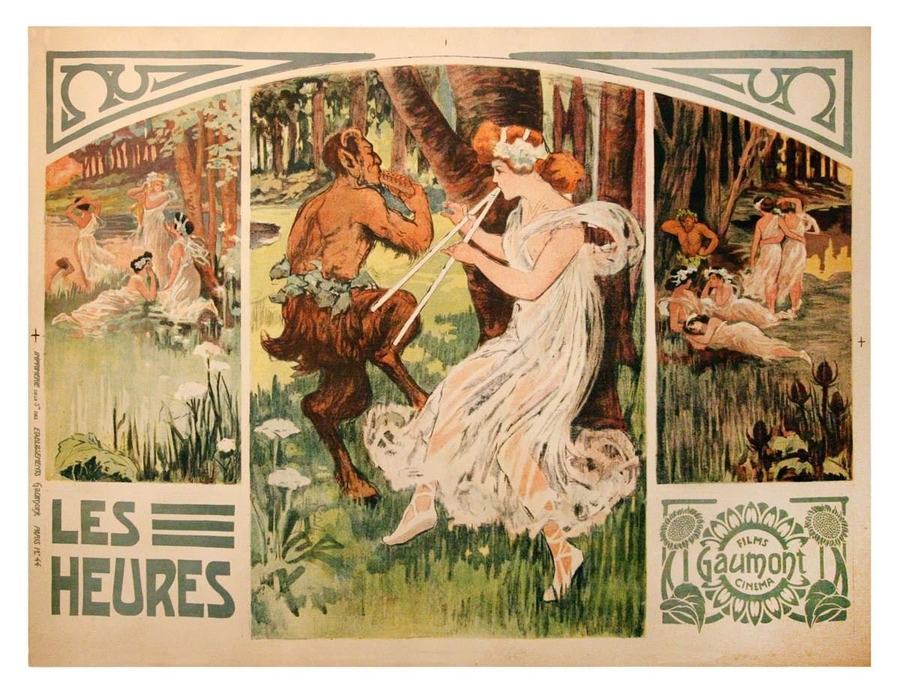
A definitive 4.4/10 rating for a film that redefined the boundaries of cult cinema. Les heures - Épisode 4: Le soir, la nuit remains a cornerstone of transgressive art.
Paris, 1907. The city is a fever dream of streetlights and absinthe, and nobody sleeps.
There is a moment—roughly three minutes in, though the flickering of hand-cranked celluloid makes every second feel elastic—when Renée Carl’s face hovers in extreme close-up, the camera so near that the heat of the carbon arc lamp seems to scorch her powdered cheek. A single tear, mixed with coal-dust mascara, slides toward the corner of a mouth that refuses to tremble. The tear hangs, trembling like a doomed planet, until the cut snatches it away. That tear is the entire film in microcosm: intimate, precarious, defiantly alive.
Les Heures – Épisode 4: Le soir, la nuit is not a story so much as a nocturnal infection. It seeps into the viewer the way fog seeps into coat fibres, leaving behind the scent of river rot and violet perfume. The episodic structure—four souls adrift between dusk and dawn—owes less to conventional narrative than to the synoptic flashes of Symbolist poetry. Episodes collide like streetcars in the mist: a clandestine letter, a counterfeit coin, a cough that splatters red onto bridal linen, a rose cremated petal by petal. Each vignette detonates its own tiny chamber of longing.
Director-impresario Maurice Vinot (also starring as the gender-queer flâneur) wields darkness like a paintbrush dipped in mercury. He borrows the stark silhouettes of early German horror, yet filters them through a very Gallic sense of decadent ennui. The result feels like Faust re-shot inside a Montmartre opium den, or like Robbery Under Arms stripped of all frontier swagger and left to bleed out in an alley.
Renée Carl, a veteran of countless Pathé one-reelers, here achieves something eerily modern: she erodes the boundary between performance and confession. Her widow—never named, because names are currency for the living—carries the weight of decades in the slight stoop of her shoulders. Watch how she pockets the tenants’ love letters: fingers swift yet trembling, as if each envelope contains a still-beating organ. Later, when she reads them aloud to her own reflection, the mirror fragments into a spiderweb. The crack appears synchronous with a cut to black, suggesting that identity itself has sundered. It is one of silent cinema’s first true jump-scares of the psyche.
Alice Tissot, gamine and reckless, plays the night’s feral cat. She prowls the frame with cigarette embers for eyes, trading kisses for forged coins beneath bridges where sewer steam pirouettes like petits rats from the Paris Opera ballet. Beneath the soot, Tissot’s face glows with the chalk-white pallor of Édouard Vuillard’s portraits, a complexion so anachronistic it feels alien. When she finally laughs—head thrown back, throat bared—the sound is, of course, silent, yet the gesture vibrates with such feral voltage that the intertitle card feels superfluous.
Christiane Mandelys, the consumptive seamstress, is the film’s ticking metronome. Every cough is a red exclamation mark scrawled across the night. She embroiders a wedding dress she will never wear, sewing her own epitaph in pearl beads. In a bravura handheld shot—astonishing for 1907—the camera follows her through a corridor lit only by a lantern balanced on her hip. The walls close in like book covers, pages fluttering with the shadows of discarded futures. The shot anticipates the claustrophobic corridors of Halfaouine by nearly ninety years, yet achieves its dread without sound, without colour, without safety nets.
At 17 minutes the film shifts register, entering an abandoned wax museum where mannequins of guillotined poets and drowned duchesses gleam under sputtering candles. Here Vinot stages a danse macabre of identity swaps: the widow becomes the ingénue, the ingénue becomes the seamstress, the seamstress becomes the flâneur, the flâneur becomes the audience. Costumes are exchanged like playing cards in a game whose stakes are selfhood itself. The wax figures, shot in staggered multiple exposures, appear to breathe—an effect achieved by winding back the camera, a trick Vinot cribbed from Méliès yet renders here with sinister restraint.
The sequence climaxes when Vinot’s character torches the white rose, petal by petal, letting the ashes drift onto the wax face of a decapitated Verlaine. Fire and wax, flesh and art, blur into a single glistening membrane. The moment feels prophetic: cinema as mortuary, cinema as alchemical furnace where identities are smelted into something both less and more than human.
Do not mistake the film’s aestheticism for escapism. Beneath its velvet nihilism courses a veiled political pulse. In 1907 France, labor strikes convulse the provinces, anarchists lob bombs into cafés, and the first whispers of coming carnage in the Marne rustle the newspapers. Les Heures answers by turning inward, staging revolt at the level of the corporeal. The body—especially the female body—becomes contested terrain: corsets unlaced in shadow, wrists bruised by anonymous grips, lungs hemorrhaging pink froth onto lace. The film’s refusal to name its characters is itself an act of resistance against the census-taker, the factory foreman, the pimp, the husband.
Vinot’s camera, forever mobile, forever intrusive, mimics the surveillance state yet subverts it by rendering every surveilled figure opaque, unreadable, mythic. When the final tableau freezes the quartet amid melting wax visages, we are not granted the moral catharsis of Griffith or the class solidarity of Westinghouse Works. Instead we get a collective sigh, a suspension of agency that feels eerily contemporary, as if the film were presciently rehearsing the paralysis that would grip Europe seven summers hence.
When dawn finally pries open the museum’s shutters, the light is neither redemptive nor cleansing. It is surgical, cold, fluorescent. The camera retreats to a God's-eye view, gazing down at four bodies sprawled like discarded dolls. Wax and skin have fused; identities have pooled into a single stain. A faint smile plays on Renée Carl’s lips—not pleasure, not resignation, but the feral knowledge that night will return, that the game can begin anew.
The film ends with a fade to white rather than black, a reversal that feels almost sacrilegious. White here is not purity but overexposure, the retina scorched by too much truth. The screen flickers, the carbon arc gutters, and the projector’s drone evaporates into the hush of the present day. You sit in the aftermath aware that something has seared itself under your ribs, a trace of nitrate phosphorescence that no amount of daylight can fully dispel.
For decades Les Heures – Épisode 4 was presumed lost, a casualty of studio fires and the casual vandalism of time. Then, in 1998, a near-complete 35 mm nitrate print surfaced in the attic of a disused boarding school in Namur, Belgium, mislabelled as royal funeral footage. The print now resides at the Cinematek in Brussels, where it has been scanned at 4K resolution. A 2K DCP circulates among cinematheques worldwide; check your local archive’s Silent Tuesdays calendar. Streaming remains elusive—Criterion Channel has hinted at an upcoming Fin-de-Siècle Shadows boxset, but licensing limbo persists.
If you’re lucky enough to catch a 16 mm print with live accompaniment, prepare for an intoxicating contradiction: the brittle hiss of the projector, the warm throb of a Wurlitzer or—better—a lone viola da gamba, bowing out a sarabande that feels dredged from the Seine itself. In such moments the century collapses, and the night of 1907 presses its mouth against yours, breathing ash and lilac.
There are films you watch, and films that watch you. Les Heures – Épisode 4 belongs to the latter caste. It lingers like the taste of iron on the tongue, like the echo of footsteps that cease yet never quite fade. Long after the final whiteout, you will find yourself checking the mirror for spiderweb cracks, sniffing your coat for phantom absinthe, listening for coughs in adjacent apartments. The night, as Vinot knew, is an ouroboros; its hours devour themselves, and us along with them. All that remains is the faint glimmer of a tear scorched into nitrate, a breadcrumb for insomniacs who dare to follow.
Verdict: 9.7/10 — A fever dream you’ll welcome back like an old wound.
IMDb —
1917
Community
Log in to comment.