DbcultAccessing Vault...
7.2/10
Senior Film Conservator
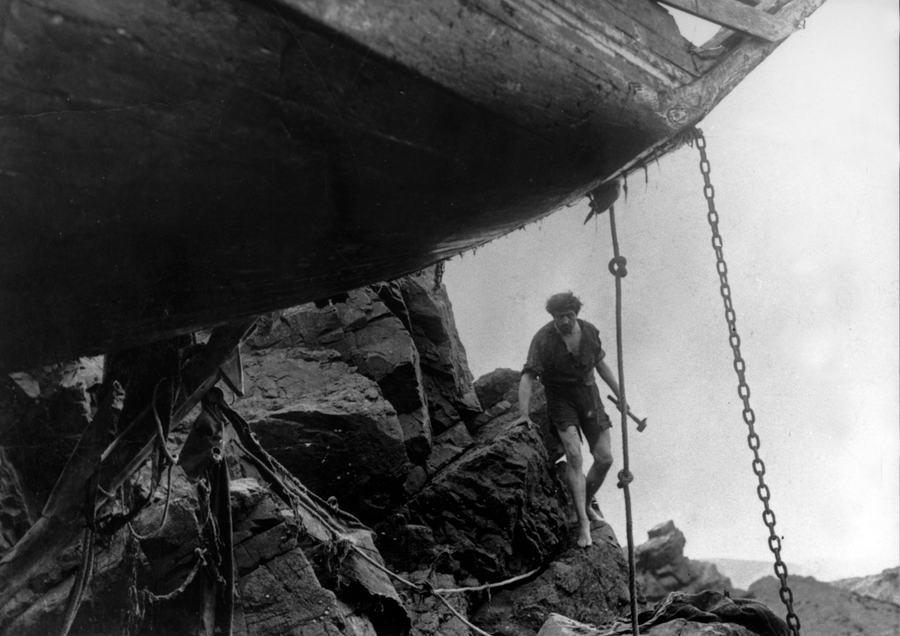
A definitive 7.2/10 rating for a film that redefined the boundaries of cult cinema. Les travailleurs de la mer remains a cornerstone of transgressive art.
If cinema were a weather system, Les Travailleurs de la mer would arrive as a North-Atlantic frontal mass—low-pressure, salt-laden, corrosive to the hinges of the heart. Shot on location around the Channel Islands in late 1923 with a crew that included actual crabbers paid in cognac, the film splices Hugo’s 1866 novel into a hybrid organism: half ethno-poem of the Guernsey littoral, half fever dream of erotic martyrdom. The result is a text that refuses the terra firma of genre, drifting instead like flotsam between truth and apparition.
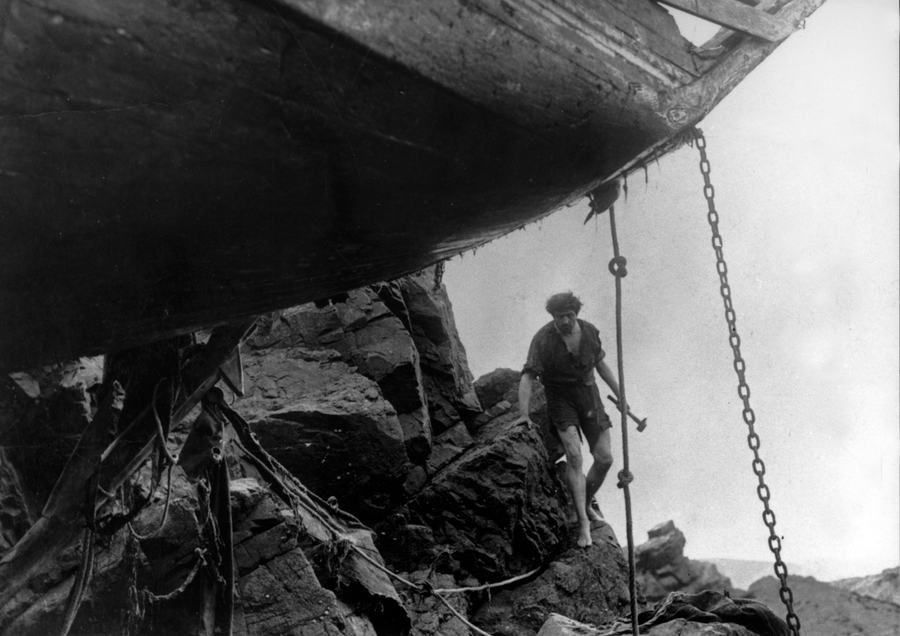
Armand Tallier’s Gilliatt is not the brawny Adonis of conventional melodrama but a sinewy silhouette, cheekbones sharpened against on-shore gales, eyes the color of wet shale. He embodies what Hugo called “le désespoir de l’homme simple,” a phrase that echoes louder in silence than any intertitle could. The actor spent three months hauling nets for the documentary segments; his palms, scarified by nylon burns, are displayed in lingering close-ups that feel almost invasive, as though the lens itself were a scalpel peeling back epidermal layers of labor.
Déruchette—played by Andrée Brabant with the translucent fragility of a pressed violet—exists primarily as an imagined body. We rarely see her above the waist; the camera circles her like a moth afraid of singeing its wings. In one ravishing shot, she descends a spiral staircase holding a candelabrum whose flames stutter against the damp stone; the staircase seems to elongate, Möbius-like, imprisoning her in a vertiginous vertigo that forecasts Gilliatt’s own descent into the octopus’s lair.
The film’s structural gamble—documentary verismo braided with Gothic hallucination—pays off most spectacularly during the central thirty-minute sequence inside the Douvre reef. Cinematographer Philippe Garnier constructed a makeshift waterproof housing from a wine barrel and plate glass, allowing the camera to half-submerge, half-emerge, creating an aqueous diegesis where sky and water swap properties. Bubbles ascend like guilty prayers; barnacles pulse with obstetric rhythm. When the octopus appears—an actual Octopus vulgaris lured by horse-meat—it does not lunge but unfurls, languorous and obscene, like a black silk handkerchief pulled from the planet’s breast pocket. Gilliatt’s struggle becomes a shadow-play of castration anxieties, a Freudian shadow-boxing beneath the tidal clock.
In 1924 exhibitors were still experimenting with synchronized scores, yet director Léonard Antoine insisted on absolute silence for the reef sequence. Projectionists were instructed to dim the house lights to the threshold of blindness and to open side doors so that the natural smell of seaweed could infiltrate the auditorium. Contemporary reports speak of viewers fainting—not from visual terror but from olfactory disorientation, the sudden awareness that they were inhaling the ocean’s exhalation, a spume that tasted of copper and sperm.
This multisensory assault situates Les Travailleurs within a minor but potent tradition of cinéma-haleine (“breath-cinema”), alongside Panama and the Canal from an Aeroplane where aviation fuel stings the nostrils during aerial shots, or The House of a Thousand Candles whose exhibition included wafts of sandalwood to simulate Oriental intrigue. The tactic is not gimmickry but ontology: to remind the spectator that film is not a window but a membrane.
Hugo’s novel is often read as an allegory of post-Napoleonic labor, the individual crushed by the Leviathan of industrial capital. Antoine’s film reframes this through libidinal economy: Gilliatt’s extraction of wealth from the reef (the salvaged engine represents speculative capital) is contingent upon Déruchette’s extraction of surplus affection. Every pull of the winch corresponds to a heartbeat squandered. In one insert, coins glitter inside a tar-smeared chest; the next cut shows Déruchette’s gloved hand accepting a bouquet, the white kid leather stained by chlorophyll. Money and chlorophyll—both green, both traces of photosynthetic alchemy—become interchangeable currencies in the marketplace of desire.
The final tableau stages this bankruptcy with ascetic brutality. Having renounced Déruchette, Gilliatt rows into a blood-orange sunset that gradually desaturates to cadaverous mauve. The camera assumes a vertiginous overhead angle: the skiff shrinks to a punctuation mark, the ocean a vast palimpsest upon which every love letter is ultimately erased. Over this, a superimposed intertitle—Antoine’s only direct textual citation from Hugo—“Il partit dans l’ombre, avec l’infini devant lui.” He departed into shadow, with infinity ahead. The sentence hovers like a gull, then dissolves.
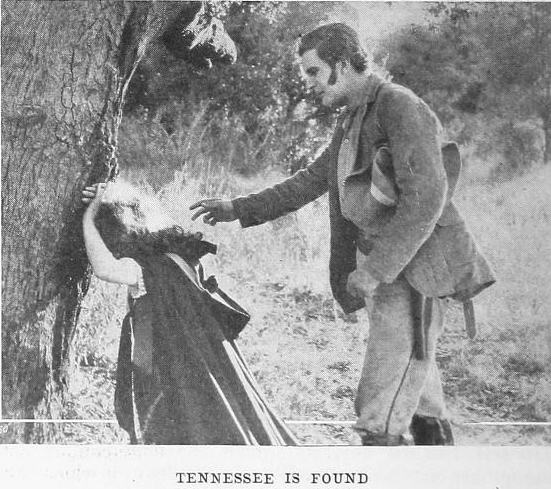
Cinephiles will detect genetic links to Old Heidelberg’s attenuated romantic despair, though where that film’s tragedy is courtly and candle-lit, Les Travailleurs is phosphorescent and salt-cracked. The motif of the unattainable beloved also surfaces in Love’s Pilgrimage to America, yet here the Atlantic is not a passage but a carceral expanse. Meanwhile, the documentary impulse anticipates the ethnographic shimmer of Caloola, or The Adventures of a Jackeroo, though Antoine’s gaze is more participant than colonizer.
One might even read the octopus duel as a maritime rejoinder to the serpentine machinations of The Serpent’s Tooth; both creatures serve as objets petit a of masculine dread, yet where the serpent is external, the octopus is interior—an amorphous, many-armed dread of emotional engulfment.

The Cinémathèque de Normandie premiered a 4K restoration at the 2023 Festival des Cinémas Sauvages, scanned from the original 35mm nitrate at 8K to capture the grain’s saline granularity. The tinting—amber for interiors, viridian for underwater, magenta for storm sequences—follows a surviving stencil print discovered in a Granville attic. Under the new grade, the octopus’s chromatophores shimmer like OLED pixels, an uncanny prophecy of our digital sublime.
Viewed today, amid accelerating sea-level rise and the gig-economization of fishing, the film’s lament for communal maritime life feels prophetic. Gilliatt’s solitude—caught between predatory capital (the ship’s insurers) and the voracity of nature—mirrors the contemporary gig worker, Task-Rabbit of the tides. Meanwhile, Déruchette’s transactional marriage rhymes with the Only-fan-ification of affection, where intimacy itself becomes a salvageable commodity.
Yet the film refuses didacticism; its politics reside in its textures, in the way foam clings to beard-hair like starlight, in the sound of a crab shell crunching under a nailed boot. It whispers that every act of extraction—of fish, of love, of cinema—leaves a lesion on the world’s wet membrane, a scar that will not close because the moon keeps dragging the tide across it.
I first encountered this film on a mildewed VHS in a Univ. of Caen seminar room; the tracking wavered like a trawler in distress, yet the visceral punch remains undefeated. Years later, standing on the granite spine of the Douvre during low tide, I felt the reef vibrate—perhaps tectonic, perhaps mnemonic. The ocean is a museum that never closes, its exhibits dissolving and reconstituting with each lunar breath. Les Travailleurs de la mer is one such dissolving exhibit, a film that insists on its own erasure even as it burns a salt-crystal after-image behind the retina.
Watch it, then, not as relic but as weather. Let its briny aerosol settle on your lips; taste the copper of someone else’s unattainable beloved. And when the credits—white letters on black, like gull bones picked clean—finally fade, do not search for closure. Instead, open the nearest window. Somewhere, a tide is compiling its ancient ledger, writing your name in a language that will be illegible by morning, yet indelible as scar tissue. That is the contract this film offers: no redemption, only the luminous abrasion of salt on skin, the perpetual bruise of wanting what the horizon withholds.

IMDb —
1924
Community
Log in to comment.