DbcultAccessing Vault...
4.2/10
Senior Film Conservator
A definitive 4.2/10 rating for a film that redefined the boundaries of cult cinema. Sunshine Dad remains a cornerstone of transgressive art.
Stepping back into the flickering shadows of early cinema, one occasionally unearths a narrative that, despite its vintage, pulsates with an almost contemporary energy. Sunshine Dad, a silent film from 1916, is precisely such an artifact—a chaotic, charming, and utterly convoluted ride that masterfully blends the thrill of a high-stakes caper with the absurdity of farcical comedy. It’s a testament to the boundless creativity that defined the nascent years of filmmaking, a period where storytellers, unburdened by established conventions, dared to weave tales of astonishing complexity and often, delightful madness.
At its core, this cinematic escapade, penned by the collaborative minds of Chester Withey, Tod Browning, and F.M. Pierson, is a relentless chase for a sacred diamond band. But to merely label it a chase film would be to strip away its vibrant layers of character eccentricity, romantic delusion, and sheer, unadulterated slapstick. The film doesn't just present a plot; it unfurls a tapestry of human folly, where ambition, avarice, and misplaced affection conspire to propel its characters through an increasingly improbable series of events. It’s a narrative that demands a certain surrender from its audience, a willingness to be swept away by its relentless momentum and to revel in the glorious chaos it so meticulously orchestrates.
The inciting incident is stark and sacrilegious: the audacious theft of a priceless diamond band from a revered Hindu shrine. This act of desecration, perpetrated by the shadowy Count Kotschkoff, immediately establishes the film's stakes, hinting at an underlying current of exotic mystery that was a popular trope of the era. However, the gravitas of this initial transgression is quickly diluted by the introduction of the Mystic Seer and the Mystic Doer, figures whose very names suggest an almost mystical, yet ultimately human, pursuit of justice. Their relentless tracking of Kotschkoff sets the stage for a globe-trotting (or at least, city-hopping) adventure, reminiscent of the intricate espionage plots that would later captivate audiences in films like Schuldig or even the more dramatic pursuit narratives seen in early thrillers.
Kotschkoff, a villain more cunning than brawny, attempts to throw his pursuers off the scent by entrusting the precious band to the Widow Marrimore. Here, the film takes an immediate pivot into the realm of the absurd. The widow, rather than securing the jewels in a vault, chooses to wear them as a garter. This decision, seemingly innocuous, is a masterstroke of comedic setup, transforming a sacred artifact into an object of casual, almost intimate, adornment. It’s a subtle commentary on the clash between the spiritual significance of the jewels and their mundane, almost risible, handling by the secular world. The garter, a symbol of feminine allure and hidden treasures, becomes the literal vehicle for the plot's next twist.
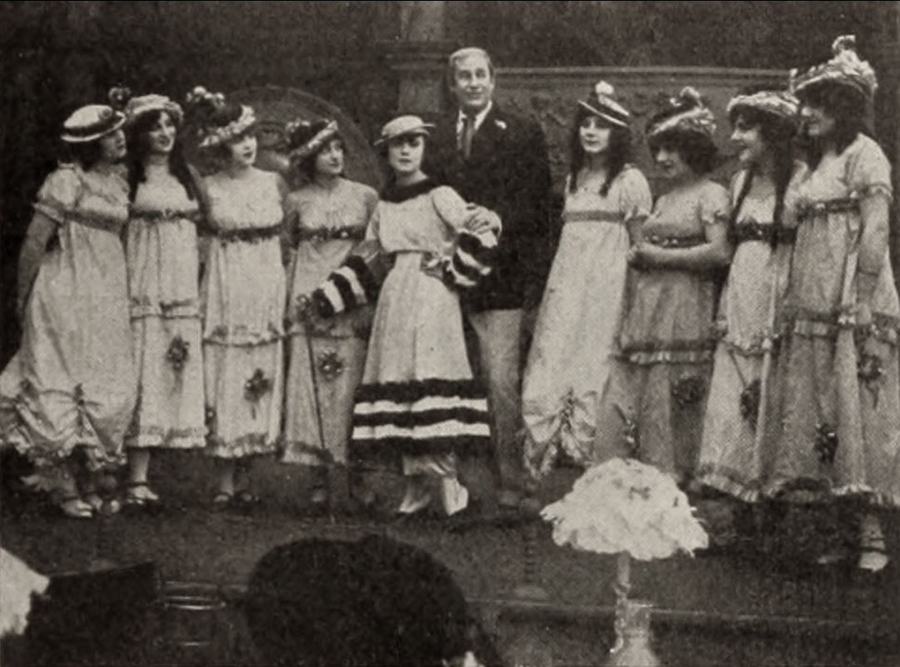
And twist it does. At a lively dance, the band makes its dramatic, unceremonious exit from the widow's leg, landing squarely in the path of Alonz Evergreen, portrayed by the inimitable DeWolf Hopper Sr. Evergreen is, without a doubt, the beating heart and the comic engine of Sunshine Dad. He is a character steeped in glorious delusion: a middle-aged actor, long past his prime, who clings fervently to the belief that he is still capable of embodying the youthful "juvenile" roles. His existence is a delicate balance of theatrical posturing and financial precarity, sustained largely by the unwavering support of his hardworking son. Evergreen’s internal world is a theatrical stage where he is perpetually the star, his external reality a constant struggle against the encroaching tides of age and irrelevance. His infatuation with the Widow Marrimore is not merely a romantic subplot; it’s an extension of his performative self, another role to inhabit, another grand gesture to execute.
Upon discovering an advertisement for the return of the jewels, Evergreen's mind, ever the crucible of self-serving schemes, concocts a plan: he will return the band to the widow, not out of altruism, but as a grand romantic gesture designed to secure her affection. He meticulously wraps the band, enclosing it with an affectionate, undoubtedly florid, note. This act, intended as a declaration of love, inadvertently becomes the catalyst for the next wave of comedic misadventure. The plot, much like a well-oiled farce, thrives on mistaken identities and misplaced objects.
Enter his son's fiancée, returning from a shopping excursion. In a moment of classic silent film misdirection, she departs, inadvertently collecting Evergreen's carefully prepared package along with her own bundles. The sheer probability of such an occurrence, while ludicrous, is precisely what gives these early narratives their charm. It’s a world where cosmic coincidence reigns supreme, propelling characters from one improbable scenario to the next. Evergreen’s subsequent discovery of his loss ignites a frantic, almost desperate, pursuit, a visual comedy of errors that showcases the physical prowess and expressive capabilities of silent film actors.
The fiancée's journey home is equally fraught with dramatic irony. Believing her beloved (Evergreen's son) to be unfaithful, she is in the throes of a romantic crisis. In a fit of pique and misunderstanding, she decides to return not only the diamond band (which she still doesn't realize is the sacred artifact) but also her own engagement ring. This double return amplifies the comedic entanglement, weaving a thread of genuine emotional turmoil into the otherwise lighthearted caper. When Evergreen finally reaches her home, his suspicions, fueled by his own frantic pursuit, lead him to believe that the young woman is, in fact, wearing the costly garter. The ensuing scene, where he attempts to verify his suspicion, is a masterclass in physical comedy, bordering on the absurd, yet entirely in keeping with the film's playful tone. Such moments, where personal delusion clashes with objective reality, are reminiscent of the broader comedic tradition of the era, where characters often found themselves in embarrassing predicaments due to their own self-importance or misunderstanding.
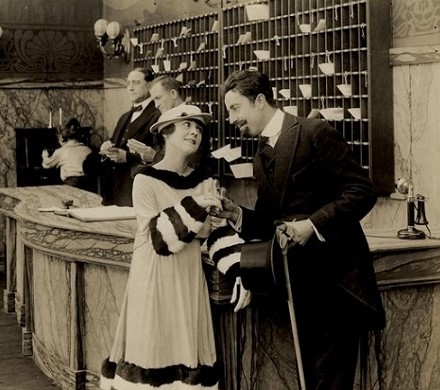
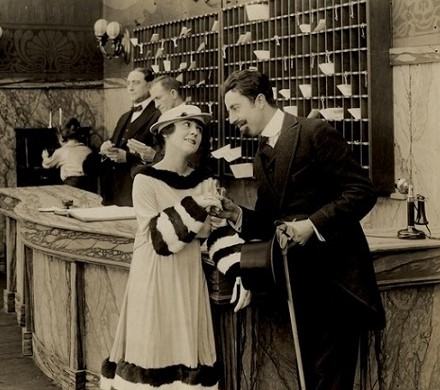
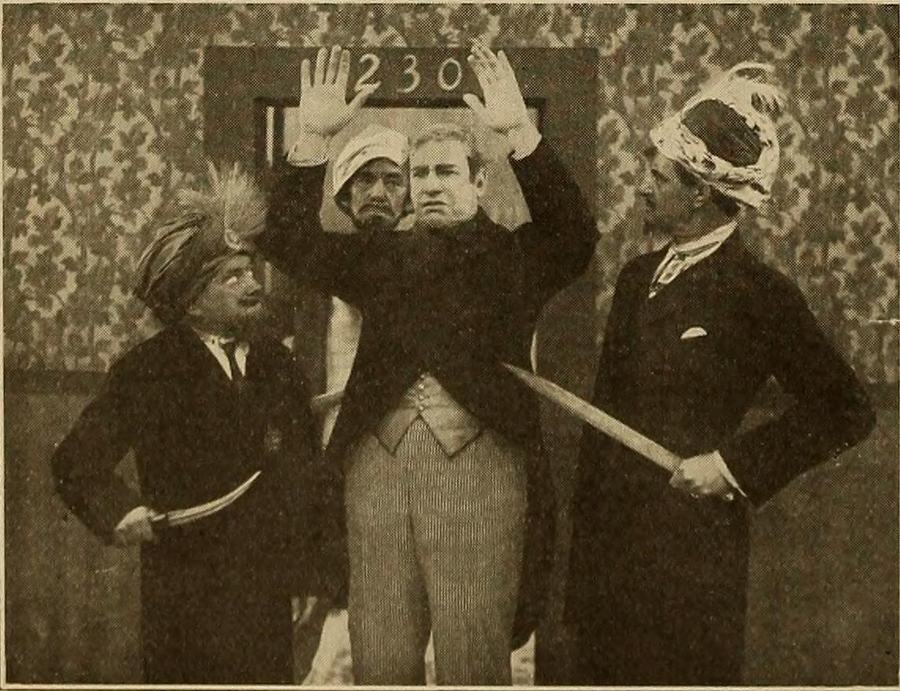
With the gems momentarily regained, Evergreen, now a man on a mission, races to the hotel where the widow resides. The Mystic Seer and Mystic Doer, ever on his trail, represent the persistent, almost karmic, force of justice in this narrative. Yet, Evergreen, through a combination of luck and bumbling agility, manages to elude them, delivering the band to the widow. This brief moment of triumph is, however, fleeting. The narrative, unwilling to settle into an easy resolution, immediately introduces another twist. As the Seer and Doer finally break into the widow's room to explain their mission and retrieve the band, they discover it is gone once more. The insidious Count Kotschkoff, ever the opportunist, has re-absconded with his stolen prize. This cyclical nature of loss and recovery is a brilliant device, ensuring that the audience remains on the edge of their seats, never quite certain of the ultimate fate of the diamond band. It’s a narrative structure that keeps the energy levels perpetually high, much like a relentless game of cinematic hot potato.
The film then pivots dramatically towards its thrilling, if slightly outlandish, climax. The Widow Marrimore, now a casualty of Kotschkoff’s renewed villainy, is taken back to the Hindu shrine, where she is tied to a stake and threatened with a truly gruesome death. The stake, in a stroke of melodramatic genius, is placed perilously close to a cage housing a ferocious lion. The slow, deliberate lifting of the gate, the anticipation of the beast's imminent darting out, builds an unbearable tension, a stark contrast to the earlier comedic antics. This sudden surge of genuine peril elevates the stakes considerably, transforming the farce into a genuine adventure thriller. It’s a narrative shift that could feel jarring in lesser hands, but here, it serves to highlight the versatile storytelling capabilities of early cinema, demonstrating how quickly a lighthearted romp could veer into existential danger. One might draw parallels to the heightened drama of The Primal Lure, where characters frequently faced the stark realities of nature's unforgiving power, or the dramatic stakes in A Fight for Freedom; or, Exiled to Siberia, where life-or-death situations were the norm.
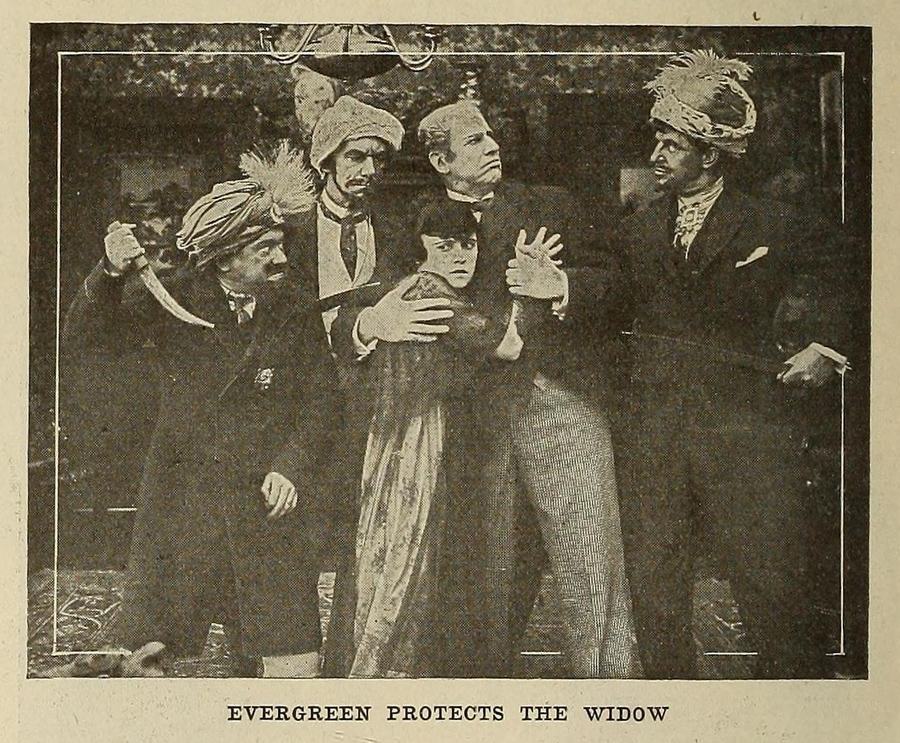
Just as hope seems lost, our unlikely hero, Alonz Evergreen, arrives. His previous blunders and self-centered motivations dissolve in this moment of genuine crisis, revealing a deeper, more courageous core. He releases his adored one, sparking a thrilling chase scene that is both exhilarating and, in its silent film execution, inherently theatrical. Leo, the lion, becomes a formidable antagonist, stalking the widow with predatory precision. The chase culminates in a surprisingly intimate setting: a bathroom. This juxtaposition of a wild beast and a domestic space is inherently comedic, yet the danger remains palpable. It's a classic silent film move, injecting a touch of the everyday into the extraordinary, grounding the spectacle in relatable, if precarious, surroundings.
In a final, heroic flourish, Evergreen rescues the widow from under the very nose of the beast. The Count is captured, and the sacred band is, at last, recovered, bringing the tumultuous journey of the jewels to a definitive, if hard-won, conclusion. The resolution is satisfying, not just because the villains are thwarted and the damsel saved, but because Evergreen, the delusional actor, has finally found a genuine moment of heroism, proving that even the most unlikely of individuals can rise to the occasion. This arc, from bumbling wannabe to accidental savior, gives the film a surprising depth, elevating it beyond mere slapstick.
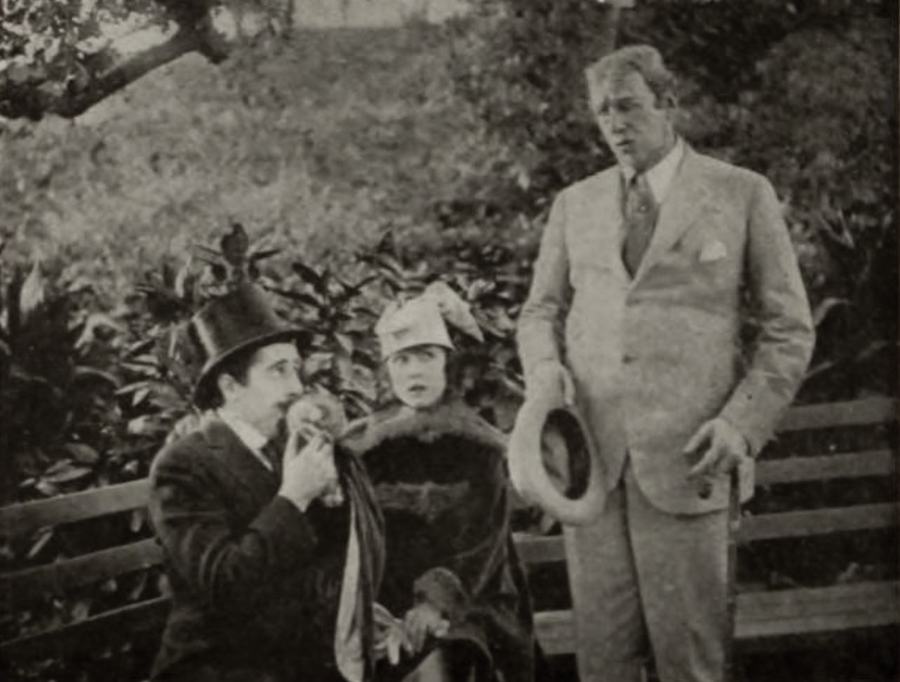
The performances in Sunshine Dad are, naturally, deeply rooted in the expressive traditions of silent cinema. DeWolf Hopper Sr.'s portrayal of Alonz Evergreen is a masterclass in physical comedy and exaggerated emotion. He embodies the aging actor with a blend of pathos and absurdity that is utterly captivating. His wide-eyed earnestness in the face of escalating chaos, his theatrical gestures, and his desperate attempts to maintain an air of juvenile charm are all delivered with a precision that transcends the lack of spoken dialogue. Mary Thurman as the Widow Marrimore navigates the transition from unsuspecting custodian to imperiled damsel with grace, while Max Davidson as Count Kotschkoff delivers a suitably villainous, yet often comically frustrated, performance. The ensemble cast, including Eugene Pallette and Fay Tincher, contribute to the vibrant tapestry of characters, each playing their part in the elaborate dance of mistaken identity and frenetic pursuit. Their performances are a reminder of the unique artistry required for silent acting, where every gesture, every facial expression, every movement had to convey meaning without the aid of spoken words.
The direction, credited to Chester Withey with story input from Tod Browning, shows a keen understanding of pacing and visual storytelling. The film moves with a brisk energy, never lingering too long on any one scene, constantly pushing the narrative forward through visual gags, dramatic confrontations, and thrilling chases. The use of cross-cutting during the pursuit sequences, and the masterful buildup of tension during the lion's cage scene, are indicative of filmmakers who were rapidly evolving the cinematic language. While not as overtly dark or macabre as some of Browning's later, more celebrated works (like his collaborations with Lon Chaney), one can perhaps discern his touch in the film's willingness to embrace the grotesque or the highly dramatic, especially in the climactic sequence. The visual grammar of the film speaks volumes, relying on clear blocking, exaggerated reactions, and dynamic camera movements (for the era) to convey the story's myriad twists and turns.
From a thematic perspective, Sunshine Dad explores the universal human desire for recognition and love, albeit through a highly comedic lens. Evergreen's relentless pursuit of the widow's affection, intertwined with the recovery of the diamond band, speaks to the lengths people will go to achieve their desires, even if those desires are rooted in self-delusion. The sacred nature of the diamond band, contrasted with its journey through various mundane and often farcical hands, subtly critiques the superficiality of material wealth versus spiritual value. It's a film that, beneath its surface of lighthearted adventure, touches upon themes of aspiration, the clash of cultures (East meets West in the shrine's context), and the unpredictable nature of fate. The film’s title itself, "Sunshine Dad," is an interesting choice, perhaps hinting at Evergreen’s sunny, if deluded, disposition, or the illuminating (and often exposing) light that is shed on his character throughout his chaotic journey.
In the grand tapestry of early American cinema, Sunshine Dad stands as a vibrant, if sometimes overlooked, thread. It encapsulates the spirit of an era where cinema was still finding its voice, experimenting with genres, and captivating audiences with spectacle and emotion. While it might not possess the dramatic gravitas of Carmen or the social commentary of Naked Hearts, its enduring charm lies in its unapologetic embrace of entertainment. It’s a film that reminds us of the sheer joy and innovative spirit that characterized silent film production.
Revisiting Sunshine Dad today offers more than just a glimpse into cinematic history; it provides a rollicking good time. It’s a reminder that even without dialogue, without sophisticated special effects, a compelling story and charismatic performances can transcend the limitations of their time. The film is a delightful journey through a bygone era of filmmaking, an era where the magic was in the movement, the story was in the eyes, and the laughter was universal. It's a perfect example of how early cinema, with its boundless imagination, laid the groundwork for the complex narratives and engaging characters we cherish today. For anyone keen to explore the rich heritage of silent films, or simply to enjoy a truly unique adventure-comedy, Sunshine Dad is a recommended watch, a sunbeam from the past that still manages to illuminate and entertain.
The film’s intricate plot, while demanding attention, rewards the viewer with a sense of playful absurdity. It’s a narrative that revels in its own convolutions, where every solution begets a new problem, and every character’s intention is either misunderstood or spectacularly backfires. This relentless chain of cause and effect is what makes the film such an engaging experience. It’s not just a story of a diamond; it’s a story of human foibles, of the lengths to which individuals will go for love, for status, or simply to avoid personal responsibility. The character of Alonz Evergreen, in particular, resonates as a timeless archetype: the dreamer who lives on the precipice of reality, whose grand aspirations often lead him into the most ludicrous of predicaments. His journey, from a self-absorbed performer to a reluctant hero, is surprisingly poignant, adding a layer of emotional depth to the otherwise madcap proceedings.
Ultimately, Sunshine Dad serves as a vibrant historical document, a window into the popular entertainment of the 1910s. It showcases the collaborative genius of its writers and directors, the expressive power of its cast, and the enduring appeal of a well-told story, no matter how outlandish. The film’s legacy lies not just in its plot, but in its spirit: a joyous, audacious, and utterly unforgettable piece of cinematic history that continues to charm and entertain, proving that some stories, like fine wines, only get better with age. Its ability to balance genuine suspense with laugh-out-loud moments, to craft characters that are both exaggerated and relatable, is a testament to the skill involved in its creation. It’s a film that deserves to be seen, discussed, and appreciated for its unique contribution to the art form.
IMDb 6.3
1931
Community
Log in to comment.