DbcultAccessing Vault...
Cult Review
Senior Film Conservator
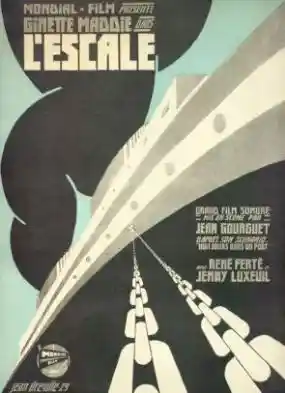
Alright, so, L'escale. This one isn't for everyone, not by a long shot. If you're hoping for something with a snappy pace or characters that always make sense, you might find yourself checking your watch. But if you have a soft spot for *old-school French dramas*, the kind where glances mean more than words, then this dusty little film might just grab you. Otherwise, it's a hard pass. 😬
It’s a bit of a slow roll, this one. The whole thing feels like a grey afternoon. The kind where you just watch the rain hit the window pane for a while.
Fanny Deslisles, as our main character, she’s really good at the whole 'looking thoughtful while staring off into space' thing. Her character carries a real weight, you can see it in her eyes even when she’s just holding a teacup. It's not dramatic, just… weary.
The story kicks off in this port town. It’s supposed to be a temporary stop for her, but things get complicated. As they always do.
There's this guy, Emilio Vardannes, who shows up. And his whole vibe is just... *trouble*. He has this intense way of looking at her. Like he knows something she doesn't, or maybe something she's trying to forget. His smile, though, it’s a bit too smooth for comfort.
I kept thinking about the lighting in some of those interior scenes. So much shadow. It felt like the film itself was trying to hide something, or maybe just wasn't sure what to show you clearly. The camera often lingers on objects, too. A half-empty wine glass, a crumpled letter. It’s like a puzzle piece without the rest of the box.
Suzanne Delprato plays this older, wiser woman. She runs the local café or something. She doesn't say much, but every time she does, it feels like a punch. Her advice to Fanny’s character, about not letting men dictate your path, it really landed. You could feel the unspoken history there.
There’s a scene where Fanny’s character is just walking along the docks. The sound of the distant gulls and the creaking boats. It goes on for a solid minute, maybe more. Nothing really happens. But you get this strong sense of her loneliness. And the *emptiness* of the place.
Then Vardannes appears out of nowhere, almost like he materialized from the fog. It's a bit cliché, maybe. But the way the scene is shot, it still feels a little jarring. Like, where did he even come from?
The dialogue is often understated. People talk around things rather than directly at them. Which can be frustrating if you're used to everything being spelled out. But it also makes those rare moments of honesty really pop.
One particular shot, it’s a close-up of Fanny’s hand, clutching a small locket. It stays there for a long time. It feels important, but the film never quite tells you *why*. You just know it is. It's a nice touch, that ambiguity.
The pacing, oh boy. It’s… deliberate. Like watching paint dry, but in a good way, if you’re in the mood for it. It really takes its time. Sometimes a bit *too* much time. You can almost feel the movie trying to convince you this moment matters. And often, it does, eventually.
Jeannie Luxeuil has a small role, but her character has this amazing little outburst. Just a few lines, but it totally changes the mood of the scene. It felt so real, almost like she forgot she was acting for a second.
I also kept noticing the costumes. Simple, but they tell a story. Fanny’s clothes, especially. They start off a bit worn, then get a little nicer, then almost… constrained. It’s a subtle thing, but it's there.
There's a moment where she almost gets on a train to leave. She’s at the station, holding her small suitcase. The train pulls in, all steam and noise. She hesitates. And the train leaves. **That hesitation.** It speaks volumes. No grand speech, just a look on her face as the last car disappears.
It reminds me a little of the mood in something like The Beloved Vagabond, that quiet despair. Or the way characters just accept their fate in Blutschande. Not the same story at all, but that *feeling*.
The music is sparse. Mostly just simple strings or a piano. It comes and goes. But when it swells, it really makes you feel something. It's not manipulative, just… present.
There are some parts where the sound mixing feels a little off. Like a door closing too loudly, or someone's voice suddenly being a bit muffled. It adds to the raw, slightly unpolished charm, though. Makes it feel less like a pristine studio production.
The ending isn't neat. Not at all. It kind of just… stops. Like life does sometimes. It leaves you wondering. What happens next for her? Does she find happiness, or is she just stuck in another "stopover"? That ambiguity is probably the film’s strongest point, actually. It doesn't give you all the answers, and that's okay. Sometimes, real life is like that too. You just keep going.
So yeah, watch it if you're patient and enjoy a good, melancholic French drama. But don't expect fireworks. Just a lot of quiet, heavy breathing.
IMDb —
1922
Community
Log in to comment.