DbcultAccessing Vault...
Cult Review
Senior Film Conservator
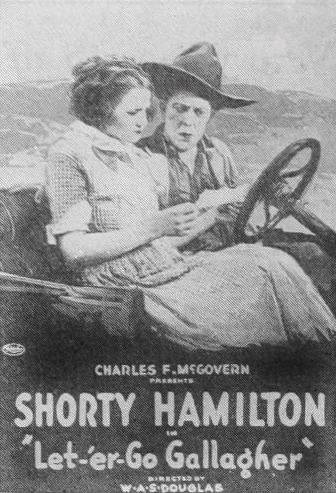
In the vast, often-overlooked annals of early 20th-century cinema, certain films emerge from the celluloid ether not merely as historical artifacts, but as pulsating testaments to the nascent power of storytelling through light and shadow. Among these, 'Let-'Er-Go Gallagher' stands as a compelling, if perhaps understated, example of character-driven narrative prowess, anchored by the magnetic, albeit often unheralded, screen presence of Shorty Hamilton. This is not merely a film; it is a visceral journey into the heart of a bygone era, a raw, unfiltered glimpse into the lives and struggles of individuals navigating the tumultuous currents of urban existence. The film, in its silent eloquence, manages to convey a depth of emotion and a complexity of human experience that belies its seemingly straightforward title, inviting contemporary viewers to transcend the absence of spoken dialogue and immerse themselves in its rich, visual tapestry.
The narrative, a robust exploration of redemption and resilience, centers on Gallagher, a dockworker whose formidable reputation for impulsive action and an unyielding physical prowess has earned him the eponymous moniker. His life, steeped in the harsh realities of a bustling, industrial city, is a perpetual tightrope walk between survival and defiance. He is a man of his environment, forged in the crucible of its unforgiving streets, yet possessing an innate moral compass, however obscured by his frequently volatile exterior. Shorty Hamilton, in a performance that resonates with a quiet intensity, embodies this duality with remarkable authenticity. His physical stature, often utilized for comedic effect in other contemporary shorts, here lends a grounded, almost tragic weight to Gallagher’s character, making his moments of vulnerability all the more poignant. It is a testament to Hamilton's nuanced acting that he can convey such a rich inner life through gesticulation and facial expression alone, a masterclass in the art of silent film performance.
The true artistry of 'Let-'Er-Go Gallagher' lies in its ability to construct a fully realized character without the aid of dialogue. The film relies heavily on visual storytelling, a language of gestures, expressions, and meticulously framed shots that communicate Gallagher’s internal world with startling clarity. We witness his fierce loyalty to his community, a fierce protectiveness that often manifests in sudden, violent outbursts, yet is always rooted in a deeper, more altruistic impulse. His world, a vibrant mosaic of fellow laborers, struggling families, and the ever-present threat of exploitation, is rendered with a gritty realism that feels both immediate and timeless. The film’s uncredited writers – a common occurrence in an era where the collaborative nature of filmmaking often overshadowed individual contributions – skillfully weave a tapestry of everyday struggles, elevating them to the dramatic heights of a morality play.
In this regard, 'Let-'Er-Go Gallagher' shares a thematic kinship with other works of the period that explored the lives of the working class. While not explicitly a social drama like perhaps some of the more overt melodramas, it subtly critiques the societal structures that necessitate characters like Gallagher. His journey, from a figure of raw, untamed energy to one who must harness that power for a greater good, is a universal narrative arc. The film’s portrayal of urban life, with its dark corners and fleeting moments of camaraderie, reminds one of the stark authenticity found in a film like A City Sparrow, which similarly captures the desperate beauty of metropolitan struggles. Both films, in their own unique ways, offer a window into the souls of those often marginalized by society, giving voice to the voiceless through the evocative medium of silent cinema.
The turning point in Gallagher’s tumultuous existence arrives with the introduction of a mysterious woman. Her presence, whether as a cabaret singer whose melancholic melodies stir something deep within him, or a compassionate social worker offering a lifeline to his community, acts as a profound catalyst. She represents a world beyond the grimy familiarity of his docks and back alleys – a realm of possibility, perhaps even refinement, that he had never dared to imagine. This burgeoning connection, subtly portrayed through lingering glances and hesitant interactions, ignites within Gallagher a nascent desire for a different path, a yearning for redemption that transcends mere survival. It is a beautiful illustration of how external forces can awaken dormant aspirations, much like the transformative power seen in narratives such as Kismet, where destiny and encounter conspire to reshape a life’s trajectory.
However, the shadows of his past are long and tenacious. Just as Gallagher begins to glimpse a horizon beyond his immediate struggles, he is ensnared in a meticulously orchestrated frame-up, a cruel machination designed by a ruthless criminal overlord. This antagonist, a shadowy figure whose power permeates the city's underbelly, seeks to exploit Gallagher's infamous reputation, turning his street-wise instincts and formidable strength against him. The film expertly builds tension here, transforming from a character study into a gripping crime drama. The injustice of the situation is palpable, and the audience is drawn into Gallagher's desperate struggle to clear his name and protect the nascent hopes he has begun to cherish. This plot device, where a character is forced to confront a false accusation and navigate a treacherous path to truth, echoes the dramatic tension found in films like Roads of Destiny, where characters grapple with predetermined fates and the fight for self-determination.
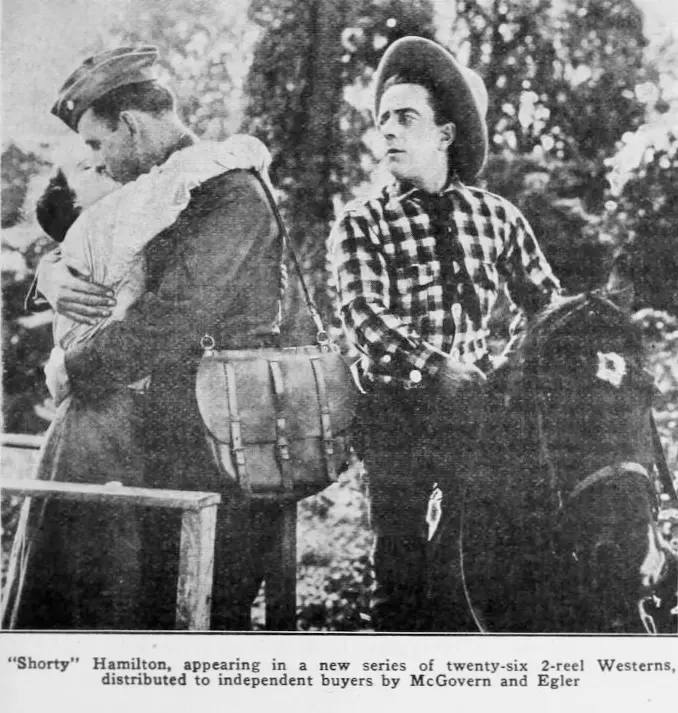
To extricate himself from this intricate web of deceit, Gallagher must delve deeper into the very underworld he has long inhabited. This journey is not merely a physical one through dark alleys and shadowy hideouts; it is a profound internal odyssey, forcing him to confront his own demons. His impulsive nature, once his defining characteristic and his primary weapon, now becomes a potential liability. He must learn to temper his raw strength with calculated strategy, to channel his fiery spirit into a focused pursuit of justice. Shorty Hamilton's portrayal here is particularly compelling, as he conveys the immense internal conflict through subtle shifts in posture and expression. We see the struggle etched on his face, the battle between the 'Let-'Er-Go' of old and the man striving for a new identity.
The film's climactic sequence is a masterclass in silent film suspense. It is here that Gallagher must truly 'let 'er go' – not just his fists in a furious brawl, but his past inhibitions, his ingrained cynicism, and his fear of vulnerability. The resolution is not simply a triumph of brute force, but a victory of character, a testament to the power of transformation. The scene, while undoubtedly featuring intense physical action, is imbued with a deeper emotional resonance, as Gallagher’s ultimate choice signifies his complete metamorphosis. This kind of moral reckoning and definitive choice for a better path is a powerful theme, reminiscent of the personal evolution seen in films like The Heart of a Girl, where characters navigate complex ethical landscapes to find their true selves.
Shorty Hamilton, though perhaps not a household name in the pantheon of silent film stars, consistently delivered performances that were both robust and remarkably nuanced. In 'Let-'Er-Go Gallagher,' he commands the screen with a gravitas that transcends his physical stature. His ability to convey a spectrum of emotions – from simmering rage to tender affection, from weary resignation to resolute determination – without uttering a single word is a testament to his innate talent and the rigorous demands of silent acting. He does not merely perform the role; he inhabits it, making Gallagher a figure both relatable and inspiring. His expressive eyes and powerful physicality become the conduits for a rich inner world, inviting the audience to project their own understanding onto his unspoken thoughts and feelings.
Hamilton’s work here exemplifies the unique challenges and triumphs of early cinema. Without the benefit of synchronized sound, actors were required to be masters of pantomime, conveying story and emotion through exaggerated yet precise movements. He brings a raw, authentic energy to Gallagher, making the character’s transformation believable and deeply affecting. One can draw parallels to the powerful, understated performances in other character-driven silent films, where the actor's physical presence and emotional depth were paramount. His portrayal of Gallagher stands as a compelling argument for reassessing the contributions of actors like Hamilton, whose work laid foundational stones for the art form.
Beyond the stellar performance, 'Let-'Er-Go Gallagher' also shines in its visual composition. The cinematography, while perhaps lacking the elaborate tracking shots of later eras, is effective in establishing atmosphere and enhancing narrative tension. The use of light and shadow to delineate moral ambiguity, to highlight the stark contrasts between the city’s opulent facades and its grimy underbelly, is particularly noteworthy. The film’s aesthetic choices contribute significantly to its overall impact, creating a world that feels both gritty and dramatically charged. The direction, even without explicit credit, demonstrates a clear understanding of visual storytelling, maximizing the expressive potential of each frame.
The enduring relevance of 'Let-'Er-Go Gallagher' lies in its timeless themes: the struggle for redemption, the fight against injustice, and the transformative power of human connection. These are narratives that resonate across generations, transcending the technological limitations of early cinema. While a film like Die badende Nymphe might explore more ethereal or fantastical elements, 'Gallagher' grounds itself firmly in human experience, making its emotional impact immediate and profound. Its narrative arc, charting a character's journey from a life of reactive impulsiveness to one of conscious heroism, serves as a powerful reminder of the potential for growth and change inherent in the human spirit.
In conclusion, 'Let-'Er-Go Gallagher' is more than just a forgotten relic of the silent era; it is a vibrant, compelling piece of cinematic history that deserves renewed attention. Its intricate plot, the powerful performance by Shorty Hamilton, and its universal themes combine to create a film that is both a fascinating historical document and a genuinely engaging piece of storytelling. It offers a rich experience for anyone willing to delve into the depths of silent cinema, proving that even without dialogue, the human spirit's triumphs and tribulations can be conveyed with breathtaking clarity and emotional force. This film reminds us that the foundational principles of compelling narrative, strong characterization, and visual artistry were already firmly established in the nascent years of the moving picture, paving the way for the cinematic masterpieces that would follow.
IMDb 5.4
1931
Community
Log in to comment.