DbcultAccessing Vault...
Cult Review
Senior Film Conservator
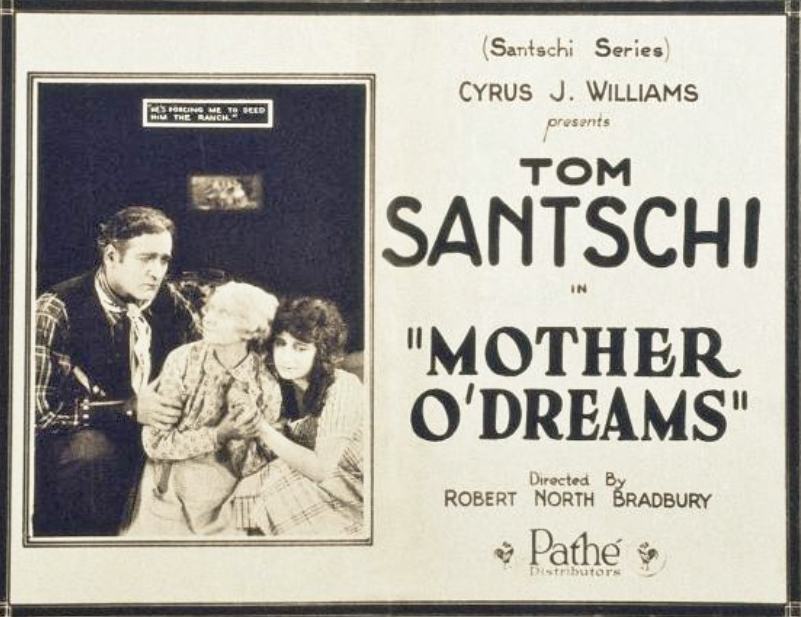
The early twentieth century was a period of frantic experimentation in the cinematic arts, a time when the grammar of visual storytelling was being forged in the fires of Selig Polyscope and other pioneering studios. Mother o' Dreams stands as a testament to this era’s fascination with the 'Mother' archetype—a theme that resonated deeply with an audience navigating the tectonic shifts of modernity. Unlike the more visceral explorations found in The Mother Instinct, this film opts for a more ethereal, almost hagiographic approach to maternal influence. It treats the memory of the mother not just as a biological fact, but as a moral compass that guides the protagonist through a world fraught with pecuniary greed and moral decay.
Tom Santschi, an actor whose physicality often veered toward the rugged and the outdoorsy, delivers a surprisingly nuanced performance here. As Tom, the wandering artist, Santschi manages to balance the delicate introspection of a painter with the latent power of a man of action. This duality is central to the film’s success. When we first encounter him, he is immersed in the act of creation, a sequence that mirrors the thematic depth of Masks and Faces. The portrait of his dead mother is not merely a plot device; it is a manifestation of his internal landscape. The brushstrokes are heavy with the weight of filial piety, a sentiment that was a cornerstone of the melodrama genre during this period.
The arrival of the grandmother and the young girl introduces a stark contrast to Tom’s solitary existence. The grandmother, portrayed with a palpable, heartwarming warmth, serves as a living surrogate for the image on Tom’s canvas. This creates an immediate, almost metaphysical bond between the artist and the elderly woman. It is a brilliant narrative stroke that elevates the film from a simple rescue story to a profound exploration of spiritual kinship. The girl, played with a burgeoning grace by Ruth Stonehouse, represents the future—a potentiality that must be shielded from the vitiated desires of the antagonist.
The conflict in Mother o' Dreams is rooted in the subversion of family loyalty. The 'scapegrace son' is a recurring figure in early cinema, often used to critique the perceived erosion of traditional values. His plan to marry the young girl—essentially his own niece or ward—to secure property rights is a chilling reflection of the legal vulnerabilities women faced at the time. This plot point echoes the darker undertones of The Master Hand, where the domestic space becomes a site of predatory calculation rather than sanctuary. The villain here is not just a personal enemy; he is a systemic threat to the sanctity of the home.
The cinematic treatment of the villain’s schemes is handled with a commendable lack of subtlety, as was the custom of the day. However, the pacing of his machinations provides a tension that is genuinely gripping. We see the grandmother’s distress not through grandiloquent gestures, but through the quiet, trembling fear of a woman who has no legal recourse. This is where Tom’s role as the outsider becomes crucial. As a wanderer, he exists outside the corrupted social fabric of the village, allowing him to act as a catalyst for justice in a way the locals cannot. His intervention is a cleansing force, much like the resolution in Her Maternal Right, though Tom’s motivations are fueled by an artistic sense of balance rather than purely legalistic duty.
One cannot overlook the visual language employed in this production. The use of natural light in the outdoor painting sequences creates a luminous quality that contrasts sharply with the shadowed, oppressive interiors where the son’s plots are hatched. This chiaroscuro effect serves to heighten the moral stakes of the narrative. The landscape is not just a backdrop; it is a participant in the drama. The rolling hills and sun-dappled groves represent the idyllic life that the grandmother and the girl deserve, a life that is being choked by the son’s avarice. In this regard, the film shares a visual DNA with Ain't Nature Wonderful?, though with a much more somber emotional palette.
The direction excels in capturing the minute details of the painting process—the mixing of pigments, the contemplative pauses, the intense gaze of the artist. These moments provide a rhythmic counterpoint to the eventual bursts of violence. When the confrontation finally occurs, it is staged with a raw, unchoreographed energy that was a hallmark of Santschi’s work. The physical struggle is not just a fight for property; it is a battle for the soul of the family. The defeat of the son is presented as a restoration of the natural order, a theme that would be revisited in later works like The Winning of Beatrice.
The film’s conclusion, where Tom promises to return for the girl after she has 'grown up,' is a trope that often sits uneasily with modern sensibilities. However, within the context of 1910s melodrama, this was viewed as the ultimate act of devotion. It is a temporal investment, a vow that transcends the immediate gratification of romance. It positions Tom as a guardian figure who transitions from a protector to a partner, a narrative arc that can also be seen in the structural complexities of The Loves of Letty. This deferred romance adds a layer of longing to the film’s final frames, leaving the audience with a sense of hope that is tempered by the passage of time.
Ruth Stonehouse’s performance in these final scenes is particularly noteworthy. She conveys a sense of burgeoning maturity and a quiet understanding of the sacrifice Tom is making. Her chemistry with Santschi, despite the age disparity of their characters, is rooted in a shared vulnerability. They are both individuals who have been touched by loss and are looking for a way to rebuild. This emotional resonance is what differentiates Mother o' Dreams from the more frivolous comedies of the era, such as The Merry Cafe or the whimsical Lyubovta e ludost.
In the broader canon of silent cinema, Mother o' Dreams serves as a crucial link between the primitive shorts of the early 1900s and the sophisticated feature-length dramas of the 1920s. It displays a sophisticated understanding of character motivation and a willingness to engage with complex social issues like elder abuse and property inheritance. While it may lack the epic scale of Behula or the experimental intensity of The Zone of Death, its intimacy is its greatest strength. It is a 'small' story told with a 'large' heart, focusing on the ripple effects of individual kindness.
The film also invites comparison to Ich bin Du in its exploration of identity and the way we project our needs onto others. Tom projects his lost mother onto the grandmother; the grandmother projects her lost hope onto Tom; and the girl projects her future onto the horizon where Tom will eventually reappear. This cycle of projection and fulfillment creates a rich tapestry of human connection that remains relevant long after the credits roll. Even when compared to more consumerist-focused narratives like Her Bargain Day, this film maintains a dignity and a focus on spiritual rather than material wealth.
Ultimately, Mother o' Dreams is a cinematic prayer. It is a plea for the protection of the innocent and the veneration of the elderly. It suggests that art is not just a passive reflection of life, but an active participant in its redemption. When Tom puts down his brush to pick up his fists, he is not abandoning his art; he is fulfilling its highest purpose—to defend the beauty he seeks to capture. For any enthusiast of the silent era, this film is an essential viewing experience, offering a window into a world where dreams were still being painted on the silver screen with the utmost sincerity and hope. It stands alongside Closed Doors as a poignant reminder of the stories that often go untold in the shadow of larger historical narratives. It is a quiet masterpiece of empathy, a brushstroke of genius in a world of monochrome shadows.
IMDb —
1923
Community
Log in to comment.