DbcultAccessing Vault...
5.1/10
Senior Film Conservator
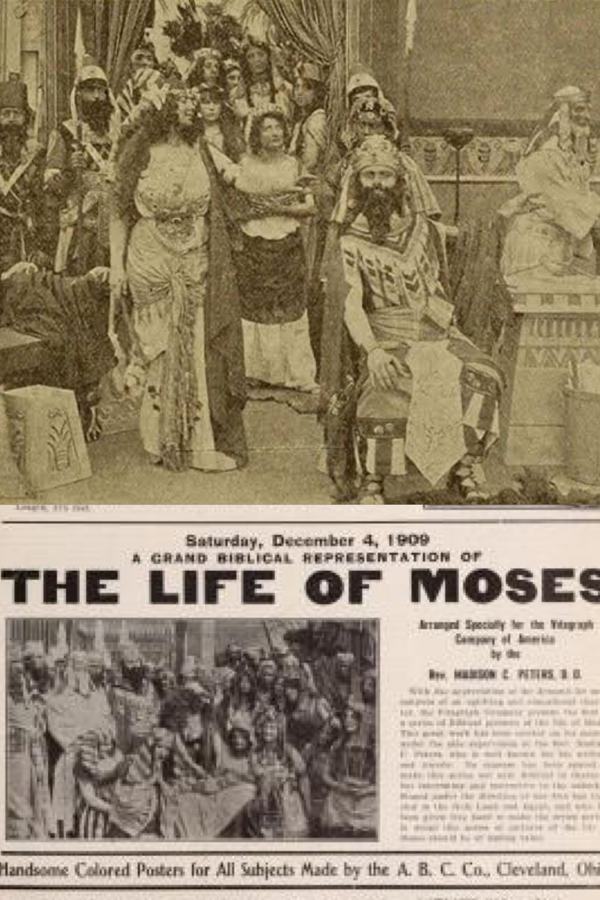
A definitive 5.1/10 rating for a film that redefined the boundaries of cult cinema. The Life of Moses remains a cornerstone of transgressive art.
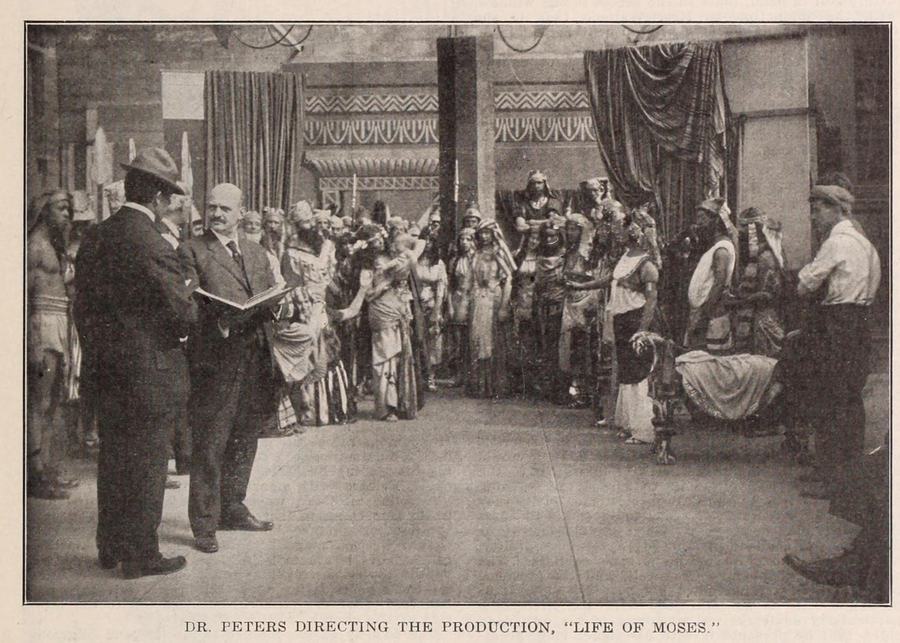
Imagine a world where color is rumor, yet every frame drips crimson with conviction. Directors Madison C. Peters and Rollin S. Sturgeon conjure that paradox in The Life of Moses, a 1909 Vitagraph monolith that refuses to whisper its biblical source. Instead it shouts—through tableau vivant choreography, through hand-tinted nitrate flames licking the edges of a thorn-bush, through crowd scenes so densely layered you can almost smell Nile silt mingling with sweat.
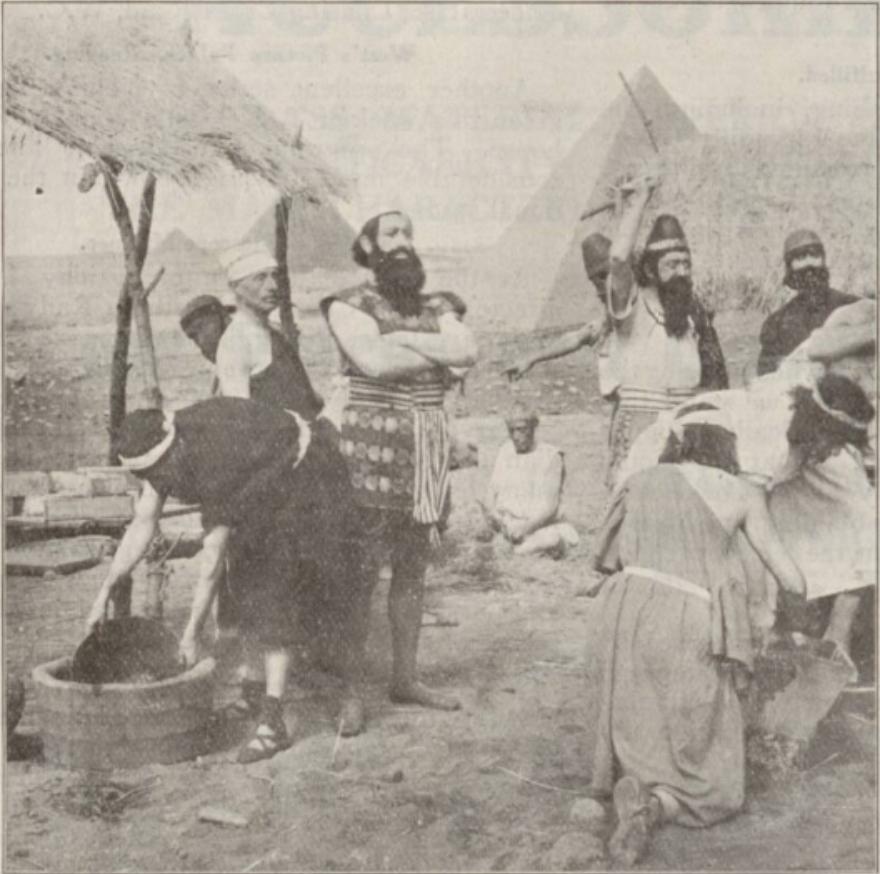
Silent-era epics often feel embalmed by time; this one bursts its sarcophagus. When Egyptian taskmasters raise braided whips, the strike is staged in depth: foreground backs ripple under linen, mid-ground silhouettes arch in pain, while background brick kilns exhale smoke that drifts across the iris-in circle like judgment itself. No zoom lenses, no dolly tracks—only a static camera that somehow vibrates with urgency. The trick? Sturgeon blocks action in staggered planes, letting kinetic energy ricochet forward. Your eye darts, flinches, mourns.
Scholars love to call the Moses-in-the-bulrush episode a fairy-tale trope. Yet here the cradle becomes a Trojan horse of dynastic dread. The princess—Julia Arthur in a performance of regal hauteur softened by micro-gestures—doesn’t simply adopt; she annexes an enemy bloodline, a living insurance against future revolt. Watch how Arthur’s gloved hand trembles above the lid: one second poised to close, the next fluttering back as though burned by prophecy. That hesitation seeds the entire film’s tension between private mercy and state machinery.
Cut to a wide shot: the same gloved hand lifts the child high against a backdrop of lotus columns. Visually the Hebrew infant now occupies the same vertical axis Pharaoh’s own heirs would. Subtext made stone: empires adopt what they cannot annihilate, hoping to metabolize dissent into docility. It never works, but oh, the cinematic audacity of trying.
Running a lean twenty-eight minutes in surviving prints, this opus compresses decades into breathless montage without sacrificing emotional granularity. Consider the forty-year Midian sojourn: a single intertitle (“Contentment beneath foreign stars”) dissolves into a shot of Moses (Pat Hartigan) hefting a shepherd’s crook, beard now wind-whipped shrubbery. A fade-out/fade-in conveys temporal gulfs that Cecil B. DeMille would later need three hours to traverse. Economy becomes elegance; the spectator’s imagination supplies the rest.
And when the burning bush ignites, Sturgeon opts for a double-exposure: orange-tinted flame superimposed over Hartigan’s profile, the silhouette neither consumed nor erased. The effect is primitive yet phantasmagoric, predating Life and Passion of Christ’s more florid miracles by a full marketing cycle. In 1909, this was the equivalent of modern CGI—audiences reportedly gasped, some fled the nickelodeon convinced nitrate itself had caught fire.
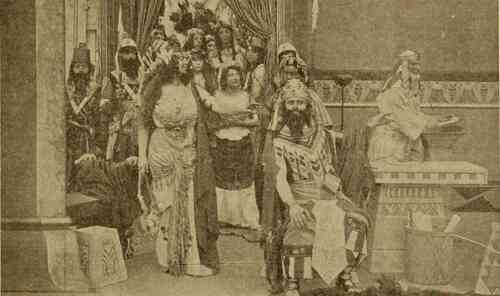
Laboratories in Paris and New York employed armies of women—coloristes—to daub each 35 mm frame with a camel-hair brush. The Life of Moses showcases their virtuosity: the Nile undulates in sickly teal until Aaron’s staff strikes, whereupon crimson gushes frame-by-frame, a visceral stop-motion hemorrhage. First-born death sequences adopt a bone-white palette, doorframes smeared with vermilion so stark it seems to vibrate off the emulsion. You don’t merely see the plague; you inhale its chromatic dread.
Yet yellow (#EAB308) emerges as the film’s stealth motif—sandals, harvest sheaves, and Moses’ Midianite robe all glow with topaz resplendence. It’s the color of transition, of liminality—desert dawn before law, before nationhood. In a medium without spoken word, hue becomes rhetoric.
Pat Hartigan shoulders the prophet’s paradox: regal bearing acquired in Pharaoh’s court, yet earth-chafed hands that remember brick-mold clay. Notice how his gait shifts: upright, almost balletic while confronting Charles Kent’s Pharaoh; then a looser, shoulder-rolling stride among slaves. The transformation is silent, sans intertitle, articulated purely through musculature. Hartigan’s eyes—dark caverns under kohl-heavy lids—betray survivor’s guilt, messianic terror, and reluctant resolve in a single close-up. It’s a masterclass in minimalist mythology, predating method acting by decades but channeling the same psychosomatic truth.
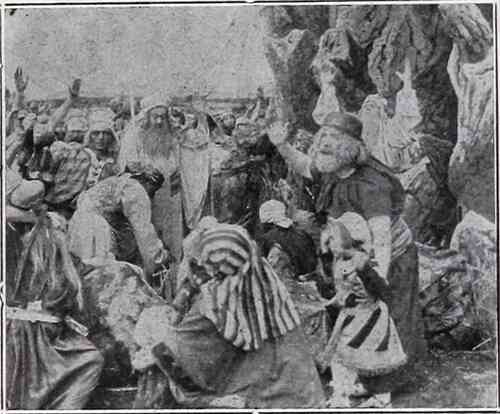
Place this film beside Birmingham’s industrial actualities or The Corbett-Fitzsimmons Fight’s pugilistic panorama and you’ll spot the chasm. While contemporaries chase vérité—documenting prize fights, parades, or royal funerals—The Life of Moses dares to stage cosmology, to sculpt transcendence from plywood and pigment. Its only spiritual sibling of the era might be Life and Passion of Jesus Christ, yet even that cycle unfolds with devotional stateliness; Moses pulsates with revolutionary ire.
Jump ahead to 1923 when DeMille unveils his first Technicolor Decalogue. The later epic dazzles with parting seas and granite commandments, but it also calcifies into Sunday-school pageantry. Sturgeon’s 1909 beast, warts and all, feels feral—propelled by a nickelodeon age that hadn’t yet learned to genuflect before reverence.
Archival records from Brooklyn’s Lyric Theater note that for screenings, management hired a nine-piece ensemble: two cornets, timpani, violin, and a thunder-sheet hammered whenever the Angel of Death hovered. Contemporary exhibitors often replaced intertitles with live narration—an early form of audio description. Imagine the cacophony: brass heralding each plague, strings weeping during the massacre of innocents, while the audience, many immigrants fresh from pogroms, mutter prayers under their breath. The film becomes communal séance, celluloid Torah rolled through sprockets rather than scrolls.
Women here are neither ornamental nor passive. The Hebrew mother (uncredited, as was cruel custom) choreographs resistance: her fingertips daub pitch onto cradle seams with the precision of a bomb-maker. The sister, Miriam’s cinematic precursor, surveils from bulrushes—an espionage agent before spy genres existed. Even Pharaoh’s daughter wields dynastic leverage; her adoption decree is less whim than preemptive strike against patriarchal genocide. In 1909, such textured female agency was practically radical, eclipsing the cardboard femmes populating Dressing Paper Dolls or actuality reels of parading suffragists.
Read the source text and you’ll find God hardening Pharaoh’s heart; watch the film and you’ll spy something murkier—political calculus. Charles Kent’s monarch isn’t a puppet of divine caprice but a tyrant terrified of demographics. His edicts escalate because each Hebrew infant that survives represents future insurgency. The film thus secularizes theodicy: plagues become geopolitical fallout, not mere celestial vendetta. Modern viewers attuned to post-colonial readings will detect an early cinematic critique of empire: brick quotas, resource extraction, forced labor—Pharaonic or Congolese, the machinery looks eerily familiar.
Only fragments survive—reels 1, 3, and 5—housed at the Library of Congress and the BFI. Yet even in their scars, they testify. Fading emulsion around the edges creates a vignette effect, as though history itself is iris-ing out, reluctant to let go. Digital restorers tread carefully: too much grain removal erases the labor of those coloristes; too little leaves audiences squinting. The compromise? 2K scans with selective damage retention, a philosophy of wounded storytelling. Watch closely and you’ll spot tram-line scratches crossing Pharaoh’s face like scars of remorse he never confesses.
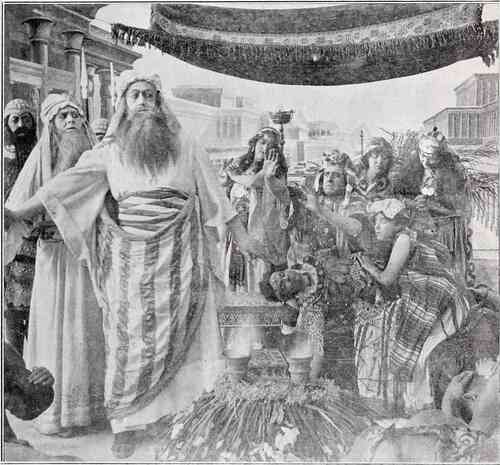
Because in an age of algorithmic content sludge, here is a relic that burns. Because its running time fits inside a commute yet stretches epochs inside your chest. Because when the Angel of Death glides through Egyptian corridors frame-by-frame, you’ll remember every headline about borders, babies, and bureaucracies unmoved by lamentation. The Life of Moses isn’t quaint; it’s prophecy on cellulite, a clarion that once rang nickelodeon walls and could still shatter our HD complacency.
So chase down that archive link, dim your lights, and let the desert bloom in the glow of your 4K monitor. The bush might not consume, but don’t be shocked if you emerge scorched—and strangely, irrevocably, freed.

IMDb —
1921
Community
Log in to comment.