DbcultAccessing Vault...
6.6/10
Senior Film Conservator
A definitive 6.6/10 rating for a film that redefined the boundaries of cult cinema. Let 'Er Go Gallegher remains a cornerstone of transgressive art.
Is Let 'Er Go Gallegher a film worth unearthing from the cinematic archives today? Short answer: yes, but with significant caveats.
This early mystery picture will primarily appeal to ardent film historians, silent film enthusiasts, and those with a keen interest in the foundational elements of the detective genre. However, modern viewers accustomed to fast pacing and complex character arcs will likely find its deliberate rhythm and straightforward narrative challenging to engage with.
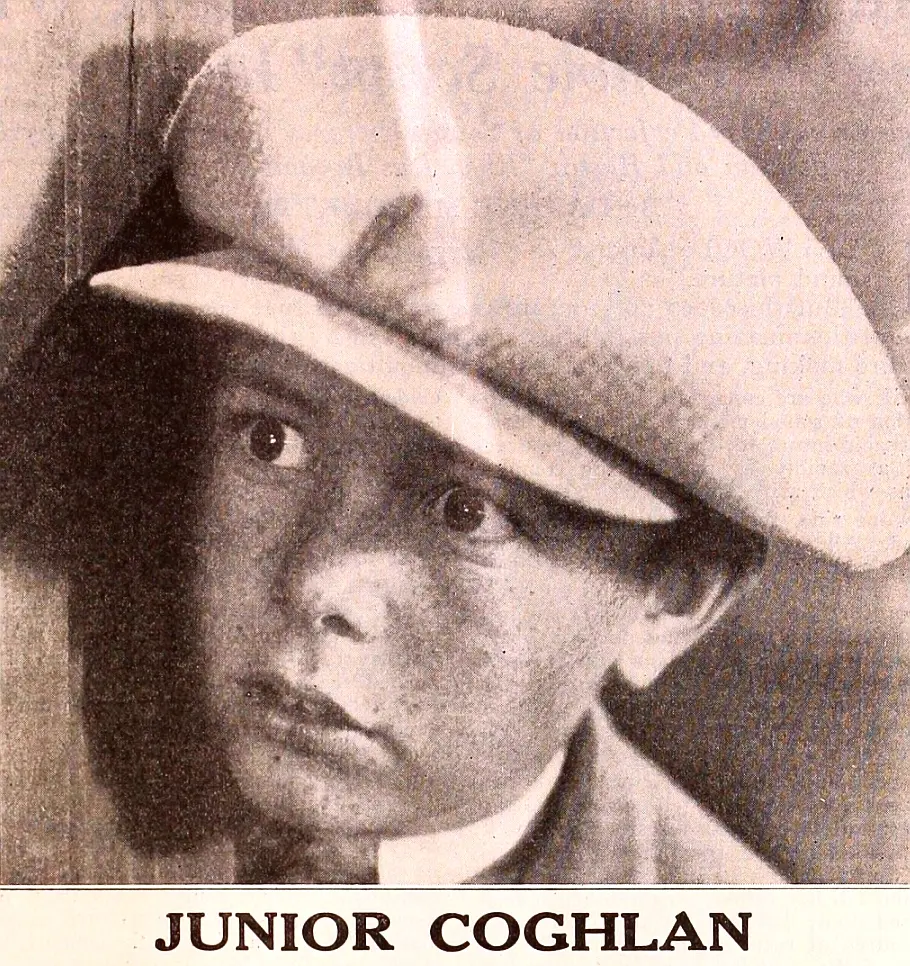
This film works because of its surprisingly effective central mystery and the earnest performances that anchor its narrative, particularly Frank Coghlan Jr.'s youthful zeal.
This film fails because its pacing can be glacial at times, and some of its narrative conveniences strain credulity, even for its era, making it a test of patience for casual viewers.
You should watch it if you appreciate the historical significance of early cinema and enjoy seeing the genesis of popular genre tropes, especially the intrepid young reporter archetype.
Let 'Er Go Gallegher, a fascinating relic from 1928, offers more than just a simple narrative; it provides a window into the formative years of cinematic storytelling, particularly within the burgeoning mystery genre. Directed by Elliott J. Clawson and penned by Clawson and John W. Krafft, this film serves as an intriguing precursor to the countless 'boy reporter' narratives that would follow, laying down some surprisingly sturdy groundwork for a trope that still resonates today.
The film’s central conceit—a young, ambitious office boy, John Gallagher (Frank Coghlan Jr.), stumbling upon a murder and leveraging it to enter the cutthroat world of journalism—feels both quaint and remarkably enduring. It taps into a universal fantasy of youthful agency, where sharp wits and sheer determination can outmaneuver the more cynical, established order. The peculiar detail of the killer having only four fingers on one hand isn't just a plot device; it's a testament to the era's simpler, more direct approach to establishing a compelling mystery, a single, indelible detail designed to hook the audience immediately.
The reverence Gallagher holds for Henry Callahan (Ivan Lebedeff), the seasoned newsman, establishes a powerful mentor-mentee dynamic that grounds the film's emotional core. This isn't just a story about solving a crime; it's about loyalty, ambition, and the transfer of knowledge from one generation to the next. When Callahan is unjustly ousted, the film shifts from a simple whodunit to a quest for redemption, elevating the stakes beyond mere journalistic triumph.
The performances in Let 'Er Go Gallegher are a mixed bag, largely reflective of the acting styles prevalent in late silent cinema and the very early talkie era. Frank Coghlan Jr., as the titular John Gallagher, embodies youthful enthusiasm with an almost relentless energy. His wide-eyed earnestness and physical expressiveness are undeniably charming, selling the character's ambition and unwavering belief in justice. There's a particular scene where he frantically tries to convince Callahan of his eyewitness account; Coghlan’s gestures and facial contortions perfectly convey a child’s desperate need to be believed.
However, this same earnestness occasionally veers into the overly theatrical, a common pitfall of the era that can feel less charming and more distracting to modern eyes. It's a performance very much of its time, lacking the subtle internalizations that would become standard in later decades. Compare his approach to the more restrained, yet equally expressive work seen in, say, The Mystery Road, which, while also an early film, showcased a slightly more nuanced character study.
Ivan Lebedeff, as the world-weary Henry Callahan, provides a necessary counterpoint to Coghlan’s youthful exuberance. Lebedeff, known for his suave, often villainous roles in other films, here plays a character of integrity under duress. His performance is more subdued, conveying a sense of quiet determination and professional pride. His scenes of disillusionment after losing his job are particularly effective, showing a man whose entire identity is tied to his profession. While not groundbreaking, Lebedeff provides a solid, anchor performance that prevents the film from feeling too juvenile.
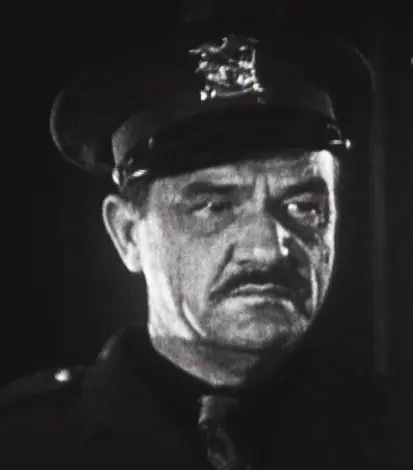
The supporting cast, including Harrison Ford (not the famous one, but a prolific actor of the era) and Elinor Fair, fill their roles adequately, though without much opportunity for significant depth. They serve primarily as plot facilitators, moving the narrative forward without demanding too much emotional investment from the audience. Morgan Brown, as the mysterious four-fingered man, is suitably menacing, relying more on his distinct physical characteristic than complex character development to create an impression.
Elliott J. Clawson’s direction is competent, if not particularly visionary. He effectively captures the bustling atmosphere of a 1920s newspaper office and the grittier, shadowy streets where the murder takes place. The film utilizes classic silent era techniques, such as intertitles to convey dialogue and internal thoughts, and often relies on dramatic close-ups to emphasize emotional reactions or crucial details, like the killer's hand.
The cinematography, while uncredited in many historical records, is functional. It’s not striving for the artistic flourishes seen in German Expressionist films like Der Hund von Baskerville, but rather focuses on clear storytelling. The lighting is generally straightforward, serving to illuminate the action rather than create complex moodscapes. There are moments of effective visual storytelling, such as the initial murder scene, which, despite its age, still manages to convey a sense of sudden violence and mystery. The focus on the distinctive hand is a clever visual anchor that the film returns to repeatedly.
Pacing is where Let 'Er Go Gallegher truly shows its age. The film takes its time. A considerable portion is dedicated to establishing Gallagher’s ambition and his hero worship of Callahan before the central mystery fully takes hold. While this character development is important, the execution can feel slow by contemporary standards. Scenes often linger a beat too long, and transitions can be somewhat abrupt, a common characteristic of films from this transitional period between silent and sound cinema. Modern audiences accustomed to the rapid-fire editing of thrillers will find themselves needing to adjust their expectations significantly. It works. But it’s flawed.
The screenplay by Elliott J. Clawson and John W. Krafft is admirably straightforward. It sets up a clear premise, introduces a distinct villain, and provides a compelling motivation for its protagonists. The 'four-fingered man' is a wonderfully simple, yet effective, piece of character design, immediately memorable and easy to track. This simplicity is both the script's strength and its weakness.
On one hand, it makes the narrative easy to follow, even for those unfamiliar with silent film conventions. The plot beats are clear, and the motivations of the characters are transparent. On the other hand, the mystery itself isn't particularly complex. Savvy viewers will likely piece together the identity of the killer well before the official reveal. The film prioritizes the journey of Gallagher and Callahan over intricate plot twists, which, while charming, can make the resolution feel a bit anticlimactic.
One unconventional observation is how effectively the film uses the newspaper setting not just as a backdrop, but as an active participant in the plot. The power of the press, the race for scoops, and the ethical dilemmas faced by journalists are all subtly woven into the fabric of the story, giving it a surprising layer of social commentary for its time. It’s not as biting as some later films, but the seeds are certainly there.
If you are a dedicated film historian, absolutely. This movie offers a valuable look at early genre conventions. It shows how detective stories were told before sound firmly took hold. The acting styles are fascinating to observe, even if they sometimes feel dated. The story is simple but effective for its era. It's a foundational piece for the 'boy reporter' trope. It’s also a good example of how early cinema built suspense. For casual viewers, it might be a challenging watch. The pacing is slow. The narrative is not complex. It demands patience. Expect a historical curiosity, not a modern thriller.
Let 'Er Go Gallegher is a film that exists squarely in the realm of cinematic archaeology. It’s not a lost masterpiece, nor is it a forgotten gem that will redefine your understanding of early cinema. What it is, however, is a fascinating, if imperfect, artifact. It provides a foundational look at how certain narrative tropes—the intrepid young reporter, the distinctive criminal, the quest for professional redemption—were being codified on screen. Its charm lies in its earnestness and its historical context, rather than its ability to thrill a contemporary audience. For those willing to adjust their viewing pace and appreciate the film for what it represents in the evolution of storytelling, there's genuine value here. For others, it will likely feel like a quaint, albeit slow, journey into a bygone era. It's a film to be studied and appreciated, not necessarily to be enjoyed in the same way a modern blockbuster is. A solid 6 out of 10 for its historical significance and pioneering spirit, though a 4 for pure entertainment value today.
IMDb 8
1914
Community
Log in to comment.