DbcultAccessing Vault...
6.2/10
Senior Film Conservator
A definitive 6.2/10 rating for a film that redefined the boundaries of cult cinema. Let Katie Do It remains a cornerstone of transgressive art.
A frost-rimed New England farm, 1916, hand-cranked light flickering through nitrate: the first thing you notice is the texture of labor. D.W. Griffith, still intoxicated with the epic after Birth of a Nation, trades Klansmen for clothespins and somehow the stakes feel sharper. Katie Standish—incarnated by the luminous Jane Grey—doesn’t just scrub linens; she scrubs identity, her silhouette evaporating beneath the weight of other people’s whims.
Griffith and co-scenarist Bernard McConville lift the plot from a Saturday-evening serial, yet lace it with Protestant guilt and capitalist hallucination: silver veins shimmering under Mexican lava, seven orphans as volatile as percussion caps, and a heroine whose martyrdom refuses the crucifix. The result is a film that feels like a daguerreotype left on a radiator—edges curling, emulsion sweating secrets.
If The Chattel explored bodies as property, Let Katie Do It weaponizes the idea of usefulness. Katie’s family converts her diligence into currency: she is the escrow account for Priscilla’s maladies. The camera, usually Griffith’s omniscient deity, here becomes a household spy—peering from behind kettles, catching the moment Katie’s shoulders slump when a second shift of mending is draped over her chair. Grey’s micro-expressions—eyelid flutter, a swallow that ripples like a skipped stone—translate exhaustion into something almost erotic, a private rebellion.
Oliver’s courtship scenes unfold like a rustic Vertigo: every time he nears Katie, the frame tilts, implying instability. Their first kiss—interrupted by Mother Standish’s cane thudding porch boards—gets stitched back into the narrative as a phantom limb. You sense its absence whenever Oliver later touches Mexican soil, the void throbbing like frostbite.
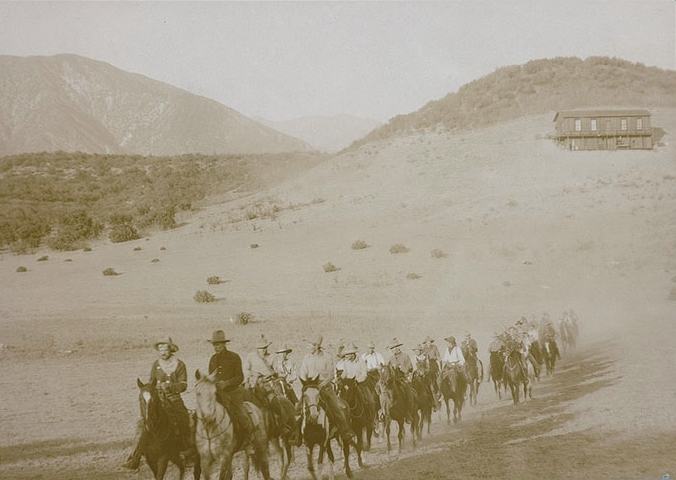
The film’s volta—from granite soil to volcanic dust—plays like a fever dream financed by Guggenheim. Cinematographer George Beranger (pulling double duty as the sleazy bandit) renders Mexico in tungsten yellows and arterial reds, anticipating the moral hemorrhage about to occur. The haciida set is half-playground, half-armory: walls bristle with rifles whose muzzles yawn like bored deacons, while children’s laughter ricochets off them.
Uncle Ben—played with mercurial warmth by Ralph Lewis—embodies Manifest Destiny’s hangover. He teaches the children to pull a lever that volleys every gun at once, a Rube Goldberg of death. Griffith lingers on their gleeful faces, cross-cutting with church frescoes of cherubs, the montage asking: what is innocence once it learns recoil?
When the bandits finally attack, the sequence detonates across multiple planes: foreground kids lighting fuses, mid-ground rifles coughing smoke, background mountains bruised by dusk. Intertitles shrink to single verbs—"FIRE!"—as if language itself is ducking bullets. The siege lasts under four minutes but feels like a semester on ethics: do you applaud child soldiers if the enemy is worse?
Jane Grey shoulders the picture, and her body becomes its dramaturgy. Watch the way her gait changes: New England Katie moves like someone counting fireflies—tentative, economical. Mexican Katie strides, sleeves rolled, hair uncoiling like released scripture. When she overhears Oliver’s anti-child tirade, the camera fixes on her reflection in a cracked mirror; the fracture splits her face so that one half weeps, the other half calcifies into flint. No CGI, no latex—just a shard of mercury glass and a woman who remembers how to be cruel.
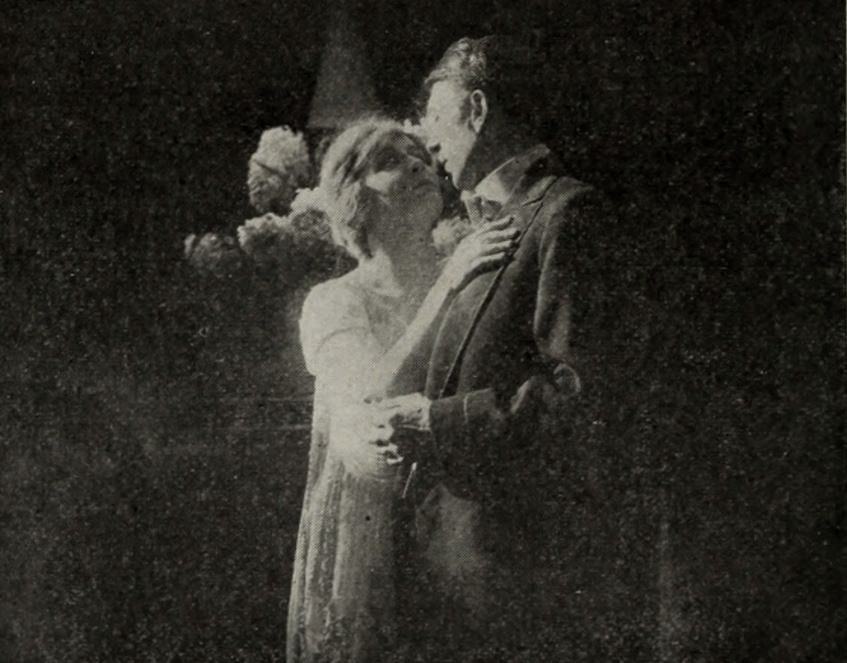
Lloyd Perl’s Oliver is less a leading man than a barometer of American ambivalence—he loves land, he loathes liabilities. Perl’s eyes telegraph the precise instant desire curdles into resentment, a tectonic shift you can practically hear. Later, when admiration reconvenes, it arrives sunburnt and chastened, a perfect mirror for a nation that must decide whether family is defined by bloodlines or by the perimeter you defend together.
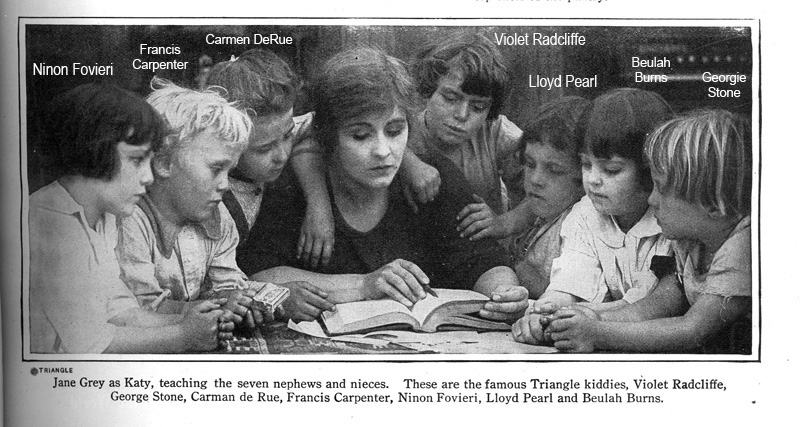
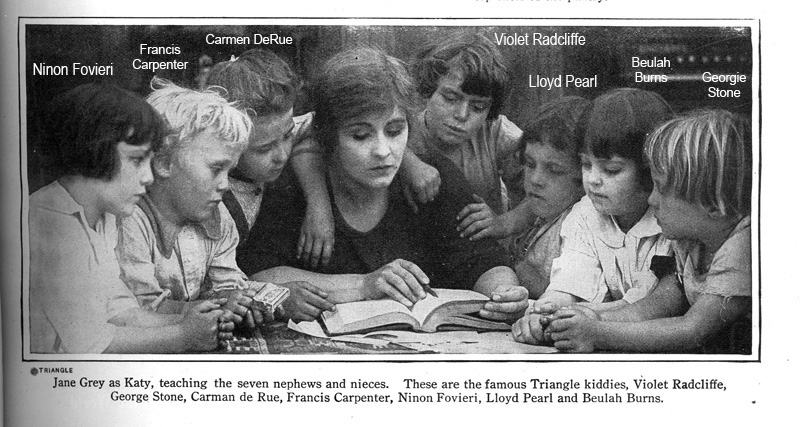
Griffith’s juvenile ensemble—headlined by ‘Baby’ Carmen De Rue and Francis Carpenter—operates like a pint-sized commedia. Each child embodies a sin or virtue: the glutton who rifles through chili peppers, the fibber whose cheeks balloon before every lie, the ascetic who counts bullets like rosary beads. Their collective arc—from nuisance to nucleus—challenges the era’s sentimental cherub tropes. Compare this with the expendable waifs in The Children Pay; here, the kids exact payment in lead.
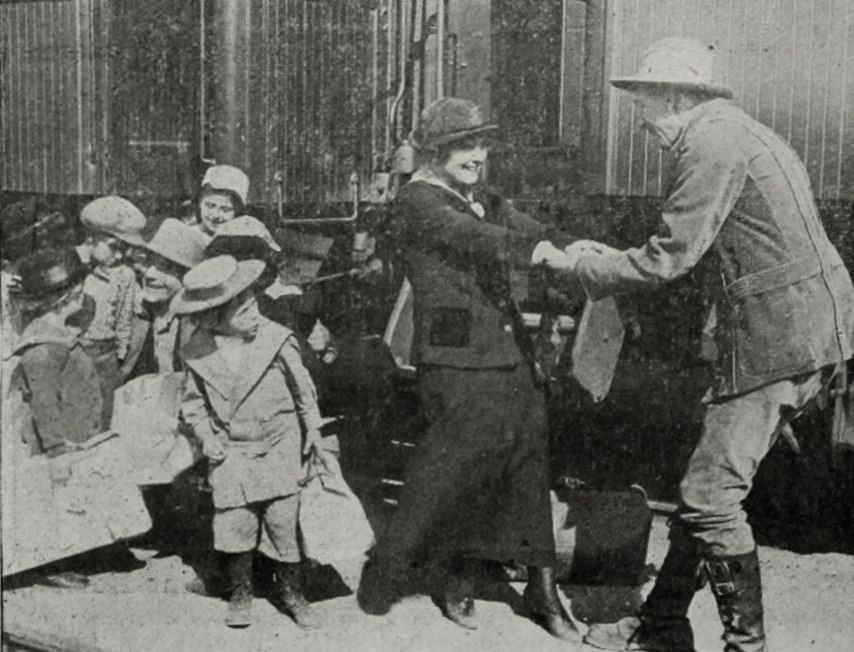
One bravura shot tracks a runaway toddler escaping the siege, a lone white bonnet bobbing across ochre infinity. The horizon swallows him until—snap!—a cowboy’s gloved hand intrudes from off-frame, yanking safety into being. It’s a visual haiku about frontier interdependence, as if the desert itself exhales relief.
Modern viewers will bristle at the unnamed Mexican antagonists, sketched with the same lazy chili-pepper strokes that plague Arizona. Yet the film hints at geopolitical context—Uncle Ben’s mine exploits local labor, and the raid plays like blowback wrapped in serape clichés. Griffith, ever the conflicted poet, inserts a fleeting close-up of a slain bandit’s mother wailing, her grief indistinguishable from Katie’s earlier tears. The moment dies aborning, suffocated by crosscut heroics, but its ghost lingers.
Similarly, race is the film’s negative space. African-American drifters appear once, loading ore carts, but the camera averts its eye as if ashamed of the chain-gaze echo. Their exclusion from both New England and Mexico underscores how whiteness here is not only a pigment but a passport.
Griffith’s signature cross-cutting—honed in The Battle of the Sexes—reaches a baroque apex here. During the climax, three arenas bleed into one another: the besieged hacienda, Katie and Oliver trapped in a burning cabin, a posse thundering across mesquite. The tempo is dictated by a metronome of gunpowder puffs; every fourth flash, Griffith interrupts with a child’s face, forcing the viewer to tally innocence against incendiary. The strategy is manipulative, yes, but also self-interrogating: it asks how many cuts equal a conscience.
Archival records suggest the 1916 roadshow featured a synchronized ensemble: banjo for New England stoicism, marimbas for Mexican peril, a lone cello bowing when Katie reads the orphan-making telegram. Today, most prints circulate silent. Paradoxically, the absence amplifies diegetic noise you can almost hallucinate—crickets stitching night together, the soft thunk of a lever pulled by a child who still believes in cause and effect.
Histories of early feminist cinema parrot the same litany—Hypocrites, Shoes, Where Are My Children? Rarely does Katie’s name surface. Perhaps because the ending retreats into domestic empire: a mansion in the States, a husband, a surplus of nursery beds. Yet the final tableau complicates closure; Katie stands at a window, children receding into wallpaper patterns, her eyes fixed on distant mountains. The shot is held so long it becomes an interrogation: did she escape orbit or merely enter a larger cage?
Compare this to the conflagration finale of Silks and Satins, where the heroine’s rebellion literally burns the set. Katie’s rebellion smolders, smoke caught in pupil rather than skyline, and that interior blaze feels, in 2024, more recognisable than any firework.
The film exists only in a 35mm nitrate print at the Library of Congress, incomplete, riddled with amber rot. A 4K scan was attempted in 2019; the scanner’s light perforated some frames, turning children into constellations of emulsion. What survives is a ghost story: faces swimming through fungal constellations, action rendered like cave painting. Embrace the decay—it is the last veil Katie must lift.
If you crave tidy restoration, skip. If you can stomach gaps where narrative should breathe, where sunlight gnaws faces into abstraction, watch. Watch for the moment a girl who never owned a doll commands an artillery of siblings. Watch for the cowboy who saves a child he’ll never parent. Watch because the silver under the floorboards is still there—buried in every household where labor is taken for granted, waiting for someone to strike the match of recognition.
Verdict: A fractured, ferocious poem about unpaid labor and unexpected militancy. It howls across a century, asking who gets to claim the children, the silver, the story.
IMDb 6.3
1934
Community
Log in to comment.