DbcultAccessing Vault...
5.9/10
Senior Film Conservator
A definitive 5.9/10 rating for a film that redefined the boundaries of cult cinema. Out of the Darkness remains a cornerstone of transgressive art.
Ah, the silent era. A time when cinematic storytelling relied not on booming dialogue but on the sheer power of visual narrative, expressive performances, and the profound resonance of its themes. In this rich tapestry, 'Out of the Darkness' emerges as a compelling example, a social drama that dares to peel back the layers of societal indifference, exposing the raw nerve of class disparity and the redemptive potential of forced empathy. It’s a film that, even a century later, speaks volumes about privilege, responsibility, and the transformative journey of self-discovery.
At its core, 'Out of the Darkness' introduces us to Helen Scott, an heiress whose life is a meticulously curated tableau of social engagements and leisurely pursuits. Her inheritance, the sprawling Scott Canneries, represents not a legacy of responsibility but a convenient fount of wealth, managed by a 'hard-fisted uncle' who embodies the callous exploitation of the era. Helen, busy with yacht races and soirées in Palm Beach, remains blissfully — or perhaps willfully — ignorant of the human cost of her prosperity. Her world, shimmering with superficiality, exists in stark contrast to the grim realities of her cannery workers, toiling for 'starvation wages' under 'unfavorable conditions.' This initial portrayal of Helen is not merely that of a wealthy woman, but a symbol of the systemic detachment that often accompanies unchecked privilege. The film sets a powerful stage, immediately drawing a line in the sand between the haves and the have-nots, and Helen, initially, stands firmly on the wrong side of that divide.
The narrative's brilliance lies in its audacious decision to shatter this gilded cage. Helen’s life, as she knows it, is quite literally sunk by a twist of fate. A foggy night, a sailing sloop, and a collision with a large schooner – ironically, a fruit carrier for her own canneries – plunge her into the cold embrace of the sea. Rescued but concussed, she awakens to a world utterly devoid of familiar anchors. Amnesia, that classic cinematic device, here serves not as a mere plot contrivance but as a profound narrative catalyst, forcing a radical re-evaluation of identity and purpose.
Stripped of her name, her memory, and her social standing, Helen is taken in by the schooner captain who saved her. His daughter, a cannery worker herself, secures Helen a position beside her at the cutting table. This is where the film truly begins its meticulous work of transformation. Helen, the former socialite, is now simply 'Helen,' a worker among workers, experiencing firsthand the grueling, repetitive, and underpaid labor that fuels her family's fortune. This immersive experience is the crucible in which her character is forged anew. The film, through its visual storytelling, would undoubtedly emphasize the stark contrast: the delicate hands accustomed to teacups now stained with fish guts, the elegant posture replaced by the stoop of toil. It’s a powerful, visceral journey that challenges the very foundations of her former existence.
This narrative arc, where a privileged individual is forced to live amongst the less fortunate, is a timeless one, echoing through various cinematic explorations of class and identity. One might draw parallels to films that explore the fragmentation of self, though perhaps with less overt social commentary, such as Without Hope, where characters grapple with their pasts or altered realities. However, 'Out of the Darkness' distinguishes itself by explicitly linking this personal amnesia to a broader social awakening. Helen's loss of memory is not just about her individual identity; it's about shedding the collective amnesia of the privileged class regarding the plight of the working poor.
Enter Harvey Brooks, portrayed by the earnest Tom Forman. Brooks is the manager of the cannery's Tampa branch, a man of conscience and conviction. He champions 'new ideas of social welfare,' tirelessly pleading with Helen and her uncle to ameliorate the abysmal working conditions and starvation wages. His efforts, however, are consistently 'ignored,' painting a portrait of a man caught between his humanitarian ideals and the rigid indifference of his employers. When he encounters the amnesiac Helen, he sees not the aloof heiress but a 'poor factory girl,' and is drawn to her 'kind manner.' Their burgeoning romance is steeped in dramatic irony, as Brooks, unknowingly, falls for the very woman whose family he despises for their exploitation.
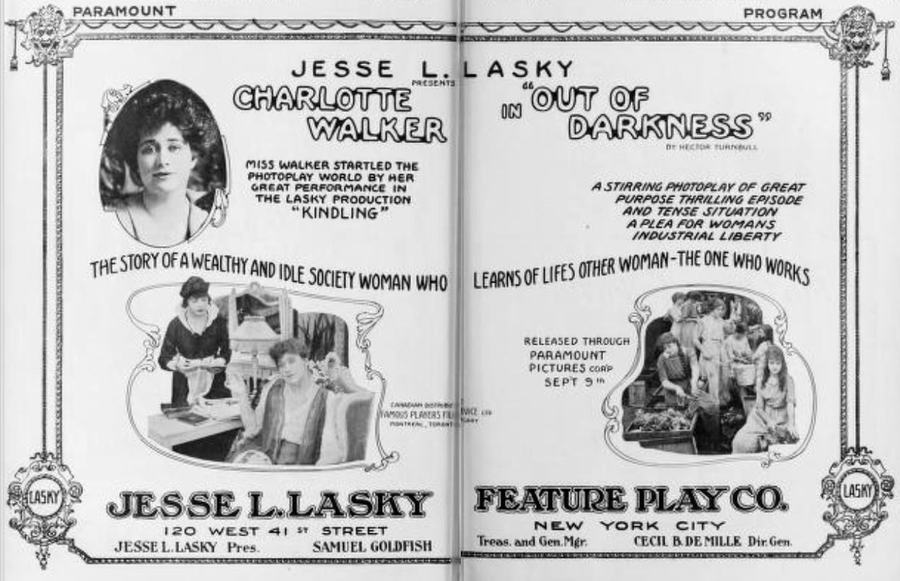
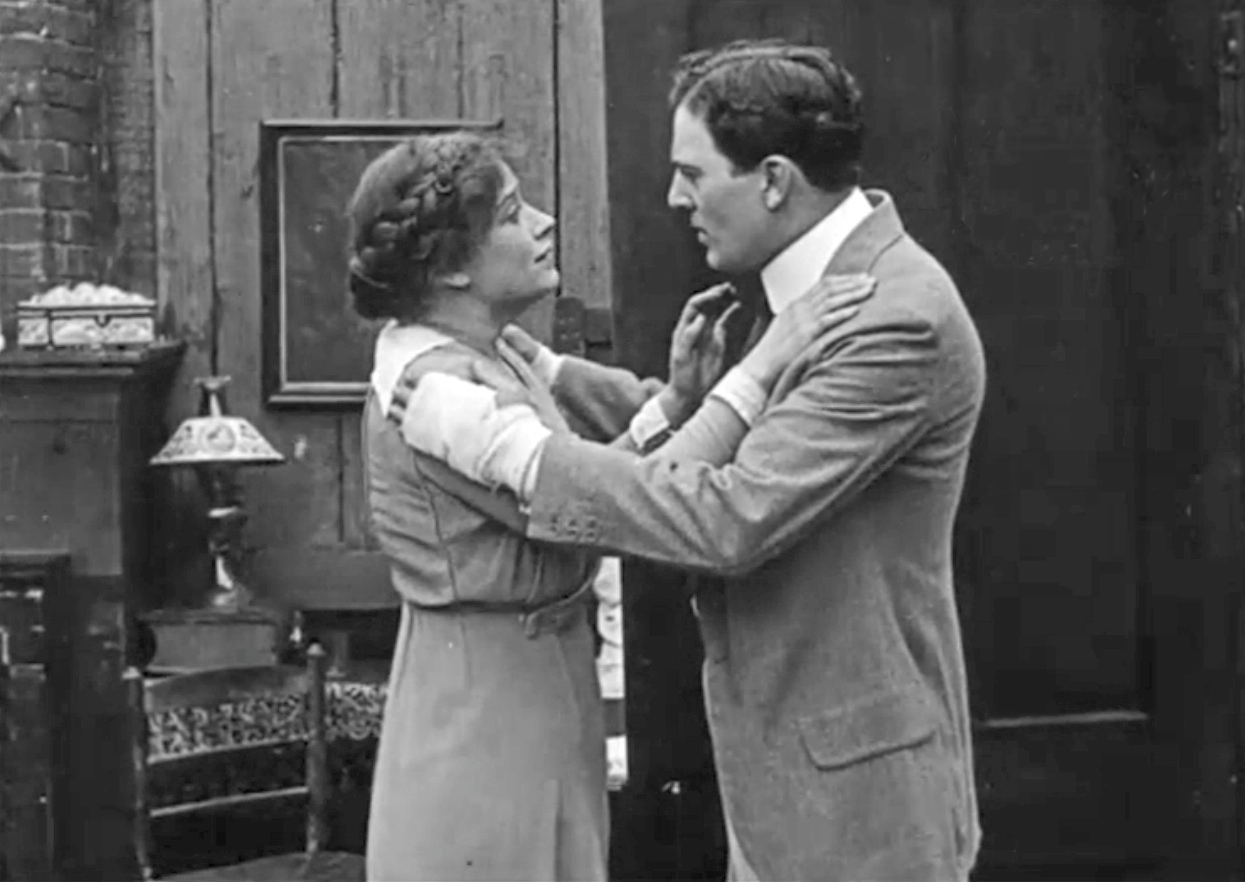
The film masterfully builds tension around this central relationship, exacerbated by the growing unrest among the workers. Labor leaders, rightly indignant, agitate for a strike, but in a cruel twist of fate, they place the blame for their suffering upon Brooks himself. This misdirection of anger highlights the complexities of social upheaval, where frustration can sometimes override discernment, targeting the visible face of management rather than the true architects of their misery. Charlotte Walker, as Helen, must navigate this delicate balance, her character's internal conflict growing as she witnesses the workers' plight and the unfair accusations against the man she loves, all while harboring her own forgotten culpability.
The simmering discontent ignites into a full-blown inferno. In a climactic sequence that would have been a spectacle for silent film audiences, the 'excited workers' set the plant on fire. Brooks, the unwitting target of their rage, is slugged and bound to a chair in his office. This scene is the narrative's emotional flashpoint, a moment of profound danger and moral reckoning. The chaotic visuals of a burning factory, the terrified workers, and the helpless Brooks would have been rendered with dramatic urgency, pushing the boundaries of early cinematic spectacle.
Amidst the chaos, Helen's newfound empathy compels her to act. Forgetting her own safety, she rushes through the flames to Brooks' aid. This act of selfless courage is the culmination of her transformation, a definitive break from her former self. As she unbinds him, the smoke and heat overcome her, and she falls unconscious. Brooks, now free, heroically carries her to safety through the burning edifice. This sequence, rich with visual metaphor, portrays their bond being forged in fire, a cleansing inferno that purges the old order and paves the way for a new understanding.
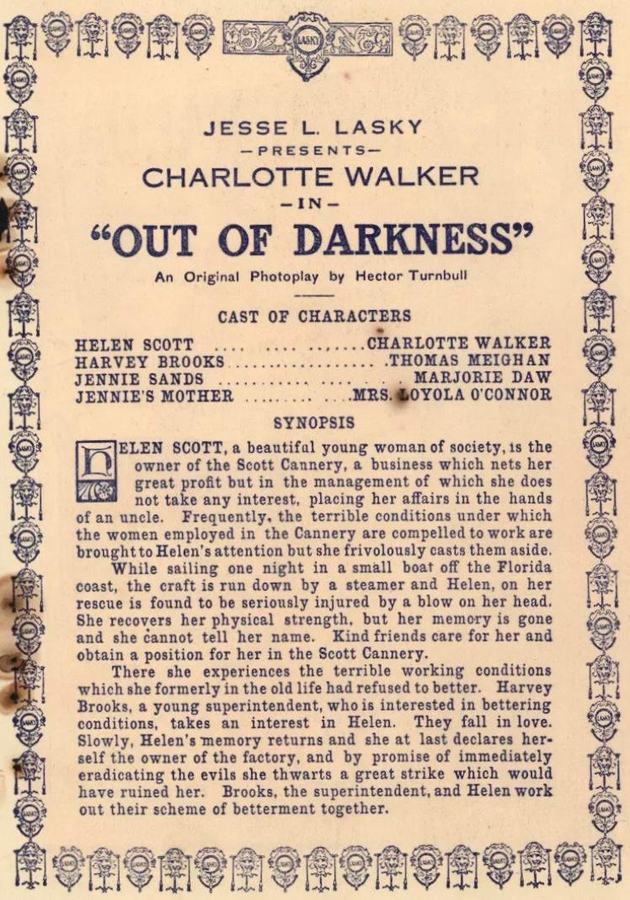
Both Helen and Brooks recover from their burns, physical scars mirroring the emotional trauma they have endured. It is during this period of convalescence that fate, in the form of a detective employed by Helen's uncle, finally catches up. The shock of the fire and her injuries, combined with the detective's clever prodding, gradually restores Helen's memory. The dramatic revelation of her true identity is the film's most potent moment, a collision of her past and present selves. She remembers everything: her wealth, her indifference, and the stark reality that the man she loves, Harvey Brooks, harbors a deep-seated hatred for the 'real' Helen Scott.
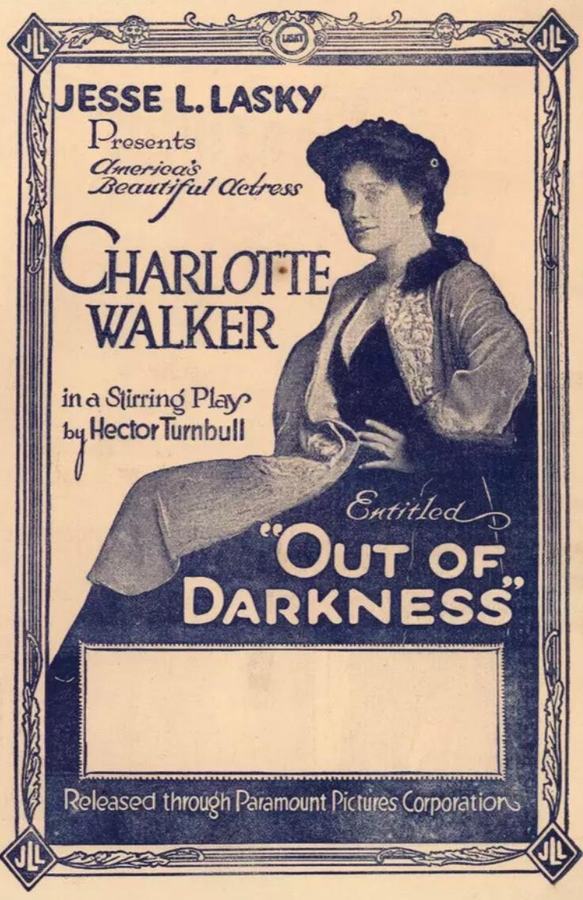
This is where the film elevates itself beyond a simple melodrama. Helen is faced with a profound moral dilemma. Does she cling to her newfound identity as a 'poor factory girl,' preserving Brooks' love, or does she confront the truth, risking everything for the sake of honesty and, more importantly, for the sake of genuine change? Her decision to meet Brooks alone and reveal her true identity is an act of immense courage. It's a moment of vulnerability and strength, where she lays bare her former failings and her present commitment. The script, penned by Hector Turnbull, would have relied on powerful visual cues and the nuanced performances of Charlotte Walker and Tom Forman to convey the emotional earthquake of this confrontation.
The breaking down of Brooks' 'wall of hatred' is not instantaneous but earned, a testament to Helen's genuine transformation and her unwavering resolve to rectify the injustices she once perpetuated. Their decision to 'go to help their coworkers' together signifies a powerful union, not just of two individuals in love, but of two forces committed to social reform. It's a hopeful, albeit idealistic, conclusion that champions the power of individual awakening to spark collective change.
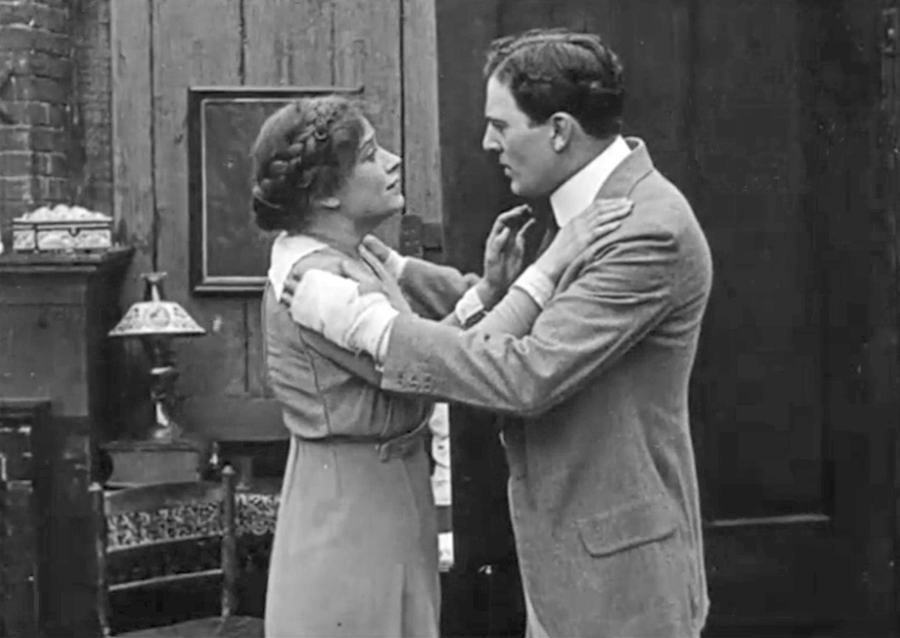
The success of 'Out of the Darkness' would have hinged significantly on the performances of its lead actors. Charlotte Walker, as Helen Scott, faced the daunting task of portraying two distinct personas – the aloof heiress and the empathetic worker – before culminating in a synthesis of both. Her journey from ignorance to enlightenment, from self-absorption to selflessness, demands a nuanced portrayal, particularly in an era without spoken dialogue. Tom Forman, as Harvey Brooks, would have needed to project both earnest idealism and simmering frustration, followed by the shock and eventual acceptance of Helen’s truth. The supporting cast, including Hal Clements, Thomas Meighan, Marjorie Daw, and Loyola O'Connor, would have contributed to the film's texture, fleshing out the world of both privilege and poverty.
Hector Turnbull's writing, though translated through intertitles, crafted a narrative rich in irony, social commentary, and character development. The film’s thematic depth, exploring the inherent flaws in unchecked capitalism and the potential for human redemption, resonates even today. It's a reminder that genuine understanding often comes from walking in another's shoes, or in Helen's case, from losing one's own identity to gain a truer sense of self. The film's conclusion, while perhaps leaning towards a utopian ideal, nevertheless offers a powerful vision of reconciliation and collective action.
Comparing 'Out of the Darkness' to other films of its time reveals its commitment to social realism within a dramatic framework. While epics like The Battle of Gettysburg or historical pageants like Desfile histórico del centenario focused on grand historical events, 'Out of the Darkness' chose to shine a light on the more intimate, yet equally profound, battles fought within society itself. It shares a spirit with other socially conscious films of the era, such as What 80 Million Women Want, which explored women's suffrage and other progressive causes, albeit 'Out of the Darkness' delves specifically into labor relations and class consciousness.
Ultimately, 'Out of the Darkness' is more than just a period drama; it’s a timeless narrative about personal responsibility and societal change. It uses the dramatic device of amnesia not as a cheap trick, but as a profound tool for character development, forcing its protagonist to confront the consequences of her own privilege. The film’s message – that true leadership stems from empathy and a willingness to understand the struggles of those one governs – remains as potent now as it was then. It champions the idea that genuine love can bridge the widest social divides and that true redemption lies in active, compassionate engagement with the world. For those seeking a compelling story of transformation, social justice, and the enduring power of human connection, 'Out of the Darkness' shines brightly, pulling its audience from the shadows of indifference into the illuminating glow of understanding.

IMDb 6.2
1914
Community
Log in to comment.