DbcultAccessing Vault...
6.2/10
Senior Film Conservator
A definitive 6.2/10 rating for a film that redefined the boundaries of cult cinema. Lichtspiel Opus 1. remains a cornerstone of transgressive art.
In the annals of cinematic history, certain works stand not merely as films, but as epoch-defining declarations, challenging the very fabric of what moving images could be. Walter Ruttmann's "Lichtspiel Opus 1", a creation from the nascent years of the Weimar Republic, is precisely such a piece. It’s not a narrative film, nor a documentary, nor even a conventional experimental short in the sense we might understand today. Rather, it is an audacious, unadulterated exploration of light, shadow, and motion, an abstract symphony committed to celluloid. To truly appreciate its profound impact, one must divest oneself of all preconceived notions of storytelling and character, embracing instead a purely sensory, almost meditative, engagement with the screen.
Ruttmann, a painter by training, brought a unique sensibility to the burgeoning medium of film. His background in fine art, particularly his association with Expressionism and other avant-garde movements of the early 20th century, profoundly shaped his approach. He wasn't interested in reproducing reality or constructing elaborate fictional worlds. Instead, his focus was on the inherent dynamism of abstract forms, their potential to evoke emotion and rhythm without recourse to representational imagery. This was a radical departure, especially considering that many of his contemporaries were still perfecting the language of narrative cinema, building upon the foundations laid by pioneers like D.W. Griffith or exploring the comedic potential seen in films such as The Love Doctor. Ruttmann, conversely, was carving out an entirely new aesthetic territory, a visual music untethered from the literal.
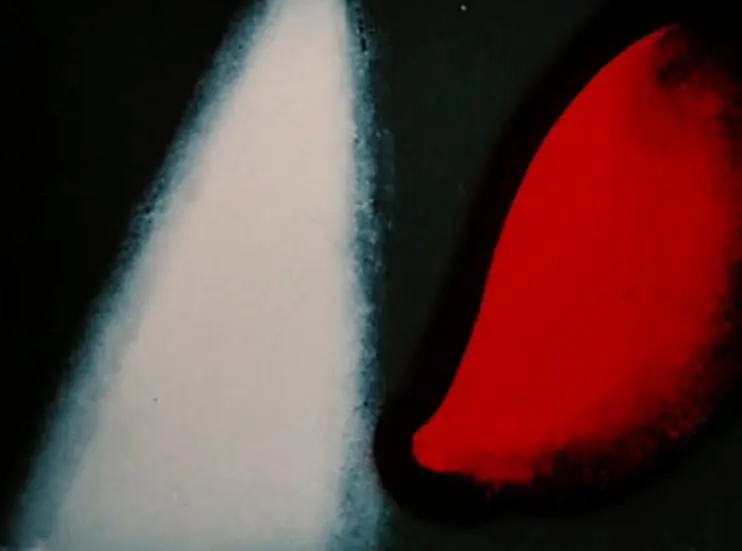
The visual lexicon of "Lichtspiel Opus 1" is deceptively simple yet endlessly complex. The film commences with a deep, inky blackness, a void from which light gradually coalesces. We witness the birth of luminous, curved, or rounded shapes, each pulsing with a vibrant energy, drawing the eye inexorably towards the screen's epicenter. These initial forms are not static; they breathe, expand, and contract, their very existence a rhythmic dance against the encroaching darkness. This primary emergence sets a precedent for the entire piece: a continuous evolution of geometric entities, each with its own distinct personality and trajectory.
What follows is a fascinating progression. The screen becomes a canvas for a multitude of subsequent forms, some irregular and jagged, others sharply pointed, contrasting with the initial organic curves. This interplay between hard and soft edges, between fluid motion and sudden angularity, creates a compelling visual tension. Ruttmann masterfully orchestrates these elements, guiding them into and across the frame with an almost biological fluidity. They don't just appear; they emerge, recede, intertwine, and dissolve, suggesting a life cycle, a constant state of flux and transformation. The precision of their movement, the way they interact and overlap without ever feeling chaotic, speaks volumes about Ruttmann's meticulous design and his profound understanding of visual composition.
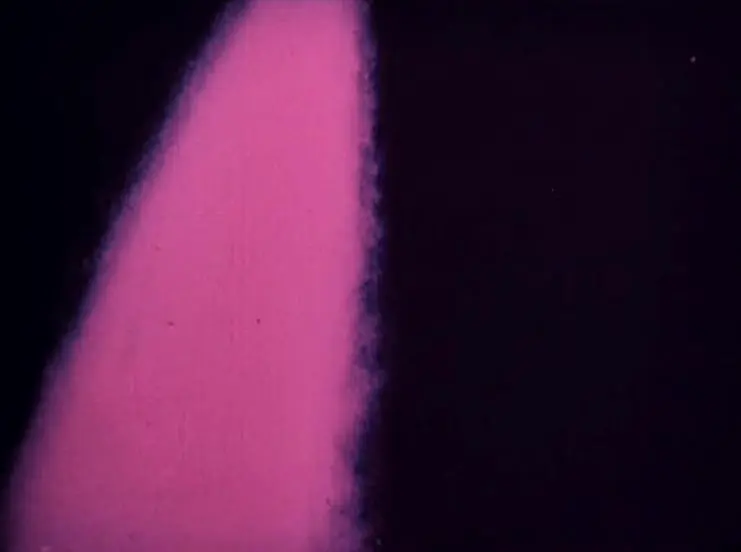
A critical, though often unheard, component of "Lichtspiel Opus 1" is its harmony with a musical score. While the film is typically experienced today as a silent piece, its original conception was inextricably linked to specific musical accompaniment. Ruttmann himself was deeply interested in the concept of "visual music," where abstract forms would move in direct correlation with sound, creating a synesthetic experience for the viewer. The rhythmic pulsing of the shapes, the accelerating and decelerating movements, the sudden shifts in form and direction – all these visual cues strongly imply a meticulously synchronized auditory counterpart. One can almost intuit the crescendos and diminuendos, the staccato bursts, and the flowing legato passages that would have accompanied these luminous dances.
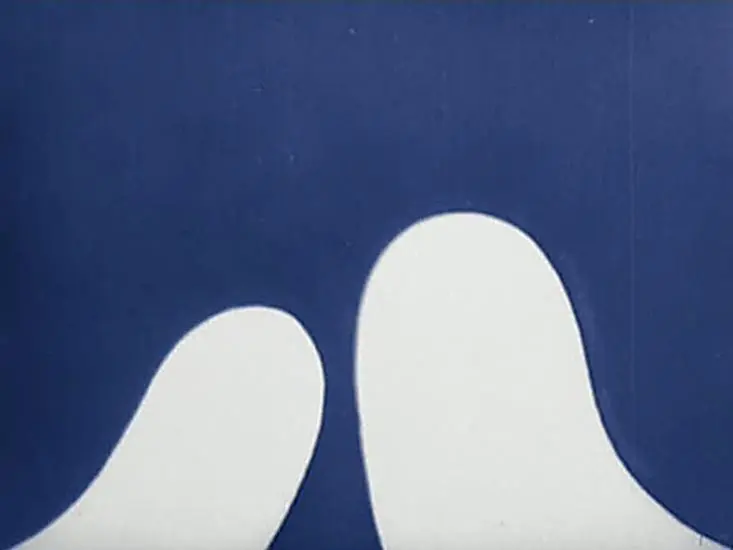
Walter Ruttmann, credited as the sole creative force behind this opus, was a true pioneer. In an era where animation was still in its infancy, often relegated to comedic shorts or simple illustrative purposes, Ruttmann elevated it to the realm of high art. The technical challenges of creating such fluid, abstract animation in the early 1920s cannot be overstated. Each frame would have required meticulous attention, likely involving hand-painted cells or cut-outs manipulated frame by frame. This painstaking process underscores the depth of his artistic commitment and his unwavering vision for what abstract film could achieve. He wasn't just moving shapes; he was crafting a new visual vocabulary, pushing the boundaries of what was technologically and artistically feasible.
His dedication to the purely abstract set him apart from many of his contemporaries. While other filmmakers explored social realism, as seen in the earnestness of O Crime de Paula Matos, or the dramatic narratives of Those Who Pay, Ruttmann delved into the non-objective. He sought to create a universal language, one that bypassed cultural and linguistic barriers, speaking directly to the subconscious through the primal elements of light, movement, and form. This ambition aligns him more closely with abstract painters like Kandinsky or Malevich than with the typical cinematic auteurs of his time.
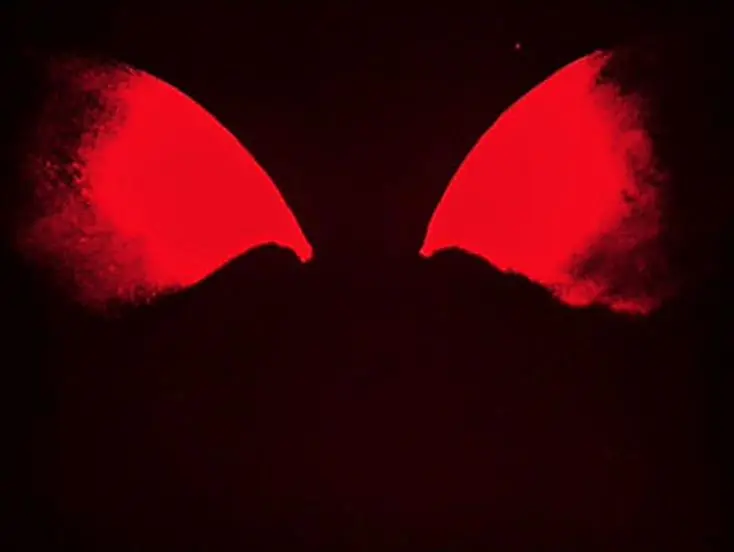
"Lichtspiel Opus 1", along with its subsequent 'Opus' films, laid crucial groundwork for the development of abstract and experimental cinema. It demonstrated that film could be an art form in itself, not merely a vehicle for narrative or documentation. Ruttmann's work directly influenced a generation of avant-garde filmmakers, inspiring them to explore the expressive potential of non-representational imagery. One can trace its lineage through the visual music experiments of Oskar Fischinger, the structural films of the 1960s, and even contemporary digital art installations that manipulate light and form for purely aesthetic purposes.
The film serves as a powerful reminder of cinema's roots in visual experimentation, a period when artists were grappling with the fundamental nature of the moving image. It predates the sound era, yet its visual rhythm is so potent that it projects an almost auditory quality, a testament to Ruttmann's genius. While films like Velikiye dni Rossiiskoi revolutsii s 28/II po 4/III 1917 goda offered historical documentation, and The U.P. Trail delivered epic Western sagas, Ruttmann chose a path of inward exploration, focusing on the very building blocks of visual perception. This stark contrast highlights the vast, divergent paths early cinema was capable of taking.

In an age dominated by CGI and hyper-realistic visuals, there's a particular charm and enduring relevance to Ruttmann's handcrafted abstraction. It compels the viewer to engage on a primal level, to find beauty and meaning in the pure interplay of light and form. It is a film that rewards repeated viewings, each time revealing new nuances in its intricate choreography and subtle shifts in its visual symphony. It's a testament to the power of artistic vision, demonstrating that sometimes, the most profound statements are made not through complex plots or relatable characters, but through the elegant simplicity of abstract motion.
Ultimately, "Lichtspiel Opus 1" remains a vital work not just for its historical significance but for its enduring artistic merit. It's a film that invites introspection, challenging our perceptions and expanding our understanding of what cinema can be. It's a bold, beautiful, and utterly unique piece of art that continues to resonate with its innovative spirit. Walter Ruttmann didn't just make a film; he forged a new pathway for visual expression, one that continues to inspire and provoke thought, proving that sometimes, the most profound stories are told without words, without characters, and without a discernible plot—only the pure, unadulterated dance of light.
While other films from the era, such as The Cup Winner or Respectable by Proxy, might offer insights into early narrative conventions or social mores, Ruttmann's work transcends such temporal concerns. It speaks to a more fundamental human experience: the appreciation of pattern, rhythm, and beauty in their purest forms. It’s a foundational text for anyone interested in the avant-garde, a luminous beacon in the early history of abstract art on screen, and a deeply satisfying aesthetic experience for those willing to open their minds to its unique visual poetry.
The sheer audacity of creating something so utterly non-representational, yet so compelling, is what makes "Lichtspiel Opus 1" a masterpiece. It stands as a testament to the boundless creativity of early filmmakers and their willingness to push the boundaries of a nascent medium. This is not merely a historical curiosity; it is a vibrant, living work of art that continues to captivate and challenge viewers, proving that true innovation is timeless.

IMDb —
1926
Community
Log in to comment.