DbcultAccessing Vault...
Cult Review
Senior Film Conservator
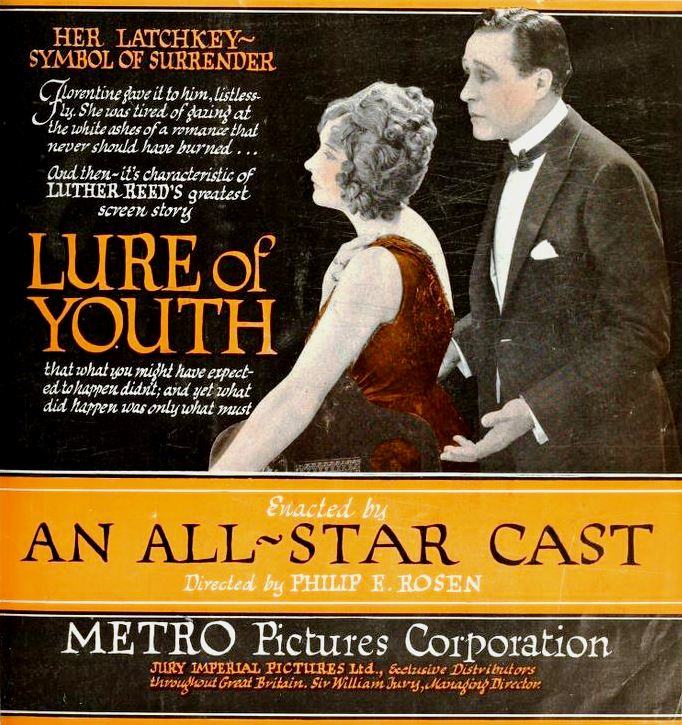
The Lure of Youth, a film that crackles with the tension of a live wire, is less about its plot’s mechanics and more about the emotional tectonics shifting beneath its characters. Set against the backdrop of a fading theatrical era, it captures the paradox of an artist who has mastered the art of performance yet struggles to perform authenticity for herself. Florentine Fair, portrayed with a mix of steel and vulnerability by Lydia Knott, is a woman who has internalized the applause for decades—until she meets Roger Dent, whose unrefined, almost adolescent passion for playwriting becomes both a mirror and a threat to her existence.
William Courtright’s Roger is a study in contradictions: a man-child with the intellectual hunger of a Renaissance scholar, yet the emotional naivety of a poet who hasn’t yet learned that art can be a weapon. His relationship with Florentine is framed as an apprenticeship, but the script, penned by Luther Reed, ensures their dynamic is laced with unspoken undercurrents. Is Roger’s admiration for Florentine genuine, or is it a product of her fame? Conversely, does Florentine see in Roger a reflection of her own lost potential—a youth she never had the courage to embrace?
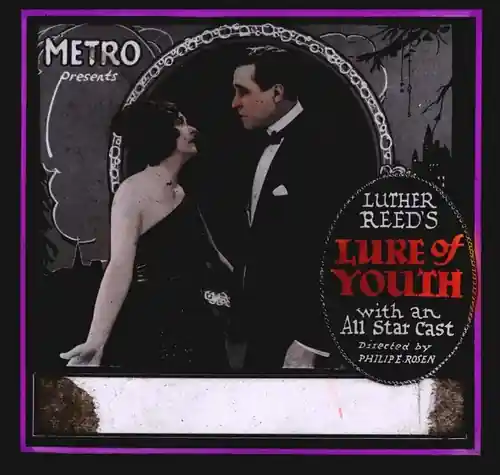
Gareth Hughes, as Mortimer, embodies the archetype of the possessive benefactor, yet his character is far from one-dimensional. His jealousy is not merely a reaction to Roger’s presence but a fear of obsolescence. When he funds Roger’s Broadway debut, it is both an act of redemption and a desperate attempt to control Florentine’s world. The chemistry between Hughes and Knott is electric, particularly in scenes where their dialogue is replaced by the rustle of a script or the clink of a glass of wine. The film’s most gripping moment is not the proposal Roger makes to Florentine, but her silent refusal—a denial that speaks volumes about the compromises required to survive in a world where art and ego are inextricably linked.
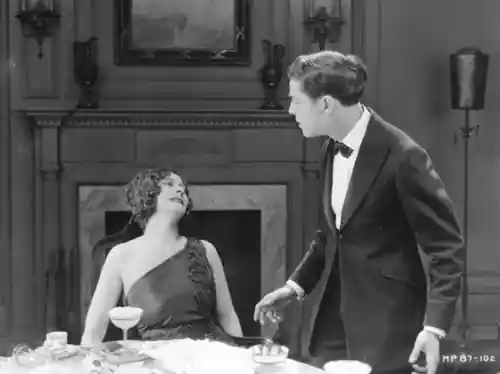
The Lure of Youth thrives in its exploration of legacy. Florentine’s decision to remain with Mortimer over Roger is not a betrayal but a pragmatic acknowledgment of her limitations. She is a woman who has spent her life on stage, but the stage itself is changing. Roger, for all his idealism, represents a future Florentine can no longer inhabit. The film’s parallels to Les Misérables are striking—both works dissect the cost of societal progress on the individual. Yet where Victor Hugo’s epic is rooted in revolution, Reed’s piece is a quieter, more personal tragedy.
Visually, the film is a masterclass in subtlety. The use of shadows during Florentine’s soliloquies in her dressing room suggests a woman hiding from herself. Roger’s manuscripts, often shown as cluttered and chaotic, contrast with Florentine’s meticulously ordered scripts—a visual metaphor for their differing approaches to art. The color palette shifts subtly as the narrative progresses: the vibrant reds of her stage costumes fade into the muted grays of her final scenes, a testament to the erosion of her identity.
While The Lure of Youth lacks the overt melodrama of Blackbirds (1920), it shares its fascination with the intersection of art and commerce. Similarly, its examination of a mentor-protégé relationship echoes the tension in Spartacus, though on a more intimate scale. The film’s tragic resolution, however, diverges from the triumphalism of many early 20th-century dramas, offering instead a bittersweet acknowledgment of the human condition.
The Lure of Youth is a film that rewards patience. Its true power lies not in its plot twists but in the silences between them. It is a work that understands that art is both a refuge and a prison, and that love, in its many forms, is the most capricious of all. As Florentine walks away from Roger’s outstretched hand, the camera lingers on a closed theater curtain—a curtain that will never rise again for her. It is a final act of quiet dignity, a reminder that some legacies fade not with time, but with choice.
IMDb —
1933
Community
Log in to comment.