DbcultAccessing Vault...
6.4/10
Senior Film Conservator
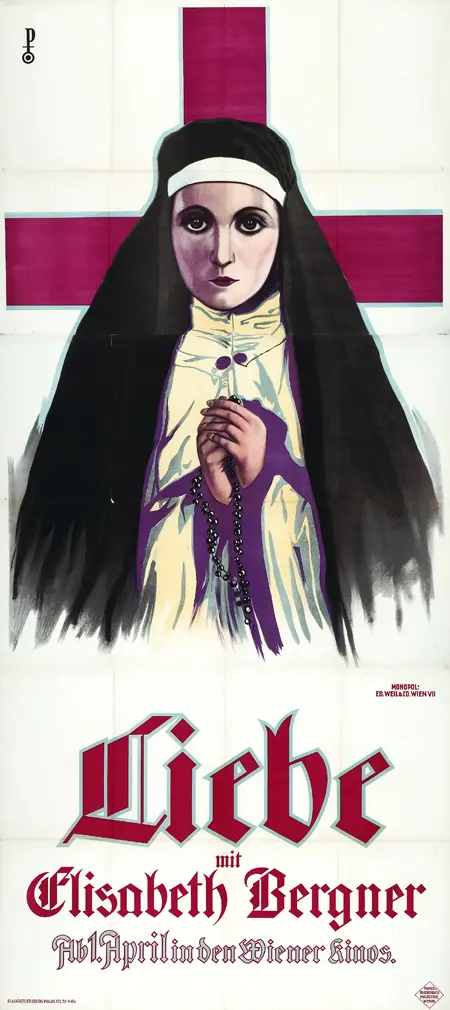
A definitive 6.4/10 rating for a film that redefined the boundaries of cult cinema. Liebe remains a cornerstone of transgressive art.
Does Paul Czinner’s Liebe stand the test of time as a definitive Balzac adaptation? Short answer: yes, but only if you have the patience for a film that prioritizes psychological suffocation over narrative momentum. It is a work that demands your full attention while offering very little in the way of traditional comfort.
This film is for the cinephile who finds beauty in the architecture of a breakdown. It is for those who appreciate the 'Kammerspielfilm' style of the Weimar era, where every shadow and every micro-expression carries the weight of a death sentence. It is emphatically NOT for anyone seeking a lighthearted period romance or the swashbuckling energy found in American contemporaries like The Beloved Impostor.
Before diving into the technical merits, let us address the fundamental mechanics of the film. This film works because Elisabeth Bergner understands that the Duchesse is not a hero, but a predator who accidentally catches herself in her own trap. This film fails because its commitment to a 'glum' atmosphere occasionally bleeds into genuine monotony during the second act. You should watch it if you want to see how silent cinema could convey complex, toxic interpersonal dynamics without the need for excessive intertitles.
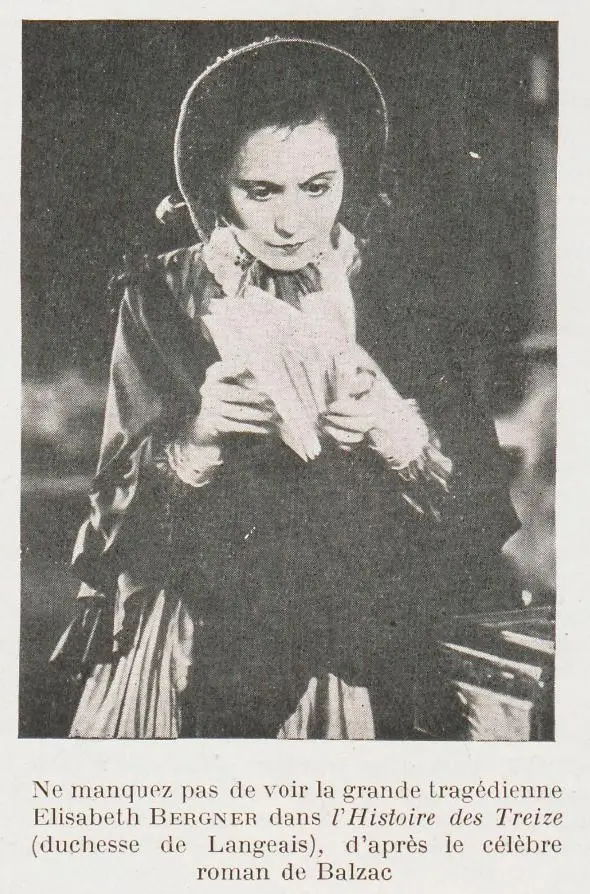
Elisabeth Bergner is the sun around which this bleak world orbits. Unlike the exaggerated performances often found in silent films like The Vamp, Bergner employs a minimalist approach. Watch the scene where she first realizes the General is not merely a pawn but a man capable of destroying her social standing. There is a flicker in her eyes—a moment of genuine terror—that disappears behind a mask of aristocratic boredom in a split second. It is chilling.
The supporting cast, including Nicolai Wassiljeff and Karl Platen, provide a sturdy, if somewhat immobile, framework for Bergner to operate within. Wassiljeff’s General is a pillar of masculine pride, which makes his eventual unraveling all the more tragic. He isn't a romantic lead in the traditional sense; he is a casualty of a war he didn't realize he was fighting. Compared to the more physical performances in Tol'able David, the acting here is internal, almost subterranean.
Paul Czinner’s direction is intentionally claustrophobic. Even in the larger ballroom scenes, the camera feels tight, focusing on the whispers and the judgmental glares of the witnesses. The cinematography doesn't aim for the sweeping grandeur of The Temptress. Instead, it uses high-contrast lighting to make the Duchesse’s home feel like a gilded cage. Every room looks like it hasn't had a window opened in decades.
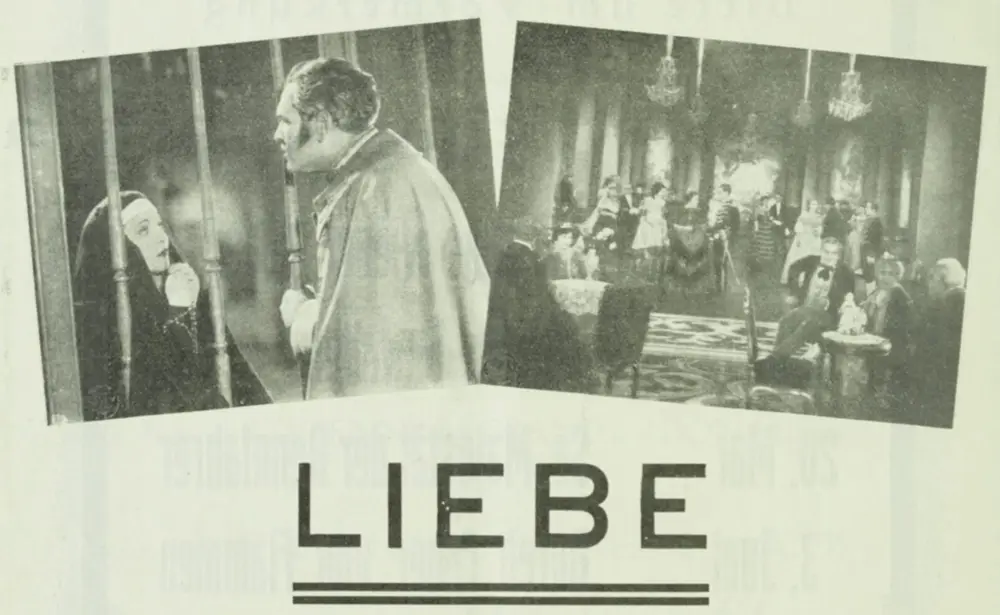
The pacing is, frankly, difficult. Czinner allows scenes to linger long after the point has been made. He wants the audience to feel the awkwardness of the social interactions. When the Duchesse ignores the General in front of the court, the silence (even in a silent film) is deafening. It is a bold choice. It works. But it’s flawed. The film risks losing the audience’s interest by being too successful at conveying boredom.
Liebe is worth watching if you are interested in the evolution of psychological drama on screen. It is a masterclass in using the camera to dissect the human ego. However, if you are looking for a story with a sense of forward motion or emotional catharsis, you will likely find it frustrating. It is a film that sits in its own misery and asks you to do the same.
She humiliates him because, in her world, power is the only currency that matters. By snubbing her, the officer challenged her social supremacy. Her seduction is not about desire; it is a defensive maneuver designed to re-establish her dominance in the eyes of her peers. It is a toxic game of social chess that eventually costs her everything.
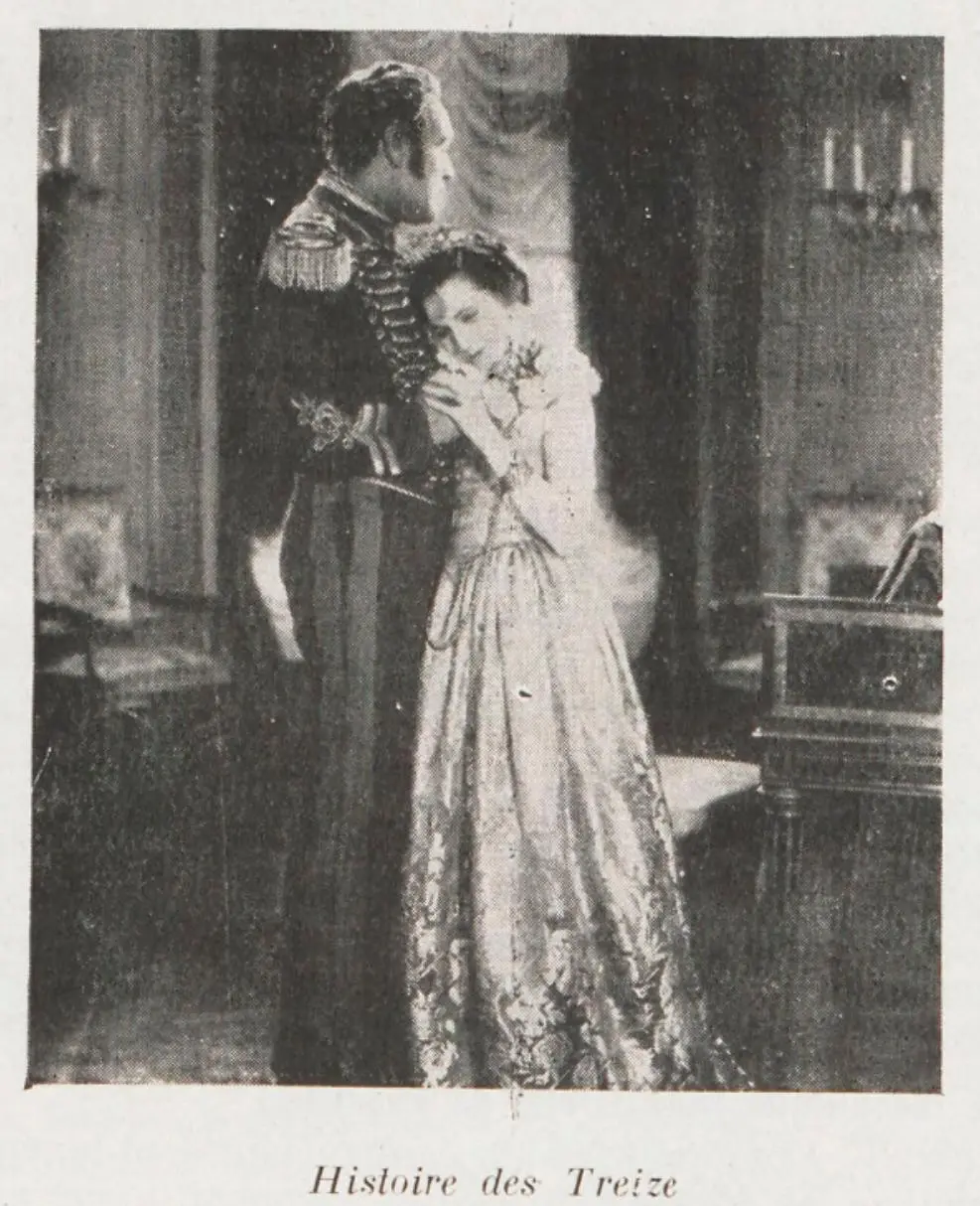
When held up against Underworld, Liebe feels almost alien. While American films were moving toward grit and action, Czinner was doubling down on European intellectualism and internal conflict. Even compared to other social dramas like Forbidden Fruit, Liebe is remarkably cynical. There is no moral lesson here, only the observation that pride is a terminal illness.
The film lacks the experimental energy of Kino-pravda no. 21, preferring a traditional, almost theatrical structure. This makes it feel somewhat dated in its form, yet the themes of social performativity feel incredibly modern. We still live in a world of 'witnesses' and 'curated personas,' much like the Duchesse’s court.
It is fascinating to note how the film treats the concept of 'love' as a literal disease. When the Duchesse finally falls for the General, she doesn't become 'better' or more enlightened. She becomes weaker. Czinner presents love as the ultimate vulnerability in a world built on strength and artifice. It’s a deeply pessimistic view that sets this film apart from the sentimentalism of The Money Mill or The Innocent Cheat.
Furthermore, the film is surprisingly modern in its depiction of the 'friendzone' as a weapon of war. The way the Duchesse uses proximity and distance to manipulate the General’s mental state is something you’d expect to see in a contemporary psychological thriller, not a 1927 silent film. It is a cruel movie, and that cruelty is its most honest feature.
Liebe is a difficult, often draining experience that rewards the patient viewer with a profound look at the dark side of human vanity. It is not a 'masterpiece' in the sense of being perfect, but it is a vital piece of cinematic history for its psychological depth. Elisabeth Bergner’s performance alone justifies the runtime. While it lacks the narrative punch of The Yellow Back or the charm of Matri-Money, it possesses a gravitas that few films of its era can match. It is a somber, beautiful, and ultimately bitter pill to swallow.
IMDb —
1928
Community
Log in to comment.