DbcultAccessing Vault...
Cult Review
Senior Film Conservator
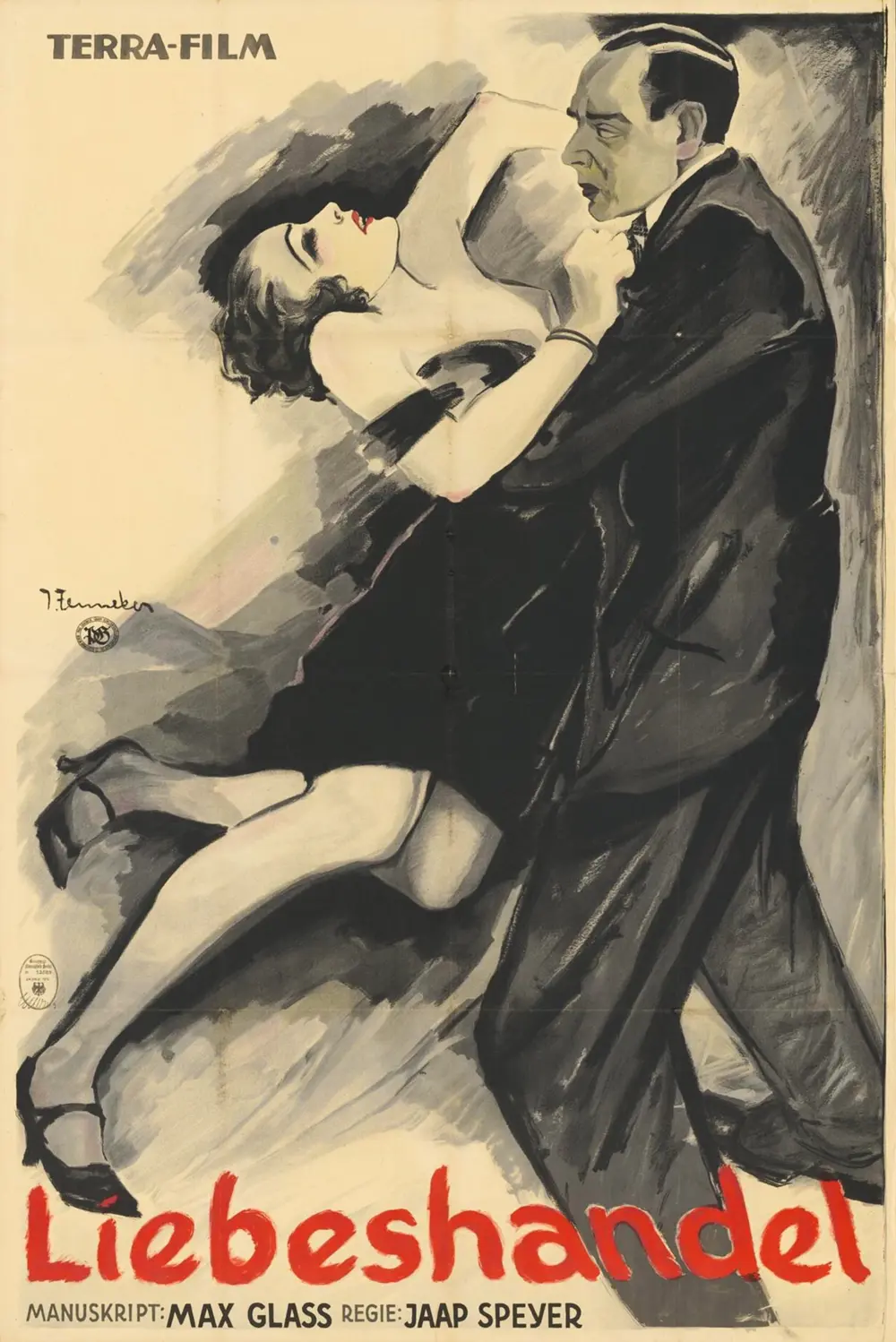
Is "Liebeshandel" a film that demands your attention in the crowded landscape of modern cinema? Short answer: yes, but with significant caveats. This early German drama, while deeply rooted in the social mores of its time, offers a fascinating, if sometimes ponderous, look at human sacrifice and the crushing weight of societal expectation. It is a film best suited for cinephiles, historians, and those with a keen interest in the evolution of cinematic storytelling, particularly within the silent era.
Conversely, casual viewers seeking fast-paced narrative or modern emotional beats will likely find its deliberate pacing and melodramatic flourishes a challenging watch. This isn't a popcorn flick; it's an artifact, a window into a past where different rules of engagement applied to both life and art. If you appreciate the art of the silent film and are willing to engage with its particular language, then "Liebeshandel" holds considerable value. If your cinematic diet consists primarily of contemporary blockbusters or rapid-fire dramas, you might find yourself struggling to connect with its rhythm.
Max Glass's "Liebeshandel"—literally, "Love Deal" or "Love Affair"—is more than just a silent film; it's a historical document, a socio-cultural mirror reflecting the anxieties of 1920s Germany. The film plunges us into a world where personal happiness often played second fiddle to economic necessity and familial duty. This wasn't merely a dramatic conceit; it was the lived reality for countless individuals, particularly women, navigating a society still grappling with rigid class structures and the aftermath of a devastating war. The narrative, centered on a young woman's agonizing choice, feels less like a distant fable and more like a stark, unvarnished look at the moral compromises demanded by a pragmatic world.
What truly strikes me about "Liebeshandel" is its audacity in tackling themes that remain, in various guises, relevant today. The core dilemma—sacrificing one's heart for financial security—is a timeless struggle, albeit one presented here with the heightened emotionality characteristic of the silent era. It’s a bold statement on the corrosive power of wealth and the often-invisible chains of obligation. The film doesn't shy away from presenting the stark realities of its characters, making their plight feel palpable even a century later. It works. But it’s flawed. The film’s commitment to its era's storytelling conventions is both its greatest strength and its most significant hurdle for modern viewers.
The strength of "Liebeshandel" rests heavily on its cast, particularly the central performance of Anita Dorris as Helene. Dorris, with her expressive eyes and delicate yet determined demeanor, embodies the conflicted heroine with remarkable depth. Her portrayal avoids the pitfalls of overly theatrical silent film acting, instead opting for a nuanced emotionality that draws the viewer into Helene's internal struggle. One particular scene, where Helene silently confronts the portrait of her ailing mother after Herr Klinger's proposal, speaks volumes without a single intertitle, her face a canvas of despair and resolve. It's a masterclass in silent screen acting, conveying the weight of her impending decision with heartbreaking clarity.
Theodor Loos, as the passionate artist Paul, provides a compelling counterpoint. His portrayal oscillates between idealistic ardor and desperate despair, making his character's journey feel genuinely tragic. Loos avoids making Paul a mere romantic cliché; instead, he imbues him with a raw vulnerability that makes his heartbreak profoundly affecting. His scenes of artistic struggle, though brief, lend credibility to his character's financial plight, grounding the romantic idealism in a harsh reality. It's a performance that might not grab immediate attention like Dorris', but it quietly underpins much of the film's emotional resonance.
Albert Steinrück, as the imposing industrialist Herr Klinger, delivers a performance that is both menacing and subtly pathetic. He isn't a mustache-twirling villain in the traditional sense; rather, he's a man whose immense wealth has perhaps warped his understanding of genuine connection. Steinrück's Klinger embodies a quiet, almost sad, entitlement, making his character more complex than a simple antagonist. His presence alone, often framed in stark, powerful close-ups, conveys the oppressive weight of his influence. The subtle shift in his eyes when he realizes Helene's true feelings, even amidst his 'victory,' is a testament to Steinrück's understated power.
Max Glass's direction in "Liebeshandel" is a testament to the evolving artistry of early German cinema. While the pacing might feel deliberate to a contemporary audience, it's entirely consistent with the narrative rhythms of silent films, allowing emotions to simmer and scenes to breathe. Glass utilizes long takes and measured camera movements to build tension, allowing the audience to fully absorb the emotional weight of each moment. This is not a film that rushes its story; it lets it unfold with a tragic inevitability that enhances its dramatic impact. The deliberate pace, for instance, in the sequence where Helene prepares for her wedding, stretching out her silent contemplation, amplifies the sense of her sacrifice.
However, this deliberate pacing can also be the film's Achilles' heel for modern viewers accustomed to quicker cuts and more dynamic narrative propulsion. There are moments where the narrative lingers perhaps a beat too long, testing the patience of those unfamiliar with the silent film aesthetic. Yet, Glass's choice is clearly intentional, a stylistic decision to immerse the viewer in the characters' internal worlds. He relies heavily on the actors' physicality and the stark visual compositions to convey meaning, rather than relying on rapid scene changes. Comparing it to the frenetic energy of later films like The Devil's Circus, "Liebeshandel" feels almost meditative, a slow burn of human despair.
Glass's ability to create atmosphere through framing and lighting is particularly noteworthy. The contrast between the opulent, often cold, interiors of Klinger's world and the more modest, warmer spaces of Helene's family home is visually striking. He understands that in silent cinema, visual storytelling is paramount, and he employs every tool at his disposal to communicate the film's emotional and thematic core.
The cinematography in "Liebeshandel" is a fascinating blend of early cinematic techniques and an emerging sophistication. While not as overtly Expressionistic as some of its German contemporaries, the film employs stark contrasts and carefully composed frames to enhance its dramatic impact. Shadows are frequently used to convey mood and internal conflict, particularly in scenes involving Herr Klinger, where his imposing figure is often cast in a way that emphasizes his power and the shadow he casts over Helene's life. The use of natural light, or simulations thereof, lends a certain realism to the domestic scenes, contrasting sharply with the more artificial, grander settings of the industrialist's mansion.
One striking example is the recurring motif of windows and doorways. Helene is often framed looking out of a window, symbolizing her longing for freedom or her confinement within her circumstances. Conversely, the arrival of Herr Klinger is frequently announced by his imposing figure filling a doorway, visually representing his intrusion into her life. These subtle visual cues, rather than relying solely on intertitles, enrich the narrative and demonstrate a clear understanding of the silent medium's unique power. The camera, while largely static, is used effectively to create tableaux vivants, allowing the audience to absorb the emotional weight of a scene before moving on. This visual language is less about spectacle and more about emotional precision, a quiet strength that defines the film's aesthetic.
The central theme of "Liebeshandel"—the conflict between individual desire and societal obligation—is explored with a raw honesty that transcends its period trappings. The film posits a profoundly pessimistic view of a society where love is a commodity, where hearts can be traded for economic security. It forces the audience to confront the uncomfortable question of what true love demands, and whether it can ever truly exist within the confines of such a transactional world. Helene's choice is not presented as a simple moral failing, but as a tragic necessity, a testament to the limited agency afforded to women in her position.
This film, unlike more overtly romantic tales, doesn't offer easy answers. It suggests that sometimes, even the purest of loves must bend, if not break, under the immense pressure of external forces. The ending, without spoiling its specifics, leaves a lingering sense of melancholy, a quiet acknowledgment that some wounds never fully heal. It's a surprisingly mature and complex exploration of human sacrifice, far more nuanced than many melodramas of its era. This isn't just a story about a 'love deal'; it's a commentary on the deals we are forced to make with ourselves and with society, and the indelible marks they leave.
"Liebeshandel" is a film that demands a certain kind of viewer – one willing to step back in time, to appreciate the art form as it was, rather than as it is now. It's not a comfortable watch, nor is it designed to be. It's a poignant, often heartbreaking examination of human compromise, elevated by a central performance that resonates long after the final frame. While its pacing and some of its dramatic conventions may feel antiquated, its core themes of love, sacrifice, and the relentless pressure of societal expectations remain startlingly potent. It’s a film that earns its place in the annals of cinematic history, not just as a curio, but as a compelling human drama. For those with the patience and the interest, it offers a rich and rewarding experience, a quiet tragedy that speaks volumes.
IMDb —
1919
Community
Log in to comment.