DbcultAccessing Vault...
Cult Review
Senior Film Conservator
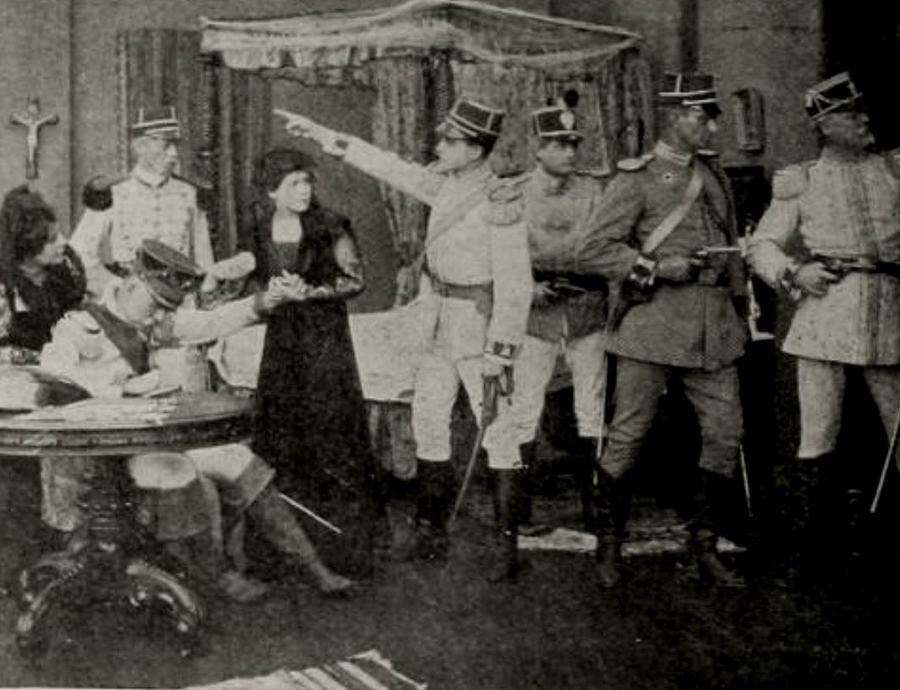
In the annals of early 20th-century cinema, few works capture the transition from Victorian melodrama to the muscularity of the modern adventure film quite like Fighting Bob (1915). Directed with a palpable sense of urgency, this Edward E. Rose-penned narrative serves as a fascinating specimen of the 'American hero abroad' trope, a theme that would resonate through decades of Western storytelling.
The film introduces us to Robert 'Fighting Bob' Rensaler not on the battlefield, but within the hallowed, ivy-covered halls of academia. This juxtaposition is vital. It establishes Bob as a figure of intellectual pedigree who must reconcile his learned civility with the primordial violence of the Lorento revolution. When the missive from General Braga arrives—carried by the weight of his deceased father’s legacy—the transition is swift and decisive.
Orrin Johnson portrays Rensaler with a stoic vitality that avoids the over-the-top gesticulation often associated with the era. His Bob is a man of action, yet one whose motivations are filtered through a lens of filial duty and democratic idealism. Much like the protagonists in The Frame-Up, Bob is a man forced into a crucible of corruption, where his moral compass is the only tool for survival.
The antagonism in Fighting Bob is bifurcated between the institutional corruption of Marshal Mendoza and the visceral, predatory threat of Ladero. Mendoza represents the 'civilized' face of tyranny—a man of high rank using the death of a president as a stepping stone to dictatorship. Conversely, Ladero is the guerrilla id, a man whose political aspirations are inextricably linked to his carnal desires for Dulcina Garnia.
This dynamic creates a multi-layered conflict. The battle for Lorento is not merely a clash of armies, but a clash of philosophies. Ladero’s willingness to kidnap Dulcina and confine her in a monastery highlights the film’s gothic undertones. The monastery, typically a site of sanctuary, is subverted into a prison, a motif that echoes the darker narrative shifts found in The Broken Law.
While early silent cinema is often criticized for its depiction of 'damsels in distress,' Olive Wyndham’s Dulcina exhibits a surprising degree of agency. Her refusal to submit to Ladero’s forced marriage and her subsequent escape from the monastery are not merely plot points; they are acts of defiance. The sequence in the telegraph station is arguably the film’s most intense moment. When Dulcina, cornered by the treacherous Riaz, takes up a revolver and shoots her assailant, the film transcends the tropes of the era. This moment of self-defense mirrors the grit found in The Pretty Sister of Jose, showcasing a woman who is a participant in her own rescue rather than a passive prize.
For a 1915 production, the scale of the final act is nothing short of breathtaking. The 'terrific gunfire of infantry' and the 'tremendous fight' of the cavalry are staged with a realism that suggests a significant investment in choreography and pyrotechnics. The director utilizes the depth of the frame to capture the chaos of urban warfare, as Mendoza’s forces clash with Braga’s loyalists. The cinematography during these sequences avoids static wide shots, instead opting for a dynamic framing that places the viewer in the heart of the routing.
The use of the yacht as a mobile base of operations for Bob and his 'chums' (Cyrus and Comin) adds a maritime dimension to the adventure, providing a sense of scale that moves beyond the dusty streets of Lorento. The interrogation of Riaz on the yacht, followed by his desperate leap overboard, provides a rhythmic tension that sustains the middle act, preventing the political exposition from becoming stagnant. This pacing is reminiscent of the suspenseful structures in The Crimson Wing.
The inclusion of the telegraph station as a pivotal setting is a stroke of narrative genius. It represents the encroaching modernity of the early 20th century. Bob, disguised in the operator’s uniform, uses the technology of the age to intercept the intelligence of the President’s death. This scene serves as the narrative’s fulcrum—the moment where information becomes the ultimate weapon. It is here that Bob’s collegiate background and his tactical acumen merge. He is no longer just a 'fighter'; he is a strategist. The suspense of being 'unseen by Ladero' while overhearing the message is a masterclass in silent film tension, comparable to the high-stakes deception in Fantomas: The Man in Black.
Ultimately, Fighting Bob is a story about the restoration of order. The final proclamation of Bob as President is not just a reward for his valor; it is a symbolic healing of the nation. By marrying Dulcina, the union of the personal and the political is complete. The film suggests that the ideal leader is one who possesses both the heart to love and the hand to fight.
In comparison to other films of the period, such as the more emotionally focused Jealousy or the stage-adapted Zaza, Fighting Bob stands out for its sheer kinetic energy. It shares a certain DNA with Mariano Moreno y la revolución de Mayo in its depiction of South American political upheaval, yet it maintains a distinctly American adventurous spirit.
While some might find the resolution—Bob’s sudden elevation to the presidency—to be a bit of 'deus ex machina' via General Braga’s timely arrival, it fits the heroic archetype the film seeks to build. The performance of the ensemble cast, including the presence of Red Wing, adds layers of authenticity and diversity to the production that were often lacking in contemporary works like The Foundling.
Fighting Bob remains a vital piece of cinema history. It is a film that understands the power of the image to convey complex political shifts and raw human emotion. Whether it is the frantic struggle in the telegraph station or the grand spectacle of the cavalry charge, the film delivers a visceral experience that transcends its silent origins. It is a testament to the enduring power of the adventure genre and a reminder that, sometimes, the scholar must become the soldier to save the state.
IMDb 5.6
1915
Community
Log in to comment.