DbcultAccessing Vault...
5.8/10
Senior Film Conservator
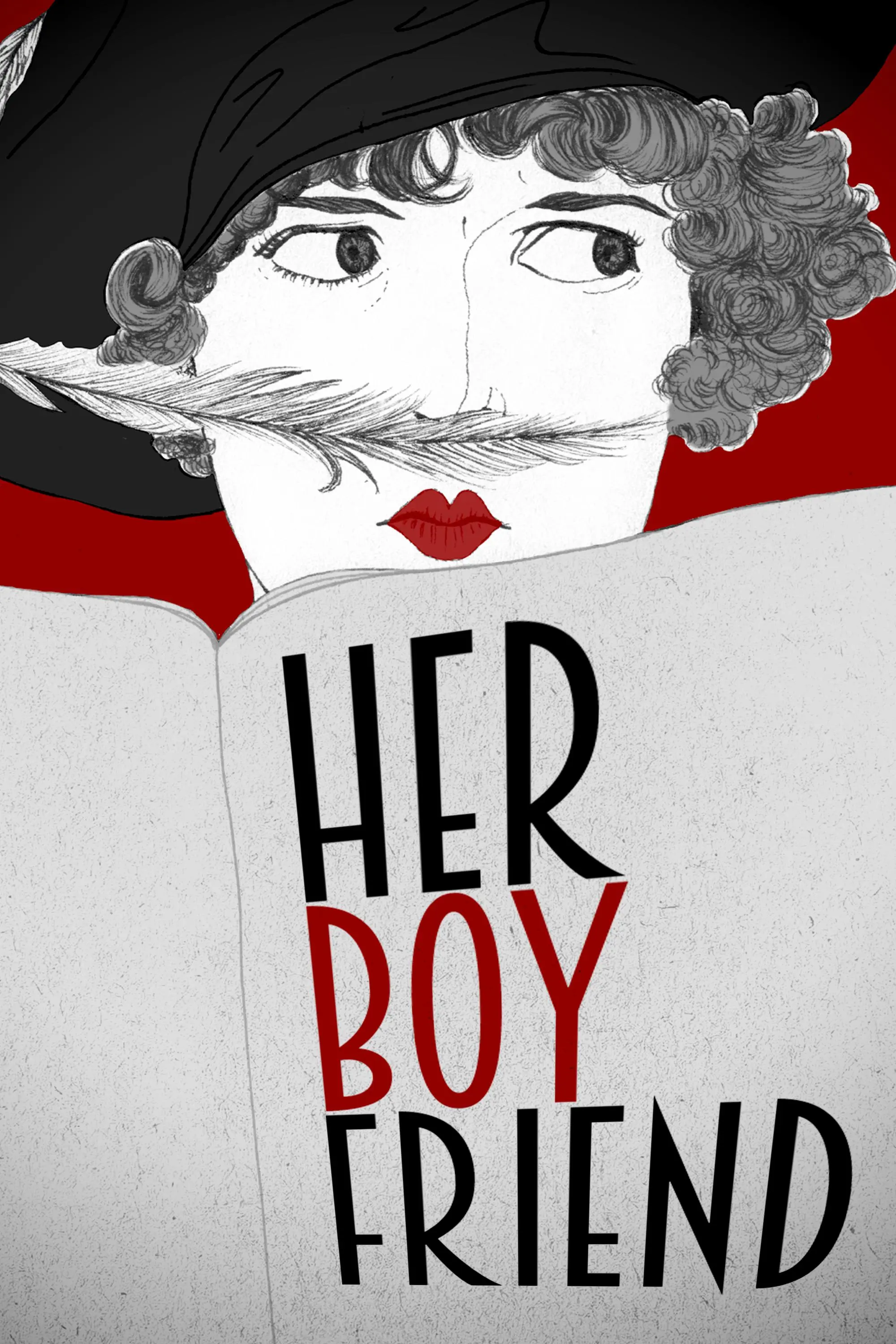
A definitive 5.8/10 rating for a film that redefined the boundaries of cult cinema. Her Boy Friend remains a cornerstone of transgressive art.
To witness Her Boy Friend (1924) is to step into a temporal vacuum where the laws of physics are merely suggestions and the narrative serves as a skeletal framework for breathtaking physical audacity. Larry Semon, a figure often overshadowed in the contemporary consciousness by the likes of Chaplin or Keaton, presents here a masterclass in the 'more-is-more' philosophy of silent comedy. The film operates at a breakneck velocity, refusing to linger on sentimentality, favoring instead a relentless bombardment of visual gags and architectural destruction.
The setting—the notoriously named Dropem Inn—acts as a quintessential 1920s noir caricature. It is a space defined by its sleaze, a microcosm of the Prohibition-era anxieties that permeated the American zeitgeist. Much like the societal reflections found in Is Prohibition a Dry Subject?, Semon’s work utilizes the illegality of the era as a playground for subversion. The 'inn' is not merely a backdrop; it is a character in itself, replete with trapdoors, hidden passages, and the constant threat of discovery.
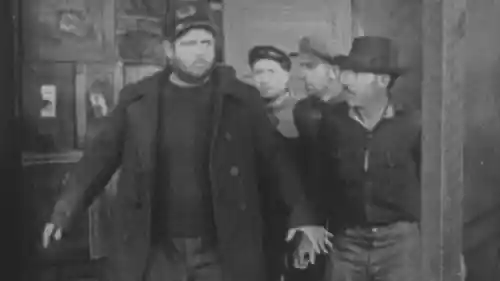
While Semon takes center stage with his trademark white-faced clowning and frantic energy, the presence of Oliver Hardy provides a foundational weight to the proceedings. Before his legendary partnership with Stan Laurel, Hardy was already a formidable screen presence, often playing the heavy or the foil with a nuanced physicality that belied his size. In this film, his interactions with Semon create a friction that drives the comedy forward. Unlike the pastoral simplicity of Mura no bokujô, the humor here is urban, aggressive, and deeply rooted in the vaudevillian tradition of the 'bumbling hero'.
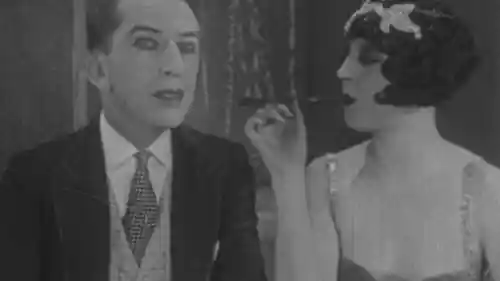
Alma Bennett’s portrayal of Iva Method offers a fascinating glimpse into the evolving role of women in 1920s cinema. She is not merely a damsel in distress; she is an operative, a woman of agency who initiates the conflict through her espionage. While the film eventually pivots to the rescue narrative, her early scenes at the Dropem Inn carry a tension reminiscent of the high-stakes drama in The Virgin of Stamboul. Bennett navigates the sleaze with a poise that contrasts sharply with Semon’s subsequent clumsiness, highlighting the absurdity of the 'hero' who is sent to save her.

The villainy provided by Frank Alexander as Slim Chance is appropriately cartoonish yet physically imposing. The kidnapping sequence is handled with a blend of melodrama and high-octane action that suggests Semon was looking at the larger-than-life narratives of films like Long Live the King, yet choosing to dismantle them through the lens of parody. The chief’s son, played by Semon, is the antithesis of the regal or the capable; he is a man out of his depth, making his eventual success all the more satisfyingly ridiculous.
From a technical standpoint, Her Boy Friend is a marvel of its time. The editing is crisp, designed to facilitate the timing of the gags which require millisecond precision. The use of depth in the frame—often having action occur in the foreground and background simultaneously—shows a sophistication that many of Semon's contemporaries lacked. This is not the static stage-bound comedy of early cinema; this is a mobile, breathing piece of art. For instance, the chase sequences utilize the environment with a creativity that brings to mind the adventurous spirit of Luffar-Petter, though with a significantly higher budget and more elaborate set-pieces.
One must also acknowledge the contributions of the supporting cast, including the likes of Curtis 'Snowball' McHenry and William Hauber. While some of the era's characterizations are undeniably dated through a modern lens, their contribution to the film's rhythmic pulse cannot be ignored. The ensemble works like a well-oiled machine, ensuring that the momentum never falters during the transition from the sleazy club to the frantic rescue operation.
When placed alongside a film like Merely Mary Ann, the stark differences in the 1920s cinematic landscape become apparent. Where Mary Ann seeks to pull at the heartstrings through sentimental realism, Her Boy Friend seeks to shatter the Fourth Wall with a brick. It is a cinema of sensation. Even when compared to the whimsical nature of Daisy. Das Abenteuer einer Lady, Semon’s work feels more grounded in the grit of the American 'roughhouse' tradition. It shares more DNA with the chaotic energy of The County Fair than with the polished dramas of the period.
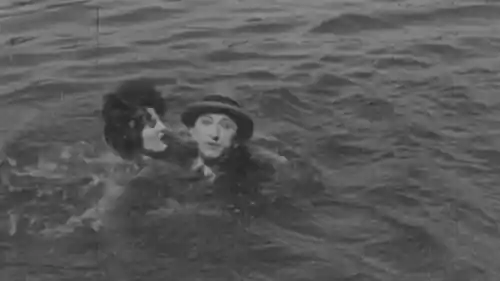
The film also touches upon themes of identity and deception, albeit in a lighthearted manner. The chief's son must masquerade and adapt, a trope that echoes the more serious explorations of duality found in The Twin Pawns or the psychological depth of El otro. Of course, in Semon’s hands, these themes are merely vehicles for more pratfalls. The 'bumbling son' archetype allows for a deconstruction of authority—the police force is rendered incompetent, saved only by a series of fortuitous accidents and the sheer tenacity of a fool.
In the grand tapestry of silent film history, Her Boy Friend stands as a testament to the era of the 'Comedy King'. Larry Semon’s legacy is complex; his films were expensive, his personality was reportedly difficult, and his star faded quickly with the advent of sound. However, viewing this film today reveals a creator who possessed an innate understanding of the visual language. The way he integrates the rescue plot with the bootlegging underworld provides a narrative cohesion that many short-form comedies of the era lacked. It is more structured than Olli's Apprenticeship and more ambitious than The Buyer from Cactus City.
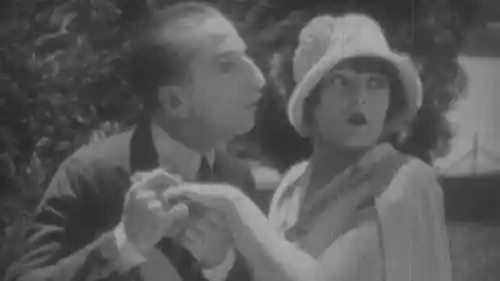
Ultimately, the film is a joyous explosion of creativity. It captures a moment in time when the cinema was still discovering its boundaries. Whether it is the frantic escape from Slim Chance’s hideout or the subtle comedic timing of Oliver Hardy’s reactions, there is a wealth of artistry to be found beneath the slapstick surface. It lacks the haunting atmosphere of Tatjana or the courtroom gravity of Der Prozeß Hauers, but it replaces those weights with the lightness of pure, unadulterated entertainment. It is a film that demands to be seen by any serious student of the medium—not just as a historical curiosity, but as a living example of the power of visual storytelling.
The preservation of such works is vital. In the interplay between Iva Method’s bravery and the chief’s son’s idiocy, we find a reflection of a world trying to laugh its way through the darkness of the post-war, Prohibition-stricken 1920s. Larry Semon may have been a white-faced clown, but in Her Boy Friend, he proved he was also a master of the cinematic frame.
IMDb —
1931
Community
Log in to comment.