DbcultAccessing Vault...
5.5/10
Senior Film Conservator
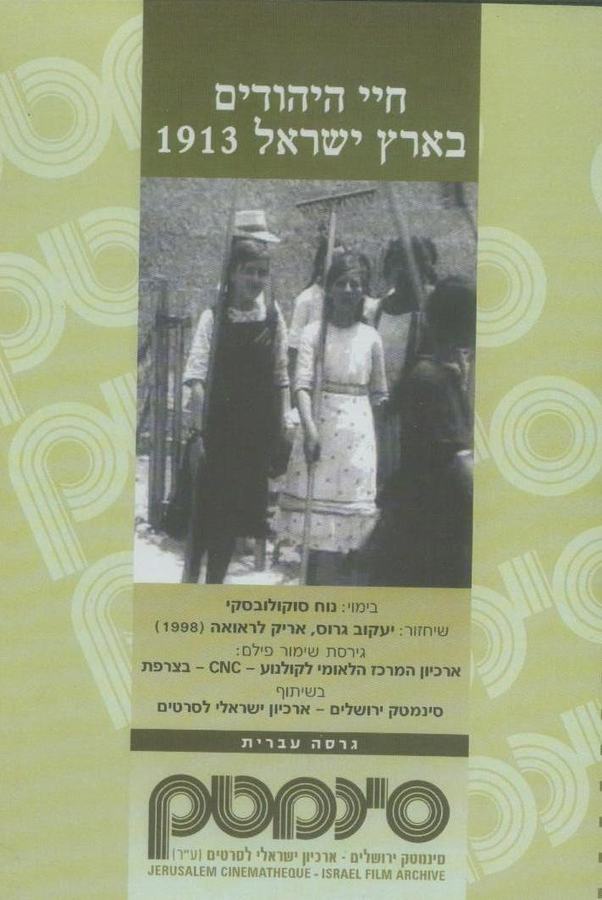
A definitive 5.5/10 rating for a film that redefined the boundaries of cult cinema. Life of the Jews of Palestine remains a cornerstone of transgressive art.
In the annals of early cinema, certain films transcend their immediate purpose to become invaluable historical documents. “Life of the Jews of Palestine: 1913”, an unassuming title for a profoundly significant work, stands as one such cinematic artifact. It is not merely a film; it is a meticulously preserved window into a pivotal moment in history – the dawn of modern Zionist settlement in Ottoman Palestine. Released on the cusp of a global conflagration that would irrevocably alter the geopolitical landscape, this film provides an unparalleled, unvarnished look at the pioneers of the First and Second Aliyah, their struggles, their aspirations, and their daily lives. It’s a testament to resilience, a visual diary etched onto celluloid, offering insights that no written account, however eloquent, could fully convey.
To truly appreciate the gravitas of "Life of the Jews of Palestine: 1913", one must first contextualize the era. The year 1913 found Palestine under the waning, yet still firm, grip of the Ottoman Empire. The Zionist movement, though gaining traction, was still very much in its infancy, its grand ambitions barely discernible against the backdrop of a largely agrarian, underdeveloped region. The pioneers, often escaping persecution or seeking spiritual fulfillment, arrived with little more than fervent ideology and an indomitable will to transform the land and themselves. This was an era devoid of the sophisticated infrastructure and technologies that would later define the region. Instead, it was characterized by raw human effort, communal solidarity, and an unwavering belief in a collective future. The film captures this arduous, often romanticized, genesis with an almost ethnographic precision, allowing contemporary viewers to witness the foundational acts of nation-building in real-time, albeit a century removed.
Unlike the grand, sweeping historical epics that would soon dominate the burgeoning film industry, such as The Birth of a Nation (though a few years later) or even contemporary European historical dramas like The Independence of Romania or 1812, this film eschews a traditional plot or dramatic arc. Its narrative is woven from the fabric of everyday existence. We observe the settlers engaged in back-breaking agricultural labor: tilling the soil, planting saplings, constructing irrigation channels – each frame a silent ode to their indefatigable spirit. The camera lingers on faces etched with determination, hands calloused by toil, and bodies bent to the task of coaxing life from arid earth. These are not actors performing a role; they are individuals living their convictions, embodying the very essence of the "halutz" (pioneer) ideal. Noah Sokolovsky, whether as a subject or a guiding presence, represents this collective endeavor, a face among many, yet symbolic of the entire movement.
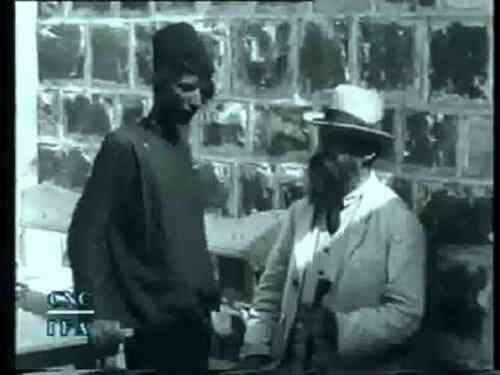
The film’s scope extends beyond mere agricultural pursuits, delving into the vibrant, emergent communal life that characterized these early settlements. We see nascent educational institutions, where children, often the first generation born on the land, are immersed in the revival of the Hebrew language, transforming it from a liturgical tongue into a living, breathing vernacular. This cultural awakening is subtly portrayed, yet profoundly impactful. The scenes depicting community gatherings, perhaps a shared meal or a discussion under the vast Palestinian sky, underscore the profound sense of solidarity that bound these pioneers together. In an age where individualistic narratives often dominated cinematic output, "Life of the Jews of Palestine: 1913" offers a compelling counter-narrative, highlighting the power of collective action and shared purpose. It presents a stark contrast to films focused on individual prowess, like the boxing matches of the era, such as The Corbett-Fitzsimmons Fight or Jeffries-Sharkey Contest, where singular triumphs were celebrated. Here, the triumph is communal, an intricate symphony of many hands building one future.
As a product of early silent cinema, the film's technical qualities are, by modern standards, rudimentary. Yet, it is precisely this rawness that imbues it with an almost visceral authenticity. The camera, often static, acts as an impartial observer, documenting rather than dramatizing. There are no elaborate tracking shots or complex editing sequences; instead, the power lies in the unadulterated gaze, the simple act of recording. This lends "Life of the Jews of Palestine: 1913" immense archival value, positioning it alongside other significant historical documentaries of its time, such as Paul J. Rainey's African Hunt or With Our King and Queen Through India. However, unlike these films, which often focused on exotic locales or royal pomp, "Life of the Jews of Palestine" turns its lens inward, capturing the quiet revolution of a people reclaiming their ancestral land and forging a new identity. It's less about spectacle and more about soul, less about grand events and more about the granular reality of everyday struggle and triumph.
When viewed alongside other films from the early 20th century, the unique character of "Life of the Jews of Palestine: 1913" becomes even more pronounced. While many films of the era, like From the Manger to the Cross or Life and Passion of Christ, delved into religious narratives, this film presents a contemporary, secular-yet-spiritually-charged, vision of Jewish life. It avoids the theatricality of grand costume dramas like Cleopatra or Les amours de la reine Élisabeth, opting instead for a gritty realism. Even in comparison to other ethnographic or travelogue films like Glacier National Park or Assisi, Italy, which showcased natural beauty or established cultural heritage, this film documents a culture in the making, a landscape being actively transformed by human will. It's a testament to human endeavor, akin to industrial films like Westinghouse Works, but with a profound ideological underpinning that elevates it beyond mere documentation of labor to a chronicle of existential purpose.

Though Noah Sokolovsky is credited, the film's true 'cast' is the collective body of pioneers. We see them not as individuals with dramatic arcs, but as archetypes of a movement. The young men and women, often fresh from Eastern Europe, imbued with socialist ideals and Zionist fervor, are captured performing tasks that seem simultaneously mundane and monumental. Their faces, often serious, occasionally alight with a nascent hope, tell stories untold by intertitles. The film's power lies in its ability to humanize history, to connect us directly with the physical and emotional landscape of their struggle. It reminds us that grand historical movements are built not by abstract forces, but by the relentless effort of countless individuals, each contributing their sweat, dreams, and resilience to a shared vision. In an age of cinematic escapism, this film offers a grounding in tangible reality, a rare and precious gift.
Over a century since its creation, "Life of the Jews of Palestine: 1913" retains an astonishing resonance. It serves as a foundational text for understanding the origins of modern Israel, offering a primary source perspective on the early Zionist experience. For historians, sociologists, and anyone interested in the complex tapestry of the Middle East, it provides an invaluable visual record, free from the interpretive layers of later narratives. It challenges simplistic portrayals and invites deeper contemplation of the immense undertaking that was the First and Second Aliyah. In an era saturated with digitally enhanced spectacles and elaborate CGI, the raw, unadorned imagery of this silent film speaks volumes, offering a poignant reminder of human agency and the transformative power of collective will. It is a cinematic time capsule, preserving the very genesis of a nation, inviting us to witness, with a clarity rarely afforded, the birth pangs of a dream made manifest.
Ultimately, "Life of the Jews of Palestine: 1913" is more than a collection of moving images; it is a profound historical statement. It documents not just what was built, but how it was built, by whom, and with what spirit. It captures the essence of a pioneering generation, their unwavering commitment to an ideal, and their tireless labor in the service of a future that, at the time, was far from certain. This film, in its quiet dignity and unpretentious realism, offers a powerful counterpoint to the often-sensationalized cinema of its period. It is a testament to the enduring power of documentary filmmaking, even in its nascent form, to capture and preserve the intricate, often overlooked, details of human history. For anyone seeking to understand the deep roots of a modern nation, this film is not merely recommended viewing; it is essential.
IMDb 5.9
1936
Community
Log in to comment.