DbcultAccessing Vault...
Cult Review
Senior Film Conservator
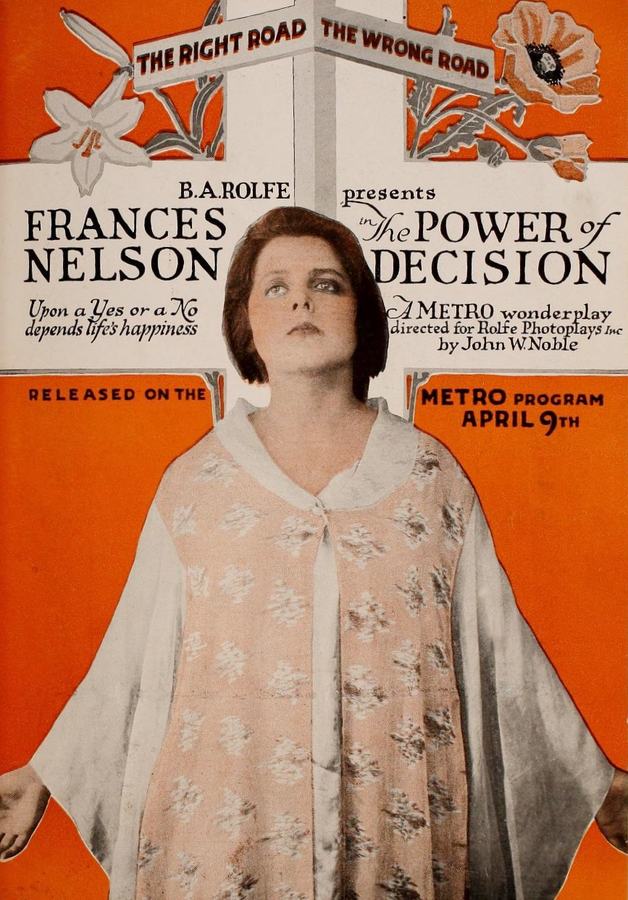
In the bustling, burgeoning landscape of early 20th-century cinema, where narratives often mirrored the dramatic societal shifts of the time, emerges a film of profound emotional resonance and intricate moral tapestry: The Power of Decision (1918). This silent era gem, penned with discerning insight by the prolific June Mathis, stands as a testament to the enduring human struggle with choice, consequence, and the relentless pursuit of personal integrity. Far from a simplistic melodrama, this picture delves into the complexities of human relationships, the allure of illicit passion, and the ultimate triumph of self-determination, all conveyed through the nuanced artistry characteristic of its period.
At its core, The Power of Decision is a character study, a meticulous examination of a young woman, Margot, thrust into a series of unenviable predicaments. Portrayed with captivating vulnerability and steely resolve by Frances Nelson, Margot's journey is one fraught with peril, heartbreak, and a gradual awakening to her own inner strength. The film opens on a scene pregnant with pathos: an auction of a deceased, struggling artist's effects. It's here that Margot first captivates the audience, not through conventional beauty alone, but through an impassioned defense of her benefactor's memory against the auctioneer's callous disdain. This initial act of defiance, a spontaneous outburst of loyalty, immediately establishes her as a character of deep feeling and unwavering principle, qualities that will be tested mercilessly throughout the narrative.
Her spirited defense at the auction draws the attention of Wood Harding (Fuller Mellish), an illustrator whose artistic eye is not merely for aesthetics but for the dramatic potential of human emotion. He purchases the ridiculed painting, a gesture that binds him to Margot through an act of shared reverence. What begins as an artistic collaboration quickly morphs into a passionate, albeit morally compromised, romance. Harding, a man seemingly unburdened by ethical constraints, harbors a secret: a wife from whom he is merely separated, not divorced. His decision to marry Margot, withholding this crucial truth, sets in motion a chain of events that will define the trajectory of her life. This initial transgression, born of desire and deceit, casts a long shadow, reminiscent of the societal entanglements explored in films like The Fatal Wedding, where concealed pasts inevitably resurface with devastating impact.
The precariousness of their clandestine union is brutally exposed with the sudden reappearance of the 'real' Mrs. Harding. Her threat of bigamy charges against Harding forces Margot into an agonizing dilemma: protect her love by sacrificing her own legitimacy, or condemn him to legal ruin. Her selfless act of denying their marriage, a profound personal cost, marks a significant turning point. It's a moment of immense vulnerability, yet also of nascent strength, as she chooses self-erasure for the sake of another. This echoes the sacrifices made by protagonists in melodramas like The Iron Heart, where characters often endure immense personal suffering to safeguard those they cherish.
Margot's subsequent flight to a distant city symbolizes her attempt to shed the weight of her past, to forge a new identity untainted by scandal. Here, under the tutelage of Mrs. Hall, a miniature painter, she finds a semblance of peace, a professional outlet for her quiet beauty. It is in this new environment that she meets Austin Bland (Hugh Jeffrey), a novelist whose intellectual depth and earnest affection offer a stark contrast to Harding's impulsive charm. Bland, drawn to her quiet grace, proposes marriage. Margot, ever honest, reveals that her heart has already been given, a testament to her enduring, if complicated, love for Harding. Yet, Bland, with a magnanimity that speaks volumes about his character, accepts her on her own terms, content with a love that may not be all-encompassing but is undeniably sincere. This unconventional union, built on understanding and respect, offers Margot a sanctuary, a respite from the emotional turbulence that has defined her life.
The narrative's brilliance lies in its intricate weaving of the personal and the philosophical. Bland's current literary endeavor, a novel titled 'The Power of Decision,' becomes more than just a plot device; it transforms into a meta-narrative, a direct commentary on Margot's own unfolding drama. Its central tenet — "Every mortal has within himself the God-given power of decision. By his own decision each man must act for himself in every crisis" — resonates with chilling prescience. The irony deepens when the publishers, unaware of the tangled past, commission Wood Harding to illustrate Bland's book. The stage is thus set for a confrontation, not merely between individuals, but between past and present, desire and duty, fate and free will.
The arrival of Harding at the Bland residence, ostensibly for professional purposes, reintroduces a potent, disruptive force into Margot's carefully constructed new life. The initial meeting, marked by a strained absence of overt recognition, is a masterclass in silent film acting, where subtle glances and body language convey a maelstrom of repressed emotion. Harding, ever the opportunist, wastes no time in attempting to reassert his old 'spell' over Margot. His presence is a constant, insidious temptation, a siren call from a past she desperately wishes to outrun. The film expertly uses Bland's novel as a narrative mirror; a specific paragraph describing a heroine's choice between two men, one bound by marriage, the other a call from the past, becomes Margot's own internal monologue, her struggle made explicit through the written word.
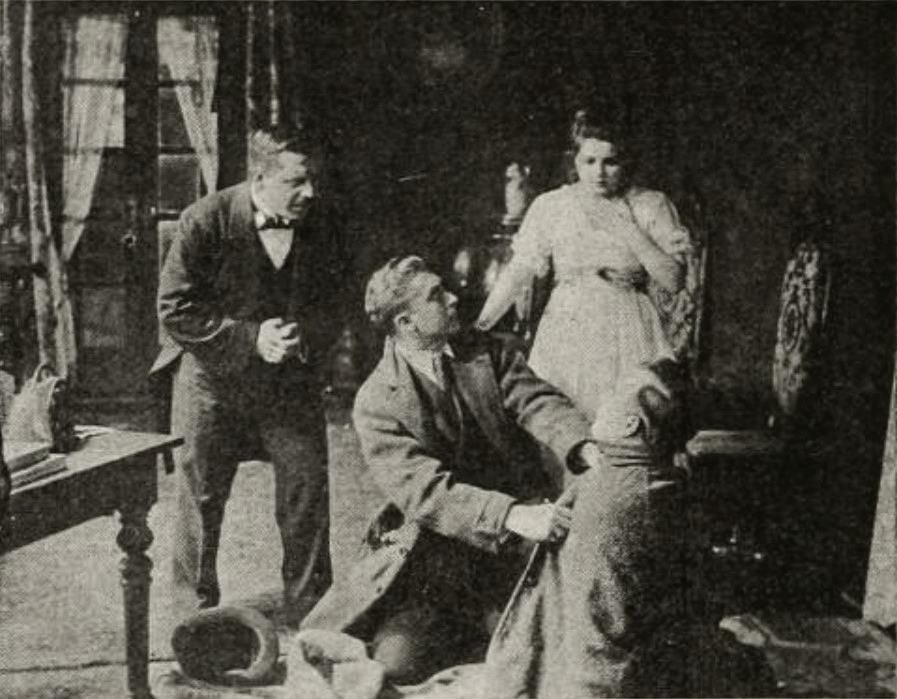
The tension escalates with the discovery of Harding's nefarious activities – first, his attempt to embrace Margot, witnessed by Gordon, the butler, and later, his audacious attempt to open the safe. Gordon, rather than acting as a protector, becomes another source of blackmail, threatening to expose Margot's past to Bland. This layered betrayal, coupled with Mrs. Harding's own discovery of Margot's picture in the novel's announcement, ensures that the truth, however painful, cannot remain buried indefinitely. The narrative tightens, weaving a web of intrigue and moral compromise around Margot, forcing her to confront the choices she has made and the choices she must yet make. This complex interplay of secrets and threats gives the film a psychological depth often underestimated in silent cinema, drawing parallels to the intricate character studies found in European films of the era, such as Raskolnikov, which delved into the moral torment of its protagonist.
Bland's acceptance of an arctic expedition, a convenient narrative device, provides the perfect catalyst for the climax. Harding intensifies his pressure on Margot, urging her to elope. Her indecision, agonizingly portrayed, culminates in a promise to signal him via the library lights, a flickering beacon of her internal turmoil. The dramatic irony is palpable as Bland, thwarted by a broken-down car, misses his train and returns home, only to witness Harding across the street, his gaze fixed on the very windows that will decide Margot's fate. The flashing lights, a moment of profound ambiguity, ignite Bland's suspicion, leading to a confrontation charged with betrayal and heartbreak.
Margot's confession, that she was tempted but ultimately chose her husband, is met with understandable disbelief from Bland. The subsequent, climactic moment – Bland firing at a moving curtain, believing it to conceal Harding – is a masterstroke of suspense and misdirection. The fallen figure, enveloped in fabric, initially suggests the tragic consequence of passion and jealousy. Margot's immediate plea for Bland to escape, offering to shoulder the blame, underscores her enduring capacity for self-sacrifice, a character trait that has defined her journey. However, the revelation that the victim is not Harding but Gordon, the opportunistic butler, attempting robbery, provides a narrative twist that simultaneously exonerates Margot and highlights the unforeseen consequences of hidden machinations. Harding, hearing the shot, flees, a coward to the last, leaving Margot to finally articulate her 'God-given power of decision' to Bland.
Frances Nelson's performance as Margot is nothing short of extraordinary. In an era where exaggerated gestures often compensated for the lack of spoken dialogue, Nelson delivers a portrayal of remarkable subtlety and emotional depth. Her eyes convey volumes; her posture shifts from timid vulnerability to resolute strength. She embodies the internal conflict of a woman torn between past passion and present stability, between societal judgment and personal truth. Fuller Mellish, as the manipulative Wood Harding, perfectly captures the insidious charm and underlying weakness of a character who preys on vulnerability. Hugh Jeffrey's Austin Bland, initially a figure of intellectual detachment, evolves into a man capable of profound understanding and forgiveness, his quiet strength providing the moral anchor for the narrative. The supporting cast, including Sally Crute, John Davidson, Richard Tucker, and Mary Asquith, contribute effectively to the film's rich tapestry.
June Mathis's screenplay is a marvel of construction, balancing intricate plot mechanics with profound thematic exploration. Her ability to craft such a compelling narrative, rich in psychological nuance and moral dilemmas, showcases her immense talent as one of the most influential writers of the silent film era. Her work often explored themes of moral complexity and personal agency, making her a vital voice in shaping early cinematic storytelling. One can see echoes of her narrative sophistication in other dramas of the period that explored intense human emotions and societal pressures, such as A Square Deal or Until They Get Me, both of which also delved into the consequences of choices made under duress.
The film's direction, though uncredited in the provided details, effectively utilizes the visual language of silent cinema. The staging, the use of close-ups to emphasize emotional states, and the carefully crafted intertitles all work in concert to build tension and convey character motivations. The interplay of light and shadow, particularly in the climactic library scene, adds a layer of symbolic meaning, reflecting Margot's internal struggle between clarity and obfuscation. The film's pacing is deliberate, allowing the emotional weight of each decision to fully register with the audience, a hallmark of well-executed silent dramas.
Ultimately, The Power of Decision is more than just a historical artifact; it is a timeless exploration of human resilience, the complexities of love, and the profound significance of individual choice. It reminds us that even in the face of overwhelming adversity and the seductive pull of a troubled past, the capacity for self-determination remains our most potent tool. Margot's journey, from a victim of circumstance to an agent of her own destiny, resonates deeply, offering a powerful message about redemption and the enduring strength of the human spirit. For enthusiasts of early cinema, and indeed for anyone interested in the enduring themes of moral courage, this film offers a captivating and thought-provoking experience, cementing its place as a significant contribution to the cinematic canon.
IMDb 5.8
1935
Community
Log in to comment.