DbcultAccessing Vault...
7.5/10
Senior Film Conservator
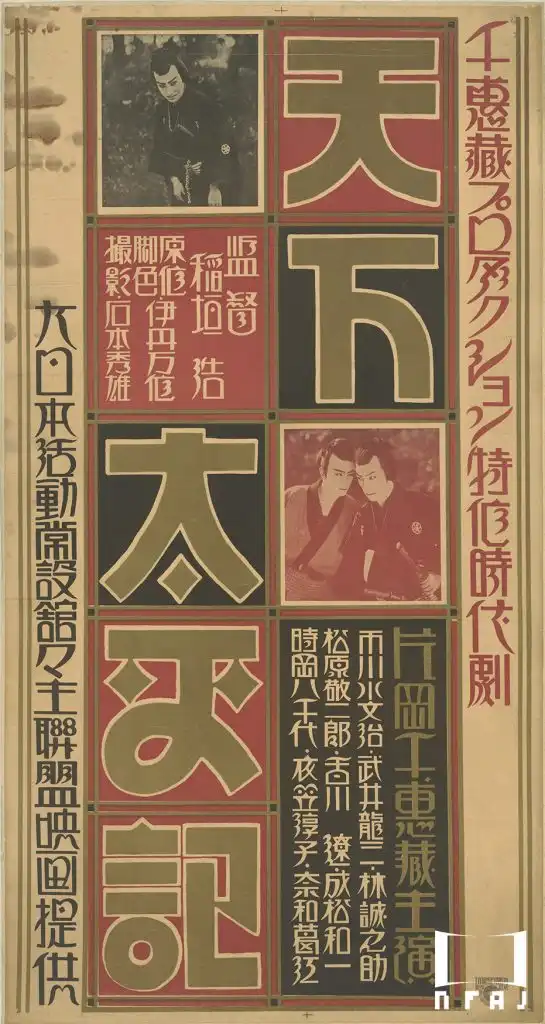
A definitive 7.5/10 rating for a film that redefined the boundaries of cult cinema. Tenka taiheiki remains a cornerstone of transgressive art.
For the average viewer seeking straightforward entertainment, Tenka taiheiki is likely a challenging recommendation. This is a film squarely aimed at cinephiles, film historians, and those with a genuine interest in the evolution of Japanese cinema. Mansaku Itami’s early work, especially with a star like Chiezō Kataoka, provides invaluable insight into the jidaigeki genre before it became codified. If you are prepared for a silent film experience, potentially with visible wear and tear from its age, and a narrative approach that prioritizes character nuance and social commentary over explosive action, then yes, it’s absolutely worth seeking out. If you prefer modern pacing, clear dialogue, and pristine visuals, you will probably find it difficult to engage with.
Chiezō Kataoka, a titan of early Japanese cinema, anchors Tenka taiheiki with a performance that feels both era-appropriate and surprisingly modern in its restraint. He doesn't embody the stoic, infallible hero often seen in more conventional samurai films of the period. Instead, Kataoka’s character often carries a visible weariness, a subtle world-weariness that subtly undermines the grand pronouncements often conveyed through intertitles. During a pivotal scene in a crowded sake house, for instance, his eyes convey more internal conflict than the sweeping gestures or dramatic poses one might expect. He uses his posture – a slight slump of the shoulders even when seated formally – to suggest a man burdened by duty or disillusionment, rather than simply projecting strength. This is particularly evident in a brief, almost throwaway moment where his character observes a group of children playing, a flicker of something akin to melancholy crossing his face before he quickly recomposes. It’s a quiet, internal performance that demands attention, resisting the urge to over-emote for the camera, which is a testament to his skill within the constraints of silent film acting.
Mansaku Itami, as a director, was known for his innovative approach, and Tenka taiheiki reflects this in its often-unpredictable pacing and tonal shifts. The film doesn't rush, allowing scenes to breathe and characters to exist within their environments. This can feel slow by contemporary standards; there are moments, especially in the film's second act, where Itami holds on reaction shots a beat longer than necessary, almost inviting the audience to sit with the discomfort or ambiguity. The reliance on intertitles, while standard for silent cinema, occasionally disrupts the flow, particularly during what appear to be intended as rapid-fire exchanges. The rhythm of reading an explanation, then returning to the visual, can break the immersive spell the performances try to weave. However, this deliberate pacing also allows for a greater appreciation of the visual storytelling. The film shifts between moments of surprisingly sharp satire, often aimed at bureaucratic figures, and stretches of genuine dramatic tension without feeling jarring. This tonal dexterity is a hallmark of Itami’s work, and it’s fascinating to see it manifest so early in his career, though it does require the viewer to adjust their expectations.
Visually, Tenka taiheiki offers a compelling glimpse into early Japanese filmmaking techniques. The camera work, while largely static by today's standards, is not without its thoughtful compositions. Itami frequently employs deep focus in certain outdoor scenes, allowing background details of village life to inform the main action, grounding the narrative in a tangible world. There's a particular sequence involving a chase through a narrow alleyway, where the relatively quick cuts and dynamic camera angles feel surprisingly modern, injecting a jolt of energy into the otherwise measured rhythm. The film’s use of natural light in its exterior shots gives a raw, almost documentary quality to the rural settings, contrasting sharply with the more theatrical, often starkly lit studio interiors. Costume details are generally authentic, though one might notice a minor character in a crowd scene with a slightly anachronistic accessory or a worn-out sandal that adds an unexpected layer of realism, perhaps unintentional. The film also showcases early attempts at crowd control and choreography, with extras often moving with a slightly less polished spontaneity than one would see in later productions, a charming imperfection that speaks to the nascent stage of the industry.
The primary strength of Tenka taiheiki lies in its historical significance and its commitment to a more nuanced portrayal of the samurai. Mansaku Itami’s direction, particularly his willingness to subvert genre expectations and infuse humor into serious themes, sets it apart. Kataoka's performance is another undeniable highlight, demonstrating a depth that transcends the limitations of silent film. The film’s visual ambition, even with primitive technology, is commendable, offering striking compositions and moments of genuine visual dynamism. For instance, the lingering shot on a discarded straw hat in the aftermath of a brief skirmish speaks volumes about the fleeting nature of conflict without a single word. However, its weaknesses are inherent to its age and the medium. The silent film format, relying on intertitles and a potentially sparse or reconstructed score, can be a barrier to entry. Some of the narrative threads, while conceptually interesting, occasionally feel underdeveloped due to the brevity imposed by the format or perhaps the loss of certain film elements over time. The pacing, while deliberate, can test the patience of viewers accustomed to faster narratives, and the occasional awkward edit or overlong shot might pull one out of the experience.
Tenka taiheiki is not a film for everyone, nor is it a casual watch. It is an artifact, a valuable piece of cinematic history that rewards careful study and a willingness to engage with its unique challenges. For those interested in the origins of Japanese cinema, the evolution of the jidaigeki, or the early work of a visionary director and a legendary star, it is an essential viewing experience. It offers a fascinating glimpse into a period of artistic experimentation, where filmmakers like Itami were actively pushing the boundaries of storytelling. While it may not provide the immediate gratification of a modern blockbuster, its quiet power, subtle performances, and historical context make it a profound, if demanding, journey back in time. Approach it not just as a film, but as a window into a pivotal moment in film history, and you will find it richly rewarding.
IMDb —
1924
Community
Log in to comment.