DbcultAccessing Vault...
Cult Review
Senior Film Conservator
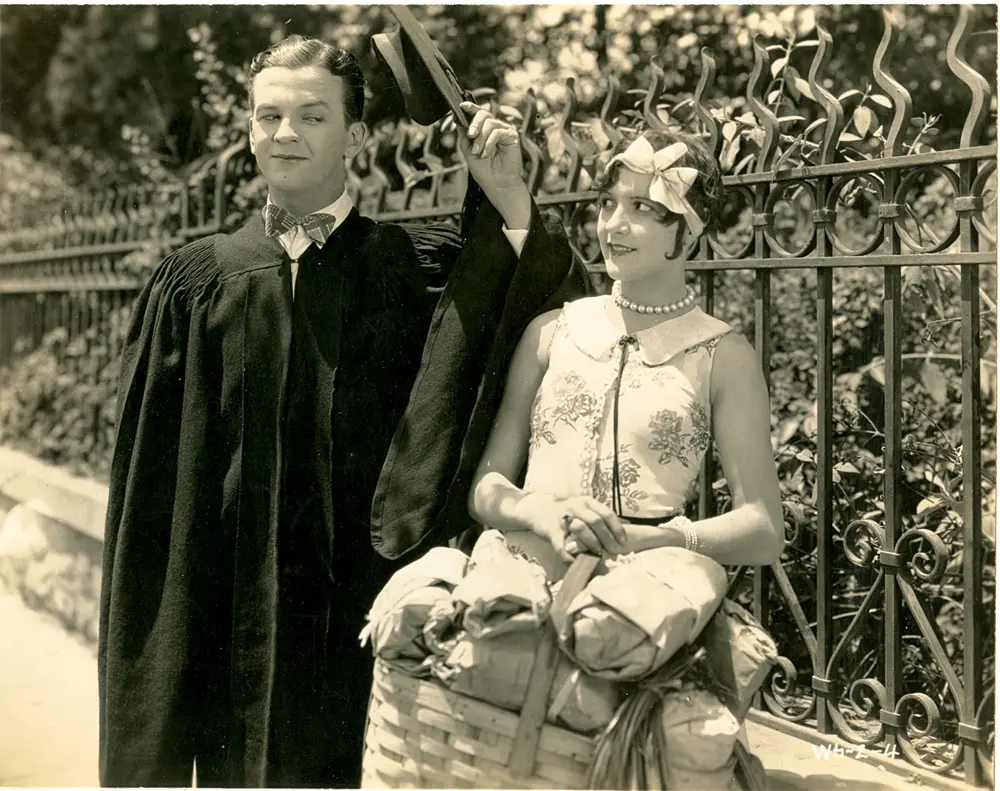
Is "Light Wines and Bearded Ladies" worth your time in the modern era? Short answer: yes, but only if you have a high tolerance for the reckless, bone-breaking physical comedy of the late silent period.
This film is specifically for those who find the technical history of early aviation stunts more compelling than a tightly wound plot. It is definitely NOT for viewers who prefer their comedy to be grounded in logic or character development.
This film works because the sheer physical danger of the final act provides a visceral thrill that modern CGI simply cannot replicate.
This film fails because the central conflict is built on a mean-spirited foundation that makes the supposed 'hero' quite difficult to like.
You should watch it if you want to see Gene Cameron perform acrobatic feats that would make a modern insurance adjuster weep.
The premise of "Light Wines and Bearded Ladies" is fundamentally insane. We are introduced to Gene (Gene Cameron), a man who has just finished barber college and somehow decides that his first 'field of labor' should be on an aeroplane. This isn't a luxury liner of the skies; it is a rattling, open-cockpit death trap. The logic here is nonexistent, but in the world of 1920s comedy, the setting is merely a scaffold for the gags.
When J. Buckley Russell climbs into the chair, the film shifts from a whimsical occupational comedy into something far more jagged. Russell plays the classic heavy—the well-to-do rival for the hand of Sally Phipps. The tension is immediate. There is a specific moment where Gene holds a straight razor to Russell's throat just as the plane hits a pocket of turbulence. It is a sequence that feels more like a thriller than a comedy, and that tonal dissonance is where the film finds its weird, nervous energy.
Unlike the more grounded humor of Almost a Husband, this film leans into the surreal. The idea of a man getting a shave while the pilot is performing tailspins is a perfect metaphor for the era's obsession with technological progress and the chaos it brings.
Gene Cameron is not a name that carries the weight of a Keaton or a Chaplin, but his physical commitment here is undeniable. He moves with a frantic, spindly energy that suggests a man constantly on the verge of a nervous breakdown. This serves the film well once the plane starts its maneuvers. The slapstick isn't just about slipping on banana peels; it’s about surviving gravity.
The cinematography by the uncredited camera crew is surprisingly adept at capturing the scale of the danger. While films like The Broken Trestle utilized environmental hazards for drama, "Light Wines and Bearded Ladies" uses the sky as a blank canvas for mayhem. There is a shot where the camera is mounted to the wing, looking back at the cockpit as Gene struggles to maintain his balance while holding a lather brush. The horizon line tilts and spins, creating a genuine sense of vertigo for the audience.
It works. But it’s flawed. The pacing in the first half is sluggish, spending too much time on the romantic rivalry on the ground before taking to the air. However, once the wheels leave the grass, the film accelerates into a chaotic frenzy that doesn't stop until the final frame.
If you are looking for a masterpiece of narrative structure, look elsewhere. This film is a curiosity, a relic of a time when the stakes of filmmaking were measured in the bruises of the cast. The ending, where the villain chases the hero out onto the wings, is a masterclass in silent-era stunt work. It is terrifying and hilarious in equal measure.
For those who have seen Oranges and Lemons and enjoyed the frantic workplace comedy, this will feel like a natural, albeit more dangerous, progression. It is a short, sharp shock of a film that reminds us that before we had green screens, we had actors who were willing to fall countless miles to the terrain beneath for a laugh.
Pros:
Cons:
When compared to other films of the period like The Tiger Man or Apartment 29, "Light Wines and Bearded Ladies" stands out for its sheer audacity. While those films often relied on interior sets and traditional dramatic arcs, this film demands the audience's attention through spectacle. It shares a certain DNA with Shore Acres in its use of a high-concept location to drive the action, but it lacks the emotional resonance of the latter.
The film captures a moment in history where the aeroplane was still a miracle and a menace, turning the sky into a playground for the absurd.
There is an unconventional observation to be made here: the film functions as a proto-slasher. Gene, with his razor and his captive audience in the barber chair, is a terrifying figure. If you strip away the jaunty piano score, you are left with a man trapped in a vibrating box with a rival who wants to cut him. It’s a fascinating look at how close comedy and horror lived to one another in the silent era.
The direction by the writers Henry Johnson and Hewlett Benjamin (who likely managed the set) is surprisingly focused on the logistics of the plane. They don't shy away from the engine grease or the wind-whipped hair. In one specific scene, Gene attempts to apply shaving cream while the plane executes a roll. The way the lather sprays across the screen is a small but effective use of the 3D space of the cockpit, long before 3D was a technical reality.
The editing is punchy, though occasionally disorienting during the more extreme maneuvers. It reminds me of the rhythmic cutting in La croisière noire, where the environment is as much a character as the people. Here, the biplane is the true star, a bucking bronco that refuses to be tamed by Gene’s inept attempts at professionalism.
"Light Wines and Bearded Ladies" is a fascinating, if somewhat cruel, relic of the silent era. It is a film that values the gasp over the laugh, and the stunt over the story. While Gene Cameron might not have the soul of a great comedian, he has the guts of a world-class daredevil. The film is a jagged, uncomfortable, and ultimately thrilling piece of cinema that deserves to be seen by anyone interested in the limits of physical comedy. It isn't a comfortable watch, and it certainly isn't a 'nice' one, but it is an unforgettable one. The plane falls. The comedy doesn't. It remains suspended in that strange, dangerous air of 1927.
IMDb 6.8
1932
Community
Log in to comment.