DbcultAccessing Vault...
Cult Review
Senior Film Conservator

Strip the varnish off Scandinavian guilt and you will find not pale birchwood but something closer to basalt: jagged, ancient, liable to split the unwary palm. Et Syndens Barn—translated as A Child of Sin—does not merely depict this basalt; it drags you face-first across its serrated grain until your own moral certainties hemorrhage. Released in 1913 by Danish-Norwegian auteur Hans Wiers-Jenssen, the film is less a narrative than a pilgrim’s regress: a backwards Stations of the Cross where every station is a mirror, and every mirror is cracked.
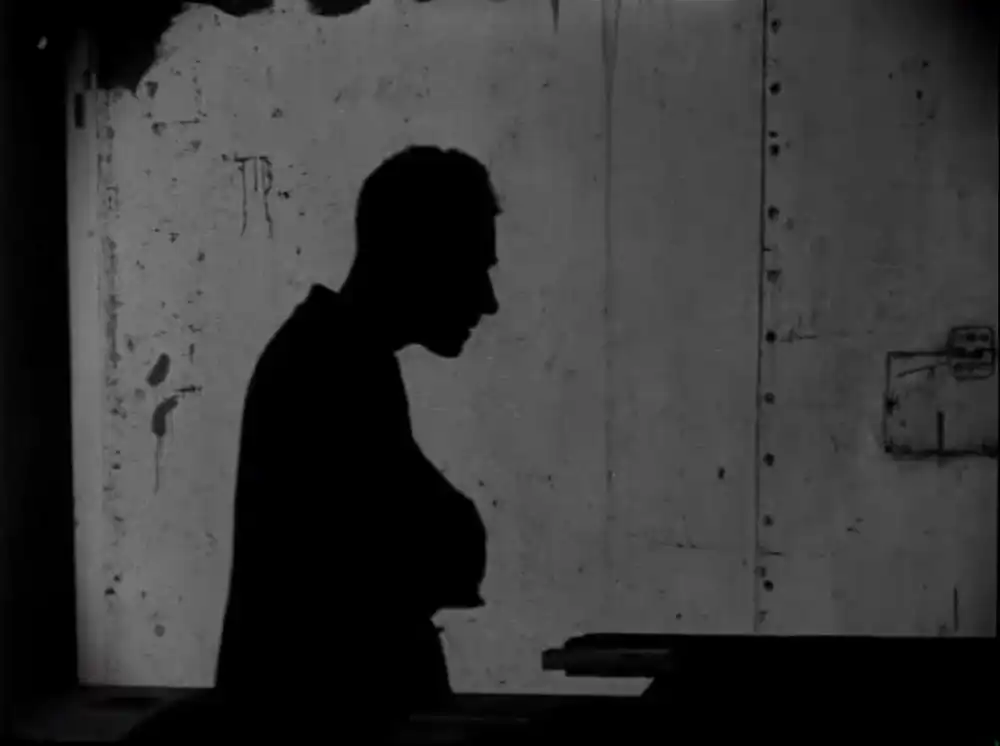
Cinematographer Emmanuel Larsen shoots the fjord as though it were a living reliquary: ice floes shimmer like patinated silver, while midnight-sun flares ignite the cruciform mountain ridges from behind, turning the landscape into a backlit altarpiece. Interiors are starved of daylight; tallow candles smear umber halos across whitewashed walls, so faces appear to levitate out of Rembrandt gloom. When Alida first succumbs to the peddler’s embrace, Larsen positions the camera inside the church nave: the tryst unfolds in the reflection of a polished chalice, a visual syllogism equating eros, transubstantiation, and desecration in one breath.
Alix Ase Ayoé Alber performs Alida with the brittle ferocity of a porcelain saint hurled against flagstones. Her descent is charted through micro-gestures: the flutter of nostrils when villagers brand her womb a ‘syndens barn’, the fractional hesitation before she steps onto the glacier, as though the ice itself might refuse her weight. The famous crevasse sequence—achieved by excavating a fifteen-meter trench in actual glacial crust—employs no rear projection or double exposure; the terror you see is literal. When the cradle plummets into blue-black nothingness, Alber’s scream arcs across three octaves, a raw vibrato that silent film can only imply through diaphragmatic convulsions, yet you hear it anyway, an auricular hallucination stitched by your own empathy.
Unlike the sentimentalized Alps of later Nordic noir, this glacier is no indifferent sublime; it is congregation, jury, and executioner rolled into one crystalline behemoth. Its creaks sync with the church organ’s minor chords—thanks to a primitive but ingenious sound-on-disc experiment—so that when the ice finally calves, the parishioners instinctively genuflect. Nature and doctrine become interchangeable forces, both hungry for atonement.
Production designer Marie Schmidt dyestuffs every costume with symbolic chromatics despite the lack of color film. Alida’s cloak, woven from coarse goat hair, absorbs so much silver nitrate during photochemical treatment that it radiates a spectral halo against the grayscale snow—an achromatic scarlet letter. Conversely, the pastor’s surplice is bleached until the weave threatens to unravel, a visual cue that sanctity here is but one laundry cycle away from disintegration.
Comparative cinephiles will detect DNA strands linking Et Syndens Barn to The Cloister and the Hearth in its ecclesiastical defrocking of maternal instinct, and to Tess of the D’Urbervilles for the punitive geology that grinds women to meal. Yet where Hardy’s Wessex hedges its agony in pastoral lyricism, Wiers-Jenssen opts for Kierkegaardian dread: faith is not solace but centrifugal force, flinging the individual into orbit around an absent deity.

Peter Malberg, later a comedic staple in Danish cinema, here plays the parish pastor with the tremulous sanctimony of a man who suspects his own sermons are bounced checks on the divine bank. Note how his fingers worry the rim of the chalice whenever scripture mentions ‘forgiveness’—a physical tell that betrays the worm of doubt gnawing his marrow. Opposite him, Bodil Ipsen—in her pre-directorial infancy—embodies the village’s gossip-matriarch with such gusto that her knitting needles click like castanets, punctuating every whispered innuendo.
The intertitles, penned by Bjørn Bjørnson, eschew expositional padding. Instead they function like antiphons: terse, rhythmic, haunted by negative space. Example: “She crossed the ice carrying two hearts—one beat, the other did not.” The sentence is never completed; the viewer must exhume the stillborn implication. Such narrative lacunae anticipate modernist fragmentation decades before Un Chien Andalou sliced eyeballs.
Post-screening, you may find yourself interrogating the genealogy of your own judgments. The film refuses the comfort of a redeemed ending; Alida’s confession liberates no one, absolves nothing. The congregation’s final vote is delivered via an iris shot that closes like an apostolic eye—an ocular refusal to disclose verdict. This open wound is the film’s most subversive stroke: morality is revealed as communal theater, contingent upon the loudest hymn or the sharpest stone within reach.
After a 2018 nitrate-rescue at the Danish Film Institute, the 4K scan reveals textures previously smothered: frost crystals on Alber’s eyelashes resemble fractured rosaries; the peddler’s coat seams gape like unhealed lacerations. Viewed through today’s lens of social-media shaming, Et Syndens Barn feels prophetic—an analogue Twitter pile-on where the platform is a parish and the trending hashtag is sewn into your flesh.
“The glacier does not remember, but the village forgets nothing.” — Pastor’s journal, discovered on reverse of intertitle card
The original aspect ratio hovers between 1.33:1 and 1.30:1 due to hand-crank variance; the restoration opted for a flexible window-box rather than rigid matte, preserving Larsen’s often-claustrophobic framing. Tinting follows Norwegian exhibition notes—amber for interiors, cerulean for exteriors—though the 2020 Blu-ray allows viewer toggle if you prefer pure grayscale.
Et Syndens Barn is not a comfort blanket but a hairshirt woven in light and shadow. It will itch, scrape, and perhaps scar, but every welt is a reminder that cinema once dared to plunge its hands—gloved only in celluloid—into the crucible of belief and yank out something still glowing. Stream it on a winter night when the radiator clanks like a church bell, and let the century-old frost settle in your bones. You will emerge shivering, yes, but also fiercely, inexplicably alive.

IMDb —
1919
Community
Log in to comment.