DbcultAccessing Vault...
Cult Review
Senior Film Conservator
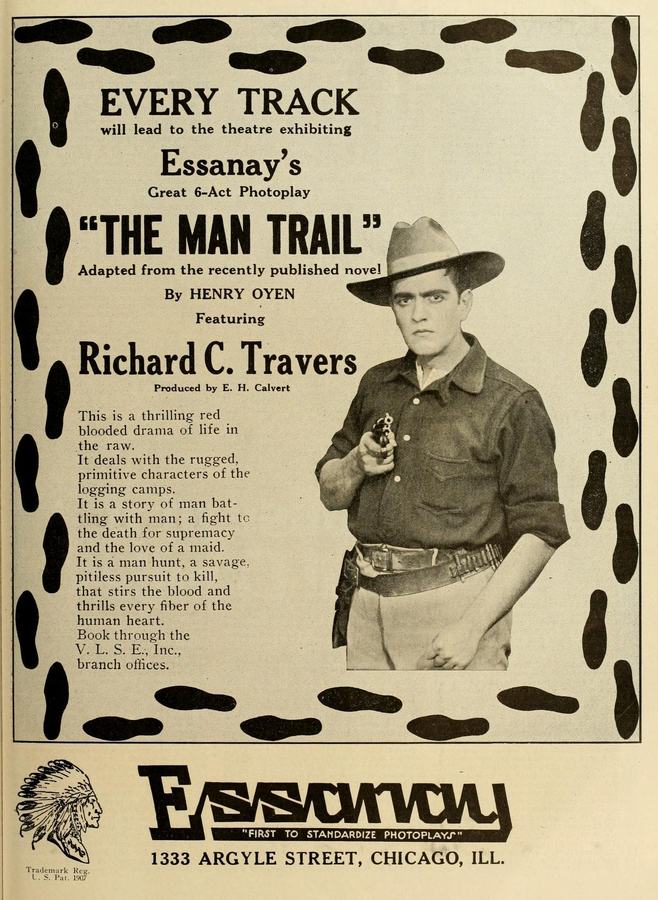
Picture this: a clatter of elevated trains dissolving behind John Peabody’s shoulders as he steps into a realm measured not in streetlights but in fathoms of pine shadow. Director Henry Oyen—no household glyph, yet a cartographer of masculine archetypes—frames the camp’s entrance like a baptismal gate. Sunlight drips through saw-blade silhouettes, foreshadowing the contest that will later cleave family fate from mere genealogy. The refusal of “Wolf” John to acknowledge blood is less cruelty than pragmatism: in a universe where spruce outweighs silver, only kinetic merit earns surnames.
Forget the pastoral haze you expect from early-twenties backlot pastorals. Oyen’s camera lingers on the frothy aftermath of crosscut teeth, turning sawdust into a mutable snowfall that powders eyelashes and coats tongues. The lumber-sawing contest itself—a terse ballet of sinew and steel—plays out in rhythmic montage: close-ups of calves flexing like bowed cedar, axes flung upward against a sky so overexposed it resembles forged tin. The sequence anticipates the muscle-memory cinema of The Boundary Rider (review here) yet predates it by months, proving that pulp wood could birth high poetry before critics coined the term.
Romance in silent reels often wilts beneath the weight of semaphore gestures; here Belle, rendered with feral minimalism by Betty Scott, complicates the trope. She enters astride a log skidder, hair uncoiling like bark shavings caught in a squall. Her affection for John is never declared via intertitle—instead, watch how she palms a splinter from his knuckle, studying the bead of blood as though reading braille. Their courtship transpires in negative space: shared glances across a mess-tent reeking of kerosene, a lantern flare that halos her clavicles the night John is christened heir. The film intuits what many modern indies forget: desire sharpens when deferred, when axes and contracts stand sentinel.
Arthur W. Bates sculpts Bart with tragic granularity. He is not the mustache-twirling ogre of nickelodeon cliché but a man whose shoulders slump under the fresh knowledge that affection cannot be felled like a pine. His defection to the rival company plays less as treachery than an apostasy of despair. Note the sequence where he stamps “X” marks onto King Pines blueprints—Oyen overlays this with a ghost-image of Belle’s smile, implying sabotage is a love letter written in reverse. In the pantheon of silent-era antagonists, Bart prefigures the bruised masculinity found in The Coward (see analysis), though Oyen predates that psychological nuance by several fiscal quarters.
The King Pines contract operates as both MacGuffin and moral plumb-line. Cinematographer Thomas MacLarnie renders these arboreal titans in forced perspective—trunks surge like fluted columns, their canopy a vaulted ceiling. Each attempt at sabotage becomes a Stations-of-the-Cross for the workingman: snapped cables sing like cathedral bells, runaway logs clatter down skid roads like penitents hurling themselves toward absolution. When the deadline is met, Oyen cuts to a horizon where stumps resemble pews emptied after sermon; the timber kingdom has been both desecrated and anointed.
Spoiler etiquette forbids divulging victors, yet the duel deserves liturgical inspection. Oyen choreographs it in a single, merciless pan: two silhouettes advancing along a sun-blanched skid road, sawdust clouds nipping at their heels. The camera refuses close-ups until the final concussion—then, a rupture of smoke frames a face contorted not in triumph but in the dawning cost of dominion. The silence that follows is cavernous, broken only by the far-off whine of a crosscut restarting work. It is a finale that renounces spectacle for sacrament, something One Wonderful Night (review) strived for yet missed by a whisker of melodrama.
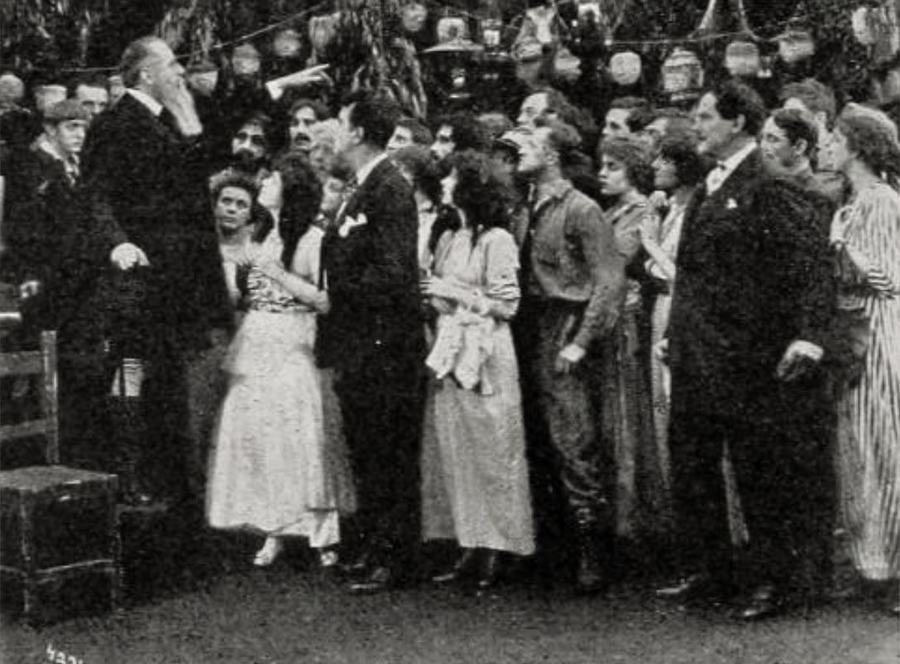
Hugh Thompson’s John Peabody is all kinetic reserve—his smile arrives like a delayed sunrise, half-hooded eyes measuring each man as though calculating board-feet. Scott’s aforementioned Belle is reactive yet never passive; watch her hand straying toward a peavey hook when Bart lunges at John—a promise of violence that never materializes but charges the air like ozone. Ernest Maupain’s “Wolf” John growls through a beard dense as underbrush, his eventual proclamation of kinship delivered off-frame, a directorial choice that renders acceptance a whispered legend rather than a proclamation.
Henry Oyen’s intertitles refuse the ornamental Victoriana clogging many silents. Witness: “Logs remember the hands that felled them” or “A tree falls the same for love or money.” Each card is haiku-brief, compelling the eye back to the visual symphony. Compare this to the logorrhea burdening A Bunch of Keys (essay), where text usurped the image; Oyens’ asceticism feels modernist, almost Ozu-like in its trust of the frame.
Archival prints now circulate with a commissioned score—dobro, hand-claps, and chains jangling in 7/8 time. During the recent Brooklyn revival, musicians placed contact mics on wooden planks, letting footfalls bleed into the composition. If you snag a Blu-ray, ensure it features this track; the default piano noodling flattens the film’s haptic soul.
While William Wellman’s The Spoilers and even the Technicolor bravado of High Sierra owe debts to frontier fatalism, Oyen’s sawdust saga remains a seed crystal. Note how the refusal to romanticize the axe recurs in Kelly Reichardt’s First Cow; the DNA is traceable. Even the Coens’ Fargo channels the same snow-blind morality, though substituting wood for ice.
Absolutely—provided you can tolerate a third-act lacking the cathartic bloodletting modern scripts crave. The Man Trail is a rediscovered vertebra in the spine of American silent cinema, a film that knows love grows ring by ring, that legacy is measured not in land seized but in splinters survived. Enter expecting the contemplative hush of a winter forest, not the whiz-bang of city chase reels, and you’ll exit with sap on your cuffs and something like reverence in your chest.
“Between the whine of the saw and the silence of the fallen, the film finds America still hacking at its own reflection.”
Runtime: 68 min | Aspect Ratio: 1.33:1 Tinted | Available: Blu-ray/Digital
IMDb —
1920
Community
Log in to comment.