
DbcultAccessing Vault...
6/10
Senior Film Conservator
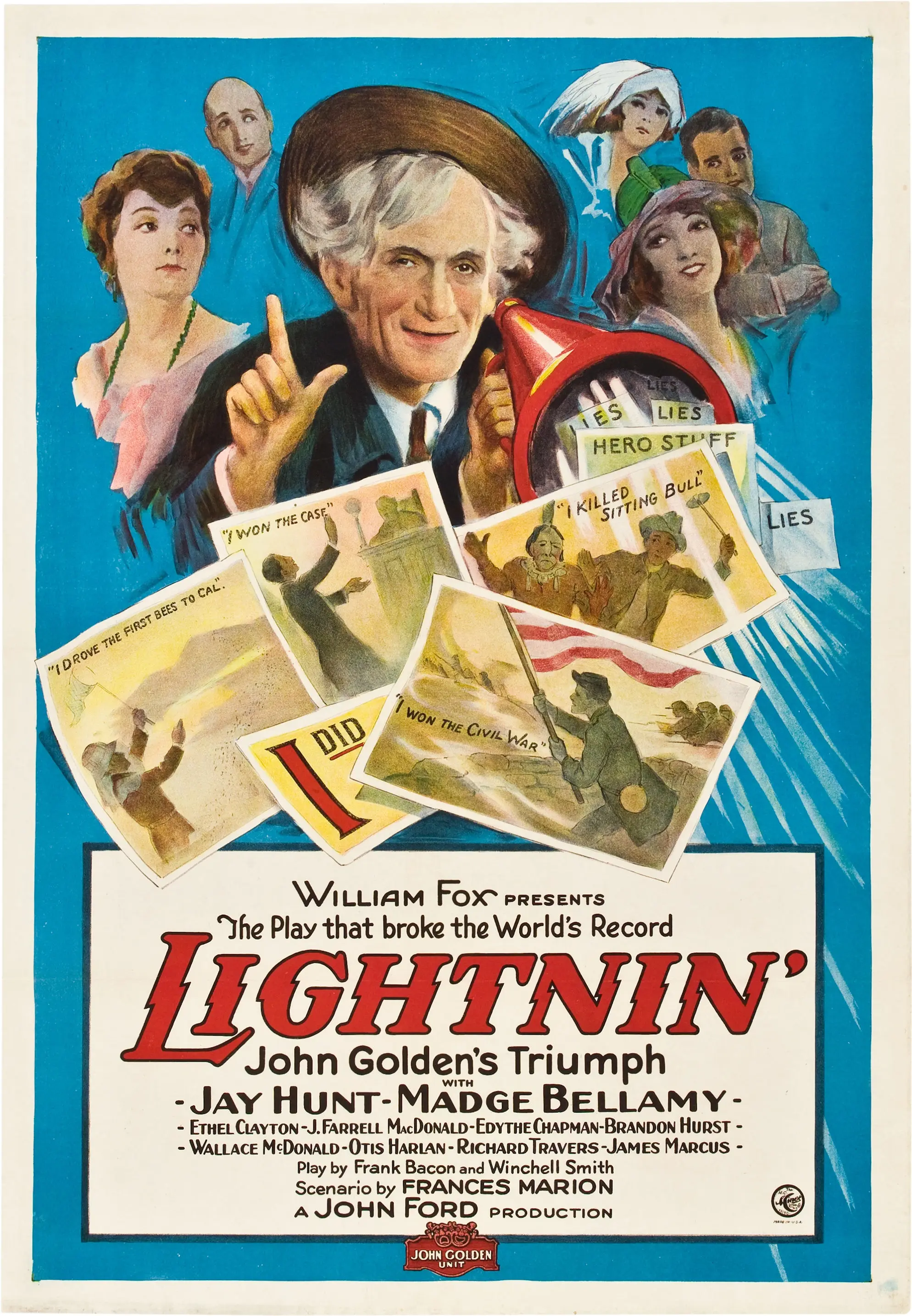
A definitive 6/10 rating for a film that redefined the boundaries of cult cinema. Lightnin' remains a cornerstone of transgressive art.
In the cinematic realm, few films have managed to captivate audiences with the same level of nuance and emotional depth as Lightnin'. This 1922 silent drama, directed by Winchell Smith and Frank Bacon, presents a complex exploration of matrimony, morality, and redemption, set against the backdrop of a proposed railroad development.
At the heart of the narrative lies Lightnin' Bill Jones, a rugged individualist with a penchant for libations, played by Wallace MacDonald. Bill's life is one of quiet desperation, toiling as a handyman at the Calivada Hotel, operated by his better half, Mother Jones (Ethel Clayton), and their adopted offspring, Millie (Madge Bellamy). The hotel, a humble establishment, serves as a symbol of the Jones's fragile existence, threatened by the machinations of real estate speculators.
The plot thickens when the speculators, driven by avarice, discern that the hotel sits atop a proposed railroad right of way. They cunningly manipulate Mother Jones into selling the land, leveraging her vulnerability and naivety. However, Bill, bolstered by the sage advice of John Marvin (Jay Hunt), a young attorney smitten with Millie, refuses to append his signature to the bill of sale. This decision precipitates a familial crisis, culminating in Bill's ejection from the household and his subsequent relocation to the Old Soldiers' Home.
As the narrative unfolds, the audience is treated to a rich tapestry of characters, each imbued with their own distinct personality and motivations. The schemers, led by the duplicitous Erville Alderson, serve as a foil to the Jones family, highlighting the corrupting influence of greed and the destructive power of deceit.
One of the most striking aspects of Lightnin' is its thoughtful exploration of morality and redemption. Mother Jones, a complex and multifaceted character, undergoes an epiphany, ultimately reconciling with her spouse. This narrative arc serves as a powerful reminder of the enduring power of love and forgiveness, even in the face of adversity.
The film's use of visual storytelling is equally noteworthy, with a muted color palette and deliberate camera work evoking a sense of melancholy and introspection. The cinematography, while not overly complex by modern standards, serves to underscore the narrative's themes of hardship and perseverance.
In terms of performances, the cast delivers a uniformly strong showing, with standout turns from Ethel Clayton and Madge Bellamy. The chemistry between the leads is palpable, lending an air of authenticity to the narrative's more dramatic moments.
For those familiar with the works of silent cinema, Lightnin' may evoke comparisons to films like The Greek Interpreter and The Triumph of Love, which also explore themes of love, morality, and redemption. However, Lightnin' distinguishes itself through its nuanced characterization and thoughtful pacing.
Upon closer examination, it becomes clear that Lightnin' is more than simply a romantic drama – it is a scathing critique of the capitalist ethos that underpinned the Roaring Twenties. The film's portrayal of real estate speculators as ruthless and amoral serves as a powerful indictment of the excesses of the era.
Furthermore, Lightnin' offers a fascinating glimpse into the social and cultural norms of the time. The film's depiction of a strong, independent female lead, Mother Jones, serves as a powerful feminist statement, while the character of Lightnin' Bill Jones himself serves as a symbol of the struggles faced by working-class Americans during this period.
As the narrative draws to a close, the audience is left with a sense of hope and renewal, as the Jones family emerges from their trials and tribulations stronger and more united than ever. This sense of catharsis is a hallmark of great storytelling, and Lightnin' is no exception.
In conclusion, Lightnin' is a masterpiece of silent cinema, offering a rich and nuanced exploration of love, morality, and redemption. Through its thoughtful pacing, nuanced characterization, and scathing critique of capitalism, the film presents a powerful and enduring commentary on the human condition.
For those interested in exploring the film's historical context, it is worth noting that Lightnin' was released during a period of significant social and cultural upheaval in the United States. The film's portrayal of a country in flux, grappling with the consequences of rapid industrialization and urbanization, serves as a powerful reminder of the enduring power of cinema to capture the spirit of an era.
Ultimately, Lightnin' is a film that rewards close attention and multiple viewings. Its themes of love, morality, and redemption continue to resonate with audiences today, offering a powerful reminder of the enduring power of cinema to inspire and educate.