DbcultAccessing Vault...
7.7/10
Senior Film Conservator
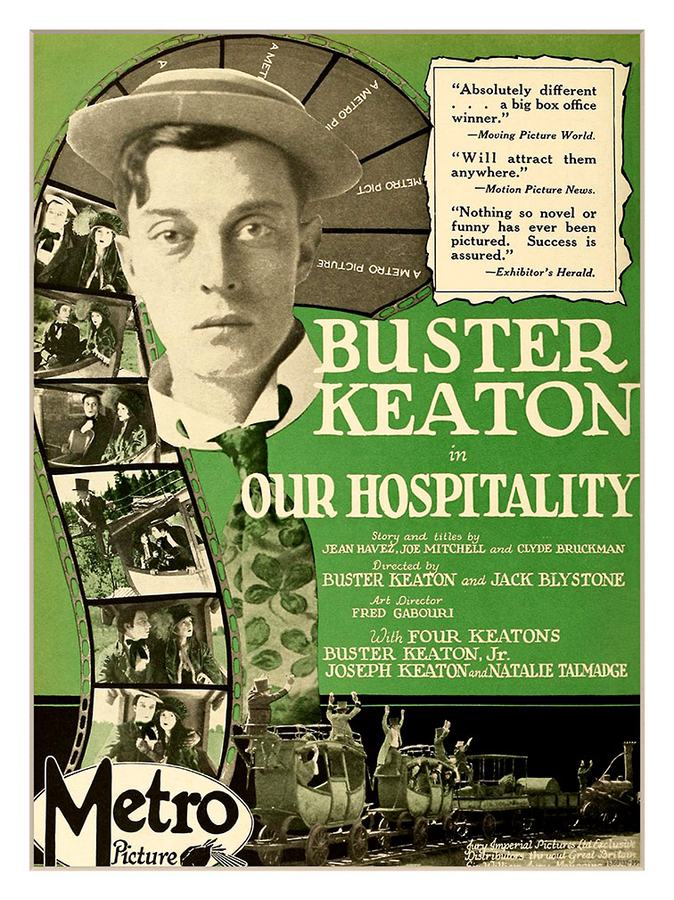
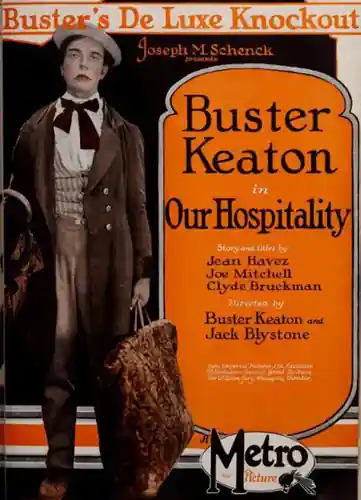
A definitive 7.7/10 rating for a film that redefined the boundaries of cult cinema. Our Hospitality remains a cornerstone of transgressive art.
When the dust settles on the opening frames of Our Hospitality, the viewer is thrust into a world where the Appalachian wilderness is both a sanctuary and a crucible. The film opens with a lone rider—portrayed with stoic gravitas by Francis X. Bushman Jr.—traversing winding mountain paths, his silhouette a lone brushstroke against a sky bruised with twilight. The cinematography, crisp for its era, captures the stark contrast between the verdant ridges and the looming shadows of familial curses.
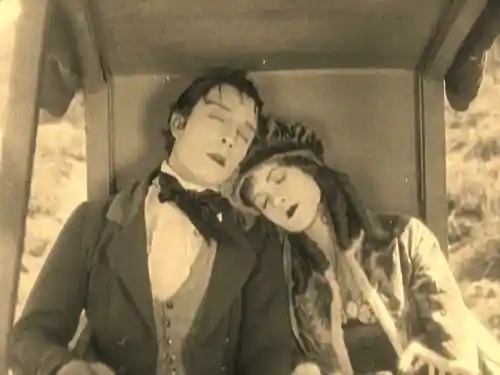
The narrative’s inciting incident is deceptively simple: a chance encounter with a young woman, played by Natalie Talmadge, whose eyes glitter like the amber of a setting sun. Yet, beneath this tender exchange lies an intricate lattice of ancestral grievance. The audience learns, through intertitles rendered in a font reminiscent of hand‑carved wooden signs, that her family has sworn an unbreakable oath to eradicate every member of his clan—a vow that has been passed down through generations like a tarnished heirloom.
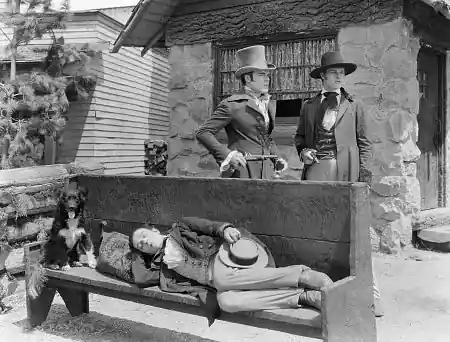
Bushman Jr.’s performance is a masterclass in expressive subtlety. Without a single spoken word, he conveys a spectrum of emotions—hope, dread, yearning—through nuanced glances and the slightest tilt of his head. Talmadge, meanwhile, balances innocence with an undercurrent of steel; her laughter, captured in the flicker of the projector, feels both genuine and foreboding, hinting at the lethal legacy she carries.
Supporting actors such as Erwin Connelly and Joe Roberts provide a textured backdrop, their characters serving as both comic relief and stark reminders of the unforgiving world the protagonists inhabit. Notably, Buster Keaton’s cameo—though brief—injects a kinetic energy that foreshadows the chase sequences that dominate the film’s second act.
At its core, Our Hospitality is a meditation on the inescapability of heritage. The screenplay, crafted by Clyde Bruckman and Joseph A. Mitchell, weaves a tapestry where personal desire is constantly at odds with the immutable expectations of bloodlines. The film’s title itself is a sardonic nod to the hospitality—or lack thereof—extended by the feuding families, underscoring the bitter irony that love must often bloom in hostile soil.
The narrative structure mirrors the topography of the Appalachian region: steep ascents, sudden drops, and winding passages that test the characters’ resolve. The pacing is deliberate, allowing moments of quiet contemplation—such as the lingering shots of mist‑cloaked valleys—to punctuate the more frenetic chase sequences. This rhythmic ebb and flow mirrors the push‑pull of the central romance, where each tender moment is shadowed by an imminent threat.
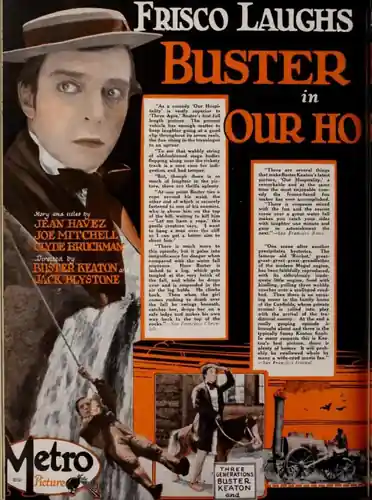
The film’s visual palette is dominated by chiaroscuro, a technique that accentuates the stark contrast between light and darkness, mirroring the moral ambiguity that pervades the story. The use of natural lighting—sunlight filtered through pine branches, moonlight glinting off river surfaces—creates an immersive atmosphere that feels both timeless and immediate.
Editing, overseen by the adept hand of Jean C. Havez, employs cross‑cutting to heighten tension during the climactic pursuit. The rapid interspersion of close‑ups with wide shots of the rugged terrain amplifies the sense of urgency, while the occasional use of superimposition—a hallmark of early silent cinema—adds a dream‑like quality to the protagonist’s internal struggle.
Though the film is silent, its accompanying score—recreated in modern restorations—utilizes a blend of Appalachian folk motifs and orchestral swells, underscoring the emotional beats without ever overwhelming the visual narrative.
When placed alongside other silent era gems, such as How I Became Krazy or The Ghost Breaker, Our Hospitality distinguishes itself through its deft intertwining of romance and revenge. While How I Became Krazy leans heavily into slapstick absurdity, and The Ghost Breaker revels in supernatural intrigue, Our Hospitality grounds its drama in the tangible, earthy reality of familial honor.
The film also shares thematic DNA with Sherlock Holmes, particularly in its use of clever ruses and strategic misdirection. However, where Holmes relies on intellectual deduction, the protagonists of Our Hospitality depend on instinct, loyalty, and an almost mythic resilience.
Decades after its initial release, Our Hospitality continues to resonate with scholars and cinephiles alike. Its exploration of intergenerational conflict prefigures later cinematic explorations of family feuds, such as those found in the Westerns of the 1950s and the modern crime dramas of the 1990s.
The film’s choreography of chase scenes—particularly the iconic riverboat pursuit—has been cited as an early influence on the kinetic action sequences that would later define Hollywood’s blockbuster era. Moreover, the film’s subtle commentary on the futility of vengeance anticipates the moral complexities of later auteurs like John Ford and Akira Kurosawa.
In the final tableau, as the protagonists stand atop a mist‑shrouded ridge, the camera lingers on their silhouettes against a sunrise that bleeds the hues of dark orange and sea blue—an emblematic visual metaphor for hope rising from the ashes of ancient enmity. The film closes not with a tidy resolution but with an open‑ended promise: love may yet carve a path through the thicket of hatred, but the shadows of the past will always linger, waiting for the next generation to confront them.
For contemporary audiences, Our Hospitality offers more than nostalgic charm; it provides a lens through which to examine the perennial tension between individual agency and collective destiny. Its artistry—manifest in performance, composition, and narrative depth—cements its status as a cornerstone of silent cinema, deserving of repeated viewings and scholarly discourse.
IMDb 4.2
1916
Community
Log in to comment.