DbcultAccessing Vault...
6.2/10
Senior Film Conservator
A definitive 6.2/10 rating for a film that redefined the boundaries of cult cinema. Lightning Love remains a cornerstone of transgressive art.
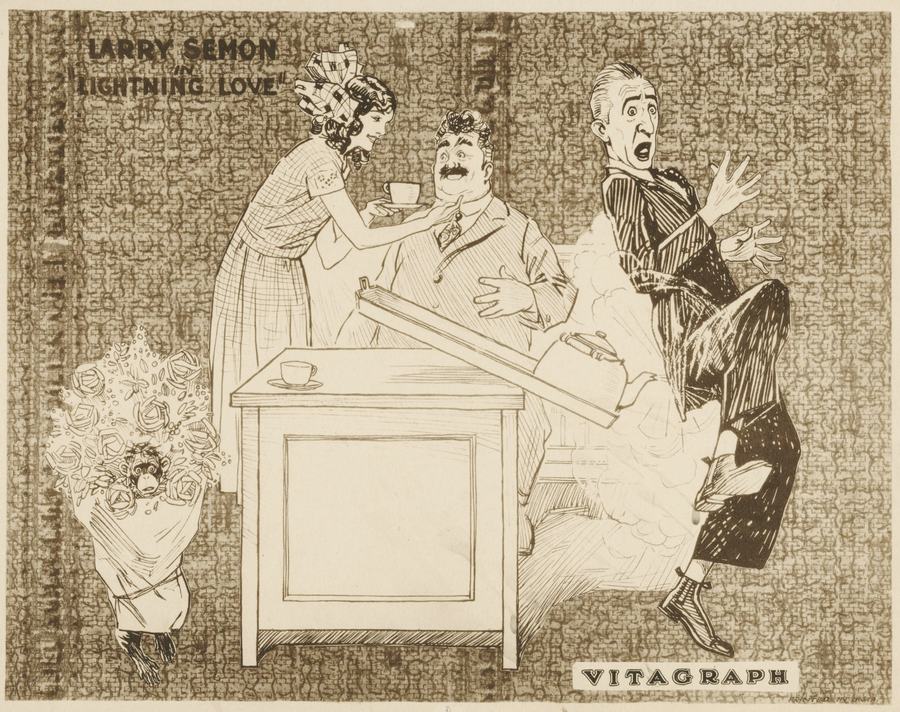
Lightning Love is a film that thrives on paradoxes: a tale of courtship suffocated by the walls of a single house, a comedy that weaponizes nature’s fury, and a silent film that speaks volumes through visual invention. At its core lies a rivalry as old as time—a polished, diminutive romantic lead (Larry Semon) pitted against a hulking brute (Al Thompson) vying for the heart of a young woman (Kathleen Myers) whose father (Curtis 'Snowball' McHenry) is as boisterous as the storm outside. But where lesser films might lean into predictable slapstick or melodrama, this 1920s production from James D. Davis and Semon elevates itself through a singular, electrifying conceit: lightning as both antagonist and narrative device.
The film’s genius lies in its ability to transform a single location—the interior of Myers’ home—into a labyrinth of tension. As thunder cracks and rain hammer the windows, the house becomes a character in its own right, its architecture shifting to accommodate the whims of the storm. Stairs that once seemed benign now spiral into peril; doorways yawn like portals to doom. The lightning, far from a mere backdrop, stalks Larry with an almost supernatural will, striking him as he ascends a staircase, darts into a hallway, or hides behind a curtain. This isn’t just a storm—it’s a psychological game, a metaphor for Larry’s escalating desperation as he scrambles to outmaneuver both his rival and the elements.
Consider the sequence where Larry, fleeing from a lightning bolt that has just electrified Thompson, barrels down a hallway only to find the same bolt pivoting around the corner. The camera lingers on his face, a mix of panic and disbelief, before cutting to the bolt itself, which arcs and crackles with a menace that feels almost organic. This is the film’s triumph: it turns a natural phenomenon into a narrative engine, a force that dictates pacing, tone, and character behavior. The effect is both comically absurd and eerily prescient of later horror tropes, echoing the malevolent environments of The Red Circle or the claustrophobic dread of The High Hand, albeit with a lighter, more whimsical touch.
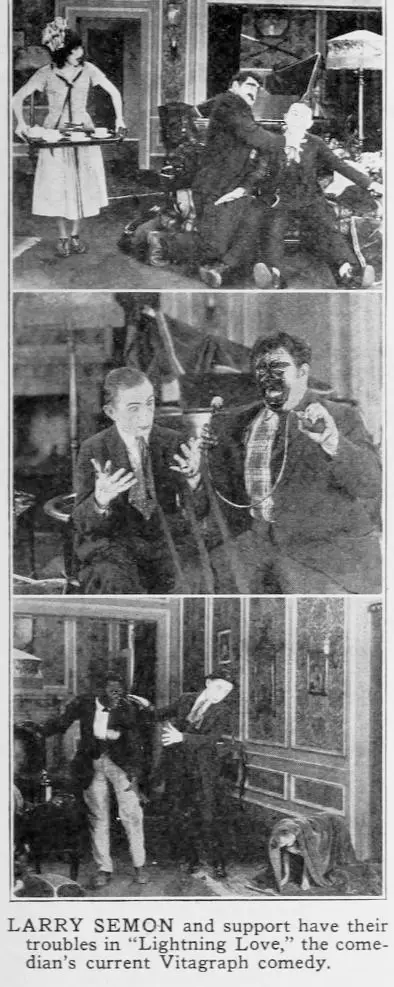
Larry Semon, the film’s architect and star, brings a physicality to the role that is both endearing and exasperating. His Larry is a man perpetually in motion, a nervous energy that contrasts sharply with Thompson’s lumbering, almost comically inept brawn. Semon’s comedic timing is impeccable, his reactions to the lightning’s relentless pursuit oscillating between wide-eyed terror and deadpan resignation. Yet, he also imbues Larry with a vulnerability that transcends the slapstick, hinting at a deeper insecurity beneath the bravado. Meanwhile, Thompson’s portrayal of the rival is a masterclass in excess—his every gesture a reminder that he exists in a world of silent film stereotypes, where size and strength are both weapon and weakness.
Elma the Monkey, though a supporting actor in the traditional sense, steals the show in moments of pure, unscripted chaos. Her antics—whether scaling furniture to evade the storm or inadvertently aiding Larry’s plight—add a layer of unpredictability that the rigid human characters lack. In one memorable scene, she dangles from a chandelier as lightning strikes the very fixture she’s clinging to, a moment of slapstick absurdity that would make Harold Lloyd nod in approval. This interplay between human and animal performances is a testament to the film’s ability to balance technical innovation with raw, instinctive humor.
What sets Lightning Love apart is its technical daring. The filmmakers employ a combination of practical effects and clever editing to make the lightning appear as though it has a will of its own. Stills of the set reveal no visible wires or contraptions; instead, the lightning’s fluid motion and erratic path suggest a mastery of early special effects that feels ahead of its time. The use of chiaroscuro lighting—deep blacks and stark whites—enhances the lightning’s otherworldly quality, framing it as a divine or infernal force rather than a mere weather event.
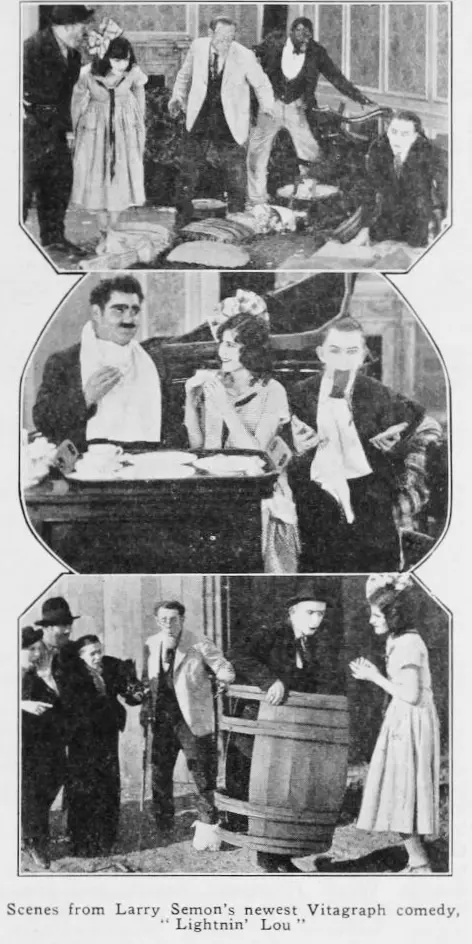
Consider the sequence where Larry, cornered in a dimly lit room, is struck by lightning as he reaches for the door. The camera cuts to a close-up of his hand, frozen mid-grasp, as the bolt arcs above it. The effect is both comical and unsettling, a visual pun on the impossibility of escape. This interplay between the literal and the symbolic is what elevates the film beyond its genre. The lightning isn’t just a gag; it’s a narrative motif, a metonym for Larry’s struggle against forces beyond his control. It’s a concept that would be revisited in later works like The Dawn of Understanding, though with far less humor and far more gravitas.
Decades later, Lightning Love remains a fascinating study in silent film innovation. Its influence can be seen in the surreal, almost surrealistic approach to natural disasters in modern cinema, where weather becomes a character in its own right. The film’s ability to merge slapstick with existential dread is a rare feat, one that nods to the broader cultural anxieties of its time. The 1920s were an era of rapid technological change and societal upheaval, and the storm in Lightning Love can be read as a metaphor for these forces, chaotic and inescapable.
Comparisons are inevitable, but the film holds its own against its contemporaries. Where Soft Money leans into social satire or Two A.M. indulges in noir-inflected mystery, Lightning Love carves out a niche all its own. Its closest relative might be The World to Live In, though that film’s focus on domestic harmony contrasts sharply with the latter’s embrace of discord. Even in an age where CGI allows for hyper-realistic effects, the hand-crafted ingenuity of Lightning Love feels refreshingly authentic, a reminder of cinema’s roots in imagination and restraint.
For all its technical brilliance and narrative audacity, Lightning Love is at heart a film about resilience. Larry’s journey—both literal and metaphorical—is one of perseverance against impossible odds, a theme that resonates as deeply today as it did a century ago. The lightning, for all its menace, becomes a symbol of the challenges we face and the absurdity with which we confront them. It’s a film that invites repeated viewings, each time revealing new layers of meaning in its chaotic beauty.
Whether you’re a cinephile or a casual viewer, Lightning Love is a testament to the power of cinema to transform the mundane into the extraordinary. It’s a storm in a teacup, a lightning bolt in a drawing room, and a reminder that sometimes, the best stories are the ones that strike you when you least expect them.

IMDb 7
1931
Community
Log in to comment.