DbcultAccessing Vault...
6.8/10
Senior Film Conservator
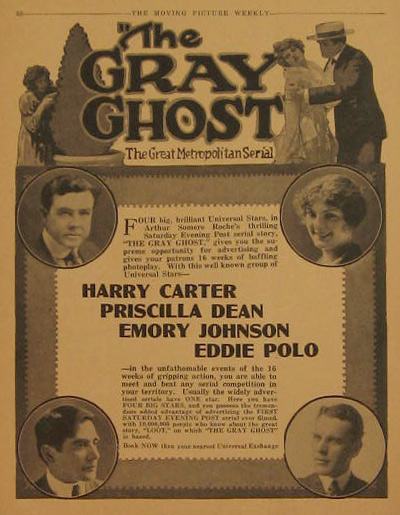
A definitive 6.8/10 rating for a film that redefined the boundaries of cult cinema. The Gray Ghost remains a cornerstone of transgressive art.
From the very first flickering frames of 'The Gray Ghost: The Bank Mystery,' we are plunged headfirst into a world where opulence and peril dance an intricate tango. This inaugural episode of the classic silent serial immediately establishes a tone of sophisticated menace, introducing us to a criminal mastermind whose presence, though often unseen, permeates every meticulously crafted twist and turn. It’s a testament to the era's storytelling prowess that a plot so dense with intrigue, betrayal, and high-stakes larceny can be conveyed with such compelling clarity through the sheer power of visual narrative and intertitles.
The narrative unfurls with the seemingly straightforward task of securing a magnificent, two-million-dollar necklace for Lady Gwendolin, a wedding present from her esteemed fiancé, Mr. Carlow. This glittering symbol of wealth and affection becomes the immediate fulcrum of the entire episode's machinations. Wade Hildreth, the junior partner of Carlow's London solicitors, is entrusted with the perilous journey to America to retrieve this treasure. His mission, seemingly simple, is fraught with unseen dangers, for the Gray Ghost, a criminal of unparalleled intellect and organization, has already set his sights on both the necklace and the accompanying certified check. The Ghost's ability to intercept information, even a seemingly innocuous cable detailing Hildreth's personal description, speaks volumes about his reach and his mastery of the burgeoning communication networks of the early 20th century. It sets up a delicious tension, as Hildreth, portrayed with a certain naive earnestness, embarks on his voyage utterly oblivious to the intricate web being spun around him. His secretary, Jean Marco, accompanying him, adds another layer of potential vulnerability or, perhaps, an as-yet-unrevealed complicity or counter-agency. The serial format, by its very nature, thrives on these escalating layers of suspense, and 'The Bank Mystery' wastes no time in establishing this crucial dynamic.
The titular Gray Ghost, whose physical presence remains largely in the shadows in this debut, is nevertheless the dominant force of the episode. His reputation precedes him, even if only one man, Detective Jerry Tyron, truly grasps the magnitude of his existence. Wilton Taylor's portrayal of Tyron, even in these early stages, hints at a man driven by an almost singular obsession, a necessary counterpoint to the Ghost's elusive genius. This dynamic of the lone, astute detective against the unseen, all-powerful criminal is a timeless trope, but here, it feels fresh and compelling, particularly within the context of the silent era's often melodramatic narratives. The Ghost's organization is described as 'perfect,' a chilling detail that elevates him beyond a common thief to a true criminal mastermind. This isn't just about snatching jewels; it's about control, manipulation, and the systematic dismantling of societal order. The very concept of a villain so adept at disappearing into the ether, leaving only a trail of perfectly executed crimes, speaks to a nascent cultural anxiety about unseen forces at play, a fear that would only deepen with the complexities of the modern age.
The heart-wrenching subplot involving Banker Olmstead and his son serves as the episode's dramatic anchor, illustrating the devastating reach of the Gray Ghost's influence beyond mere theft. Young Olmstead's entanglement with the Ghost through gambling debts paints a vivid picture of moral decay and vulnerability. The father's anxiety over the impending auditor's visit, and his subsequent decision to inspect the bank's books himself, is a poignant portrayal of a man desperately trying to uphold integrity in a world crumbling around him. The scene where young Olmstead confronts the Ghost, begging for mercy, is a masterclass in silent film acting, conveying desperation and fear without a single spoken word. The Ghost's response, not to offer help but to further ensnare him, reveals a cold, calculating cruelty. This manipulation is further underscored by the intriguing presence of Morn Light, a musical comedy star, whose connection to the Ghost remains shrouded in mystery. Gertrude Astor's performance here, observing the brutal exchange with a mixture of anger and perhaps fear, adds a layer of complexity to the criminal underworld, suggesting internal conflicts and moral quandaries even within the Ghost's orbit. Her demand to know Olmstead's fate and the Ghost's dismissive 'mind your own business' hint at a deeper, more volatile relationship than initially perceived. This kind of character development, even in a serial, elevates the narrative beyond simple good-versus-evil.
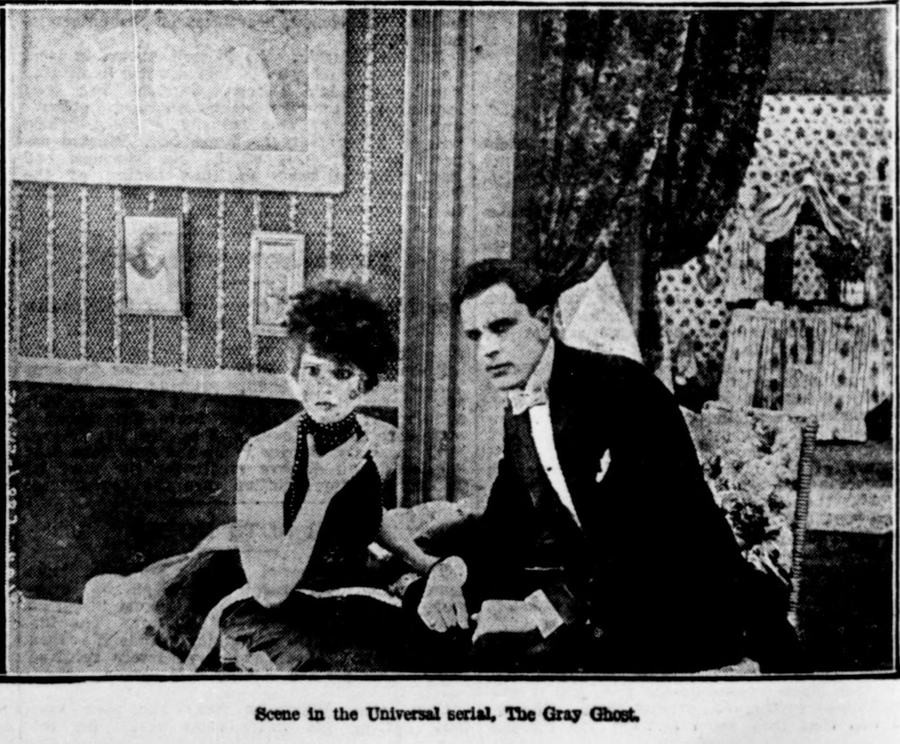
The climax of 'The Bank Mystery' is a breathtaking exercise in suspense and criminal ingenuity. Banker Olmstead's discovery of his son's thefts in the vault is a moment of profound despair, quickly overshadowed by the brutal efficiency of the Gray Ghost's plan. The watchman, a seemingly trustworthy guardian, is revealed to be a complicit pawn, allowing the Ghost's men access to the inner sanctum. The subsequent shooting of the elder Olmstead, followed by the chilling act of placing the revolver in the unconscious son's hand, is a masterstroke of villainy. It's a classic frame-up, executed with ruthless precision, designed not just to eliminate an obstacle but to completely destroy a life. The son's awakening to the watchman's deceitful narrative – that he has shot his own father – is a moment of pure psychological terror. The swift arrival of an 'officer' who then transforms into a civilian, silencing young Olmstead's desperate pleas, underscores the pervasive nature of the Ghost's influence. This isn't just about a single crime; it's about a network of corruption that infiltrates the very institutions meant to uphold justice. The scene culminates in the Ghost's audacious call to Tyron, a taunt delivered with supreme confidence, setting the stage for the next installment. The disappearance of the banker's body is the final, tantalizing piece of the puzzle, ensuring that Tyron, and the audience, are left with more questions than answers, a hallmark of effective serial storytelling.
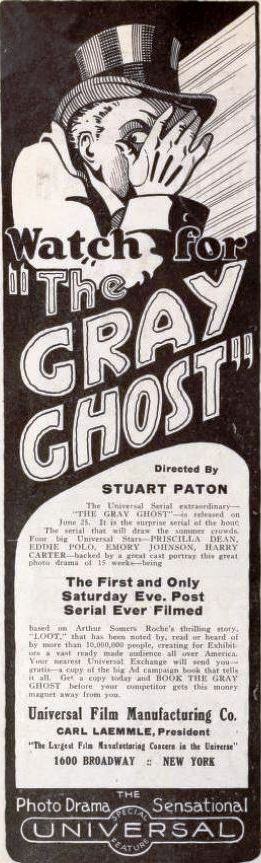
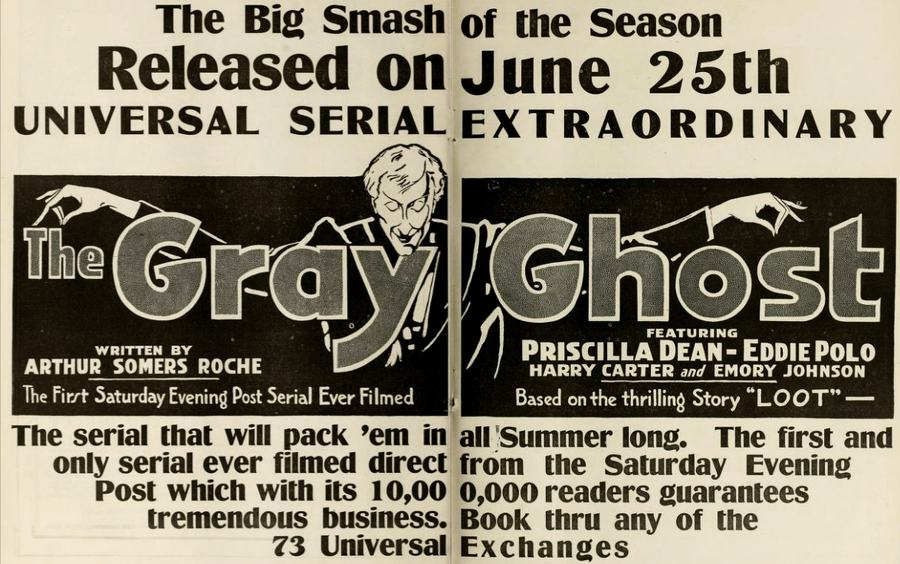
Stuart Paton, as the director, along with writers Arthur Somers Roche and Paton himself, demonstrates a keen understanding of pacing and visual storytelling crucial for the silent film medium. The way tension is built through lingering shots, dramatic intertitles, and the expressive physicality of the actors is remarkable. The use of shadows and stark contrasts, particularly in the bank vault scenes, effectively conveys the sinister atmosphere surrounding the Ghost's operations. While we don't see J. Morris Foster's face fully as the Gray Ghost in this episode, his presence is felt through the actions of his subordinates and the sheer audacity of his plans, a testament to the power of suggestion in early cinema. The supporting cast, including Gypsy Hart, John Cook, Eddie Polo, and Gertrude Astor, deliver performances that, while characteristic of the era's heightened theatricality, effectively convey their characters' motivations and emotions. Emory Johnson, as young Olmstead, particularly shines in his moments of desperation and terror, making his character's plight genuinely affecting. This level of intricate plotting and character interaction was not always a given in early serials, which sometimes prioritized spectacle over substance. 'The Bank Mystery' manages to blend both, offering a compelling narrative alongside thrilling developments.
The serial format itself was a powerful force in early cinema, drawing audiences back week after week with its promise of cliffhangers and unfolding mysteries. 'The Gray Ghost' capitalizes on this, delivering an opening episode that is packed with enough intrigue to ensure viewers would eagerly anticipate the next installment. This approach to storytelling, with its episodic nature and heightened suspense, laid much of the groundwork for later television series and even modern cinematic franchises. Comparing it to other films of the era, one can see how 'The Gray Ghost' distinguishes itself. While films like The Master Hand might explore criminal genius through a more standalone narrative, 'The Gray Ghost' embraces the prolonged cat-and-mouse game inherent in the serial. The meticulous planning of the Gray Ghost rivals the intricate plots found in contemporary crime dramas, showcasing a sophistication that belies its age. The element of a hidden mastermind, a puppeteer pulling strings from the shadows, echoes themes found in other suspenseful productions like The Tell-Tale Step, which also delves into the darker side of human nature and hidden machinations. The societal anxieties about crime and corruption, which are palpably present in 'The Bank Mystery,' resonate with concerns explored in films such as A Corner in Cotton, though through a different lens of social commentary. The film's portrayal of a seemingly upstanding institution like a bank being compromised from within by greed and manipulation is a stark commentary on the fragility of trust, a theme that remains relevant even today.
The ensemble cast, under Stuart Paton's direction, contributes significantly to the episode's immersive quality. J. Morris Foster, though largely obscured as the Gray Ghost, creates a palpable sense of dread through the sheer effectiveness of his character's actions. His off-screen presence is arguably more terrifying than any overt display, allowing the audience's imagination to fill in the blanks, making him a truly formidable antagonist. Wilton Taylor's Jerry Tyron, the persistent detective, is the audience's anchor in this swirling chaos. His solitary belief in the Gray Ghost's existence positions him as the lone voice of reason, a classic archetype that resonates deeply. His determination, even in the face of skepticism, is what will drive the narrative forward in subsequent episodes. Gertrude Astor, as Morn Light, is particularly captivating. Her ambiguous loyalties and her flashes of moral indignation provide a crucial human element within the cold, calculating world of the Gray Ghost. Is she a victim? A willing accomplice with a conscience? Her character adds a layer of moral complexity that enriches the narrative beyond a simple crime story. The performances of the Olmstead family, particularly that of Howard Crampton as the elder banker and Emory Johnson as his ill-fated son, are central to the episode's emotional impact. Their descent into ruin at the hands of the Gray Ghost is both tragic and a stark warning, highlighting the vulnerability of even the most established members of society to the insidious influence of crime. The film's ability to craft such distinct and memorable characters within the constraints of a silent serial is a testament to the skill of the writers and the actors alike. The interplay between these characters, their differing motivations and their unwitting or unwilling roles in the Gray Ghost's grand scheme, forms a rich tapestry of deceit and suspense.
'The Gray Ghost: The Bank Mystery' is far more than just a typical silent film serial opening; it's a meticulously constructed piece of early cinematic art that immediately draws the viewer into its shadowy world. The plot, rich with double-crosses and psychological manipulation, feels remarkably modern in its complexity. The performances, while adhering to the dramatic conventions of the era, effectively convey the high stakes and emotional turmoil. The ending, a classic cliffhanger with the missing body and the framed son, ensures that the audience is left clamoring for the next installment. This episode sets a high bar for the rest of the serial, promising a thrilling and intricate battle of wits between the elusive Gray Ghost and the dogged Jerry Tyron. It is a compelling example of how early cinema, even without synchronized sound, could craft narratives of profound suspense and enduring intrigue. The Gray Ghost emerges not just as a criminal, but as a symbol of the unseen dangers lurking beneath the veneer of societal order, a theme that continues to resonate in thrillers to this day. One can imagine audiences in 1917 leaving the cinema buzzing with speculation, eager to unravel the next piece of this master criminal's puzzle. The film's ability to create such a powerful and lasting impression, even after all these years, is a testament to its timeless appeal and the enduring power of a well-told mystery. The foundation laid in 'The Bank Mystery' is robust, promising a serial that not only entertains but also subtly explores the darker facets of human nature and the societal anxieties of its time. It’s a film that reminds us that true suspense doesn't always need explosions or CGI; sometimes, all it takes is a clever plot, a shadowy villain, and a few well-placed twists to keep an audience utterly captivated.
IMDb —
1928
Community
Log in to comment.