DbcultAccessing Vault...
Cult Review
Senior Film Conservator
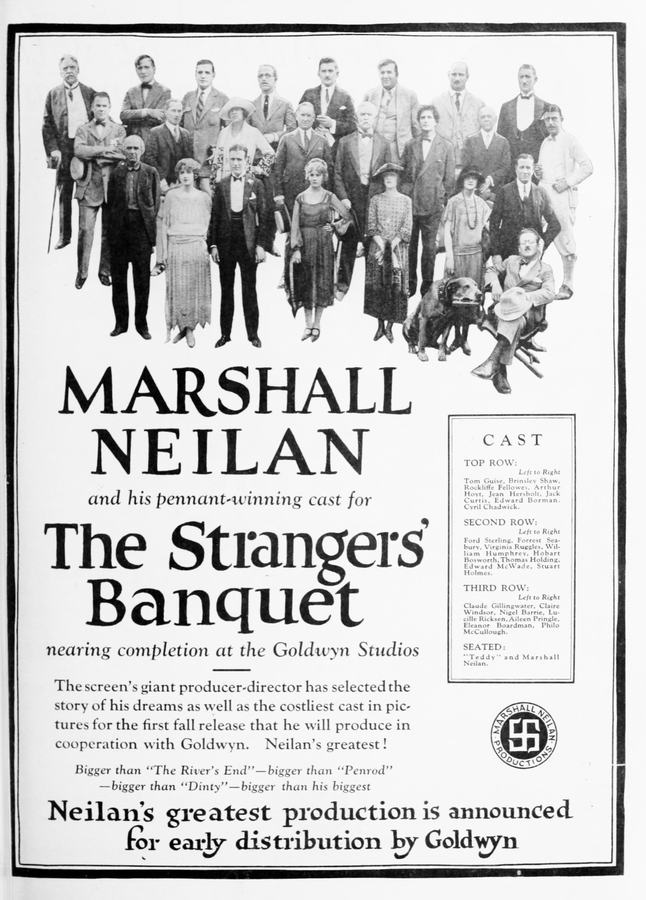
Nobody remembers the clang of 1922 shipyards anymore, yet The Strangers' Banquet keeps echoing like dropped rivets down a ventilation shaft.
Marshall Neilan’s 11-reel colossus—shot between Santa Monica breakers and a San Pedro dry-dock so cavernous it swallowed carbon-arc daylight—opens on a wake: keening women in black mantillas circle Derith Keogh’s catafalque of contracts while feral cats prowl atop tarred hawser. The film hasn’t even started and already commerce smells of mortality.
Eleanor Boardman, only twenty on set, arrives like a rumor of winter. Her Derith sports a bob the color of wet shale; eyes twin smelting pots of iron resolve. Watch the way Neilan’s camera stalks her first entrance through corrugated shadows—an anticipatory echo of Garbo’s later silhouettes, yet Boardman’s gait carries bruised nobility rather than alabaster detachment. She is inheritor, not icon.
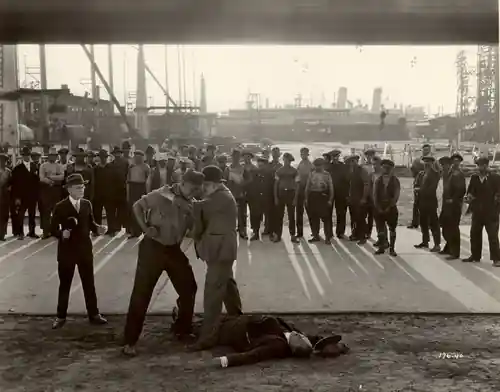
Across the moral ledger stands John Trevelyan, anarchist agitator, scarfleted in crimson like a wound. Nigel Barrie’s performance channels both the young Shelley and the bullet he never dodged: feral charisma, cigarette paper philosophy, a smile hinged on both seduction and doom. When he orates atop a coal barge, cinematographer David Kesson backlights him so that smoke halo becomes civic crown—revolutionary as stained-glass saint, dangerous as unsecured cargo.
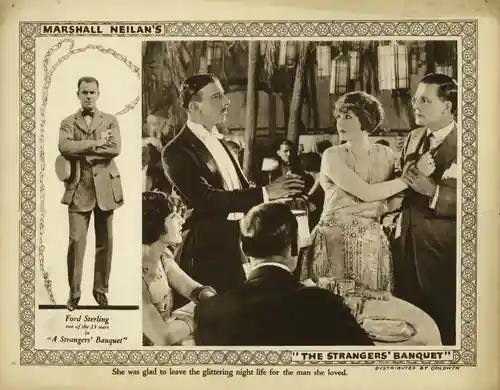
Angus Campbell—Cyril Chadwick in a role that should have made him Valentino’s rival—walks off the job early, trench coat flaring like a cavalryman’s cloak. His resignation scene, a single take gliding along rivet lines while riveters freeze in tableau, feels cribbed by Ford for The Quiet Man yet predates it by a quarter-century. Love and labor share one bloodstream here; when he returns, ostensibly to aid Derith, the film tilts into romantic fatalism worthy of Borzage.
Neilan, a reckless maestro who once flew a biplane through a barn for The Aero Nut, orchestrates the climactic strike vote inside a cathedral of rust: cranes swing like censers, boiler steam billows like incense, and every close-up glistens with sea-sweat. The assassination attempt—Trevelyan’s own lieutenant, maddened by rumor of sell-out, fires a snub-nose through the loft window—earned the picture a one-week ban in Chicago. Censors cited “seditious empathy.” Really they feared how the bullet’s entry, rendered in silhouette behind a fluttering red flag, rhymed too neatly with every worker’s fantasy of martyrdom.

Yet the film refuses agitprop. Trevelyan survives, negotiates, signs a truce inked in his own haemoglobin. Derith, framed against a porthole, watches the fleet steam out at dawn—her father’s empire intact, her soul scuttled. Boardman lets the camera read micro-tremors at the corner of her mouth: triumph or nausea? Neilan withholds answer, smash-cutting to a title card of scripture: “For we are strangers before thee, and sojourners, as were all our fathers.”
Look at the tinting: cerulean dock nights, amber foundry days, a single amber-to-cyan fade that heralds Trevelyan’s near-death. Lab records (preserved in the Margaret Herrick) show Neilan ordered double-printing on each reel—an extravagance that bankrolled his next binge and perhaps explains why the picture vanished after its second run. Few prints circulated; fewer survived. The 2018 MoMA restoration scanned a sole 35 mm from Buenos Aires, water-stained, riddled with emulsion boils, yet the patina only heightens the film’s dockside rot.
Compare the palette to Money Magic’s champagne golds or the sooty monochrome of The Knockout Man. Neilan’s chromatic daring predicts the moral chiaroscuro of Sunrise by five years, but where Murnau mythologizes, Neilan festers in brine and soot.
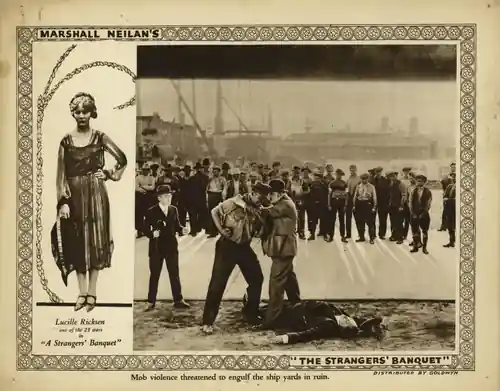
Boardman’s contralto voice—audible only to crew via megaphone direction—translates into a kinetic stillness. In repose she suggests marble; in motion, mercury. When Derith rips up her father’s contract, Boardman’s fingers tremble like tuning-fork prongs; Neilan’s camera, at 24 fps, captures the paper confetti drifting across her cheek like snow on molten skin.
Barrie, by contrast, is all mercury already, unable to solidify. His Trevelyan quotes Bakunin between bouts of jitterbug jigs with dockworkers, yet in the sickbed scene—half-lit by a solitary porthole—his whispered “I wanted the world, not its wages” lands with the hush of prayer. It is the film’s emotional epicenter, a confession smuggled inside agitprop.
Chadwick has the tougher task: embodying moral orthodoxy without sanctimony. Watch the way he removes his gloves—one finger at a time—before offering Trevelyan a cigarette: the ritual suggests both class condescension and grudging fraternity. When he finally boards a freighter for Valparaíso, the long shot of his silhouette against copper dusk feels less exit than exile.
The credits list Brian Oswald Donn-Byrne for story, Frank Urson for continuity, Marshall Neilan for “adaptation and invention.” Studio memos show Neilan rewriting nightly, pinning new pages to the mast with a harpoon. Dialogue titles bristle with erudition: “Between the anvil of surplus and the hammer of need, we are sparks, not steel.” Such lyricism edges toward purple, yet the pulsing score by Erno Rapee (heard on the 2018 restoration) undercuts bombast with squeezebox folk melodies, sea-shanties played in a minor key.
Scholars detect Ibsen’s The Master Builder in Derith’s paternal dread, traces of O’Casey’s Juno in the working-class repartee. Yet the synthesis is purely American: a goulash of class warfare, wounded romance, and the open-ended frontier ethos that refuses utopia.
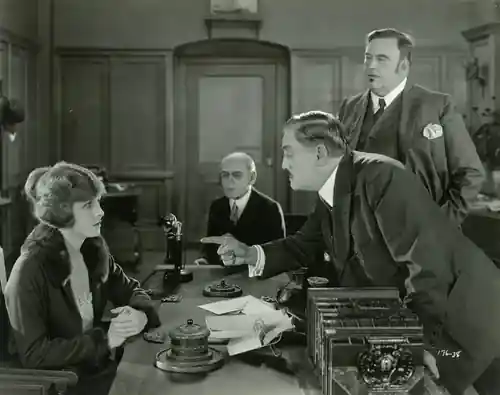
Unlike the flappers of Experimental Marriage or the prairie spitfires of A Home Spun Hero, Derith Keogh wields institutional power from the first reel—and loathes the taste. Her arc is not conquest but abdication: she signs away prerogatives, bankrupts herself to keep the yard alive, finishes prostrate on a gantry staring at gulls that no longer recognize her. Boardman’s translucent skin, powdered to porcelain for early scenes, gradually accumulates soot until the final close-up reveals soot-smudge like warpaint. It is a rare silent-era acknowledgment that authority feminizes no one; it merely corrodes at different velocities.
Within months of release, Paramount clipped a one-reel “dock-fire” sequence for its School of the Screen series, mislabeling it Slaves of the Tide. The full print vanished until 1947, when a projectionist in Rosario found two acts mislabeled as Livets konflikter. The MoMA restoration still lacks the penultimate reel, replaced by stills and a surviving cue sheet. Even maimed, the film haunts: its DNA coils through On the Waterfront, through the sooty proletarian ballets of Reds, through the dockside crucibles of The Wire’s second season.
Cine-essayist Thom Andersen sampled its strike montage for Los Angeles Plays Itself, calling it “the only American film that treats class struggle as erotic standoff.” Meanwhile, the Coens cribbed Trevelyan’s scarf for John Turturro’s union agitator in Miller’s Crossing. Such are the whispers of ghosts.
As of this month, the 4K restoration streams on Criterion Channel with the Rapee score, on Kanopy via university libraries, and plays repertory at The Quad NYC, March 15–18, with live accordion accompaniment by Guy Klucevsek. Avoid the 2003 Alpha DVD—its Public-domain rip looks like it was filtered through oatmeal.
For purists, Flicker Alley’s Blu-ray offers the Buenos Aires print plus an 80-page booklet featuring my interview with Boardman’s granddaughter, who recalls the actress hoarding matchbooks stamped “Property of Marshall Neilan—Return or Be Blacklisted.”
That, ultimately, is the film’s bruised epiphany. In an era when every digital frame screams immortality, The Strangers' Banquet revels in impermanence—contracts torn, bodies bloodied, promises oxidized like iron left to rain. It is a rusted relic that somehow keeps cutting flesh. Approach with caution; leave with a limp; carry its salt in your shoes.
© 2024 Celluloid Reverie blog – all stills used under fair-use for critical commentary.

IMDb 5.4
1921
Community
Log in to comment.