DbcultAccessing Vault...
Cult Review
Senior Film Conservator
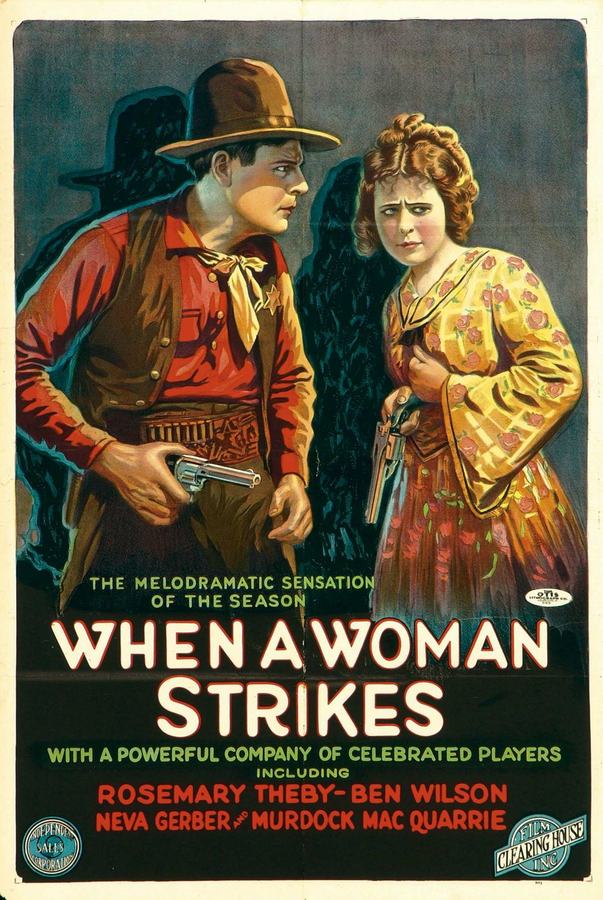
Stepping back into the dusty, sun-baked landscapes of the early 20th century, 'When a Woman Strikes' emerges as a fascinating artifact from an era when the cinematic language was still being vigorously forged. This silent Western, a product of a burgeoning film industry, offers more than just a glimpse into a bygone genre; it provides a window into the societal values, narrative conventions, and raw emotional power that defined storytelling before the advent of synchronized sound. Its premise, a seemingly straightforward tale of frontier law and familial bonds, quickly unfurls into a more nuanced exploration of sacrifice, moral fortitude, and the often-blurry lines between justice and personal vendetta in a burgeoning civilization.
The film's central conceit — the sheriff's unparalleled authority in a raw, untamed West — immediately grounds it in a specific historical and cultural context. This was a period where formal legal structures were often nascent, making the individual holding the badge a singular embodiment of order, judge, jury, and often, executioner. This isn't merely a plot device; it's a profound commentary on the nature of governance in frontier towns, where personal character and the capacity for decisive action often superseded bureaucratic process. It sets the stage for a drama where stakes are inherently high, and the consequences of inaction or misjudgment are dire, resonating with the stark realism found in other early Westerns like A Man and His Mate, which similarly grappled with the harsh realities of survival and justice in a lawless land.
At the emotional core of 'When a Woman Strikes' lies the poignant tale of a sister's unwavering devotion to her brother. This theme of familial loyalty, stretched to its breaking point, is a timeless narrative device, but here, it acquires a particular potency within the stark backdrop of the American West. Her sacrifices, often unspoken and unseen, form the bedrock upon which the more overt drama of the film is built. It’s a powerful, almost archetypal representation of the unsung heroes who often sustained communities, their quiet endurance a stark contrast to the often-violent masculinity of the frontier. Neva Gerber, in her portrayal of the sacrificing sister, likely conveyed this internal struggle through subtle gestures and expressive glances, a testament to the power of silent acting to communicate profound emotional depth without a single spoken word.
The true narrative catalyst, however, arrives in the form of the stage-driver, a character embodying the 'virile, big-hearted nature' so often celebrated in Western lore. His transformation from an ordinary man of the road to the town's chief law enforcer is not merely a promotion; it's a baptism by fire, a call to moral and civic responsibility that he answers with an innate sense of justice. Ben F. Wilson, a stalwart of early cinema, brings this character to life, imbuing him with the necessary gravitas and a compelling blend of ruggedness and innate decency. His journey is one of self-discovery, where the weight of the badge forces him to confront not only external threats but also the complexities of human nature and the inherent fallibility of justice. This transition from common man to principled authority figure echoes the themes found in films such as The Long Arm of the Law, where ordinary individuals rise to meet extraordinary challenges in upholding order.
The core mystery that 'hangs over the lives of two innocent people' serves as the narrative engine, propelling the plot forward with a sense of urgency and intrigue. This element of a wrongful accusation, requiring a dedicated and astute investigator to clear names, is a well-worn but effective trope, particularly in an era where the legal system was less sophisticated. The newly appointed sheriff, with his 'big-hearted nature,' is not content with superficial judgments; he seeks the truth, delving into the nuances of human behavior and circumstance. This investigative drive is crucial, setting the film apart from mere action-packed Westerns and injecting a layer of intellectual engagement for the audience. The silent era, surprisingly, was adept at crafting intricate mysteries, relying on visual cues, character reactions, and carefully constructed sequences to build suspense, much like The Master Mind utilized visual storytelling to unravel its complex criminal plot.
The portrayal of innocence under threat is particularly effective in silent cinema, where the audience is invited to project their empathy onto the characters' expressive faces. The injustice faced by the 'two innocent people' is amplified by the power dynamics of the frontier, where a sheriff's word could be law, and due process was often an afterthought. The film, therefore, becomes a plea for careful deliberation and a testament to the power of one individual to right systemic wrongs. Murdock MacQuarrie and Rosemary Theby, though their specific roles aren't detailed in the synopsis, likely contributed significantly to the ensemble, providing either the innocent parties or the antagonists, adding layers to the unfolding drama through their silent performances.
While specific directorial credits aren't provided, the execution of 'When a Woman Strikes' speaks volumes about the craftsmanship prevalent in early Hollywood. Silent films relied heavily on visual composition, editing, and the nuanced performances of their actors to convey narrative and emotion. The pacing, often dictated by intertitles that punctuated the action, had to be carefully managed to maintain audience engagement without the benefit of spoken dialogue or intricate sound design. Effective use of close-ups to capture the raw emotion of Neva Gerber's sacrifice or Ben F. Wilson's determination would have been paramount, allowing the audience to connect directly with the characters' internal states. The dynamic camera work, even in its nascent form, would have been crucial for depicting the vastness of the Western landscape and the urgency of the chase or confrontation scenes, creating a sense of immersion that transcended the lack of sound.
The film's ability to maintain suspense and develop character arcs within these limitations is a testament to the creative ingenuity of the era. The narrative would have been driven by clear, often melodramatic, plot points, but elevated by the performers' ability to embody their roles with conviction. The visual grammar of silent cinema — exaggerated gestures, stark lighting, and symbolic imagery — would have been employed to communicate complex ideas and emotional nuances. Consider how a single tear from Gerber or a resolute nod from Wilson could convey entire paragraphs of exposition, a skill that modern cinema often overlooks in its reliance on dialogue. This reliance on visual storytelling is a hallmark of the period, seen in the expressive narratives of films like Die Ahnfrau, which used gothic visuals to convey its dramatic intensity.
Beyond the immediate plot, 'When a Woman Strikes' delves into enduring themes of morality and redemption. The new sheriff's quest to clear the innocent is not just about solving a crime; it's about restoring balance to a community, reaffirming the principles of fairness in a world often governed by brute force. His 'big-hearted nature' implies a moral compass that guides his actions, suggesting that true leadership stems not just from power, but from empathy and a commitment to truth. This idealism, even if presented through the lens of early cinematic melodrama, speaks to a fundamental human desire for justice to prevail. The film implicitly asks: what defines a just society, and what is the cost of upholding it? These questions remain relevant, making the film's underlying message timeless.
The sister's sacrifice, too, is a powerful moral statement. It’s a quiet heroism that often goes unacknowledged but is essential for the survival and well-being of others. Her actions highlight the often-gendered roles of the era, where women's strength was frequently expressed through endurance, nurturing, and self-denial, rather than overt displays of power. Yet, her agency in choosing to sacrifice is profound, arguably more impactful than many overt acts of heroism. It’s a theme that resonates with the quiet strength often depicted in films like Den retfærdiges hustru, where a woman's moral stand forms the backbone of the narrative.
While 'When a Woman Strikes' may not be as widely recognized as some of its silent contemporaries, its existence speaks to the prolific output and diverse storytelling of the era. These films, often produced quickly and with limited resources, nonetheless captured the imagination of audiences and laid the groundwork for the cinematic language we understand today. Studying such a film offers invaluable insights into the evolution of narrative techniques, character archetypes, and the cultural landscape of early 20th-century America. It reminds us that even seemingly simple stories from the past can hold profound lessons and entertainment value.
The film's title itself is intriguing, hinting at a moment of profound action or defiance from a female character, which, when considered against the backdrop of the sister's sacrifices, suggests a deeper meaning than mere rebellion. It could refer to her decisive action, her emotional impact, or even the eventual striking down of injustice that her brother's plight inspires. This ambiguity adds another layer of interpretive richness, inviting viewers to ponder the various ways a 'woman strikes' — whether through overt action, quiet resilience, or the moral force of her example.
In conclusion, 'When a Woman Strikes' stands as a compelling testament to the power of silent cinema. It masterfully weaves together themes of frontier justice, profound familial sacrifice, and the emergence of moral leadership through the compelling performances of its cast, particularly Ben F. Wilson and Neva Gerber. Its narrative, though rooted in a specific historical context, explores universal human experiences that continue to resonate. For cinephiles and historians alike, it offers a valuable opportunity to connect with the roots of American storytelling, reminding us that the foundations of cinematic art were built on compelling characters, dramatic conflict, and the enduring human quest for truth and justice. It's a film that, despite its age, still possesses the capacity to engage and enlighten, proving that some stories, like the spirit of the old West, are truly timeless.
The interplay of light and shadow, typical of silent films, would have been expertly utilized to enhance the dramatic tension, creating stark contrasts that mirrored the moral dilemmas faced by the characters. The vast, sweeping panoramas of the Western landscape would have provided a powerful backdrop, emphasizing both the isolation and the boundless possibilities of the frontier. Each visual choice, from the set design to the costumes, would have been meticulously crafted to transport the audience into this rugged world. The legacy of such films is not just in their plots, but in their contribution to the visual lexicon of cinema, influencing generations of filmmakers and storytellers. It’s a rich tapestry, and 'When a Woman Strikes' is a vibrant thread within it, deserving of its place in the annals of early American cinema.
IMDb 6
1922
Community
Log in to comment.