DbcultAccessing Vault...
Cult Review
Senior Film Conservator
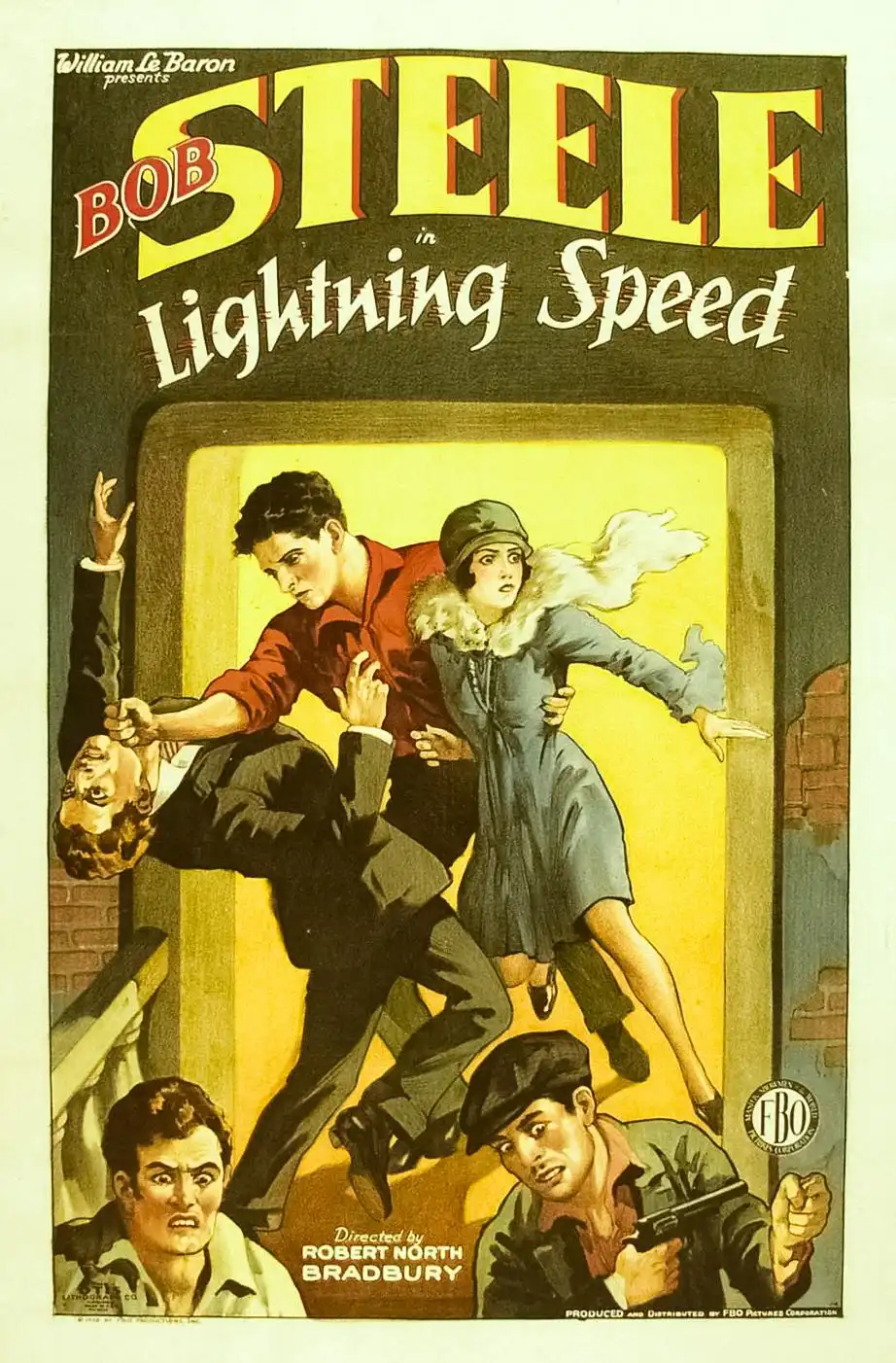
So, Lightning Speed. Is it worth watching today? Look, if you’re a silent film purist, or someone genuinely fascinated by the mechanics of early cinema and how stories were told before sound, then yes, absolutely. You'll find things to pick apart and appreciate here. But if you’re coming in cold, hoping for some forgotten gem that transcends its era, you're probably going to bounce off this one pretty hard. It’s a curiosity, not a masterpiece, and honestly, it feels every bit of its nearly 100 years.
The plot is pure melodrama, straight out of the 1920s serial playbook. Reporter Jack Pemberton (Barney Furey) is in love with Betty Standish (Mary Maybery), the governor’s daughter. Classic setup. Then enters Velvet, the criminal mastermind, whose brother is on death row. Velvet wants Betty kidnapped to strong-arm her father into a pardon. It’s a simple, high-stakes premise, and it gets to the point quickly, mostly.
Barney Furey as Jack has this earnest, almost perpetually worried look about him. His gestures are big, as you'd expect. There's a scene early on where he's trying to warn Betty, and his hands are flying, his eyebrows are doing overtime. It’s not subtle, but you get the message. Mary Maybery as Betty, meanwhile, plays the damsel in distress with admirable commitment, even if her constant wide-eyed alarm starts to feel a little repetitive after the third close-up.
The pacing is… well, it's not exactly lightning speed for most of the runtime. There are stretches of exposition, delivered through intertitles that feel like they're trying to cram a novel into a few lines. You get the gist, but sometimes the sheer volume of text just halts things. Then, suddenly, the film remembers it's called Lightning Speed and throws in a chase scene that feels genuinely frantic, almost like a different movie for a few minutes. This tonal whiplash is actually one of its more endearing qualities.
William Welsh as Velvet, the villain, is exactly what you want from a silent film baddie. A dark mustache, a sneer that could curdle milk, and a cape that seems to have a life of its own. Every time he appears, there's a definite shift in energy. You know he's bad news, even if his motivations are a bit thinly sketched beyond 'save my brother, be evil'. His henchmen, particularly Bob Steele in a small role, are mostly there to look menacing and get easily outwitted by Jack.
There's a sequence where Jack is sneaking around Velvet's hideout, and for a good minute, you can hear the film projector rattling more than the dramatic tension building. It’s a reminder of the raw, tactile experience of watching these old prints. And then there's a shot of a flickering gas lamp in the background that just looks so incredibly dangerous, like the whole set could go up in flames at any moment. You wonder if anyone else on the crew was a little nervous.
The big set piece, of course, is the balloon escape. Velvet, with Betty in tow, attempts to flee via hot air balloon. This is where the budget, or lack thereof, really shines through. The matte paintings are charmingly obvious, and the scale models are… well, they’re definitely models. But there's a certain scrappy ingenuity to it all. The sequence goes on a bit long, and you can almost feel the filmmakers trying to stretch every penny of special effects they had. Still, the idea itself is bold, and the final fall of Velvet is quite a dramatic flourish, even if it's clear he's just a dummy by that point.
The chemistry between Jack and Betty is… functional. They're the hero and the heroine. They like each other. There's not a lot of nuanced romance going on, more a sense of 'we are the leads, therefore we must love.' It’s a common thing in films of this era, like in Too Many Kisses, where the plot mechanics often take precedence over character depth. You cheer for them because they're the good guys, not necessarily because you're deeply invested in their emotional journey.
One particular edit near the end, right after the rescue, is jarring. It cuts from a relieved embrace directly to a newspaper headline proclaiming Jack's heroism, completely skipping any emotional aftermath. It’s efficient, but it leaves you feeling a little short-changed. Like, 'okay, great, but did they even talk about what just happened?'
Ultimately, Lightning Speed is a snapshot. A glimpse into the kind of straightforward, action-packed entertainment people consumed in 1928. It's not going to change your life, and it's certainly not going to win over anyone who isn't already predisposed to the charms and quirks of silent cinema. But if you're in the mood for a simple story, some over-the-top villainy, and a balloon chase that's endearingly clunky, it's a perfectly fine way to spend an hour and change. Just don't expect it to actually move at lightning speed.
IMDb 6.4
1925
Community
Log in to comment.