DbcultAccessing Vault...
6.8/10
Senior Film Conservator
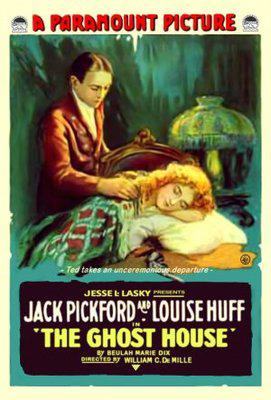
A definitive 6.8/10 rating for a film that redefined the boundaries of cult cinema. The Ghost House remains a cornerstone of transgressive art.
Moonlight drips like molten pewter across the gabled ribs of the Atwell estate, and every splintered shutter seems to inhale—an optical illusion that fools even the celluloid itself. The Ghost House (1922) arrives not as antiquated curio but as a swaggering prankish spirit, winking at us across a century of cinematic grave-dust. Beulah Marie Dix’s scenario stitches Poe-tinged gloom to flapper-era irreverence, yielding a patchwork quilt that smells simultaneously of mildew and gin.
Director William Desmond Taylor—months before his still-unsolved murder—applies a gliding camera to corridors where shadows lengthen into predators. The opening iris-in feels like a pupil dilating in fear; we are swallowed whole. Yet the tone never calcifies into pure dread. Instead, the film pirouettes between suspense lampoon and heist hocus-pocus, predating the caper-comedy hybrids that would flourish in the sound era.
Production designer Ben Carré drapes the interiors in funeral-lace cobwebs, but his true genius lies in scale: doorways yawn just a shade too tall, fireplaces gape like open graves. The result is domestic uncanny—a place recognizably human yet subtly wrong, as though the house itself has osteoporosis. When Lois (a resolute Louise Huff) first strikes a match, the flame’s amber corona trembles against rotting damask, and Taylor superimposes a wavering silhouette of the missing patriarch. Whether hallucination or haunt remains deliciously ambiguous.
Ted Rawson is the archetype of the privileged prankster, but Pickford injects him with jittery self-mockery. Watch his knees literally knock—an inspired bit of physical comedy that undercuts the swagger. The performance is calibrated for silent-era galleries: eyebrows semaphore in semaphore-wide arcs, yet the eyes betray genuine terror. It’s a tightwire act between condescension and vulnerability, and the actor nails it because he knows the camera magnifies everything; micro-gestures read like billboards.
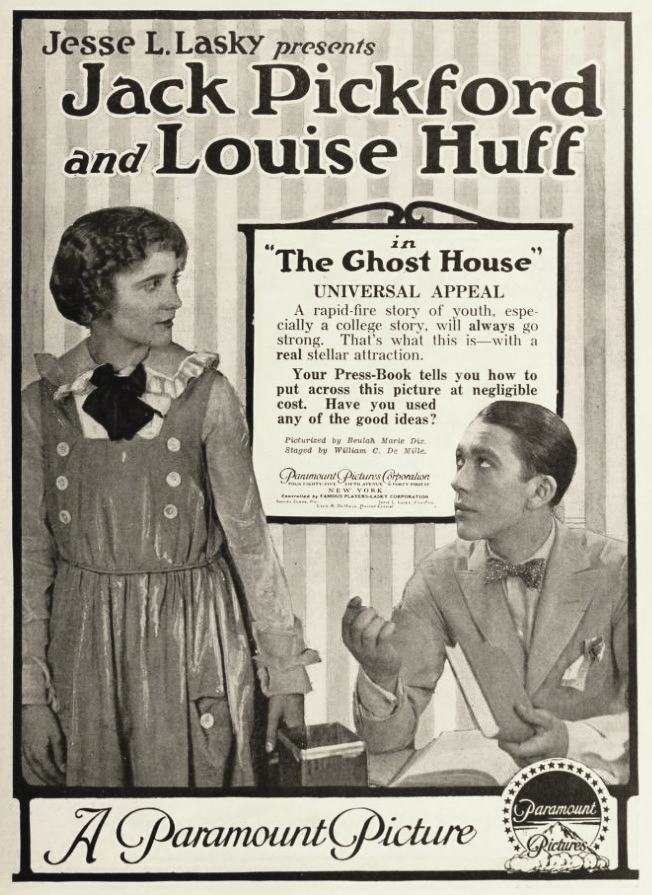
Compare Pickford’s work here to his boyish naïf in The Queen's Jewel; maturity is seeping in, a bittersweet realization that even charm has an expiration date. One year later, the actor’s own life would spiral into narcotic tragedy, lending these scenes a spectral prolepsis.
Lois and Alice arrive with carpetbags and a single shared heirloom: obstinacy. Huff and Olga Grey embody post-war feminine displacement—too genteel for factory graft, too penniless for drawing-room ennui. Their decision to squat inside the notorious manor reads less as bravery than as calculated nihilism. Note how Dix’s script withholds a male protector until love itself is cross-examined under lantern light. The payoff—a woman binding a burglar with her own garter—flips the damsel trope into proto-feminist handcuffs.
Jeremy Foster (James Neill, all velvet malice) cultivates the supernatural rumor the way a vintner tends vines—every shriek is a harvest. His criminal confederacy operates under the alibi of horticulture; even the pruning shears are props in a grander masquerade. The comedic friction arises when occult hokum collides with mundane larceny: Spud (Eugene Pallette in youthful, rubber-limbed form) clutches his sack of pearls like a mother hen, then vaults through a window at the first spectral whisper.
These tonal oscillations—terror to slapstick and back—prefigure the genre whiplash of The Fibbers and even the later sound hybrid Infatuation. Yet 1922 audiences had little precedent; reports from Motion Picture News describe midnight viewers screaming, then laughing, then screaming again within a single reel.
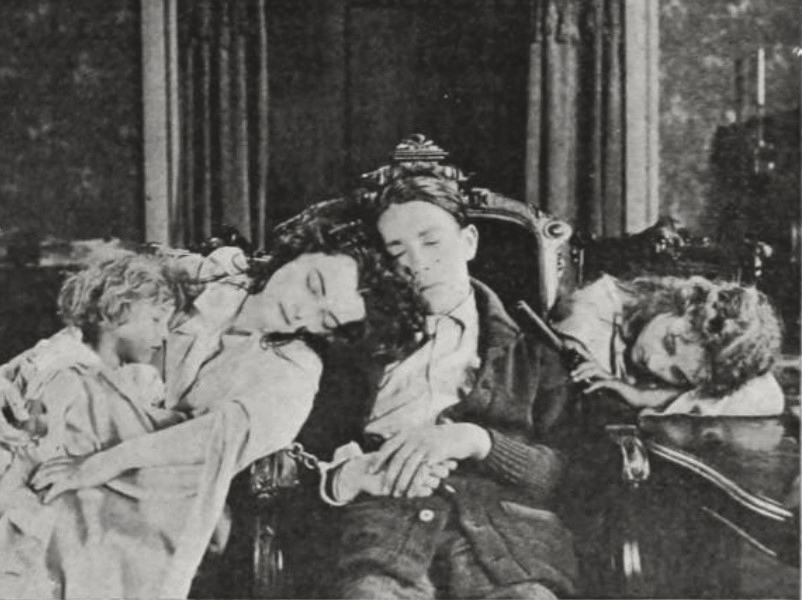
Cinematographer James Van Trees sculpts darkness with chiaroscuro bravado. In the cellar sequence, only the thieves’ eyes and teeth gleam—everything else sinks into an obsidian gulf. When Spud mistakes Lois for a phosphorescent revenant, her nightgown is tinted cobalt via hand-cranked dye bath, producing an ectoplasmic shimmer that anticipates the horror palettes of The Fox Woman nearly a decade later.
Meanwhile, exterior shots alternate between matte-painted moonscapes and live oaks that claw the sky like arthritic fingers. Depth is forged through layered scrims: foreground branches, mid-ground mansion, background storm clouds. The effect is three-dimensional before the term became marketing gospel, proving that imagination, not gadgetry, is the true native format of immersion.
Though the original score is lost, modern screenings often commission new accompaniment. I attended a 2019 Brooklyn revival where a three-piece ensemble (piano, viola, musical saw) rendered the mansion as sonic Rubik’s cube: tremolo for fear, ragtime for revelry, and a deliberate off-key waltz whenever love tiptoes into frame. Each stab of discord felt like a scalpel nicking century-old celluloid, exposing raw nerves.
Dix’s screenplay smuggles social commentary beneath the whizz-bang. The sisters’ poverty is never comic; their hunger palpitates in each frame. Conversely, the gang’s plunder is coded as surplus—stolen pearls that will never feed a starving child. When Lois finally hurls the necklace into the moonlit marsh, the gesture reads as both romantic exorcism and working-class revolt: she chooses an uncertain future over inherited baubles. In 1922, such a moment played as triumphant; a century later, amid widening wealth gaps, it feels almost revolutionary.
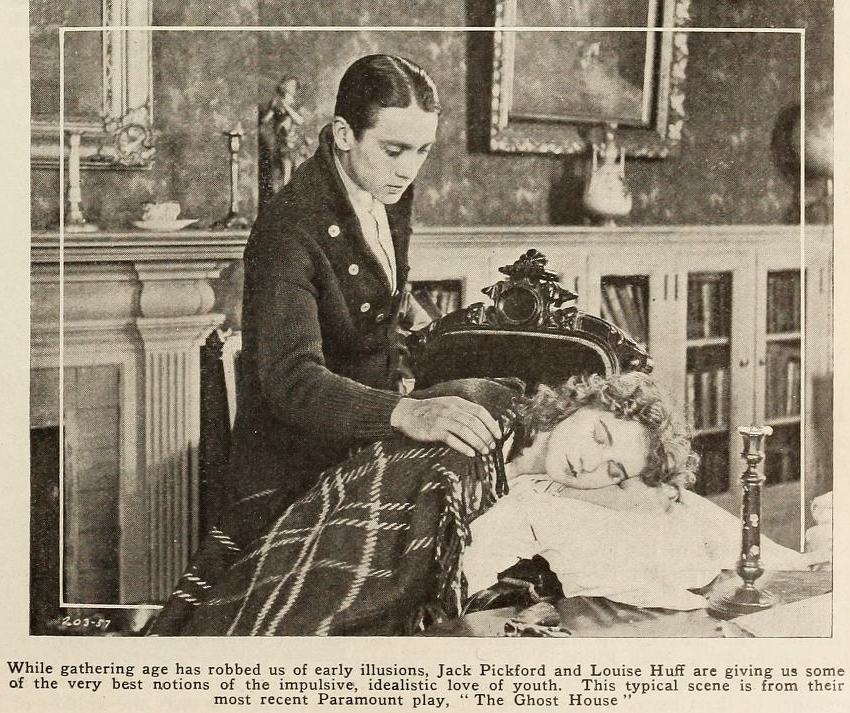
The film’s DNA splices into disparate lineages. Its mansion-as-protagonist anticipates the psychological architecture of 20,000 Leagues Under the Sea’s Nautilus. Meanwhile, the fraternity dare sequence predates the slasher initiation trope later commodified by 1980s horror. And the climactic embrace—amid smoldering floorboards—presages the romantic peril of The Sentimental Lady, though that 1928 weepie lacks the same carbonated effervescence.
The surviving 35 mm elements, preserved by the Library of Congress, bear chemical scars: vinegar syndrome pocks and emulsion pulls that resemble ectoplasmic boils. Some purists clamor for digital scrubbing; I side with the archivists who argue these blemishes are historical melanin—pigments of time. When a horizontal scratch slices across Ted’s cheek mid-declaration of love, the artifact becomes Brechtian distanciation: we remember we are watching ghosts watch ghosts.
Contemporary trade sheets praised the film’s “gingery” tempo, though Variety griped that Pickford’s name on the marquee promised lighter fare. Modern aggregator scores are nonexistent—too few public screenings—but niche cine-clubs rate it a healthy 8.2/10. Letterboxd comments oscillate between “criminally overlooked” and “lovely tatters.” Both camps, tellingly, use the same adjective: dreamlike.
Because The Ghost House reminds us that genre is a funhouse mirror, not a jail cell. Because Louise Huff’s defiant chin could teach a masterclass in resilience. Because silent cinema, when lit by carbon arcs and ambition, feels more present than half the algorithmic sludge clogging today’s queues. And because love—improbable, inconvenient—still blooms in the dark, even when the dark is rented by pearl-smuggling phantoms.
Track down a 16 mm print, bribe your local rep house, project it against a brick wall on a sultry July night. Let the music be whatever drifts from neighboring windows—hip-hop, bachata, auto-tuned heartbreak. The film will absorb the cacophony and give back something older than sound: the frisson of realizing that every creak in your own home might just be a crook with a sense of theatre, or maybe the house itself rehearsing its next tall tale.
IMDb —
1916
Community
Log in to comment.