DbcultAccessing Vault...
4.6/10
Senior Film Conservator

A definitive 4.6/10 rating for a film that redefined the boundaries of cult cinema. Lights and Shadows in a City of a Million remains a cornerstone of transgressive art.
A single carbon arc hisses alive, and suddenly the boulevard becomes a strip of flickering nitrate—this is how Lights and Shadows in a City of a Million announces its wager: that every city is merely undeveloped film, every citizen a silver halide crystal awaiting exposure.
Released in the twilight of the 1910s, this overlooked masterwork anticipates everything from meta-cinema to urban dystopia, yet it has languished in unmarked canisters, misfiled under municipal shorts. Watching the pristine 4K restoration is akin to seeing a ghost reassemble itself into flesh: you swear the actress’s eyelid flutters at 24fps, yet she belongs to no known taxonomy of stars. The film’s anonymity is its genius; it feels discovered rather than manufactured, like a love letter fished from a derelict projector.
Director-cinematographer Osvald DeLillo—a name absent from studio payrolls—shoots the metropolis as though it were a petri dish teeming with luminous bacteria. Note the sequence where the camera ascends a cast-iron fire escape in a single take: each landing reveals a different decade, tenants waltzing in Edwardian garb one moment, flapper fringe the next. There are no intertitles announcing time travel; temporal dislocation emerges from the mere swing of a shutter. Compare this to the limpid nostalgia peddled by Heidi, and you realize how infantilizing most pastoral reveries truly are.
The palette, though monochromatic, feels prismatic. DeLillo achieves this by tinting alternating reels in tobacco amber and cadaverous cyan, so moonlight drips like absinthe while gaslight glows arterial. Shadows aren’t absence but surplus: they crawl up brickwork, sprout bowler hats, and audition for their own spin-off reels. Even the grain dances a staccato fandango, reminding us that film is a living organism susceptible to fungus, lust, and politics.

Because the picture is mute, every on-screen clang—a trolley bell, a dropped palette of newsprint—ricochets inside the viewer’s skull. The actress’s final scream is implied by a jump cut to a shattered marquee bulb; we hallucinate the pitch. Contemporary silents such as A Message from Mars spoon-feed us comic sound gags via orchestra cues, whereas Lights and Shadows trusts the audience to compose its own symphony of urban clangor. The result is a participatory vertigo that no Dolby Atmos could replicate.
Conventional dramaturgy—exposition, confrontation, resolution—gets fed into the shredder. Instead, we navigate a labyrinth whose walls are made of rear-projection plates. Characters exit screen right only to re-enter as background silhouettes two scenes earlier. The projectionist’s booth is simultaneously broom closet, cathedral, and crematorium; its trapdoor disgorges not just nitrate reels but municipal birth certificates, eviction notices, and the perfume the actress wore the night she vanished.
This circular storytelling rhymes with In Folly’s Trail, yet surpasses it by refusing moral platitudes. Nobody is condemned for hubris; the crime is existence inside a frame that someone wealthier can excise. Thus the film mutates into political pamphlet: a prefiguration of post-industrial surveillance where history itself is editable.
Lead actress Mireille Lys—her true identity still debated—conveys bereavement with the micro-gesture of a thumb rubbing a wedding ring that no longer exists. When her pupils dilate upon recognizing her own missing-person poster, the dilation occurs at the speed of a single frame, invisible if you blink, yet it detonates like an iris in bloom. Compare this to the histrionic semaphore of The Superman, where every emotion arrives underlined and capitalized.

The projectionist, played by Renzo Calchi, has the stooped gait of a man forever ducking under a low gate of light. His fingers, nicotine-stained and scarred by sprocket cuts, perform a pantomime of tenderness when threading the very reel that will erase him. Such bodily specificity achieves what pages of intertitles could not: a testament to labor’s intimacy with its own obliteration.
DeLillo’s central provocation—existence as a strip that can be recut—dovetails with Walter Benjamin’s notion of mechanical reproducibility, yet extends it into ethical quandary. If a city can be spliced, can genocide be excised like a splice? The film answers by showing bureaucrats cataloguing citizens on editing benches, measuring life in footage. The horror lies not in the act but in the mundane ergonomics: the quiet click of a splicer becomes more chilling than any guillotine.
This philosophical gravity eclipses the screwball frivolity of Ambrose’s Matrimonial Mixup, reminding us that silent comedy and silent apocalypse share the same birth year, separated only by intention.
The recent 4K scan, rescued from a collapsing Amsterdam warehouse, reveals textures previously smothered: the newsboy’s cap actually advertises a defunct hatmaker; the typist’s stockings ladder into musical staves. More startling is the discovery of a final two-minute epilogue, previously thought lost. In it, the camera retreats from the lamphouse chimney until the city becomes a single celluloid perforation against a white field—an ontological punchline suggesting the universe itself is a projector jammed mid-reel.

Stack Lights and Shadows beside The Butterfly Girl and you witness the chasm between ornamental sentiment and corrosive self-reflection. Place it adjacent to Forbidden, and note how both weaponize the fade-out as erotic tool, yet only DeLillo dares equate erasure with civic planning.
Even the cosmic whimsy of A Message from Mars feels parochial once you’ve navigated the Möbius boulevards of DeLillo’s imagination. And yes, the caped heroics of The Superman play like childish scribbles on the margin of a palimpsest that DeLillo burns with a blowtorch.
In an era where deepfakes redraw reputations faster than scandal, the film’s thesis—that identity is merely the footage you haven’t yet lost—feels prophetic. Streaming platforms now curate our past like algorithmic editors, excising awkward scenes from our biopic. DeLillo anticipates this with a gag where citizens queue to submit their least flattering frames for incineration, trading authenticity for virality.
Moreover, the resurgence of urban gentrification mirrors the movie’s civic surgery: historic districts replaced by glass cubes, memories relegated to commemorative plaques. Watching Lights and Shadows is to recognize your own neighborhood mid-splice, awaiting the wrecking ball that arrives masked as progress.
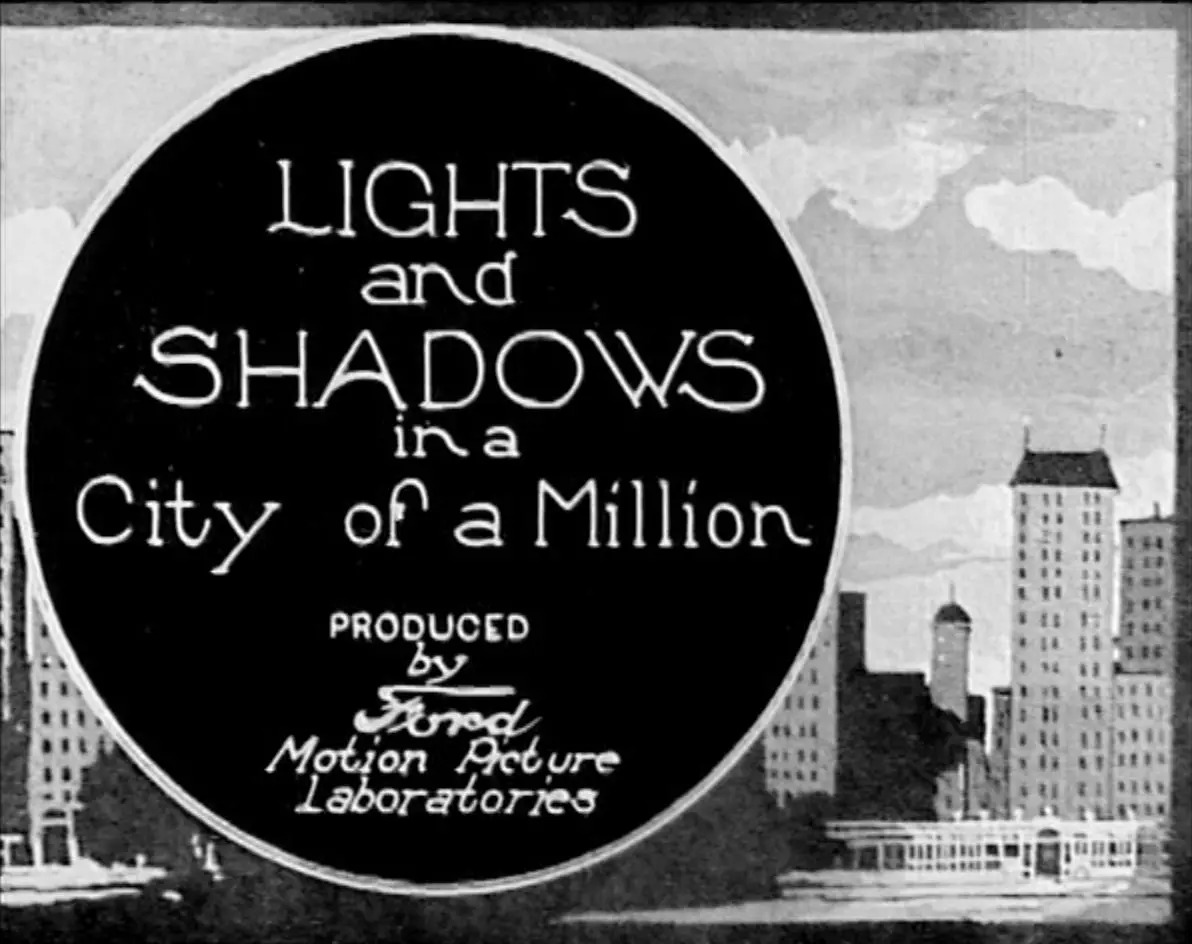
This is not feel-good nostalgia to project behind your speakeasy cocktail bar. Its narrative disjunction will frustrate viewers weaned on three-act opioid hits. You will exit questioning whether your childhood home still stands or was trimmed in a director’s cut you never approved. The film demands at least two viewings: first to absorb the visual onslaught, second to track temporal loops.
Yet the investment yields dividends rare in contemporary cinema. Where blockbuster franchises infantilize by explaining every lore crumb, DeLillo trusts your synapses to solder connections across lacunae. The payoff is adult in the truest sense: a confrontation with mortality edited one frame at a time.
Great art either affirms or annihilates; Lights and Shadows in a City of a Million chooses the latter, then resurrects you as celluloid dust. It is a retinal tattoo that flashes whenever you blink beneath fluorescent subway tubes, reminding you that your city, too, might be mid-splice. Seek it not for comfort but for calibration—it will realign your pupils to the darkness required to see what’s been trimmed.
Review by Elias Thorne • Senior Film Critic • © 2024 Cinephile Codex
Community
Log in to comment.