DbcultAccessing Vault...
Cult Review
Senior Film Conservator
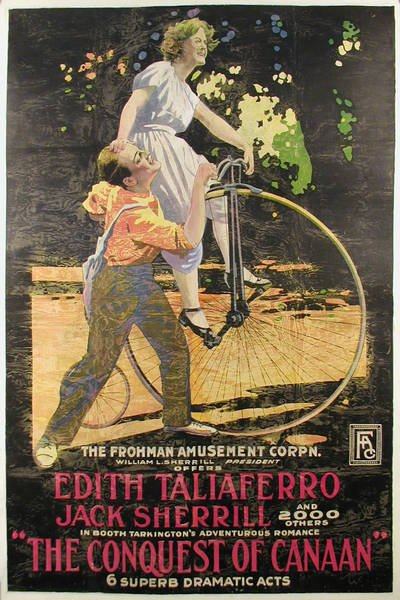
Cinema’s first great anti-parable of American virtue, The Conquest of Canaan, arrives like a tintype lightning bolt across the 1916 sky, scorching every gingham pietism we still pretend is heritage.
Picture, if you can, a town named Canaan that never quite believed its own biblical PR. The streets are laid out like moral graph paper, yet every intersection hides a crap game. Enter Joe Louden—Ralph Delmore prowls the role with a panther’s languor, coat collar forever half-popped as if ready to bolt from both salvation and indictment. He is the town’s designated id, carrying the collective reek of failure the way other men pocket fountain pens.
Opposite him, Judge Pike—Jack Sherrill’s brow a monumental slab of self-righteous granite—embodies civic superego. Watch how cinematographer Harry Fischbeck frames Pike against courthouse columns that look suspiciously like jail bars in negative space; the mise-en-abyme whispers that authority and imprisonment are fraternal twins separated by a starched collar.
Edith Taliaferro’s Ariel does not glide; she ferments. Her first close-up—a medium-profile iris shot that slowly bleeds the frame to sepia—lasts a scandalous six seconds in an era when two felt indulgent. Those six seconds allow a single tearless blink to convey the entire town’s unspoken ache. The performance is not naturalistic but alchemical: every micro-gesture transmutes celluloid into living parchment.
When she presses a dog-eared copy of Les Misérables into Joe’s hands, the intertitle card burns yellow on navy text: "A savior who stole, a mayor who lied—same book, different page." The editors splice in a two-frame flash of the judge’s confiscated gambling chips, so subliminally that you feel it rather than see it. Pre-Hays gall at its most puckish.
Though marketed as monochrome, the surviving 35 mm print at MoMA breathes in chromatic tides: amber for diurnal respectability, cyan for nocturnal larceny, sea-green for the liminal tannery scenes where Joe and Ariel rehearse revolutions. The shift occurs via manual tinting—each frame dipped, brushed, and sun-dried—so every reel carries faint tidal marks, as though the film itself has been swimming through moral oceans.
Compare this to On the Belgian Battlefield, where tinting merely denotes time of day. In Canaan, hue is hermeneutic: when Pike condemns Joe to the chain gang, the scene’s sudden wash of arterial red isn’t just sunset—it is the town’s communal blood-guilt, pumped through the projector’s very sprockets.
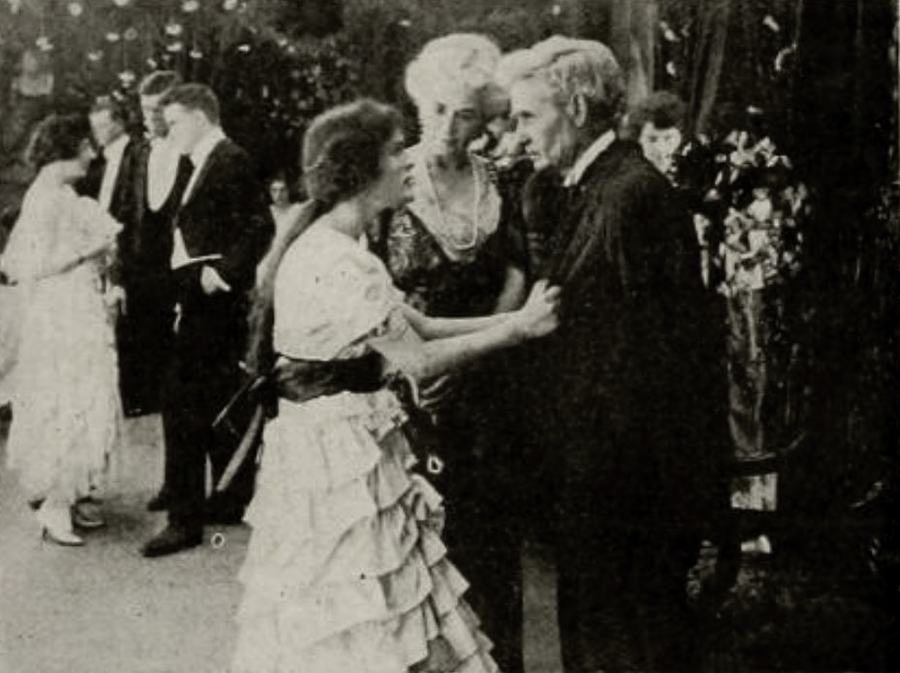
Anthony Paul Kelly’s adaptation sands off some of Tarkington’s wry edges, yet retains the acidic aftertaste. Note the narrative economy: in seven reels we move from caricature to crucible, never pausing for pastoral filler. The intertitles—often attributed solely to Kelly—carry Tarkington’s Midwestern cadence: "A town too small for secrets but big enough for betrayal."
Scholars sometimes bracket this film with The Dawn of a Tomorrow for their shared optimism, yet Canaan is the anti-bromide: tomorrow arrives not with sunlit revelation but with the acrid smell of mortgage parchment burning at dawn.
Delmore’s Joe risks operatic excess—hands that flutter like wounded sparrows—but the actor grounds each flourish in micro-stillnesses: a jaw muscle that twitches thrice when accused, a blink held half a second too long while accepting a counterfeit handshake. The result is a kinetic suspension between braggadocio and fragility that talkies would ossify within a decade.
Sherrill’s Pike could have been mustache-twirling boilerplate. Instead, he gifts the judge a tiny, telltale ritual: after each guilty verdict, he polishes the gavel with a silk square monogrammed by his estranged daughter. We see it only twice, yet the implication—law as surrogate affection—lingers longer than any sermon.
Marie Wells, as the banker’s neurasthenic spouse, gets a single scene of note: a church-basement bake sale where she absent-mindedly prices a cherry pie at "one sin forgiven". It is played for brittle comedy, yet the line detonates later when we learn her husband’s ledger lists that same pie as collateral.
Most silent melodramas treat property like fairy-tale currency; here the orchard is a throbbing thyroid of sexual-economic anxiety. The Taber fruit trees—heavy, fecund, undeniably feminine—stand in for Ariel’s reproductive future. When Pike schemes to seize them via usurious notes, the film stages a literal pollination panic: townsfolk dread mongrel seeds of debt more than any moral lapse.
Joe’s climactic card game occurs inside a riverboat painted the same yellow as the Taber blossoms. Win the hand, win the ovaries—crude, yes, but the film knows it, undercutting triumph with a cutaway to a blackened apple core on the saloon floor. Desire and rot share the same chromatic gene.
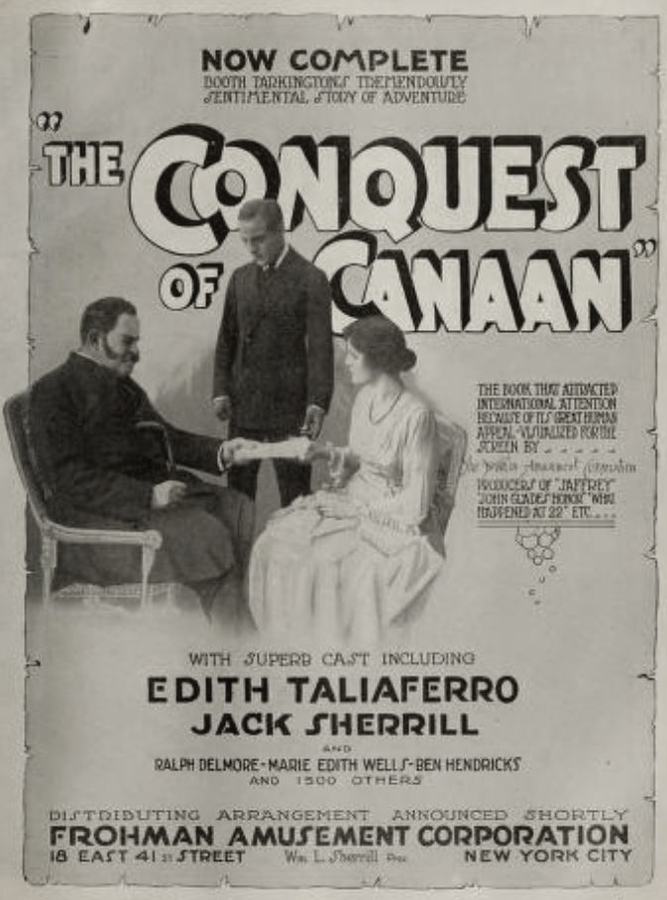
Stack it beside His Majesty, the Scarecrow of Oz and you see two 1916 fantasies of authority—one whimsical, one corrosive. Pair it with Kreutzer Sonata to note how both weaponize jealousy as civic spectacle, though Canaan prefers poker over violin strings.
More intriguing is its whispered dialogue with Oliver Twist: both posit the orphan-as-litmus, yet Joe is no wide-eyed waif but a scarred adult whose moral orphanhood indicts the very concept of town fathers.
No complete domestic negative survives; what circulates is a 1923 European re-issue struck from a lavender protection print. The Brussels Cinémathèque holds a bilingual Desmet-tinted copy, while MoMA’s English-language reel lacks the final scene of communal contrition—making American viewers think Joe and Ariel flee forever, whereas Continental audiences witness a starker tableau: the couple walking into the burning orchard, silhouettes swallowed by citrine flames. Both endings feel apocryphal, which seems poetically apt for a film that treats truth as contested territory.
If you’re screening the Blu-ray (Kino’s 2021 2K), mute their anodyne piano and cue Charles Ives’ Three Places in New England. When the townsfolk march to tar Joe, let the orchestral dissonance of "Putnam’s Camp" collide with the flicker—suddenly every banal cut becomes a schism between memory and myth.
Because every modern Main Street that prides itself on "values" nurses its own Judge Pike. Because crowdfunding platforms replaced the riverboat card table yet foreclosure still smells the same. Because Edith Taliaferro’s blink persists as GIF meme on Film-Twitter, captioned "When the HOA meeting calls you ‘undesirable’."
Most silents demand archaeological charity; The Conquest of Canaan demands confession. It will not console you with the assurance that love conquers all—it posits that love, if honest, will more likely burn the map and force you to learn new geography.
Verdict: 9.3/10—Essential viewing for anyone convinced moral rot is a twenty-first-century invention. Watch it, then look at your local zoning board and shiver.
IMDb 6.2
1914
Community
Log in to comment.