DbcultAccessing Vault...
3.2/10
Senior Film Conservator
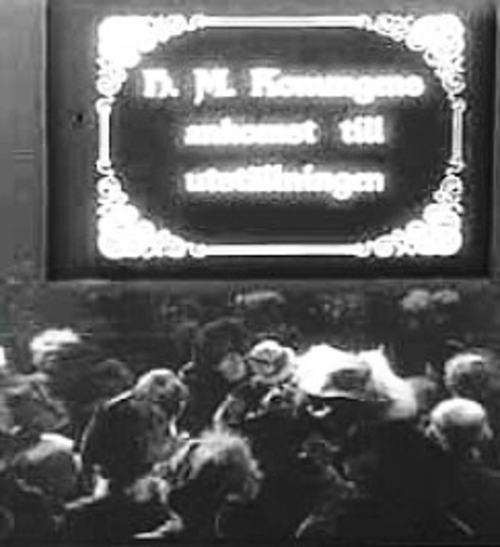
A definitive 3.2/10 rating for a film that redefined the boundaries of cult cinema. Lika mot lika remains a cornerstone of transgressive art.
Stepping back into the very genesis of cinema is an experience akin to time travel, a journey to an era where the moving image was a marvel, not a commonplace. And few journeys offer such a unique vantage point as revisiting Lika mot lika, a film so historically significant it feels less like a movie and more like a captured whisper from the past. This isn't just an early Swedish film; it's a seminal moment, a flicker of light from the projector that illuminates the birth of a national cinematic identity, graced by none other than Swedish King Oscar II himself. Imagine, royalty gracing the silver screen when the 'screen' was still a novelty, a curiosity, often shown in makeshift venues or travelling exhibitions. It's a testament to the medium's immediate, almost magnetic, allure.
The premise of Lika mot lika is disarmingly simple, yet its implications are anything but. We are transported to a charity soiree, a gathering of the societal elite in a plush social lounge. These events, common among the aristocracy and burgeoning bourgeoisie of the late 19th and early 20th centuries, were opportunities for both philanthropy and social display. The film’s camera, likely a static, unblinking eye, records a scene that, to contemporary audiences, would have been a fascinating peek into an exclusive world. The true magic, however, lies in the presence of King Oscar II. His appearance elevates the film from a mere recording of an event to a historical document of immense value. It signifies a royal acknowledgment, perhaps even an endorsement, of this nascent technology. One can only speculate about the ripple effect this royal appearance had on public perception of cinema in Sweden. Did it lend an air of legitimacy, turning a carnival attraction into a respectable form of entertainment or even art? Absolutely. It transformed the ephemeral into the immortal.
The film's title, 'Lika mot lika' (Like Against Like), hints at a theatrical origin, and indeed, it's based on a play by Paul Siraudin. This is crucial for understanding the performance style. Early cinema often drew heavily from the stage, given the lack of established cinematic acting conventions. Actors like Helfrid Lambert, Knut Lambert, and Tollie Zellman, likely seasoned theatrical performers, would have brought their stage presence to the camera. Their movements, gestures, and expressions would have been calibrated for the proscenium arch, not the intimate close-up (which was still decades away from becoming a common cinematic tool). We see a fascinating blend: a real-life event (a charity soiree) imbued with the theatricality of its time, further elevated by the unexpected real-life presence of a monarch. This fusion is what makes Lika mot lika such a compelling subject for study.
Early cinema often walked a tightrope between what we now call 'actualités' – short documentary-like films capturing everyday life or newsworthy events – and staged narratives. Think of films like Saída dos Operários do Arsenal da Marinha or A Rua Augusta em Dia de Festa, which simply documented people leaving work or street scenes. These films were fascinating because they offered a window into the unfamiliar or allowed people to see themselves. Lika mot lika, however, occupies a more complex space. While capturing a 'real' event, the charity soiree, it is also clearly influenced by a dramatic text, implying a degree of staging or pre-arranged action, even if the King's presence was a genuine inclusion. This blurring of lines is characteristic of early cinema's experimental nature, where filmmakers were still discovering the language of the medium.
Consider the 'fight films' of the era, such as The Corbett-Fitzsimmons Fight or Sharkey-McCoy Fight Reproduced in 10 Rounds. These were often re-enactments, staged for the camera, yet presented with the thrill of a live event. Lika mot lika, in its own way, is a 'reproduction' of a social event, perhaps embellished or directed for optimal viewing. The camera's perspective, the framing, the duration – all these nascent choices speak volumes about the filmmakers' understanding of their craft. It's a direct, unmediated gaze, yet one that implicitly understands the power of spectacle, especially when royalty is involved. The film, in essence, becomes a historical mirror reflecting not just the event, but also the very nascent conventions of cinematic storytelling.
Technically, Lika mot lika would have been rudimentary by today's standards. A single, static shot was the norm. Editing, if present at all, would have been minimal, perhaps just a start and end point for the camera's operation. There would be no dynamic camera movements, no close-ups to emphasize emotion, no intricate cross-cutting to build suspense. Yet, within these constraints lies a unique charm. The film offers an unbroken, observational window into a moment in time. The very limitations of the technology force the viewer to engage differently, to appreciate the scene as a whole, to search for details within the frame. It's an exercise in patient observation, allowing the historical richness to seep in through the seemingly simple presentation. The 'magic' was simply the act of seeing life, in motion, reproduced.
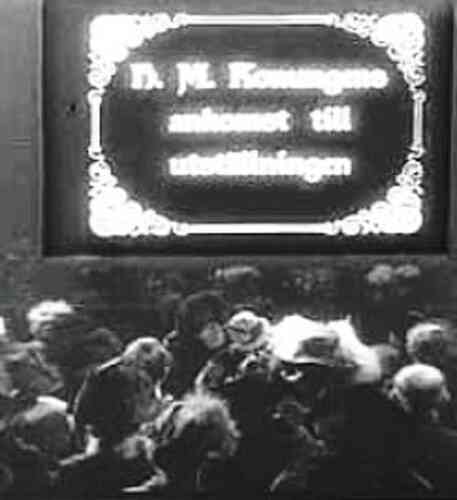
The significance of Lika mot lika extends far beyond its runtime. It's a foundational piece of Swedish film history. It helps us understand the early reception of cinema, its initial subject matter, and the way it interacted with existing forms of entertainment like theater. For film historians, it’s a treasure, offering insights into the evolution of cinematic language and the cultural landscape of the late 19th and early 20th centuries. The fact that such a film, featuring a reigning monarch, was produced so early in cinema's life cycle speaks volumes about the vision of its creators and the rapid acceptance of this new medium across various societal strata, from the common person to the royal court.
The preservation of films like Lika mot lika is paramount. These aren't just entertainment pieces; they are irreplaceable historical documents. They offer visual evidence of bygone eras, showing us fashion, architecture, social customs, and even the demeanor of historical figures. Without these early works, our understanding of cinema's humble beginnings and its subsequent explosive growth would be incomplete. Each surviving frame is a victory against the ravages of time and neglect. They remind us that cinema, from its very first breath, was a powerful tool for capturing reality, for staging stories, and for reflecting the societies that produced them.
While modern blockbusters dazzle with special effects and intricate narratives, there's an undeniable purity and wonder in these foundational works. They strip away the layers of sophisticated technique and reveal the raw magic of moving images. They force us to consider what was truly revolutionary about cinema at its inception: the simple act of capturing and replaying life. The presence of King Oscar II in Lika mot lika is not merely a cameo; it's a symbolic moment where history, royalty, and technology converge, marking a significant milestone for both Swedish culture and the global history of film. It's a moment frozen in time, inviting us to reflect on how far we've come, and how profoundly simple the beginnings truly were.
The film's very existence, its subject matter, and the notable figures involved, all contribute to its enduring allure. It serves as a vivid reminder that cinema was, from its earliest days, intertwined with social life, public events, and even the highest echelons of power. It wasn't just a spectacle for the masses; it was a mirror held up to society, reflecting its rituals, its hierarchies, and its evolving relationship with technology. To watch Lika mot lika today is to connect directly with the past, to witness the genesis of an art form that would reshape the world, one frame at a time.
The cultural resonance of Lika mot lika extends beyond its immediate historical context. It speaks to the universal human fascination with seeing and being seen, with documenting and preserving moments. The charity soiree itself, a microcosm of social interaction, becomes a stage for both genuine philanthropy and subtle performance. The actors, Helfrid Lambert, Knut Lambert, and Tollie Zellman, despite their likely limited screen time, represent the pioneering spirit of performers willing to adapt their craft to a completely new medium. Their theatrical training, honed for the stage, would have been the foundation upon which early cinematic performance was built, shaping the very grammar of acting for the camera.
Moreover, the film's title, drawing from Paul Siraudin's play, indicates an early cross-pollination between different art forms. Cinema didn't emerge in a vacuum; it borrowed heavily from theater, photography, and literature. This interdisciplinary approach was vital in its early development, providing templates for narrative, character, and visual composition. While we may not have the full context of Siraudin's original work, its influence on the staging and perhaps even the subtle character interactions within the film is undeniable. This early fusion laid the groundwork for the complex, multifaceted art form that cinema would become.
In the grand tapestry of film history, Lika mot lika might seem like a small thread, but it is a crucial one. It stands as a testament to the adventurous spirit of early filmmakers, the curiosity of audiences, and the surprising adaptability of even the highest echelons of society to embrace a brand new, revolutionary technology. It's more than just a historical curiosity; it's a vibrant, living artifact that continues to inform our understanding of cinema's past and its enduring power to capture, reflect, and shape our world. Its simplicity belies its profound significance, a silent echo from a time when every moving image was a miracle.
IMDb —
1919
Community
Log in to comment.