DbcultAccessing Vault...
2.2/10
Senior Film Conservator
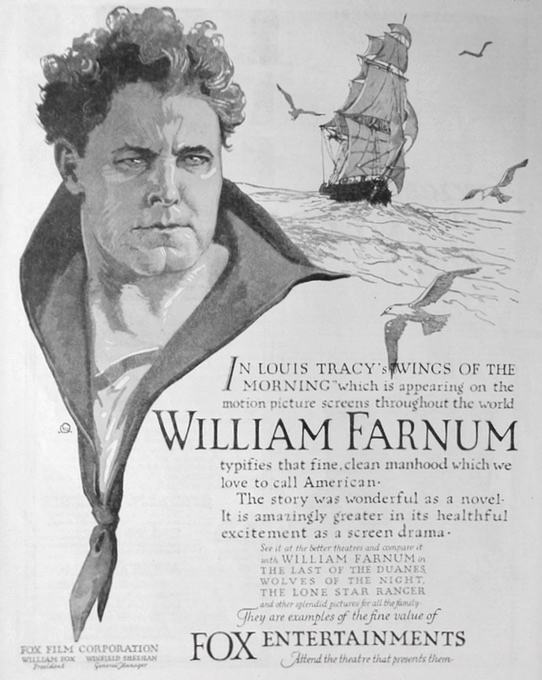
A definitive 2.2/10 rating for a film that redefined the boundaries of cult cinema. Wings of the Morning remains a cornerstone of transgressive art.
Ah, the silent era! A time when narratives unfurled with a grand, almost operatic flair, relying on visceral performances, sweeping visuals, and the evocative power of intertitles to convey tales of passion, peril, and profound human drama. Among the myriad cinematic offerings of 1919, a year teeming with artistic ambition as the world grappled with the aftermath of global conflict, emerges "Wings of the Morning". This particular cinematic journey, a product of its time yet possessing a timeless allure, invites us into a world where honor is a fragile commodity, betrayal lurks in the shadows of colonial opulence, and redemption is a hard-won prize forged in the crucible of adversity. It's a film that, even a century later, still manages to captivate with its intricate plot, its grand romantic gestures, and its surprisingly modern exploration of reputation and justice.
The narrative tapestry of "Wings of the Morning" is woven with threads of intrigue and moral compromise, beginning in the sultry, sun-drenched climes of Singapore. Here, we are introduced to Captain Robert Anstruthers, a character etched with the virtues of integrity and unwavering loyalty. He finds himself in an unenviable predicament, attempting to shield his esteemed friend, Colonel Costabel, from a scandal that threatens to engulf his military career and personal life. The source of this impending ignominy? None other than Costabel's wife, whose clandestine affections have strayed into the arms of the conniving Lord Ventnor. The film masterfully sets up this initial conflict, painting a vivid picture of the social strictures and hypocrisies prevalent in colonial society, where appearances often trump reality, and reputation is everything.
The plot thickens with Costabel's departure for the interior, leaving his wife free to indulge her illicit liaison with Ventnor. The stage is set for a classic melodramatic confrontation upon the Colonel's return, marked by the discovery of Ventnor's hat – a seemingly innocuous object that becomes a potent symbol of transgression – in his wife's boudoir. What follows is a breathtaking display of manipulative cunning: Costabel's wife, rather than facing the consequences of her infidelity, deftly twists the narrative, painting Anstruthers as an aggressor and Ventnor as her chivalrous protector. This act of blatant perfidy is truly the inciting incident, propelling Anstruthers into a vortex of false accusations and public disgrace. His subsequent court-martial, a swift and brutal descent from esteemed officer to pariah, serves as a stark reminder of how easily a man's honor can be shattered by a calculated lie, especially when wielded by someone in a position of perceived vulnerability. The sheer injustice of this moment resonates deeply, echoing similar themes of wrongful accusation and societal judgment found in other dramatic works of the era, though perhaps with a more overt sense of exoticism due to its Singaporean setting.
Stripped of his name and commission, Anstruthers embarks on a new chapter, reinventing himself as Robert Jenks and enlisting as a common sailor aboard a vessel owned by the benevolent Sir Arthur Deane. This transformation from military officer to humble mariner is a compelling arc, showcasing a protagonist's resilience in the face of utter ruin. It’s a classic tale of a fallen hero finding a new path, a motif that has captivated audiences across centuries. His journey, however, is far from smooth sailing. A tumultuous typhoon strikes, reducing the ship to splinters and casting Anstruthers and Deane's spirited daughter, Iris, adrift. This sequence, undoubtedly a marvel of early cinematic special effects, must have been breathtaking for contemporary audiences, thrusting our protagonists into a desperate struggle for survival against nature's raw fury.
Their subsequent weeks alone on a deserted island form the heart of the film's romantic and adventurous core. Here, amidst the pristine wilderness, their bond blossoms, forged in shared hardship and mutual respect. The discovery of a hidden gold mine adds another layer to their burgeoning romance, promising a future of prosperity and freedom. But paradise, as always in these tales, is fleeting. A band of marauding pirates descends upon their idyllic sanctuary, shattering their peace and introducing a new dimension of peril. This sudden shift from romantic isolation to thrilling action keeps the audience on the edge of their seats, demonstrating the film's capacity to blend genres seamlessly. The arrival of Deane and Ventnor on a gunboat, a deus ex machina moment if ever there was one, to defeat the pirates, not only resolves the immediate threat but also ingeniously reintroduces the very characters responsible for Anstruthers' initial downfall, setting the stage for the narrative's ultimate confrontations.
The return to civilization does not signal an end to Anstruthers' trials. Iris, recognizing the true character of the man who saved her, announces her engagement, a declaration that triggers Ventnor's final, desperate attempt to secure his own interests. His threat to withdraw vital financial support from Sir Arthur Deane unless the engagement is broken reveals the insidious nature of his power and influence, demonstrating how monetary leverage can be wielded as a weapon against genuine affection and honor. However, Deane, a man of surprising moral fortitude, refuses to be swayed, choosing his daughter's happiness and the integrity of her chosen partner over financial expediency. This pivotal decision underscores a recurring theme in silent cinema: the triumph of virtue over venality, a comforting moral compass for audiences navigating a rapidly changing world.
The climax of the film is a masterclass in narrative convergence, where all the disparate threads of betrayal and loyalty finally intertwine. Costabel's wife, driven by a potent cocktail of jealousy and rage over Ventnor's apparent shift in attention towards Iris, finally breaks her silence. Her confession to her husband, revealing the full extent of her perfidy and Anstruthers' innocence, is the moment of ultimate catharsis. This revelation not only clears Anstruthers' name but also restores his commission, completing his journey from disgrace to redemption. The ending, while perhaps tidily melodramatic, provides a satisfying sense of justice served, reinforcing the idea that truth, eventually, will prevail. It's a powerful conclusion that resonates with the moral sensibilities of the era, where clear-cut heroes and villains ultimately receive their just deserts.
In the absence of spoken dialogue, the burden of conveying emotion and character falls squarely on the shoulders of the actors, and the cast of "Wings of the Morning" rises admirably to the challenge. G. Raymond Nye, as Captain Robert Anstruthers, embodies the stoic heroism and wronged dignity of his character with palpable conviction. His transformation from a respected officer to a humbled sailor, and then to a resilient survivor, is conveyed through nuanced facial expressions and powerful physicality. He manages to project both vulnerability and an unyielding moral core, making his journey of redemption feel earned and deeply satisfying.
Louise Lovely, portraying Iris Deane, is a captivating presence. Her performance balances innocence with an underlying strength, making her a compelling romantic lead. She is not merely a damsel in distress but an active participant in her own destiny, capable of surviving harsh conditions and making her own choices, even against powerful opposition. Her chemistry with Nye is understated yet effective, conveying a genuine connection forged through shared trauma and mutual respect. This portrayal of a strong female character, though within the confines of a romantic narrative, subtly foreshadows the evolving roles of women in cinema, moving beyond mere decorative figures. One might even draw a parallel to the independent spirit seen in characters from films like Stella Maris, where female protagonists grapple with societal expectations and forge their own paths.
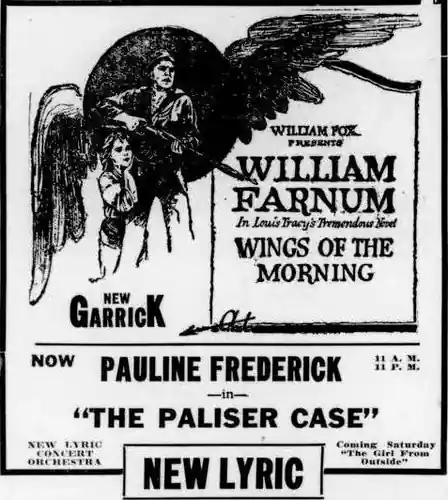
Herschel Mayall's Lord Ventnor is a deliciously despicable villain, oozing with aristocratic arrogance and a chilling lack of scruples. He embodies the classic antagonist of melodrama, his every sneer and manipulative gesture clearly communicating his nefarious intentions. Genevieve Blinn, as Costabel's treacherous wife, delivers a performance that perfectly encapsulates the duplicity and self-preservation at the heart of her character. Her ability to switch from demure victim to vengeful manipulator is a testament to her acting prowess in the silent medium. The supporting cast, including William Farnum as Sir Arthur Deane and Clarence Burton as Colonel Costabel, provide solid anchor performances, lending gravitas and emotional weight to the unfolding drama.
"Wings of the Morning", like many films of its vintage, relies heavily on visual storytelling, a craft that reached its zenith during the silent era. The use of elaborate sets and exotic locations, from the colonial grandeur of Singapore to the untamed beauty of a deserted island, transports the audience into its richly imagined world. The cinematography, while perhaps not groundbreaking for its time, effectively captures the scale of the adventure and the intimacy of the character interactions. The typhoon sequence, in particular, would have been a technical triumph, showcasing the ingenuity of filmmakers in creating spectacular action without the aid of modern special effects.
The pacing of the film is a fascinating study in silent era conventions. It builds slowly, meticulously establishing the characters and their initial conflicts, before accelerating into a whirlwind of adventure and dramatic revelations. The intertitles, far from being mere plot points, often serve as extensions of the narrative voice, providing context, emotional emphasis, and occasionally, a touch of poetic flourish. They are an integral part of the experience, guiding the viewer through the complex web of relationships and motivations. The melodrama inherent in the plot is embraced rather than shied away from, a characteristic that defines much of early cinema. This embrace allows for heightened emotions and clear moral distinctions, which, while sometimes appearing simplistic to modern eyes, were deeply resonant for audiences of the period. The film's ability to maintain suspense and emotional engagement without a single spoken word is a testament to the power of pure visual narrative.
At its core, "Wings of the Morning" is a profound exploration of themes that continue to resonate: honor, justice, and the indomitable human spirit. Anstruthers' journey is a powerful allegory for the loss and rediscovery of one's identity and reputation. His initial disgrace is not merely a personal setback but a public humiliation, stripping him of his very essence as a respected officer. His subsequent resilience, his willingness to start anew under a false name, speaks volumes about his inner strength and unwavering moral compass. The film posits that true honor is not merely bestowed by rank or title, but earned through one's actions and character, even when faced with overwhelming injustice.
The theme of justice, or rather the lack thereof initially, is central to the film's dramatic tension. The ease with which Anstruthers is condemned based on a lie highlights the fragility of truth in a society driven by appearance and power. However, the narrative ultimately champions the idea that truth will out, and that justice, though delayed, can still be achieved. The eventual confession of Costabel's wife, driven by her own jealous fury, serves as a powerful reminder that deceit often unravels from within. This moral clarity, a hallmark of many films from this period, provides a satisfying resolution, reaffirming societal values.
Furthermore, the film delves into the complexities of love and loyalty. The unwavering bond between Anstruthers and Iris, forged in the crucible of survival, stands in stark contrast to the transactional and deceitful relationships elsewhere in the story. Their love story is presented as pure and uncorrupted, a beacon of hope against the backdrop of betrayal and avarice. Sir Arthur Deane's refusal to succumb to Ventnor's financial blackmail further reinforces the idea that true loyalty and moral conviction are more valuable than material wealth. These thematic elements elevate the film beyond a simple adventure tale, imbuing it with deeper meaning and lasting emotional resonance.
Viewing "Wings of the Morning" today offers a fascinating window into the ambitious scope and narrative conventions of early cinema. It's a testament to the storytelling prowess of writers Charles Kenyon and Louis Tracy, who crafted a tale brimming with twists, turns, and emotionally charged moments. While some elements might feel overtly melodramatic to a modern sensibility, it's crucial to appreciate the context of its creation. This was an era when films were still defining their language, experimenting with what was possible on screen, and aiming to provide grand spectacle and moral clarity to mass audiences.
The film’s blend of colonial intrigue, high-seas adventure, island survival, and romantic melodrama makes it a particularly rich example of the diverse genres that flourished during the silent era. It demonstrates a sophisticated understanding of narrative structure, building suspense and developing character arcs over an extended runtime, which was not always a given in the early days of filmmaking. Its influence, though perhaps not as widely documented as some canonical works, can be seen in the enduring appeal of adventure-romances and tales of redemption that followed. For cinephiles interested in the evolution of narrative film, "Wings of the Morning" provides a compelling case study. It showcases the foundational elements of cinematic storytelling that would continue to be refined and reinvented in subsequent decades. Comparing it to other contemporary adventure films like Captain Starlight, or Gentleman of the Road or even the dramatic tension of The Claws of the Hun, one can appreciate the shared ambition to create engaging, high-stakes narratives that captivated audiences with their blend of thrills and emotional depth.
In conclusion, "Wings of the Morning" is far more than a historical curiosity; it is a vibrant, engaging piece of cinematic art that speaks to universal human experiences. It reminds us of the power of integrity in the face of deceit, the strength of love against adversity, and the enduring hope for justice. Its intricate plot, compelling performances, and ambitious scope make it a film well worth rediscovering, a testament to the enduring magic of silent cinema. It stands as a powerful reminder that even without a single spoken word, a story can soar, carrying its audience on the very wings of morning towards a captivating dawn.
IMDb 6.4
1918
Community
Log in to comment.