DbcultAccessing Vault...
Cult Review
Senior Film Conservator
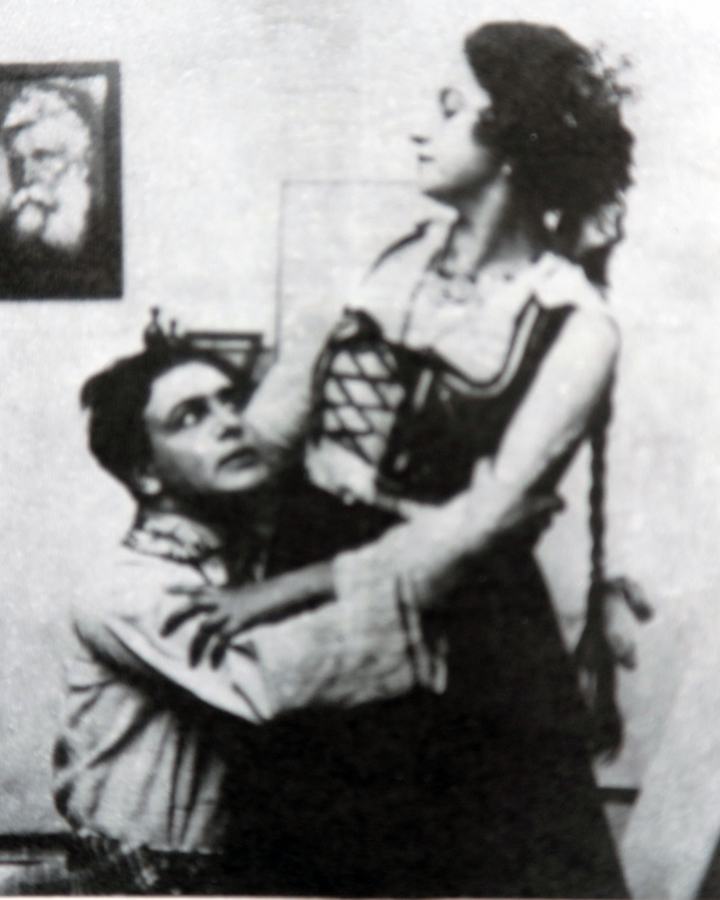
There is a moment—halfway through Liliana—when the camera lingers on a cracked icon of the Virgin, candle-smoke bruising the silver foil. The shot lasts maybe four seconds, yet it detonates the entire film: Bulgaria itself is that ruptured Madonna, maternal only in myth, treacherous in practice.
Sofia, 1981, shot in wintry 16-mm grain, resembles a Soviet satellite that forgot to orbit: trams screech like gutted boars, bureaucrats chew sunflower seeds in echoing hallways, and every ledger is a gravestone for someone’s future. Liliana’s father—pen-pusher, dreamless, asthmatic—expires at his desk, face down on a requisition form. The state buries him in a potter’s field; the state buries his daughter while she still breathes.
Enter the Chief: a man whose moustache looks glued on for a Figaro matinée, whose courtesy smells of mothballs and camphor. He offers "guardianship" the way a spider offers silk: a shimmering highway straight into the digestive abyss. The seduction scene is filmed in one unbroken take, corridor light flickering like a bad fluorescent moral conscience. We never see the act; we see Liliana’s hand sliding down the wallpaper, fingers splayed in a soundless scream that out-volumes any shriek. Bulgarian cinema rarely flinched from rape, yet Sagaev refuses the tawdry titillation that mars Evening – Night – Morning. The violation is bureaucratic before it is sexual: a signature on a permission slip, a dormitory key, a life stamped "void."
After expulsion, the film fractures into a montage reminiscent of Dziga Vertov on laudanum: Liliana’s silhouette sold by the hour, cigarette embers mapping constellation across a darkened studio, the wet slap of paint on canvas standing in for absent caresses. Cinematographer Svetoslav Kazandjiev shoots her nude form through a pane of frosted glass, turning flesh into bruised moonlight—an aesthetic choice that indicts every brushstroke seeking to immortalise what it simultaneously degrades.
When the blood first appears—delicate arterial flecks on a handkerchief—the editor cuts to a close-up of a rooster’s head being lopped off for market day. The parallel is savage yet precise: both bodies are commodities, both throats slit to feed someone else’s hunger. Consumption is the secret religion of this society: consumers of labour, of sex, of icons, of stories.
Most narratives would crown Kamen the saviour. Sagaev perversely casts him as a slower catastrophe. Played by Petko Chirpanliev with the bashful gravitas of a young Sam Shepard, Kamen is first seen posing in nosiya costume—hand-stitched sandals, crimson sash, ornamental dagger—an ethnographic toy for city painters. He is simultaneously hyper-masculine and ornamental, a living postcard. His love arrives not as redemption but as relocation: he drags Liliana from urban abattoir to rural panopticon.
The village—shot in honeyed magic-hour that would make Terrence Malick weep—promises bucolic rebirth. Instead it stages a different crucifixion. The peasant women with their gold-coin necklaces and hemp aprons embody a thousand years of distilled misogyny; they smell moral sulphur on Liliana as keenly as they scent rain. The film’s centrepiece is the horo dance at harvest festival: handkerchiefs flick like white flags, boots pound dust into copper clouds, accordion chords saw bones. Liliana, radiant in green linen, steps into the circle; the music hiccups, dancers recoil as though she carries plague. The camera pirouettes with her, then spirals downward to the trampled earth—an elegy for inclusion that never materialised.
Matrimony here is not sacrament but quarantine. Kamen’s mother—Vera Nabokova in a performance channeling Barbara Stanwyck’s frost—inspects the bride’s dowry of one trunk, two lungs, infinite disgrace. She yields, not out of compassion but pragmatism: fieldwork demands female hands, and Liliana’s are calloused yet elegant. Weeks of harvesting roses for attar, stacking hay, baking prosphora bread gradually pigment her cheeks with terracotta health. Sagaev lingers on these restorative tableaux until they ache with ominous idyll; we sense happiness accumulating interest payable in blood.
Meanwhile Zvetana Odzhakova’s score—oboe, gaida drum, distant church bells—hovers like a migraine. It crescendos when Liliana coughs up scarlet petals into the snow: the sound of hope’s ligaments snapping.
Word of her past slithers in via a travelling tinsmith—proof that Bulgaria’s gossip arteries pulse faster than any railway. The village girls enact ostracism with medieval flair: stones inside greeting loaves, dead crows on the doorstep, whispers shaped like crucifixions. Liliana’s relapse is filmed as reverse baptism; she thrashes in ice-melt river water while women chant carols whose minor thirds slice like wire. Consumption becomes communal punishment, the lungs a parchment where collective judgement is inscribed.
Her death occurs off-screen. We only glimpse the aftermath: bare pine boards, a candle stub, Kamen’s boots pacing a metronome of grief. The film refuses a saintly tableau; instead the corpse grimaces mid-breath, mouth open as if to question the silence.
What elevates Liliana from miserabilist tract to uncanny masterpiece is its final reel: the birth of a Balkan vampire myth. Sagaev, mining vǎrkolak folklore, stages Kamen’s haunting with expressionist shadows worthy of Murnau. Liliana’s spectre materialises in ultraviolet moonlight, hair floating as though suspended in amniotic fluid. She beckons; he follows across scree fields, through fog that swallows footfall. The camera assumes Kamen’s POV—hand-held, breath-ragged—until the precipice yawns. The plunge is not shown; we get only a long shot of the valley swallowing sound, then the echo of impact absorbed into night-blooming jasmine.
Next morning villagers find two graves disturbed, earth upturned like a tongue unable to contain its story. The final frame—a child’s shadow flitting across a church wall—implies the infection migrates, legend propagates, misogyny outlives flesh.
Stavruda Frateva’s Liliana is a masterclass in calibrated vulnerability. Watch her eyes in the modelling studio: pupils dilate not at the painter’s flattery but at the scent of turpentine—a synesthetic memory of father’s office supplies. She ages a decade in a single close-up, yet never begs sympathy. When she murmurs "I wanted to finish school" the line lands like a guillotine because her tone is matter-of-fact, almost apologetic for inconveniencing us with grief.
Opposite her, Chirpanliev radiates the slow-burn bewilderment of someone discovering that goodness can be lethal. His final dissolve into obsession feels earned, not operatic; every daily graveyard visit adds a gram of madness until sanity snaps like frost-bitten wire.
The colour palette—ochre, rust, nicotine—seeps into every frame, evoking A Woman in Grey yet bleaker. Sagaev juxtaposes archival footage of Sofia’s smog-choked thoroughfares against pastoral mountain meadows so idyllic they feel sarcastic. The splice is abrasive, almost Brechtian: we cannot escape the nation as palimpsest where feudal codes bleed into socialist bureaucracy.
Sound design deserves academic theses. Listen for the absence of birds during city scenes; only when Liliana reaches the village do sparrows return—then abruptly cease after the dance scandal, nature itself complicit in ostracism.
Made during the waning years of the Zhivkov regime, Liliana smuggles a scorching critique beneath socialist-realist signifiers. The Chief’s sexual predation parallels state paternalism: both extract labour/pleasure while promising protection. Kamen’s peasant clan embodies folk conservatism that survives every revolution; their rejection of Liliana illustrates how patriarchy mutates rather than dies, simply shifting custodianship from bureaucrat to village elders.
Compare it with The Daughters of Men where fallen women find quasi-nunnerly redemption; Sagaev spits on such sentimental absolution. There is no convent, no philanthropic rescue, only consumptive soil and the eternal return of gossip.
Place Liliana beside Liliana (yes, recursive, but necessary) and you perceive a lineage: from silent-era suffering saints through Italian neorealist anguish to post-communist gothic. Its DNA shares strands with La fiaccola umana in portraying female illness as societal indictment, yet surpasses it by refusing tubercular romance. The ghost finale aligns with The Blue Bird’s fantastical moralism, but Sagaev’s spectre is not allegory—it is scar tissue made animate.
For decades Liliana circulated on mildewed VHS dupes in university basements. The 2022 4K restoration by the Bulgarian National Film Archive unveils nuances invisible before: sable textures of tuberculosis blood, lunar glint in Kamen’s dilated pupils, the Chief’s moustache bristling like a hedgehog anticipating winter. Watch on largest screen possible; the goat-bells were mixed in Dolby Atmos and roll across the theatre like distant thunder.
Liliana is not a comfort but a cauterisation. It brands into your cortex the realisation that every system—urban or rural, capitalist or communist, secular or sacred—collaborates in the consumption of female bodies. The vampire coda does not offer catharsis; it announces recurrence. Misogyny, like undeath, cannot die.
Yet the film’s formal rigour, its cruel lyricism, its refusal of easy absolution elevate it to the pantheon of Balkan tragedy. You will walk out hearing nonexistent church bells, smelling nonexistent roses, checking your own lungs for rust. That is the toxic miracle of great art: it infects you with memory of someone else’s extinction.
Five corroded stars out of five—because six would imply redemption exists.

IMDb —
1931
Community
Log in to comment.