DbcultAccessing Vault...
3.7/10
Senior Film Conservator
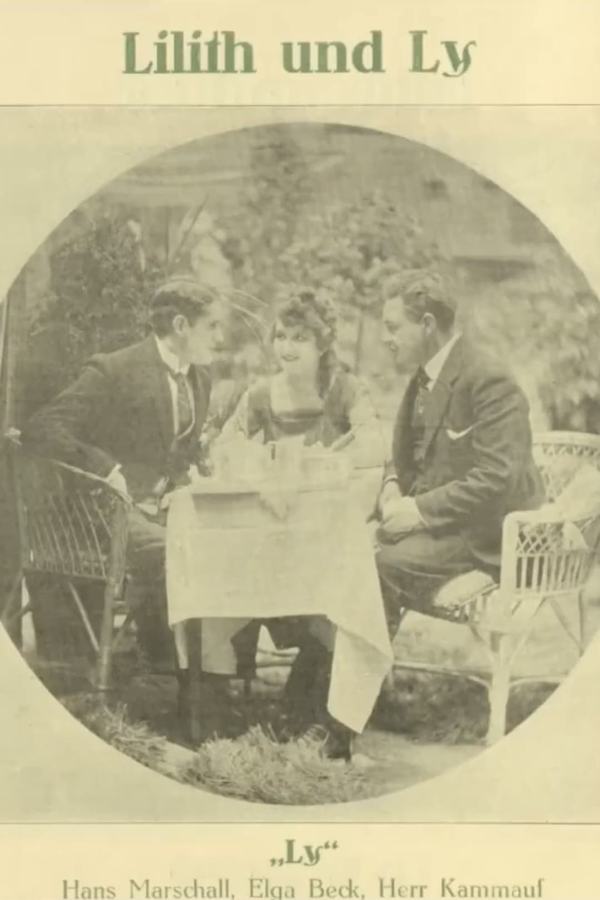
A definitive 3.7/10 rating for a film that redefined the boundaries of cult cinema. Lilith and Ly remains a cornerstone of transgressive art.
There are films that fade into obscurity, and then there are films that become whispers—legends of what might have been, tantalizing fragments of a nascent art form’s boundless imagination. Fritz Lang’s purported early work, Lilith and Ly, falls squarely into the latter category. Its very status as an ‘apparently lost film’ only amplifies its mystique, transforming it from a mere motion picture into a cinematic phantom, haunting the collective unconscious of film historians and horror aficionados alike. To discuss such a film is to engage in an act of speculative archaeology, sifting through the dust of time to reconstruct an experience that, by all accounts, must have been profoundly unsettling and deeply resonant. This is not just a forgotten piece of history; it’s a potential keystone in understanding the genesis of psychological horror and the evolution of the vampire mythos on screen.
The narrative premise of Lilith and Ly is, in itself, a potent brew of Faustian ambition and Promethean hubris. We are introduced to an inventor, a figure of solitary genius and perhaps, dangerous naiveté, whose intellect outstrips his wisdom. Portrayed by the compelling August Hartner, this character embodies the classic trope of the scientist who dares to play God. His workshop, one can only imagine, would have been a marvel of early cinematic set design—a labyrinth of gears, tubes, and arcane instruments, bathed in the stark, high-contrast lighting characteristic of the period. The catalyst for his undoing is a ‘strange jewel,’ a MacGuffin steeped in ancient power, whose very existence suggests a world beyond scientific rationalism. This jewel isn't merely a tool; it's a key to forbidden knowledge, a conduit to forces the inventor barely comprehends. With it, he breathes life into a statue of Lilith. This act of creation is not merely technological; it’s alchemical, mystical, a transgression against the natural order. Lilith, a figure deeply entrenched in folklore as the primordial temptress, the first woman, the demon of the night, is brought forth not from flesh and blood, but from cold stone, a testament to the inventor’s singular, perhaps warped, vision. His immediate fall into love with his creation is both predictable and tragic, illustrating the profound narcissism inherent in such an act. He doesn't just create; he creates for himself, forging a companion in his own image of desire, oblivious to the ancient warnings embedded in Lilith’s very name.
The casting of Elga Beck in the dual roles of Lilith and Ly is a stroke of genius, allowing for a haunting continuity of presence even as the characters diverge in their tragic fates. As Lilith, Beck, one can imagine, would have exuded an otherworldly allure, a silent film siren whose every gesture and glance conveyed both intoxicating beauty and an underlying, unsettling predatory essence. Her transformation from inanimate stone to living, breathing seductress must have been a visual tour-de-force, a moment of cinematic magic that would have captivated audiences. The romance that blossoms between the inventor and Lilith is initially idyllic, a dream brought to life, but it quickly sours into something more sinister. Lilith’s love is not reciprocal; it is consumptive. She is not merely taking his heart; she is taking his very life force. This subtle, insidious vampirism, depicted without the overt fangs and blood often associated with the trope, speaks to a more psychological and metaphorical interpretation of the vampire. It’s a relationship built on extraction, a beautiful parasite slowly draining its host. The film, even in its lost state, seems to delve into the insidious nature of toxic relationships, where one party thrives at the expense of the other, a theme that resonates with the moral ambiguities explored in films like Cheating the Public, albeit in a vastly different genre context.
The true genius of the plot lies in the inventor's own undoing through his creations. He develops a screen, another technological marvel, which inadvertently becomes the instrument of his enlightenment and subsequent despair. This screen, perhaps a precursor to the surveillance technologies that would later fascinate Lang in films like Dr. Mabuse the Gambler, reveals Lilith's true nature. It’s a chilling twist of dramatic irony: the very intellect that allowed him to create life also provides the means to observe its parasitic reality. The screen doesn't just show; it unmasks, stripping away the illusion of love to expose the stark, terrifying truth. Lilith appears on it as a vampire, actively siphoning his life essence. How would this have been portrayed in silent film? Through masterful use of shadow play, perhaps, or subtle, almost imperceptible visual effects. We can imagine the inventor watching in horror as his own image on the screen visibly fades, grows translucent, a spectral shell of his former self, while Lilith, perhaps, gains a vibrant, almost unnatural glow. The visual language would have been key here, relying on the actors’ nuanced performances and the cinematographer’s skill to convey a process both internal and external. This gradual fading, a slow erosion of existence, is far more terrifying than a sudden, violent attack. It’s the horror of watching oneself disappear, piece by agonizing piece. This slow, psychological decay mirrors the internal struggles and hidden dangers explored in films like A bánya titka, where unseen forces slowly unravel protagonists.
The horror deepens profoundly with the introduction of Ly, the inventor’s new love, also portrayed by Elga Beck. This narrative choice is brilliant, creating a visual echo, a tragic doppelgänger effect. Ly is not just another victim; she is an innocent, a beacon of potential solace, who becomes ensnared in Lilith's ever-expanding web of malevolence. Her gradual fading, a terrifying manifestation of Lilith’s encroaching, possessive influence, signifies an escalation of the vampiric dominion. It’s no longer merely about the inventor’s personal folly; it’s about a spreading contagion, a force that seeks to replicate itself, to consume all warmth and life it encounters. The idea that Lilith can possess and drain through another, perhaps even without direct physical contact, elevates her from a simple creature of the night to a formidable, almost spiritual, entity of pure consumption. The inventor is forced to witness the same insidious decay he is experiencing reflected in the woman he loves, a double agony that surely pushes him to the brink of madness. This theme of a malevolent, untamed force, growing in power and influence, brings to mind the 'wild force' implied by the title of Dikaya sila, though likely in a far more supernatural context here. The film explores the profound psychological toll of watching a loved one succumb to an unseen enemy, a torment that transcends mere physical danger.
To consider Lilith and Ly as a work potentially touched by the genius of Fritz Lang, even in an uncredited capacity, is to imbue it with an almost mythical significance. Lang, a master of expressionistic cinema and psychological tension, had a profound understanding of human obsession, architectural grandeur, and the dark undercurrents of society. Even if his involvement was limited, one can speculate on how his nascent visual style might have manifested. The meticulously designed laboratory, the stark contrast between light and shadow illuminating the inventor's despair, the almost architectural precision of Lilith's movements – these elements could very well bear the nascent hallmarks of Lang's emerging vision. His later works, like Metropolis or M, showcase a director fascinated by the interplay of technology and mysticism, the corrupting influence of power, and the fragility of the human psyche against overwhelming forces. Lilith and Ly, with its themes of creation gone awry, technological revelation, and insidious vampirism, aligns perfectly with the thematic preoccupations that would define Lang's illustrious career. The moral ambiguity and the exploration of a dangerous, seductive female figure also resonate with the archetype of the femme fatale that would populate cinema for decades, perhaps finding early echoes in films like The Lotus Dancer.
In the realm of silent cinema, the burden of narrative and emotional conveyance rests almost entirely on the shoulders of the actors and the visual storytelling. August Hartner, as the inventor, would have relied on exaggerated gestures, wide-eyed terror, and a progressively gaunt physicality to portray his character's slow descent into decay and madness. His performance would have been a masterclass in conveying silent agony, the internal horror made manifest through external expression. Elga Beck’s dual role offers a fascinating challenge and opportunity. As Lilith, she would need to be both alluring and terrifying, her beauty a mask for her predatory nature. Her movements would have to be fluid, almost serpentine, her gaze hypnotic. As Ly, she would have presented a stark contrast—innocent, vulnerable, her fading a silent testament to Lilith's encroaching power. The visual effects, rudimentary by today's standards, would have been groundbreaking then. The gradual fading of the inventor, the spectral manifestation of Lilith on the screen, the slow physical diminishment of Ly—these would have been achieved through clever lighting, double exposures, and innovative editing. The film's atmosphere would have been crucial, relying heavily on chiaroscuro lighting, expressionistic set designs, and perhaps even tinted frames to evoke mood—sea blue for eerie nighttime scenes, dark orange for moments of intense fear or passion, yellow for the unnatural glow of the jewel or Lilith's eyes. The supporting cast, including Hanns Marschall, Franz Kammauf, Herr Akner, and Ernst Escherich, though their specific roles are not detailed in the plot summary, would have contributed to building the world of the inventor, perhaps as skeptical colleagues, concerned friends, or even unwitting accomplices, adding layers to the unfolding tragedy. Their presence would ground the fantastical elements in a semblance of reality, making the horror more impactful when it inevitably breaks through. The high stakes of the inventor's ambition and his subsequent downfall align with the thematic weight suggested by a title like The Highest Bid, where the cost of desire proves devastating.
The tragedy of Lilith and Ly being a 'lost film' is immense, not just for its potential artistic merit but for its place in the historical lineage of horror and German Expressionism. To lose such a work is to lose a piece of our collective cinematic memory, a potential bridge between early genre experiments and the sophisticated psychological thrillers that followed. Yet, even in its absence, the film's premise continues to fascinate, proving the enduring power of its core themes: the perilous allure of forbidden knowledge, the destructive nature of obsession, and the insidious terror of the unseen. It speaks to a primal fear of creation turning against its creator, of love transforming into a parasitic bond, and of the self-destructive potential of unchecked ambition. The narrative, even in summary, paints a vivid picture of betrayal and a creeping dread that could easily rival the most unsettling narratives of its time, or even ours. It is a story of tangled hearts, not just romantically, but existentially, where the very essence of life is at stake, much like the complex emotional webs explored in Tangled Hearts. The film's legacy, therefore, lives on in the imagination, a testament to the power of storytelling to transcend the physical medium. It serves as a reminder of the fragility of film history and the importance of preservation, urging us to cherish the cinematic treasures we still possess, while mourning those that have slipped through the sands of time. The story of Lilith and Ly is not just a tale of horror; it’s a lament for a lost artistic vision, a silent scream echoing through the decades, still capable of chilling us to the bone.
IMDb 6.2
1935
Community
Log in to comment.