DbcultAccessing Vault...
6.7/10
Senior Film Conservator
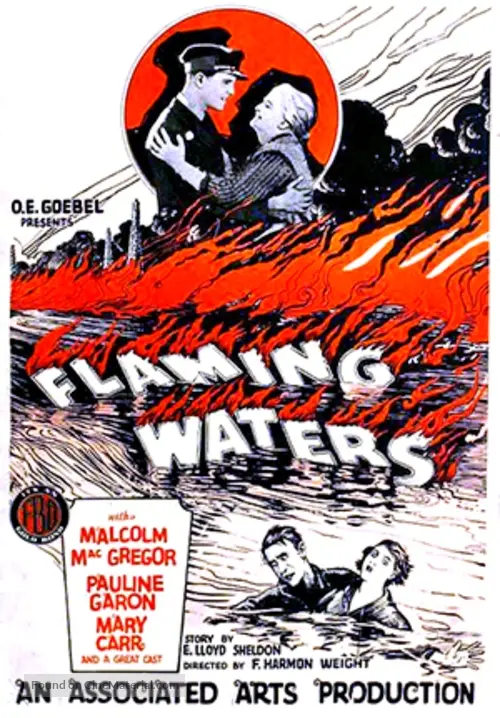
A definitive 6.7/10 rating for a film that redefined the boundaries of cult cinema. Flaming Waters remains a cornerstone of transgressive art.
Is Flaming Waters a film that deserves a place in your modern viewing rotation? Short answer: yes, but only if you have the patience for the deliberate, gestural storytelling of the mid-1920s. This isn't a fast-paced thriller by today's standards, yet it possesses a moral weight that many contemporary films lack. It is for the viewer who finds beauty in the grain of silent film and the archetypal struggle of the 'little guy' against the machine; it is not for those who require dialogue-heavy exposition or CGI spectacles.
Before we dive into the mechanics of this revenge plot, let's establish the ground rules of this production. This film works because it anchors its high-stakes swindle in a deeply personal tragedy. This film fails because the antagonist, Jasper Thorne, is written with such one-dimensional villainy that he occasionally borders on a caricature. You should watch it if you want to see a masterclass in silent-era emotional projection, particularly from Mary Carr.
The opening frames of Flaming Waters establish a stark contrast between the freedom of the ocean and the industrial claustrophobia of Dan O'Neill's hometown. Malcolm McGregor plays Dan with a rugged, slightly weary energy. When he discovers his mother scrubbing floors, the shift in his physicality is remarkable. He goes from a relaxed sailor to a coiled spring of resentment. This isn't just about money; it’s about the desecration of the domestic sphere by industrial greed.
The screenplay by Fred Myton and E. Lloyd Sheldon doesn't waste time on pleasantries. It establishes the stakes with a brutal efficiency. We see the 'slick' Jasper Thorne, played with a chilling lack of empathy by John Miljan. Thorne represents the worst of the 1920s speculative bubble—a man who views people as nothing more than obstacles to a mineral right. The contrast between McGregor’s sincerity and Miljan’s artifice drives the first act with surprising momentum.
Consider the scene where Dan first confronts Thorne in his office. There is no physical violence, but the way Dan looks at the mahogany desk—bought with his mother’s misery—tells the audience everything they need to know. It is a moment of quiet, simmering rage that sets the stage for the 'swindle' to come. It reminds me of the urban tension found in Manhattan, though transposed to a more industrial, oil-soaked setting.
Yes, Flaming Waters is worth watching for its historical value and its surprisingly modern take on corporate greed. While the pacing reflects its 1925 release, the core conflict remains incredibly relevant. It provides a window into an era where the 'American Dream' was being rapidly redefined by oil and industry. If you appreciate films like Still Waters for their period-specific charm, you will find much to admire here.
The second act of the film shifts gears from a domestic drama into a heist-like narrative. Dan’s plan to out-maneuver Thorne is complex, perhaps too complex for the medium of silent film to convey without an over-reliance on intertitles. However, the visual storytelling carries the burden well. We see Dan adopting the very persona of the speculators he despises. He puts on the suit, he adopts the swagger, and he begins to weave a web of false promises around Thorne.
There is a specific moment involving a fraudulent telegram that serves as the film’s turning point. The tension is built not through music, but through the close-ups of Thorne’s eyes as he weighs the risk. It’s a gamble. It works. But it’s flawed in its execution. The film asks us to believe that Thorne, a seasoned predator, would be so easily blinded by his own greed. While it’s satisfying to see him fall, the logic is a bit thin.
The cinematography by the uncredited camera team captures the 'flaming' aspect of the title with some impressive (for the time) pyrotechnics and lighting effects. The oil fields at night look like a hellish landscape, a fitting backdrop for a man losing his soul to gain a fortune. This visual flair elevates the film above standard melodrama, giving it a gritty, tactile quality that feels authentic.
Mary Carr, as Dan’s mother, is the emotional anchor of the film. She was often cast as the 'suffering mother' in this era, and while that might seem like a cliché, she plays it with such genuine pathos that it’s hard not to be moved. Her performance isn't just about sadness; it’s about the loss of dignity. When she hides her red, soapy hands behind her back as Dan enters the room, it’s a more powerful statement than any monologue could be.
John Miljan’s Thorne is the perfect foil. He doesn't twirl a mustache, but he doesn't have to. His villainy is in his stillness. He is a man who has calculated the cost of everything and the value of nothing. Compared to the more comedic or bumbling characters in films like The Poor Boob, Thorne is a genuinely threatening presence. He represents a systemic evil rather than a personal one.
Pauline Garon provides a necessary, if somewhat underwritten, romantic interest. Her role is largely to reflect the stakes of Dan’s transformation. As Dan becomes more like Thorne to defeat him, she becomes the mirror showing him what he is becoming. It’s a standard trope, but Garon handles it with a grace that prevents it from feeling entirely like a plot device.
The film’s greatest strength is its atmosphere. The soot-stained sets and the sense of industrial decay are palpable. It captures a specific moment in American history where the landscape was being physically and morally reshaped. The pacing in the first half is excellent, building a sense of inevitable conflict that keeps the viewer engaged.
Furthermore, the film avoids a purely happy ending. While Dan succeeds, there is a sense that something has been lost in the process. The 'flaming waters' of the title refer not just to the oil, but to the volatile nature of revenge itself. It’s a surprisingly mature takeaway for a film of this vintage.
On the downside, the third act feels rushed. The intricate setup of the swindle is resolved in a series of quick scenes that don't quite provide the catharsis the audience has been waiting for. Thorne’s downfall is satisfying, but it lacks the 'punch' that a more modern script might have provided. Additionally, some of the supporting characters, particularly Thorne's associates, are indistinguishable from one another.
Directorial choices in Flaming Waters show a keen understanding of space. The use of depth of field—showing Dan in the foreground while his mother works in the background—is used effectively to emphasize their shared struggle. This is a technique seen in more experimental works like Looney Lens: Pas de deux, but here it is used for narrative clarity rather than avant-garde flair.
The editing, while standard for 1925, manages to maintain a rhythmic quality during the film's climax. The intercutting between Dan’s final move and Thorne’s realization creates a genuine sense of suspense. It’s a testament to the power of pure visual storytelling. You don't need to hear the oil baron's scream of frustration to feel it.
"The oil isn't the only thing that's slick in this town; the morality is just as slippery, and Dan O'Neill is the only one willing to get his hands dirty to clean it up."
Flaming Waters is a solid, evocative piece of silent cinema that manages to transcend its melodramatic roots. It is a film about the cost of progress and the price of dignity. While it doesn't reinvent the wheel, it rolls with a steady, confident purpose. It’s a bit of a mess in the final ten minutes, but a beautiful one. If you can look past the limitations of its era, you’ll find a story that is as relevant today as it was nearly a century ago. It works. But it’s flawed. And that’s exactly why it’s worth your time.

IMDb 4.5
1931
Community
Log in to comment.