DbcultAccessing Vault...
4.9/10
Senior Film Conservator
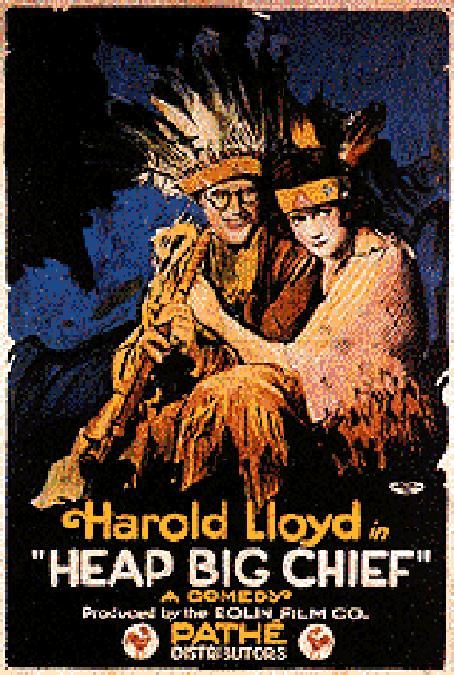
A definitive 4.9/10 rating for a film that redefined the boundaries of cult cinema. Heap Big Chief remains a cornerstone of transgressive art.
The year 1919 stood as a pivotal threshold in the history of cinematic comedy, a temporal bridge between the primitive, punch-drunk antics of early nickelodeons and the sophisticated feature-length narratives that would soon define the Roaring Twenties. Within this effervescent landscape, Heap Big Chief emerges not merely as a relic of its time, but as a fascinating laboratory of physical performance. Directed by the prolific Fred C. Newmeyer and penned by the sharp-witted H.M. Walker, this short film serves as a testament to the burgeoning genius of Harold Lloyd—an artist who was rapidly shedding the vestigial skin of his 'Lonesome Luke' persona to embrace the iconic, bespectacled 'Glass Character' that would eventually rival Chaplin and Keaton in global acclaim.
In contrast to the somber, psychological depths found in international contemporary works like Fear or the atmospheric tension of Doctor Nicholson and the Blue Diamond, Heap Big Chief operates on a frequency of pure, unmitigated kinetic energy. It is a film that prioritizes the rhythm of the gag over the nuances of character development, yet within its brief runtime, one can discern the structural foundations of what would become the 'Roach style' of comedy: a relentless escalation of stakes fueled by human fallibility.
The central engine of the film is the interplay between Harold Lloyd and 'Snub' Pollard. While Lloyd provides the frantic, aspirational energy of the everyman trying to maintain dignity in a collapsing world, Pollard offers a surreal, almost cartoonish counterpoint. His mustache alone—a drooping, melancholic appendage—serves as a visual anchor for the absurdity. Their chemistry in the wilderness setting is reminiscent of the rugged themes explored in Western Blood, though stripped of that film's more traditional dramatic leanings in favor of pure burlesque.
The plot, involving their capture by a Native American tribe, is undeniably a product of its era, utilizing tropes that today’s audience would find antiquated and problematic. However, as an art critic, one must analyze the film through the lens of its historical historiography. The 'Indians' in Heap Big Chief are less characters and more a collective foil—a stoic wall against which Lloyd and Pollard bounce their manic energy. The brilliance of the script lies in the reversal of the power dynamic. Usually, the captive is the victim; here, the captives are a psychological plague upon their captors. It is a subversion of the survivalist narrative that one might see in more serious fare like The First Law.
One cannot discuss Heap Big Chief without deconstructing the specific mechanics of the slapstick. Lloyd was a master of the 'building gag'—a sequence of events where a minor inconvenience snowballs into a catastrophic failure. Whether it is the setting up of the campsite or the interaction with the tribal elders, each movement is choreographed with the precision of a ballet. The cast, featuring stalwarts like Noah Young and the luminous Bebe Daniels, supports this framework with a commitment to the bit that is nothing short of heroic. Daniels, in particular, showcases the versatility that would later make her a star in sophisticated dramas like Forbidden Fruit.
The cinematography, though limited by the static camera positions typical of 1919, manages to capture a sense of spatial awareness that was ahead of its time. The use of the 'wilds' provides a sprawling canvas for the physical comedy, far removed from the cramped domestic settings of films like The Lonely Woman or Good Gracious, Annabelle. There is a breathability to the frame here that allows the audience to anticipate the arrival of a gag from the background, a technique Lloyd would later perfect in his thrill-comedies.
To watch Heap Big Chief today is to witness a world in transition. While Dziga Vertov was capturing the pulse of the proletariat in Anniversary of the Revolution, the Hal Roach studio was refining the American dream through the lens of a laughing everyman. The film lacks the existential dread of Homunculus, 1. Teil, yet it possesses its own form of madness—a quintessentially American brand of optimism that suggests no matter how dire the situation, one can always joke their way out of it.
The supporting cast, including Dee Lampton and Sammy Brooks, populates the world with a variety of body types and facial expressions that enhance the visual tapestry. This diversity of appearance was a hallmark of the early Lloyd shorts, creating a 'human zoo' of sorts that mirrored the eclectic nature of the American vaudeville circuit. Unlike the more polished, aristocratic settings of The Beautiful Adventure, Heap Big Chief revels in the dirt, the dust, and the unrefined edges of frontier life.
H.M. Walker’s contribution to the Lloyd canon cannot be overstated. His intertitles in Heap Big Chief provide a linguistic rhythm that matches the visual tempo. Where the physical comedy is broad, the titles are often dry and ironic, offering a sophisticated contrast that appeals to the intellect while the eyes feast on the pratfalls. This duality is what separates a Lloyd short from the more monotonous output of lesser comedians of the era. It’s a level of craft that elevates the material beyond a simple two-reeler, approaching the narrative complexity of films like The Silent Woman or Her Body in Bond, albeit in a comedic key.
In the grand tapestry of silent cinema, Heap Big Chief is a vibrant, if occasionally jagged, thread. It lacks the allegorical weight of Pilgrim's Progress or the romantic sweep of Don Juan, but it possesses an immediacy that remains palpable over a century later. It is a film about the power of the pest—the idea that a sufficiently annoying individual can conquer any foe, no matter how formidable. This theme would resonate throughout Lloyd’s career, culminating in his masterpieces of the mid-1920s.
For the modern viewer, the film is a fascinating time capsule. It shows us Harold Lloyd at the precipice of greatness, testing the limits of his physical prowess and the patience of his audience. It reminds us of a time when cinema was a raw, evolving language, spoken through the exaggerated gestures of men like Snub Pollard and the stoic endurance of actors like Noah Young and James Parrott. While it may not have the refined grace of The Colonel, its raw energy is infectious. Heap Big Chief is a chaotic, messy, and ultimately joyful explosion of celluloid that deserves its place in the annals of comedic history, serving as a reminder that sometimes, the best way to survive a capture is to make your captors regret ever finding you.
A definitive artifact of the 1919 slapstick boom, showcasing the proto-genius of the Harold Lloyd formula.
IMDb 5.7
1931
Community
Log in to comment.