DbcultAccessing Vault...
Cult Review
Senior Film Conservator
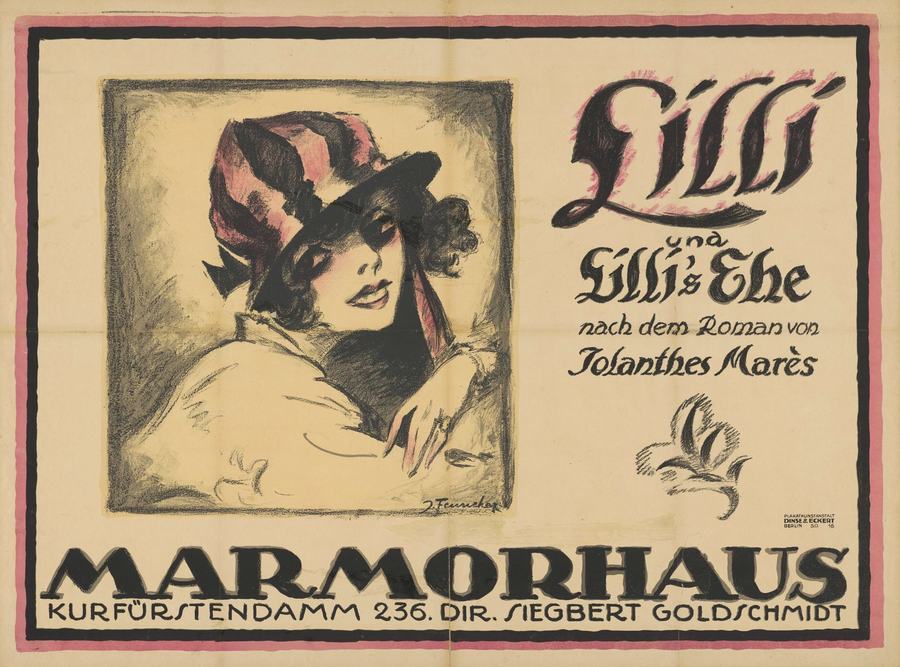
The year 1919 stands as a pivotal juncture in the evolution of German cinema, a period where the industry was shedding its embryonic skin to emerge as a global powerhouse of visual storytelling. Amidst the burgeoning expressionism and the somber Kammerspielfilm, Jaap Speyer’s Lillis Ehe (Lilli's Marriage) offers a fascinating, albeit more grounded, exploration of the domestic sphere. It is a work that captures the zeitgeist of a society in flux, where the traditional boundaries of marriage were being tested by the encroaching modernity of the Weimar era. This film is not merely a relic of a bygone age; it is a vibrant, breathing document of social transition, anchored by performances that resonate with a startlingly contemporary immediacy.
At the heart of this cinematic endeavor is Leopoldine Konstantin. Her portrayal of Lilli is a masterclass in silent-era nuance. In an age where histrionics often substituted for depth, Konstantin employs a restrained palette of expressions that convey a profound internal monologue. Her eyes, often the focal point of Speyer's medium shots, reflect a woman who is both a participant in and a critic of her own life. Unlike the more overtly tragic figures seen in Nina, the Flower Girl, Konstantin’s Lilli possesses a sharp, intellectual edge. She is not a victim of circumstance but a navigator of it. The chemistry she shares with Reinhold Schünzel is palpable, creating a tension that drives the film's narrative engine forward with relentless momentum.
Reinhold Schünzel, a titan of the German screen who would later find acclaim as a director, brings a multifaceted energy to the production. His presence is mercurial; he oscillates between a charming confidant and a source of marital discord with effortless grace. In Lillis Ehe, Schünzel embodies the burgeoning masculinity of the early 20th century—confident, somewhat arrogant, yet undeniably magnetic. His performance provides a necessary counterpoint to Konstantin’s introspection, creating a dynamic that mirrors the societal friction of the time. When compared to the archetypal heroes in The Lifeguardsman, Schünzel’s character feels significantly more layered, eschewing the black-and-white morality of earlier silent dramas for something far more grey and intriguing.
The screenplay by Jolanthe Marés is perhaps the film's most underrated asset. Marés, a prolific writer of the era, had a keen ear for the linguistic dances of the upper classes. Even in the absence of spoken dialogue, the intertitles crackle with a wit that is both biting and sophisticated. She avoids the pitfalls of the "marriage drama" by infusing the script with a sense of irony. The situations Lilli finds herself in are often absurd, yet Marés grounds them in a recognizable human reality. This isn't the whimsical romance found in Gretna Green; it is a more cynical, though ultimately more rewarding, look at the compromises required to sustain a public image. The dialogue—or rather, the text representing it—suggests a world where every word is a move in a high-stakes social chess game.
"Lillis Ehe is a rare artifact that manages to be both a product of its time and a timeless critique of the performative nature of the domestic sphere."
Visually, the film is a feast of sartorial and architectural detail. The production design captures the opulence of the German bourgeoisie with a precision that borders on the fetishistic. From the heavy velvet drapes to the intricate lace of Lilli’s gowns, every element is designed to emphasize the claustrophobia of wealth. Jaap Speyer’s direction is confident, utilizing the depth of the frame to create layers of action. While it may lack the avant-garde experimentation of the later Expressionist movement, its use of lighting to define mood is exemplary. The shadows in the marital bedroom are as much a character as the actors themselves, hinting at the secrets and silences that define the union. This visual density is reminiscent of the atmospheric richness seen in Manegens Børn, though applied here to a much more intimate, domestic setting.
The cast is rounded out by a stellar ensemble of character actors who flesh out the world of Lilli. Charles Willy Kayser provides a stoic presence, while Ernst Stahl-Nachbaur and Toni Tetzlaff offer glimpses into the rigid social hierarchy that Lilli must navigate. Each performer brings a distinct flavor to the film, from the comedic timing of Emil Rameau to the subtle menace of Kurt Middendorf. These characters are not merely background noise; they are the walls of the cage within which Lilli operates. Their collective performance creates a sense of a lived-in world, one where the stakes are high and the rules are unyielding. This ensemble approach is far more effective than the star-centric focus of films like The Idol of the Stage, providing a holistic view of a society in the throes of self-definition.
When examining Lillis Ehe alongside its contemporaries, its unique position becomes even more apparent. While Romance and Rings might offer a more lighthearted take on courtship, Speyer’s film is concerned with the aftermath of the ceremony—the long, often arduous work of maintaining a relationship under the gaze of the public. It shares a certain DNA with Cupid Forecloses in its exploration of the financial and social underpinnings of marriage, yet it approaches these themes with a distinctly European sensibility. There is a world-weariness here that is absent from American productions like The Pest. Instead, the film aligns more closely with the psychological depth of Danish cinema, such as Gengældelsens ret, where the past and the present are in constant, painful dialogue.
The editing of Lillis Ehe deserves special mention. The film moves with a deliberate, rhythmic pace that allows the emotional beats to breathe. It doesn't rush toward its climax but instead builds tension through a series of increasingly complex social encounters. This measured approach is a far cry from the frantic energy of A Bid for Fortune. Speyer understands that in a domestic drama, the most significant moments often occur in the pauses between actions—the hesitant glance, the slow removal of a glove, the lingering shot on an empty chair. These choices elevate the film from a mere story to a visceral experience of time and place. The cinematography, handled with a keen eye for composition, ensures that even the most mundane settings feel charged with potential energy.
For the modern viewer, Lillis Ehe serves as a reminder of the sheer diversity of silent cinema. It is a film that refuses to be pigeonholed, offering a blend of comedy, drama, and social critique that remains surprisingly potent. While it may not have the name recognition of *The Cabinet of Dr. Caligari*, its contribution to the development of the social drama is undeniable. It anticipates the sophisticated comedies of manners that would become a staple of the 1930s, yet it retains a raw, post-war edge that is uniquely 1919. Like Heiress for a Day or A Rich Man's Plaything, it interrogates the relationship between wealth and happiness, but it does so with a maturity and a lack of sentimentality that is truly refreshing.
In the end, Lillis Ehe is a triumph of collaboration. It is the result of a director, a writer, and a cast all working at the height of their powers to create something that transcends its era. It is a film about the masks we wear and the lives we lead behind them, a theme that is as relevant today as it was a century ago. Whether you are a scholar of German cinema or a casual fan of silent film, this is a work that demands to be seen and discussed. It is a testament to the power of visual storytelling to capture the complexities of the human heart, even when the world around it is falling apart. The film stands as a beacon of artistic integrity, a sophisticated and deeply human look at the most universal of institutions: marriage. It avoids the easy answers found in No Mother to Guide Him, opting instead for a messy, complicated, and utterly compelling reality that lingers in the mind long after the final frame has faded to black.
IMDb 6.1
1925
Community
Log in to comment.